Hands on Heritage: Why Japan, Mexico, and Italy Are the Ultimate Classrooms for Traditional Crafts
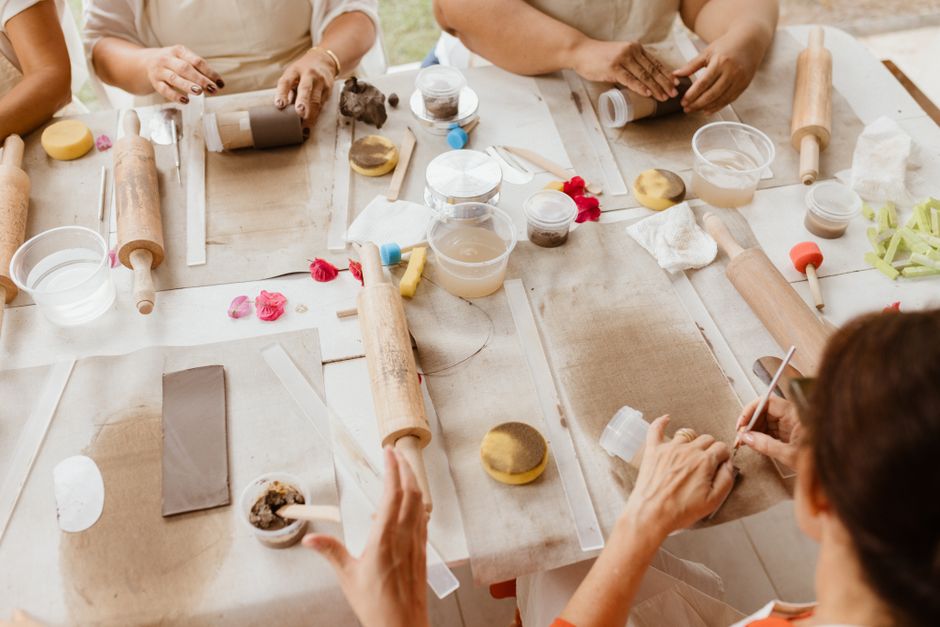
A potter’s hands shape clay in a workshop in Hagi, Japan—where centuries of tradition meet your own creative journey.
✈️ Best time to visit: Japan (March–May or Oct–Nov), Mexico (Nov–April), Italy (April–June or Sept–Oct)
💰 Estimated budget range (daily): $50–120 (Mexico), $80–200 (Italy), $70–150 (Japan)
⏱️ How long to spend there: 7–10 days per country for a hands-on workshop immersion
🎯 Difficulty level: Easy–Moderate (no prior skill needed); Japanese woodworking is harder
📍 Recommended season: Spring and fall for all three, to avoid extreme heat and crowds
👥 Best for: Solo travelers, couples, cultural enthusiasts, and creative-minded families (children 12+)
I remember the precise moment I fell in love with learning crafts abroad. It was a misty October morning in the hills outside Kyoto. I was ankle-deep in clay slip, my hands raw from wedging, and an 83-year-old potter named Mr. Tanaka gently guided my fingers to form the lip of a tea bowl. He didn’t speak English, and my Japanese was broken, but when he showed me the bowl I’d just thrown, he nodded once—a silent acceptance. That feeling of being connected to a lineage of makers, to a place, and to a material, changed how I travel. I’ve since flown to Oaxaca to weave with Zapotec artisans on backstrap looms, and to the hills of Tuscany to learn the patience of Florentine woodworking. I write this article not as a detached list maker, but as a traveler who has spent years seeking out these experiences. If you’re tired of passive tourism—the kind where you just look and photograph—then learning a traditional craft is your antidote. This guide covers three powerhouse destinations: Japan, Mexico, and Italy, each offering distinct techniques, deep-rooted traditions, and teachers who will treat you like family. By the end, you’ll know exactly where to go, when, and how much it costs to get your hands dirty with pottery, weaving, or woodworking.
The Essentials at a Glance
- 🗾 Japan (Pottery & Woodworking): Master the “wabi-sabi” aesthetic in Hagi or Kyoto—book a multi-day workshop for the best depth; many studios offer translation support.
- 🌵 Mexico (Weaving & Pottery): Head to Oaxaca for backstrap weaving or Tonalá for hand-painted pottery; local cooperatives offer affordable, authentic instruction with zero gatekeeping.
- 🍷 Italy (Woodworking & Pottery): Tuscany’s Montepulciano and Florence host master woodcarvers; avoid August when everything closes—go in May for ideal workshop conditions.
- 💰 Budget smart: Mexico is the most affordable ($200–400 for a full week of craft classes); Japan and Italy run $500–900 per week including materials.
- 📅 Book early: Popular instructors—like the textile weavers in Teotitlán del Valle—fill up 3 months ahead for fall and spring.
The Complete Guide
Why This Matters / Why You Should Go
We live in an era of frictionless consumption. You can buy a Japanese tea bowl on Etsy in three clicks. But that bowl will never tell you the story of the clay’s origin, the kiln’s heat, or the potter’s hundred failed attempts. Learning a traditional craft on location shifts you from consumer to participant. In Oaxaca’s hot, dusty courtyards, when you weave a belt alongside Maria, a 10th-generation Zapotec weaver, you understand why a single piece takes a week. In a woodshop in Florence, as you carve a simple leaf into a cabriole leg, you feel the geometry that made the Renaissance. These experiences dismantle the distance between you and the object. They also create human connections that no hotel or museum can. I’ve had my best conversations while our hands were busy—when the language barrier dissolves into laughter over a crooked glazed pot. This is travel as creation, not consumption. It’s for anyone who wants their souvenirs to come with a memory attached to their own fingers.
When to Visit (Seasonal Guide)
For Japan, call it cherry blossom season (late March to early April) or the golden foliage of November. Both offer mild weather and ceramic cafes that open their outdoor kilns. Summer is humid and crowded in Kyoto—pottery studios have fans, not AC. Winters are quiet but cold in unheated traditional workshops. Mexico hits its sweet spot from November through April when Oaxaca’s days are sunny and dry for weaving outdoors. Avoid December 15–January 6 if you dislike crowds; locals flood craft markets. Italy’s workshop season runs April–June and September–October. August is a ghost town—many artisans close their studios for Ferragosto. I once made the mistake of arriving in Florence in mid-August; only one woodcarver was open, and he was grumpy about it. Go in May for long daylight and empty benches.
Budget Breakdown
Let’s talk real numbers. I’ll use a 7-day trip per location, not including international flights. In Mexico (Oaxaca): a comfortable guesthouse with a family runs $35–60/night. A four-hour weaving workshop with materials costs about $50–80. Add meals ($15–25/day on street food), local buses ($1–3 per trip). Total: $400–600/week. Money-saving tip: stay in a homestay where the host is a craftsperson—I found one in Teotitlán for $25/night including dinner and a weaving demo. In Japan (Hagi or Kyoto): a traditional ryokan or simple guesthouse: $80–150/night. A full-day pottery class (with firing and glazing) runs $120–180. Meals ($30–50/day). Local train and bus: $20/day. Total: $800–1,200/week. Save by renting a small apartment with a kitchen and taking a shorter workshop (2 days instead of 5). In Italy (Tuscany): an agriturismo or small apartment: $80–200/night. A three-day woodworking course in a collective studio: $250–400. Meals ($40–70/day, wine included). Local car rental or train: $30–50/day. Total: $900–1,400/week. Cheat: stay in a less touristy town like Sansepolcro instead of Florence—you get better prices and quieter studios.
Getting There & Getting Around
For Japan, fly into Tokyo (Narita or Haneda), then take the Shinkansen to Kyoto (2.5 hours, $130) or a local train to Hagi (5 hours from Tokyo, $90). Once there, rent a bicycle—most craft villages in Hagi are 10 minutes apart. In Kyoto, bus Pass #100 gets you to pottery studios in the Nishijin district. For Mexico, land at Oaxaca International Airport (OAX). Taxis into the city are a flat $10. To reach weaving villages like Teotitlán del Valle, take a colectivo (shared van) from the Central Abastos market—costs $1.50 and runs every 20 minutes. Drivers will honk to signal departure. In Italy, fly into Florence Airport (FLR). Rent a car for Tuscany’s hill towns—it’s the only sane way to reach offbeat woodworking studios. Parking in Florence itself is a nightmare; use the Fortezza da Basso lot ($25/day) and walk. In each country, I strongly recommend downloading Google Maps offline and Maps.me for rural routes. Japan’s train app (Hyperdia) is gold; in Mexico, ask locals for bus times—they change daily.
Top Recommendations / Must-Do Activities
In Japan, do not miss a full-day throwing wheel class at the Hagi Uragami Museum’s workshop. Price: $150 for a session that includes clay, glazing, and two fired pieces shipped to you (shipping extra). The teacher, a retired master, will show you how to pull a perfect cylinder in a room that smells of tatami and wood ash. I loved it because I left with a functional cup, not a souvenir. Downside: it’s popular—book three months ahead. In Mexico, the Cooperative Mujeres Artesanas in Teotitlán del Valle offers backstrap weaving classes for $60 for a full day, including a meal of mole and handmade tortillas. You’ll dye your own wool with cochineal insects—intense, vivid reds. I loved feeling the rhythm of the loom tied to my waist. The downside: it’s physically demanding—your back will ache. Bring a cushion. In Italy, head to Scuola del Cuoio in Florence (the leather school attached to the monastery Santa Croce) or, for woodworking, join a three-day class at Studio Dell’Arte in Montepulciano (around $350). You’ll carve a small panel in the style of Renaissance furniture. I loved the precision required, but it’s not for the impatient. Insider tip: arrive 15 minutes early to watch the masters prepare their tools—you’ll learn more in that pre-class hour than in the lesson itself.
Traveler’s Pro Tips
Embrace the phrase “first work is your teaching piece”: In Japan, your first pot might crack in the kiln. In Mexico, your first weave will have uneven tension. That’s the point. These imperfections are called “wabi-sabi” in Japan and “huella del artesano” (the artisan’s footprint) in Mexico. Document them. I still have my first lumpy bowl—it’s my favorite.
Learn the local word for “thank you” before you start: In a Zapotec workshop, say “díixhe” (DEE-shay). In a Japanese pottery, say “sumimasen” (for excuse me) and “arigatou gozaimasu”. In Italy, a solid “grazie mille” works. These small efforts earn you extra attention and often a second lesson.
Bring a dedicated set of old clothes: You will get clay under your fingernails, wood dust in your hair, and possibly indigo dye on your skin. In Mexico, local women wear long skirts to sit at looms—I bought one for $15 at the market and it was the best investment of my trip. No microplastics, only natural fibers.
Book the first class of your trip, not the last: You’ll want time to practice before you leave. I once booked a pottery class on my last day in Japan. My pieces weren’t fired yet, so I never saw the final result. Schedule your workshop early; you can visit the studio later to pick up your work (most will hold it for 6 months).
Don’t be afraid to fail publicly: The best craftspeople are the ones who laugh. In Montepulciano, I carved a leaf that looked more like a potato. My teacher, Signor Dario, laughed and made me do it again. That second attempt was my proudest moment. You’re not paying for a masterpiece; you’re paying for a lesson in humility.
Common Mistakes to Avoid
Booking a “craft class” that’s a tourist trap: I once paid $90 for a “weaving workshop” in a fancy Oaxaca shop. It turned out to be watching a video while a woman wove a piece I couldn’t touch. Avoid any class that doesn’t include hands-on time with materials. Look for workshops labeled “participatory” or “hands-on.” In Mexico, the best ones are in villages, not the city center.
Forgetting to ask about language barriers: In Japan, many older potters speak no English. I assumed a translator would be present—there wasn’t. The result was 40 minutes of smiling and nodding. Solution: book through a studio that explicitly offers English-speaking assistants, or use Google Translate with the camera function for tool names.
Overpacking and under-buying local tools: Lugging your own pottery tools across the globe is silly. Every destination sells quality tools at a fraction of the price. In Hagi, a set of wooden carving loops costs $8. In Oaxaca, a stick shuttle costs $3. I filled half my suitcase with tools and left the clothes behind. You can always buy a shirt; you can’t always buy a teapot carving knife from a local smith.
Not adding shipping costs into your budget: I shipped a finished, heavy clay vase from Japan for $120—more than the workshop itself. Ask the studio how much shipping is before you start. Alternatively, choose small projects (coasters, a small bowl, a keychain) that you can hand-carry. Some Italian woodworkers will break down furniture kits flat for your luggage.
Your Travel Checklist
Documents: Valid passport (6 months validity for Japan, Mexico, Italy). Print workshop booking confirmations. For Japan, bring a copy of your visa waiver. For Mexico, download the immigration form (FMM) for a quicker entry.
Packing: Old cotton clothes (long sleeves for woodworking), closed-toe shoes, an apron (light canvas), a small hand towel for clay, and reusable water bottle. For Italy, add a thin scarf to cover your mouth in dusty woodworking areas.
Research: Look up the specific technique you’ll learn (e.g., “raku firing” vs. “Okinawan pottery”). Watch a 10-minute YouTube video on basic throwing or weaving before you go. It’ll give you vocabulary.
Bookings: Reserve workshops at least 6–8 weeks ahead. For popular teachers (like the Tanaka family in Hagi), book 4 months ahead. Confirm via email the address and materials included.
Health & Safety: Tetanus shot (you’ll handle sharp carving tools). For Mexico, ensure your travel insurance covers minor injuries. Bring band-aids and antiseptic cream for inevitable cuts.
Local currency: Cash is king in villages (yen in Japan, pesos in Mexico). In Italy, many studios accept cards but have a €50 minimum. Bring small bills—$5 and $10 denominations for tips and market tools.
Apps: Google Translate (download Japanese/Mexican Spanish offline), Maps.me (rural maps), and a notebook app (I use Notion) to document the steps your teacher shows you.
Traveler FAQ
Q: Do I need any prior experience to join these craft workshops?
A: Absolutely none. Most teachers in these three countries design their classes for complete beginners. They expect you to fail, and they’re prepped for it. In fact, teachers often prefer newbies because you have no bad habits to unlearn. Just show up curious and ready to get your hands dirty.
Q: Can I combine craft learning with regular sightseeing in one trip?
A: Yes, but I advise focusing on one craft per region. Over four days in Oaxaca, you could do a weaving class in the morning and visit Monte Albán ruins in the afternoon. In Kyoto, a half-day pottery session leaves time for temples. But if you try to shove woodworking, weaving, and pottery into one week, you’ll burn out. Slow down—quality over quantity.
Q: What if I don’t like what I make? Can I scrap it?
A: In Japan and Italy, your fired or carved piece is yours to keep, even if you hate it. I’ve seen many travelers toss their pot in the trash bin at the studio—it’s fine. In Mexico, the weavers often ask if you want to keep or give the piece to the community. There’s no judgment. The process mattered more than the object.
Q: Is it safe for a solo woman traveler to take craft classes in these destinations?
A: Yes, with standard caution. In Oaxaca, stick to established cooperatives and village homestays recommended by women-run groups (like “Mujeres Artesanas”). In Japan, studio environments are extremely safe. In Italy, avoid walking alone to remote woodworking studios after dark—drive or take a taxi. I’ve traveled solo as a woman to all three and never felt threatened, but I always share my itinerary with a friend.
Q: How do I find authentic workshops versus touristy ones?
A: Look for studios that don’t have a shop as the main attraction. A real workshop won’t push sales; they’ll push clay. In Mexico, ask at local museums for a list of “talleres abiertos.” In Japan, search for “kōgei” (craft) with “taiken” (experience). In Italy, use the “Artigiani e Botteghe” directory by a local tourist board. Always email to confirm that you’ll be creating, not just watching.
Ready for Your Adventure?
This isn’t about adding another stamp to your passport. It’s about adding a skill to your hands and a story to your voice. When you shape clay in Hagi, you’re practicing a tradition that’s lasted four centuries. When you weave wool in Teotitlán, you’re threading the same patterns as your teacher’s grandmother. When you carve wood in Tuscany, you’re connecting to the very hands that built the Renaissance. I won’t pretend it’s easy—you will get frustrated, you might snap a warp thread or crack your bowl. But that’s the whole point. The crack is where the light gets in, as Leonard Cohen said. You will return home not only with a physical object but with the memory of how your hands solved a problem. If you’ve hesitated because you think you’re “not creative,” I promise you—creativity is just curiosity that got its hands dirty. So pick one: pottery, weaving, or woodworking. Pick a country. Book a class. And then write to me. I want to know what you make.


No comments:
Post a Comment