Three Skies That Will Rewire Your Soul: Stargazing in Chile, Namibia, and New Mexico With a Telescope
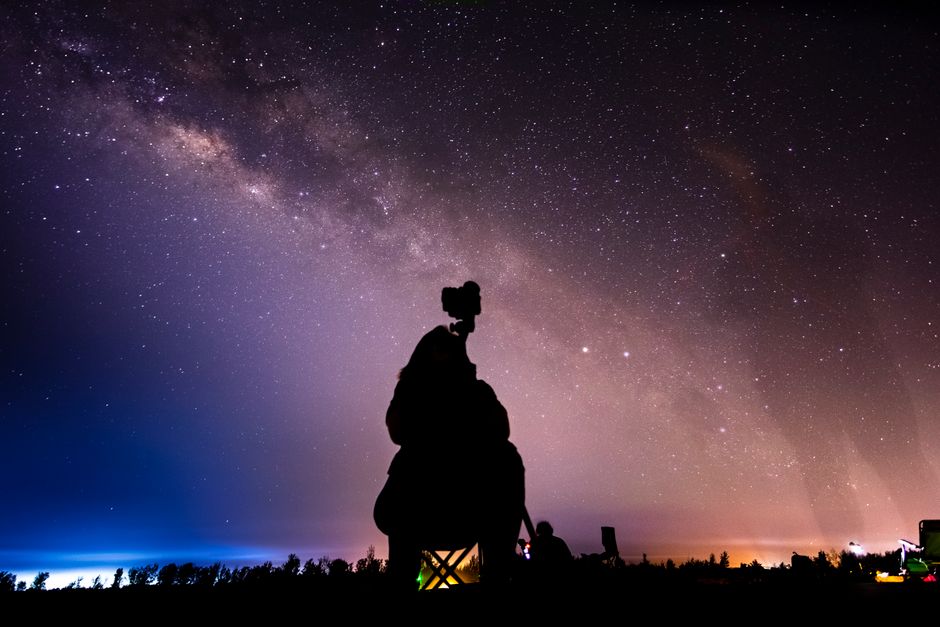
A 30-second exposure captured at the VLA in New Mexico — the core of our galaxy rising over a 25-inch Dobsonian telescope.
✈️ Best time to visit: April–October (Southern Hemisphere); September–May (Northern Hemisphere)
💰 Estimated budget: $150–$350 per day (mid-range); $4,000–$6,000 for a 14-day trip including telescope rental
⏱️ How long to spend: 10–14 days per destination for meaningful astronomy tourism
🎯 Difficulty level: Moderate (requires some pre-trip planning for telescope transport)
📍 Recommended season: Winter in each hemisphere (low humidity, longer nights)
👥 Best for: Solo travelers, astronomy couples, small groups of friends who own telescopes
Introduction
I remember the exact moment I knew I had to write this guide. I was standing in the Atacama Desert at 2 a.m., my fingers numb despite thick gloves, watching Jupiter’s Great Red Spot drift across the eyepiece of my 10-inch Dobsonian. The air was so thin and dry that the planet looked like a painted marble — no shimmer, no atmospheric wobble, just sharp. Behind me, the Magellanic Clouds hung so low I felt I could reach up and stir them with a hand.
I’ve been hauling telescopes to remote places for over a decade — a journey that started with a cheap department-store reflector and a clear night in the Catskills. Since then, I’ve logged hundreds of hours under the darkest skies on Earth, from the high plains of New Mexico to the dunes of the Namib Desert. I’ve made every mistake you can imagine: forgetting the collimation tool, booking a hotel on the wrong side of a mountain, assuming a full moon wouldn’t matter. And I’ve learned what actually works.
This article is built from those nights — the triumphs and the fogged-up lenses. I’ll walk you through three of the world’s premier destinations for telescope-based stargazing: northern Chile, New Mexico, and Namibia. Each offers a radically different sky, climate, and culture. You’ll get specific advice on when to go, what to budget, how to transport your gear, and the one thing I wish someone had told me before my first trip. By the end, you’ll know exactly which dark-sky park matches your style — and how to avoid the rookie mistakes that can ruin an astronomy pilgrimage.
The Essentials at a Glance
🌌 Chile’s Atacama Desert — The driest non-polar desert on Earth, with 300+ clear nights per year. Home to ALMA and the European Southern Observatory. Altitude ranges from 8,000–16,000 feet — bring medication for altitude sickness.
🌵 New Mexico’s Cosmic Campground — The first International Dark Sky Sanctuary in the U.S. National Forest system. Altitude 5,800 feet, Bortle Class 1 sky, no light domes for 200 miles. Open year-round, no reservations required (first-come, first-served).
🏜️ Namibia’s NamibRand Nature Reserve — Gold-tier Dark Sky Reserve with some of the darkest skies measured on Earth. Proximity to the Tropic of Capricorn means you can see both Northern and Southern Hemisphere constellations. Dry season (May–October) offers 90% clear nights.
🪐 Telescope Rental Tip — In Chile, rent from Sky Watcher in San Pedro de Atacama ($50/day for an 8-inch Dob). In Namibia, book through Sossusvlei Desert Lodge (complimentary 12-inch Meade). In New Mexico, bring your own — rental options are extremely limited.
The Complete Guide
Why This Matters / Why You Should Go
We live in a world where 80% of North Americans can no longer see the Milky Way from their backyards. Light pollution has erased the night sky for most people — not just the faint fuzzies, but the core structure of our own galaxy. When you travel to a true dark-sky destination, you’re not just taking a vacation. You’re regaining access to something fundamentally human that has been stolen by streetlights and billboards.
Chile’s Atacama is the mecca of professional astronomy for a reason: the combination of extreme altitude, bone-dry air, and stable atmospheric laminar flow creates conditions where a 10-inch amateur telescope shows detail that would require a 16-inch in the suburbs. I’ve split epsilon Lyrae — the famous Double-Double star — into four distinct components at 200x with a simple Dobsonian. At home in New York, that same telescope barely shows the pair as two blobs.
New Mexico offers something different: accessibility. You can fly into Albuquerque, drive four hours to the Cosmic Campground, and be set up by sunset. The sky is so dark there that the zodiacal light — a pyramid of ghostly glow after dusk — is visible to the naked eye for eight months of the year. My first night there, I saw the Gegenschein, a faint glow opposite the sun that most astronomers never see in a lifetime.
Namibia is the wild card. The NamibRand Reserve is the size of a small country, with zero artificial light within a 100-kilometer radius. I drove three hours from the nearest town and watched the Southern Cross wheel overhead while a black-backed jackal barked in the distance. It’s not just the darkness — it’s the solitude. If you want to feel like the last person on Earth with the best seat in the universe, this is your place.
When to Visit (Seasonal Guide)
Chile (Atacama): The best window is April through October, which is the dry season. November to March brings the Bolivian winter — afternoon thunderstorms and increased cloud cover, though clear nights are still common. I’ve been in July and January; July wins hands down. The Milky Way core is at its most dramatic from March to September, rising vertically over the desert floor like a glowing canyon. Avoid the week of the Feria de las Flores in October unless you like crowds.
New Mexico (Cosmic Campground): Any month works, but the sweet spot is September through May. Summer brings monsoon thunderstorms from July through August — spectacular lightning shows but often cloudy until midnight. I went in late October and had seven consecutive clear nights with temperatures in the 40s°F. Winter nights are brutally cold (20°F or lower) but the transparency is incredible. Spring offers the best zodiacal light viewing.
Namibia (NamibRand): May through October is dry, cold, and utterly clear. November to April is the rainy season — not a dealbreaker, but you’ll have 50–60% cloud cover on average. The Southern Cross is visible year-round, but the galactic center is highest between March and September. I went in August: daytime temps of 70°F, nighttime temps dropping to 30°F, and not a single cloudy night in ten days. Book your accommodation six months ahead if you want to stay within the reserve.
Budget Breakdown
Chile (14-day trip): Round-trip flight from the U.S. to Calama: $800–$1,200. Accommodation in San Pedro de Atacama: low-end hostel ($25/night), mid-range guesthouse ($80/night), high-end lodge like Tierra Atacama ($600/night). Food: $15–$30/day for local meals; $50/day for nicer restaurants. Telescope rental: $50/day for an 8-inch Dob. Car rental: $50/day for a 4x4 (required for most dark sites). Total: $2,200–$4,500 per person. Money-saver: camp at the “Astronomical Tourism Camp” near ALMA for $15/night.
New Mexico (10-day trip): Flight to Albuquerque: $300–$600. Car rental: $40/day. Accommodation in Reserve, NM: $60–$100/night for a motel or Airbnb. Camping at Cosmic Campground: $0 (free, no water, no electric). Food: $20–$40/day. No telescope rental options — bring your own. Total: $1,200–$2,000 per person. Pro tip: buy groceries in Silver City before heading out — the nearest decent store is 90 minutes away.
Namibia (14-day trip): Flight to Windhoek: $1,000–$1,600. Rental SUV: $100/day (required for gravel roads). Accommodation in NamibRand: $150–$400/night (lodge options only; no camping within reserve). Sossusvlei Desert Lodge starts at $400/night but includes telescope use and guided astronomy sessions. Food and fuel: $30–$50/day. Total: $3,800–$6,000 per person. Money-saver: stay outside the reserve at Solitaire Guest Farm ($80/night) and drive in for sunset sessions.
Getting There & Getting Around
Chile: Fly into Santiago (SCL), then connect to Calama (CJC) — about a 2-hour flight. From Calama, drive 1.5 hours to San Pedro de Atacama on highway 23. The road is paved and well-marked. Once in San Pedro, most dark-sky sites are within a 30-minute drive. For the truly remote sites near the Argentina border, you need a 4x4 with high clearance — the road to Paso Sico is washboard gravel and can turn to mush after rain. I recommend renting a Toyota Hilux from Econorent in Calama ($50/day). Fill up gas in Calama — San Pedro’s only station is 40% more expensive.
New Mexico: Fly into Albuquerque (ABQ) or El Paso (ELP). From ABQ, it’s a 4-hour drive to the Cosmic Campground. Take I-25 south to Socorro, then US-60 west to Reserve. The final 20 miles are on well-maintained gravel — any car can handle it in dry weather. The campground has 8 spots, all first-come, first-served. I’ve never been turned away, but by November the number drops to 3 if there’s snow. Cell service is nonexistent. Download offline maps of the Gila National Forest before you go.
Namibia: Fly into Windhoek (WDH) — direct flights from Frankfurt, Johannesburg, and Cape Town. Rent a 4x4. The drive to NamibRand is 5 hours on good paved roads to Maltahöhe, then 1 hour on gravel to the reserve. The gravel roads are graded but can be corrugated — reduce tire pressure to 1.8 bar for comfort. I punctured a tire on my first trip; carry two spares and a compressor. Within the reserve, you drive on sand tracks — a high-clearance SUV is mandatory. The lodges provide detailed route maps; don’t rely on Google Maps, which will try to send you through closed gates.
Top Recommendations / Must-Do Activities
1. ALMA Visitor Center (Chile): At 16,400 feet, the Atacama Large Millimeter/submillimeter Array is the highest observatory complex on Earth. The free guided tour (book weeks ahead) takes you inside an operational antenna — a massive dish that sees the cold gas of star-forming regions. The altitude hit me like a truck: I got a headache within 30 minutes. Bring acetazolamide, coca tea, and take it slow. The gift shop sells excellent star wheels calibrated for southern latitudes.
2. Night photography at the Valley of the Moon (Chile): The landscape looks like a Martian terrain under the Milky Way. Arrive during the last hour of twilight to watch the sky transition. Use a red flashlight to navigate the rocks — they’re sharp and tippy. I scratched my telescope tube crawling to a perfect spot; don’t make my mistake. Bring a sturdy tripod and a remote shutter cable; the wind is fierce even at 10 p.m.
3. Cosmic Campground’s “Big Sky” weekend (New Mexico): Every year in September, the Forest Service hosts a public star party with dozens of amateur astronomers. It’s the only time the campground fills up (all 8 spots plus overflow parking). I’ve looked through a homemade 30-inch Dobsonian there — the owner built it in his garage for $3,000. The community is welcoming; you can borrow eyepieces and ask for help collimating your scope. No reservations — arrive by noon on Friday to claim a spot.
4. The dunes of Sossusvlei at night (Namibia): The lodges will set up a telescope on the ancient sand dunes, which are 300 meters high and totally devoid of vegetation. On a moonless night, the sand reflects starlight so well that you can walk without a flashlight. I observed Omega Centauri — a globular cluster 17,000 light-years away — and it filled the entire eyepiece field of view. The lodge astronomer (usually a trained guide with a GOTO mount) will help you find deep-sky objects. Tip: request the time between 2 a.m. and 4 a.m. when the galactic core is highest.
5. The VLA tour (New Mexico): The Very Large Array is an hour from the Cosmic Campground. Tour the control room and walk among the 27 dish antennas that famously appeared in “Contact.” The visitor center explains how the array achieves the resolution of a 22-mile-wide telescope. I learned that the antennas move on train tracks — the “A” configuration makes them 36 kilometers apart. Avoid the midday heat; go on the 10 a.m. tour and then head straight to the campground for the night.
Traveler’s Pro Tips
Red light is not optional: Use red LED lights exclusively. In Namibia, I saw a photographer use a white headlamp to adjust his camera — the glare ruined 20 minutes of dark adaptation for everyone within 200 meters. Tape a red filter over your phone’s flashlight. Your eyes will thank you.
Bring a hair dryer for dew: The desert dries during the day, but condensation forms on optics by midnight. In the Atacama, my corrector plate fogged over completely at 3 a.m. A 12-volt hair dryer plugged into your car’s inverter saves the night. I now carry a 20-foot extension cord.
Altitude acclimatization is not optional: In Chile, fly into Calama (7,500 feet) and spend two days in San Pedro de Atacama (8,000 feet) before going higher. Do not attempt ALMA (16,400 feet) on your first day. I vomited in a ditch at 14,000 feet — not a great start to a stargazing trip. Diamox (acetazolamide) really works; get a prescription from your doctor.
Pack collimation tools in carry-on: Bring a collimation cap, a Cheshire eyepiece, and a laser collimator in your carry-on luggage. TSA is fine with telescope tools. Checking them risks loss or damage. I’ve seen a $1,200 eyepiece smashed by baggage handlers; never risk it.
Learn to star-hop before you go: GOTO mounts are great, but they can fail — battery dies, GPS loses signal, or alignments drift. In Namibia, my mount froze up at 1 a.m. I had to find Messier 83 manually using a 50mm finder. If you can’t star-hop with a Telrad and a sky chart, you’re one glitch away from a wasted night. Practice at home with a small scope first.
Common Mistakes to Avoid
1. Booking a trip during a full moon: I once planned a whole Namibia itinerary without checking the lunar phase. The full moon washed out the Milky Way completely — I could barely see the Trifid Nebula in a 10-inch scope. Check moon phase calendars for your dates. The 7 days before and after new moon are prime. The 3 days around full moon are a lost cause for deep-sky.
2. Forgetting that the desert is cold at night: In Chile, I wore a light jacket at midnight in summer and shivered so hard I couldn’t focus the eyepiece. The Atacama can drop to 25°F at 14,000 feet even in January. Pack merino wool base layers, a down jacket, a windproof shell, and insulated boots. In Namibia, I saw an unprepared tourist in shorts at 2 a.m. He lasted 20 minutes. Don’t be that person.
3. Overlooking the value of landscape photography: I was so focused on the telescope that I didn’t take a single wide-field shot of the Milky Way over the sand dunes. Now I regret it. Bring a DSLR and a fast wide-angle lens (f/2.8 or faster) and shoot some panoramas. You’ll want something to show your friends besides a fuzzy image of the Orion Nebula taken through an iPhone.
4. Assuming all dark-sky parks have the same rules: The Cosmic Campground in New Mexico allows campfires — but only in designated rings. NamibRand prohibits any open flame due to fire risk. Chile’s Atacama parks often close gates at 9 p.m. I once got locked in a parking lot at ALMA because I lost track of time. Always check the specific park’s regulations online before you go.
Your Travel Checklist
Documents: Passport (Chile & Namibia require 6 months validity), printed flight itineraries, travel insurance covering medical evacuation (especially for Chile’s altitude), International Driving Permit (required in Namibia).
Packing: Telescope (collapsible/reduced in a Pelican case), red LED headlamp, 12V dew heater, collimation tools, Telrad finder, star charts (paper backup), extra batteries for mount, merino base layers, down parka, windproof pants, insulated boots, sunblock (yes, at night — you’ll apply it at dawn).
Research: Download offline maps for the area (Google Maps offline or Gaia GPS), save astronomy apps (Stellarium Mobile, SkySafari — they work offline if you download the databases), check Starlink satellite passes (they ruin long-exposure photography), read local weather forecasts for the specific mountain/dune.
Bookings: Airport shuttle to Calama (only one company, Transvip, book online), lodge reservations (NamibRand fills 6 months in advance), telescope rental reservation in Chile, free ALMA tour (book 3 weeks ahead).
Health/Safety: Altitude sickness medication (acetazolamide, coca tea for Chile), antihistamines (for desert dust), first aid kit including blister treatment, emergency satellite communicator (InReach or Zoleo — no cell service in any park), high SPF lip balm and moisturizer.
Local Currency: Chilean Peso (bring dollars to exchange or withdraw from ATMs in San Pedro — credit cards widely accepted), Namibian Dollar (tied to South African Rand — bring both currencies), U.S. Dollars (accepted at Cosmic Campground — who needs cash if you have gas).
Apps: Stellarium (offline sky map), Photopills (planning Milky Way shots), Windy (high-altitude cloud forecast), Moon Reader (for constellation legends when the scope is packed away).
Traveler FAQ
Q: Can I do heavy astronomy tourism if I’m a complete beginner?
A: Absolutely, but start small. I recommend booking a guided night at a lodge in Namibia (e.g., Sossusvlei Desert Lodge) where an astronomer sets up the telescope and shows you the highlights. You’ll learn the sky without the stress of collimating a scope in the dark. Then graduate to a self-guided trip in New Mexico, where the Bortle Class 1 sky makes finding objects much easier.
Q: Do I need to bring my own telescope, or can I rent one?
A: Depends on the destination. In Chile, plenty of shops in San Pedro de Atacama rent 8-inch Dobs and small refractors for $40–$60/day. In Namibia, only the high-end lodges offer free use of a Meade 12-inch LX90, but don’t count on availability. In New Mexico, renting is virtually impossible — you must bring your own. I strongly recommend bringing your own scope for consistency and familiarity.
Q: Is it safe to stargaze alone at these locations?
A: Yes, with standard precautions. At the Cosmic Campground in New Mexico, I’ve camped alone without incident — the astronomy community is tight-knit and watches out for each other. In Namibia, don’t walk far from your vehicle after dark; black-backed jackals are curious but harmless. In Chile, the main risk is altitude sickness, not crime. I learned the hard way to sleep with a water bottle attached to my sleeping bag to stay hydrated.
Q: How do I protect my telescope from dust and sand?
A: This is critical in the Namib and Atacama. I use a dedicated dust cover made of Tyvek that breathes but blocks particles. After each night, I brush the OTA with a soft, dry paintbrush before packing. Never wipe optical surfaces with a dry cloth — you’ll scratch the coatings. Use a rocket blower and a tiny bit of isopropyl alcohol on a lens tissue only when absolutely necessary. I also store my eyepieces in ziplock bags inside the case, and I change out the desiccant packs monthly.
Q: What’s the single most important piece of advice for a first-time stargazing trip?
A: Do not underestimate the importance of thermal equilibrium. Your telescope needs time to reach the outside air temperature before it gives sharp views. A scope brought directly from a warm room into the cold desert gives terrible images for the first hour — the air inside the tube creates heat waves. In Chile, I park my scope outside an hour before sunset, then go inside to eat dinner. When I come out, the optics are ready. This one step improved my views more than any upgrade to eyepieces.
Ready for Your Adventure?
This is not a trip you take for Instagram likes or to check off a bucket list. Stargazing with a telescope in a true dark-sky park is a pilgrimage to the edge of human experience — a chance to stand under a sky that looks exactly as it did 10,000 years ago, when our ancestors told stories in the stars. I’ve done it three times now, and each trip changes me. The Atacama taught me humility in the face of altitude and vastness. New Mexico showed me that community still exists in the dark, sharing eyepieces and pointing out the Veil Nebula. Namibia gave me silence so profound that I heard the universe breathe.
I know the hesitation: the cost, the logistics, the fear of breaking expensive gear. I felt it all before my first trip. But I promise you this — the moment you put your eye to that eyepiece and see Saturn’s rings razor-sharp against a black velvet sky, every worry dissolves. You will look up and recognize your home in the cosmos.
Start small. Choose New Mexico if you’re driving; Chile if you want the best atmosphere; Namibia if you crave isolation. Check the moon phase, pack your red flashlight, and give yourself permission to be awestruck. The stars have been waiting for you.


No comments:
Post a Comment