Why Glamping in the US Is the Only Way to Truly Reconnect with Nature Without Sacrificing Comfort
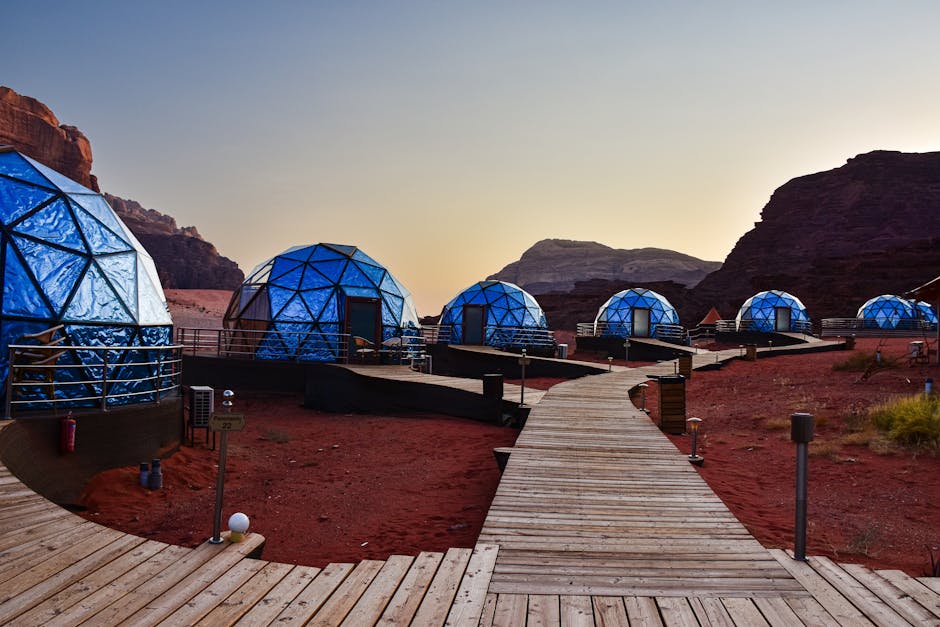
A well-appointed glamping tent where the wild meets comfort — this is the promise of a modern outdoor stay.
✈️ Best time to visit: May–October (peak), but shoulder months (April, September) offer milder weather and fewer crowds.
💰 Estimated budget range: $200–$600 per night (mid-range) to $800–$1,500+ (ultra-luxury); expect $3,000–$5,000 for a week.
⏱️ How long to spend: 3–5 nights for a proper escape; 7 nights for deep relaxation.
🎯 Difficulty level: Easy — you don't have to pitch a tent or build a fire.
📍 Recommended season: Summer for alpine glamping; fall for foliage and desert glamping; winter for hot-tub snow views.
👥 Best for: Couples, solo travelers seeking solitude, families with older kids, and anyone who loves nature but hates sleeping on the ground.
Introduction
I still remember the first time I zipped open a canvas tent door and found a king-sized bed with crisp white sheets, a wood-burning stove crackling in the corner, and a copper bathtub waiting under a skylight. Outside, the only sounds were wind through ponderosa pines and the distant hoot of an owl. That was the moment I understood: glamping isn't just "camping for people who don't like camping." It's a fundamentally different way to experience the outdoors — one that invites you to slow down, savor the details, and truly rest.
Over the past six years, I've stayed in more than forty glamping resorts across the United States — from geodesic domes in the Utah desert to safari tents overlooking Montana's Yellowstone River, from treehouses in the Smoky Mountains to yurts in the Oregon wine country. I've tested the $2,000-a-night ultra-luxury domes and the $150 rustic cabins with solar lights. I've made mistakes (yes, I once booked a "luxury tent" that turned out to be a soggy tarp), and I've found genuine gems that changed how I think about travel. I'm writing this guide because I believe glamping can offer something rare: a chance to truly disconnect from the digital noise and reconnect with the natural world — without giving up a hot shower or a great cup of coffee.
In this guide, you'll learn exactly what to look for when choosing a glamping experience, how to plan your budget and timing, and which specific resorts and activities are worth your time and money. I'll share the mistakes I've made so you don't have to repeat them, and I'll give you a practical checklist to ensure your trip is as smooth as it is memorable. Let's find your perfect outdoor sanctuary.
The Essentials at a Glance
- 🏕️ Book early, especially for summer weekends. Top glamping spots in places like Montana and Colorado sell out six months ahead — I've learned this the hard way.
- 🧳 Pack layers, not just "camping gear." Even in luxury domes, mornings can be 40°F and afternoons 80°F — think merino wool and a light down jacket.
- 🌲 Location matters more than the tent. A gorgeous yurt on a crowded campground is less rewarding than a simple cabin with a private view of a canyon.
- 💡 Check what's included. Some "glamping" means a bed and a heater; others include chef-prepared meals, guided hikes, and private hot tubs. Know before you go.
- 🌅 Embrace the off-hours. The best moments happen at dawn and dusk — when other guests are eating or sleeping, you'll have the landscape to yourself.
The Complete Guide
Why This Matters / Why You Should Go
Glamping matters because it solves the fundamental tension of outdoor travel: we want to experience wild places, but we also want to feel safe, warm, and rested. Traditional camping can be physically demanding — setting up tents in the rain, dealing with cold nights, worrying about bears, waking up sore and tired. That stress often undermines the very connection with nature we're seeking. Glamping removes that friction. When you arrive at a well-designed glamping resort, the fire is already laid, the bed is already made, and the bathroom is a short, clean walk away. You can spend your energy on hiking, watching stars, reading by lantern light, or simply sitting still and listening to the forest.
But it's not just about convenience. The best glamping experiences are carefully situated in places that maximize your immersion — a tent perched on a cliff edge overlooking a canyon, a dome with a transparent ceiling over a desert sky, a treehouse built around an ancient oak. These are settings that amplify your sense of awe. I've found that the quality of my sleep in a good glamping tent rivals — and sometimes beats — a five-star hotel. There's something about the sound of rain on canvas and the absence of traffic that resets your nervous system. Who is it for? Solo travelers who want solitude without fear. Couples celebrating anniversaries or seeking romance. Families with older kids who can appreciate the luxury. Friends wanting a weekend that feels like an adventure but not an ordeal. And anyone who has had a bad camping experience and thinks they "don't like nature." I've converted dozens of skeptics by taking them glamping.
When to Visit (Seasonal Guide)
Spring (April–May): Wildflowers bloom across the West — think the Texas Hill Country, Sedona, and the Columbia River Gorge. Temperatures are mild (50–70°F), but rain is common. Crowds are thin, and prices are lower. Downside: some high-altitude glamping sites in Colorado and Montana don't open until June.
Summer (June–August): Peak season for most glamping destinations. The best weather for alpine settings like Jackson Hole, the Sawtooth Mountains, or Lake Tahoe. Families flood popular spots; book by February. Temps range from 70–90°F in lower elevations. Nights are short but warm. Pros: long daylight for hikes. Cons: mosquitos, wildfire smoke in late summer, and premium rates.
Fall (September–October): My personal favorite. The summer crowds thin, the weather is crisp (50–75°F), and the foliage in Vermont, the Catskills, and the Great Smoky Mountains is spectacular. Desert glamping in Moab or Sedona becomes comfortable again after scorching summer heat. Many resorts offer shoulder-season discounts. Downside: nights dip below freezing at higher elevations — bring warm sleepwear.
Winter (November–March): A niche but magical season. Geodesic domes with wood-fired hot tubs in places like Idaho or New York's Hudson Valley offer a cozy, romantic escape. Snowshoeing and stargazing are highlights. Some resorts close entirely. Those that stay open often have limited availability and high demand over holidays. Expect temperatures below 30°F at night even in the desert.
Budget Breakdown
Accommodation (per night): Low-end ($150–$250) — basic yurts or canvas tents with shared bathhouses, propane heaters, and no electricity. Mid-range ($250–$500) — private tent with ensuite bathroom, electricity, mini-fridge, and a deck. High-end ($500–$1,500+) — safari suites, geodesic domes with full kitchens, private hot tubs, outdoor showers, and concierge service. I've stayed at Under Canvas Zion (mid-range, $380) and at the Treehouse at Dawn Ranch in California (high-end, $700) — both were worth every penny for the location and service.
Food: Most glamping sites have a small restaurant or offer meal packages ($30–$60 per person per day for breakfast and dinner). Some provide communal cooking facilities. I recommend bringing your own snacks and coffee — the on-site options can be limited. Budget $50–$100/day for meals depending on whether you cook or eat out.
Activities: Many high-end sites include guided hikes, yoga, or stargazing in the nightly rate. Otherwise, expect to pay $50–$150 per activity (river rafting, horseback riding, national park entrance fees). I always add $200–$300 for a week's worth of extras.
Transport: For most US glamping sites, you'll need a car. Rentals run $50–$100/day. Some remote resorts require a 4WD vehicle — always check before you book. Total weekly budget: $2,500–$5,500 for a couple (mid-range). Money-saving tips: Book Sunday–Thursday to save 20–30%. Book directly on the resort's website (avoid OTAs). Travel with a group and split a large safari tent. Bring your own alcohol and food for at least half your meals.
Getting There & Getting Around
Most glamping resorts in the US are located near national parks or scenic regions — you'll almost always fly into a major airport and then drive. For example, to reach the acclaimed "Collective" glamping retreats near Yellowstone, fly into Bozeman Yellowstone International Airport (BZN) and drive 1.5 hours to the resort. For Utah's Under Canvas Moab, fly into Salt Lake City (SLC) and drive 3.5 hours, or into Moab's Canyonlands Field (CNY) — a tiny airport with limited flights — and drive 15 minutes. For East Coast glamping in the Hudson Valley, fly into Albany or Newburgh and drive 1–2 hours. For Texas Hill Country glamping, fly into Austin (AUS) and drive an hour to sites near Wimberley or Fredericksburg.
Once you're at the resort, you generally won't need a car again — most glamping experiences are self-contained, with hiking trails, campfires, and amenities on-site. However, I always recommend having your own vehicle to explore nearby towns, restaurants, and trailheads. Some ultra-luxury resorts (like the Dunton Hot Springs in Colorado) include airport transfers and on-site vehicles, but they're the exception. Navigation is simple: download Google Maps offline before you go, because cell service is often nonexistent once you leave the highway. For a smooth experience, arrive before dark — finding your tent along unlit dirt roads at 10 PM is not the welcome you want.
Top Recommendations / Must-Do Activities
1. Under Canvas Mount Rushmore (South Dakota): I spent three nights here in a safari tent with my own wood-burning stove. The best part? You can hear the wind through the Black Hills and see the Milky Way so clearly you feel like you're floating in space. The resort offers guided stargazing with a telescope — don't miss the Perseids in August. Tip: Ask for a tent away from the main lodge for more privacy.
2. The Ranch at Rock Creek (Montana): This is glamping at its most refined — a working cattle ranch with luxury canvas cabins, a spa, and fly-fishing on a private stretch of Rock Creek. I'll never forget the horseback ride at sunset into the Sapphire Mountains. The downside: it costs $1,200+ per night, and you'll want to stay at least four nights to settle in. Insider tip: Book the "Fly-Fishing Package" — it includes a guide who knows exactly where the trout are hiding.
3. Skylodge Adventure Suites (Utah/Colorado border? Actually, this is near Moab): For the truly adventurous, this is a set of transparent geodesic domes hanging off a cliff face. You hike up 400 feet via via ferrata to reach them. It's terrifying and exhilarating. The views of the red rock canyon at sunrise are indescribable. Only for those without a fear of heights. Bring a headlamp and a good camera.
4. Treehouse at Cheaha Mountain (Alabama): A lesser-known gem in the Talladega National Forest. The treehouse is built around a living hickory tree, with a screened porch overlooking the forest. It's rustic but charming — no electricity, just propane lights and a wood stove. I loved the solitude and the sound of the creek below. Not for anyone who needs Wi-Fi, but perfect for a digital detox.
5. AutoCamp Russian River (California): Airstream trailers in a redwood grove — a mid-range, social glamping experience. I loved the outdoor fire pits, the communal lounge, and the proximity to Sonoma wine country. The downside: the trailers are close together, so it's not for seeking isolation. Great for couples meeting friends.
Traveler's Pro Tips
Bring a sleep mask and earplugs: Canvas tents and domes let in a lot of early morning light. Also, you'll hear every rustle of leaves and mouse scratching — earplugs aren't just for light sleepers; they're for anyone who wants to actually sleep through the dawn chorus.
Test your gear before you go: If the resort provides a wood-burning stove, ask if they include kindling and instructions. My first night at a yurt in Vermont, I spent two hours trying to start a fire with damp wood. Now I bring a small fire starter kit and cotton balls soaked in petroleum jelly.
Charge everything before you arrive: Most glamping sites have limited or shared power outlets. Charge your phone, camera, and kindle fully before you leave the airport. Better yet, bring a portable power bank (10,000 mAh minimum). I use an Anker PowerCore — it's saved me multiple times.
Ask about bear safety — even if it's "luxury": At a glamping site near Glacier National Park, I left a granola bar in my tent. A black bear visited at 3 AM. The staff were understanding, but I lost a night of sleep and felt foolish. Now I always ask where to store food and follow the rules strictly.
Book a night with a new moon: If you want to see the Milky Way in all its glory, plan your trip around the lunar calendar. A new moon means dark skies — and that's one of the main reasons you're glamping. Apps like Star Walk 2 help you identify constellations.
Common Mistakes to Avoid
Mistake 1: Underestimating the temperature drop at night. Even in the desert, summer nights can drop 30 degrees. I once shivered through a night in Moab in August because I only brought a thin blanket. How to avoid: Bring a warm sleeping bag liner or a down jacket. Check the historical lows for the area — not just the daytime highs.
Mistake 2: Assuming "glamping" means "all inclusive." At a "luxury tent" in the Catskills, I arrived to find no towels, no drinking water, and a bathroom that was a 10-minute walk in the dark. The website had shown photos of fluffy robes and chandeliers. How to avoid: Call the property directly and ask exactly what's provided — towels, bedding, toiletries, water, cooking equipment. Read recent reviews on TripAdvisor, not just the website.
Mistake 3: Overpacking for "comfort." I've seen people arrive with suitcases full of designer clothes they never wear. Glamping isn't a fashion show. You'll be dusty, likely sitting by a fire, and possibly in rain. How to avoid: Bring three outfits: one for hiking, one for lounging, and one slightly nicer one for dinner. Merino wool layers, a waterproof jacket, and sturdy boots — that's it.
Mistake 4: Not checking the bug situation. My first glamping trip in Florida was a mosquito nightmare. I came home with 40 bites. How to avoid: Inquire about the mosquito and tick season at your destination. Bring DEET-based repellent and a permethrin-treated head net if you're going to a forest or wetland area in summer.
Your Travel Checklist
Packing: Merino wool base layers, waterproof jacket, sturdy hiking boots, warm hat and gloves (even in summer), swimsuit for hot tubs, headlamp, power bank, sleep mask, earplugs, insect repellent, sunscreen, water bottle, snacks you love (no one wants to eat granola bars every day).
Documents: Photo ID (driver's license or passport), printed reservation confirmations (cell service may be spotty), insurance card, emergency contact list.
Research: Read three recent reviews of your specific tent or yurt (the location within the grounds matters). Check the resort's social media for real photos. Download offline maps of the area. Confirm check-in time and late arrival policy.
Bookings: Book your glamping site and any popular activities (guided hikes, spa treatments) at least 60 days ahead. Reserve rental car early (airport rentals near national parks sell out).
Health & Safety: Carry a small first-aid kit (blister bandages are key). Tell someone your itinerary. Know the location of the nearest hospital or clinic. Bring any prescription medications in original bottles.
Local Apps: AllTrails (for hiking), Star Walk 2 (for stargazing), Airbnb/Glamping Hub (for last-minute bookings if you change plans), offline Google Maps.
Traveler FAQ
Q: Is glamping really worth the money compared to a hotel? A: Yes, if you value the experience of sleeping in nature with wildlife sounds and starry skies. Hotels offer more predictable comfort, but glamping offers immersion. For me, the memory of waking up to a sunrise over a canyon is worth more than room service. Mid-range glamping ($250–$350/night) often provides better value than a mediocre hotel in a tourist town.
Q: How do I find a legitimate, high-quality glamping site and avoid scams? A: Use reputable booking platforms like Glamping Hub, Under Canvas, or the resort's direct website. Always read at least 20 recent reviews on multiple platforms (Google, TripAdvisor, Yelp). Look for specific mentions of cleanliness, staff helpfulness, and accuracy of the listing. If a site's photos look like stock images or are too polished, be suspicious. I always call the property and ask about the exact tent I'm booking.
Q: What's the best type of glamping structure for a family of four? A: Safari tents or large yurts with separate sleeping areas work best. Avoid treehouses or tiny domes if you need space for beds and luggage. Look for "family suite" options — Under Canvas and AutoCamp both offer tents with multiple queen beds. A private bathroom is non-negotiable with kids.
Q: Can I glamp alone as a solo traveler? A: Absolutely — and it's wonderful. Many solo travelers choose glamping for the safety and comfort. Look for properties with communal fire pits and group dining, like AutoCamp or some Collective Retreats. I've made friends over campfires and had deep conversations under the stars. Just be aware that some luxury resorts charge a single supplement; call to ask.
Q: What happens if the weather is terrible — is there any backup plan? A: Most glamping structures are designed to handle rain and wind, but extreme storms are a risk. Ask the resort about their weather cancellation policy before booking. Some have indoor common areas or offer to move you to a cabin. I always bring a backup entertainment — a deck of cards, a good book — and embrace the storm. One rainy night in a dome in Idaho, watching lightning over the mountains became the highlight of my trip.
Ready for Your Adventure?
Glamping in the US has given me some of the most restorative, awe-inspiring moments of my life — from soaking in a copper tub while snow fell silently outside, to sharing stories around a fire with strangers who became friends, to lying awake in a dome and watching a meteor shower cross the sky. It has taught me that luxury isn't about high thread counts or room service; it's about having the space to simply be present, without distraction, in a place of natural beauty. Yes, it costs more than sleeping on the ground — but the return on investment, measured in deep sleep, lasting memories, and a quiet mind, is immense. I know that stepping out of your comfort zone, even a luxury version of it, can feel intimidating. I've felt it too. But I promise you: the hardest part is just booking that first night. The rest is a path back to yourself, under a canopy of stars. Where will your first glamping adventure take you?


No comments:
Post a Comment