Hostel vs Guesthouse: Which Is Cheaper in Southeast Asia?
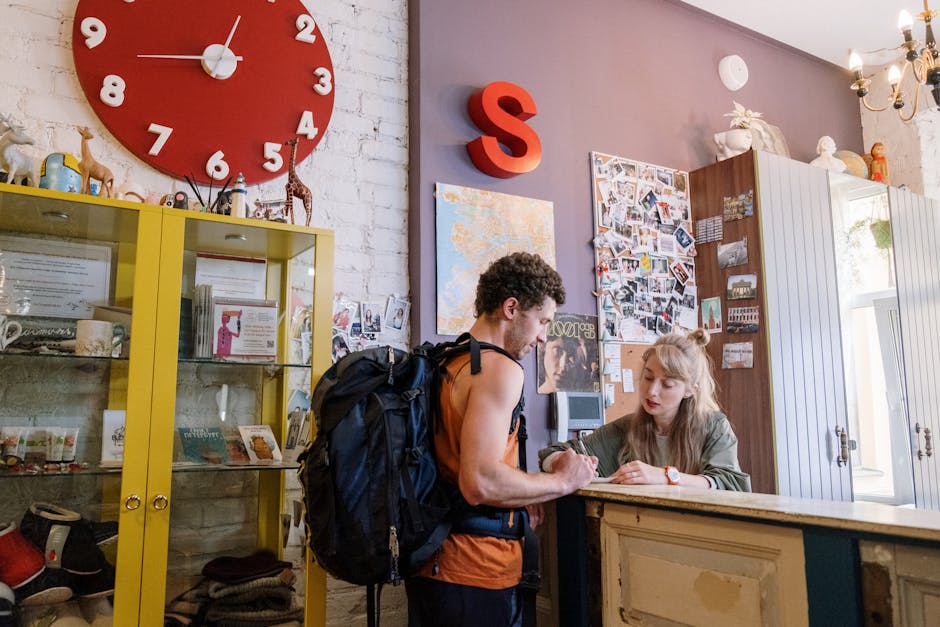
A quiet guesthouse balcony in Luang Prabang — worth the extra dollar or two.
💰 Daily budget: $18–35/person | 🛏️ Cheapest dorm bed: $3–8 | 🛏️ Cheapest private room (guesthouse): $8–15
🚌 Local transport cost: $0.50–3 per ride | ⏱️ Ideal trip length: 3–5 weeks | 🎒 Best for: Solo travelers who value socializing vs. couples who value privacy
I’ll never forget the night I paid $4 for a dorm bed in Chiang Mai’s Old City, then walked two blocks to a guesthouse where a clean private room with a fan and a shared bathroom cost $7. I was traveling alone, so the hostel made sense socially — but the math didn’t add up. That night I sat on the guesthouse’s rooftop, eating a $1.50 pad thai from the street cart below, and wondered: why does everyone assume the dorm is always the cheapest option?
After five months bouncing through Thailand, Vietnam, Cambodia, Laos, and Indonesia — sleeping in fifty-plus beds across thirty different properties — I can tell you the answer isn’t simple. Southeast Asia’s budget accommodation market is a weird, wonderful beast. Some of the cheapest sleeps I’ve found weren’t in party hostels but in family-run guesthouses where the “free breakfast” meant a real plate of noodles and a fresh fruit shake. Other times, a hostel’s air-conditioned pod dorm was an unbeatable value in a city where guesthouse rooms started at $18.
This isn’t a theoretical argument. It’s a nuts-and-bolts breakdown of real prices, real trade-offs, and the specific scenarios where one option clearly wins. I’ll take you through accommodation, food, transport, hidden costs, and a few surprises I discovered the hard way. By the end, you’ll know exactly which choice fits your next budget trip.
The Essentials at a Glance
- 🌙 Sleeping costs: Dorms range $3–10/night; guesthouse privates run $8–20. Two people can almost always split a guesthouse room cheaper than two hostel dorms.
- 🍜 Food savings: Guesthouses with kitchens or included breakfasts save $2–4 daily. Hostels often have cafes with discount meals for guests.
- 🔒 Security vs. comfort: Hostels provide lockers and 24-hour staff. Guesthouses give you a lockable door and often more quiet, but may lack luggage storage.
- 🤝 Social factor: Hostels win for solo travelers who want to meet people. Guesthouses are better for couples or anyone craving actual sleep before a 6 AM bus.
- 📍 Location reach: Both exist in every price tier, but guesthouses in smaller towns can be significantly cheaper than the lone hostel in town.
🥾 Backpacker Tip: In Hoi An, I found a guesthouse three blocks from the Ancient Town for $9/night — that included a free bicycle rental worth about $2/day. The nearest hostel dorm was $7 but charged $3 extra for bike hire. The guesthouse was cheaper overall, and I didn’t have to listen to someone pack at 5 AM.
The Real Cost Breakdown
1. Accommodation — The Obvious (and Not-So-Obvious) Numbers
Let’s start with the big one. A dorm bed in a popular hostel in Bangkok’s Khao San Road area runs about $5–8. A private room in a guesthouse one street over on Soi Rambuttri goes for $12–16. For a solo traveler, the dorm is cheaper — full stop, right? But here’s the twist: if you’re two people, two dorm beds cost $10–16 total, and that guesthouse room is $12–16. Suddenly the private room is the same price for infinitely more space, quieter conditions, and your own key.
In cities like Luang Prabang, the gap is even smaller. I paid $8 for a guesthouse room with a balcony, a fan, and a shared cold-water bathroom. The cheapest dorm in town was $6. For $2 more, I had a double bed without a stranger snoring three feet away. In a week of travel, that difference adds up to $14 — less than one fancy dinner.
But in destinations like Kuala Lumpur’s Chinatown, guesthouse rooms start at $15–18 while hostel dorm beds can dip to $4–6. Here the math heavily favors the hostel, especially for solo travelers. In Bali’s Ubud, the split is more dramatic: a decent guesthouse room with AC costs $20–30, while hostel dorms float around $8–12. Two people can still justify the guesthouse, but solo travelers should stick to dorms unless they find a real steal.
2. Food — Where Guesthouses Quietly Win
Many guesthouses in Vietnam, Laos, and Cambodia include breakfast in the room rate. That’s not just a piece of toast and instant coffee — it’s often a bowl of pho or a full plate of eggs and fresh baguette. I stayed at a guesthouse in Hanoi’s Old Quarter for $13/night that served a proper Vietnamese breakfast every morning. The hostel down the alley charged $9 for a dorm but had no included meals, so I’d spend at least $2–4 on a street breakfast. That erased the savings immediately.
Hostels counter with their own cafes and common kitchens. In Chiang Mai, a popular hostel near Tha Phae Gate had a kitchen where I could cook instant noodles and store leftovers. The trade-off was the $5 dorm vs. a $10 guesthouse room with breakfast. My calculation: $5 dorm + $1.50 breakfast (fruit shake + sticky rice) = $6.50 total, which beat the guesthouse at $10. But the guesthouse breakfast felt like a real meal, and I didn’t have to walk anywhere for it.
The wildcard is street food. Southeast Asia’s sidewalks are the cheapest kitchens on earth. A plate of nasi goreng in Bali’s Ubud costs $1. A bowl of laksa in Penang is $1.20. If you can eat street food for every meal, the accommodation choice matters less because your food budget stays under $5–7 per day regardless of where you sleep.
3. Transport — The Hidden Location Tax
Hostels cluster around backpacker hubs and transport hubs. In Ho Chi Minh City, Pham Ngu Lao Street is a dense strip of hostels, bars, and cheap eats. You can walk to bus stations and meetup points. Guesthouses are scattered all over. I booked a beautiful guesthouse in District 3 for $11/night — a steal — but it was a 20-minute bus ride from the backpacker area. Each bus trip cost $0.30, but the time lost added up. I spent an extra hour a day commuting to meet friends or book tours.
In smaller towns like Vang Vieng or Kampot, both options sit side by side and the location difference is negligible. In cities like Bangkok, a guesthouse near a BTS Skytrain station can save you $2–3 per day in tuk-tuk fares compared to a hostel deeper in a side alley. Add that over a week and it’s a meaningful sum.
4. Activities & Hidden Fees
Hostels earn commissions from tour bookings, and that can be a pro or con. I’ve booked day trips through hostel desks that were $1–2 cheaper than booking directly with tour operators, because the hostel negotiated a group rate. But I’ve also been upsold “must-do” pub crawls and cooking classes that inflated my daily spending by $15–20.
Guesthouses are less pushy, but they often charge extra for motorbike rental or laundry. I paid $5 for a day’s bike rental from a guesthouse in Ninh Binh, then saw the hostel two doors down charging $4. It’s the opposite in Pai, Thailand: a guesthouse rented scooters for $6/day, while hostels were all at $8. There’s no universal rule — just a reminder to ask everywhere and compare.
5. The Total Picture: A Real Week on the Road
| Category | Hostel (1 week, solo) | Guesthouse (1 week, solo) | Guesthouse (1 week, couple, split) |
|---|---|---|---|
| Accommodation | $42 | $84 | $84 (each pays $42) |
| Food (3 meals) | $28 | $21 (included breakfast) | $35 ($17.50 each) |
| Transport (local) | $5 | $10 | $10 ($5 each) |
| Activities | $12 | $15 | $20 ($10 each) |
| Total weekly cost | $87 | $130 | $149 ($74.50 each) |
Numbers based on average prices in Thailand, Vietnam, and Laos. “Activities” assumes one tour/day trip per week.
Money-Saving Tips
- Always ask about breakfast. Before booking any guesthouse, confirm what’s included. I once booked a guesthouse based on a $8 room rate, only to find breakfast was a $3 add-on — the hostel across the street was $7 with free toast and tea.
- Book guesthouses for two, hostels for one. Simple rule that saves real money. If you’re traveling with a partner or friend, split a guesthouse room and you’ll often pay the same or less than two dorm beds.
- Negotiate longer stays at guesthouses. I stayed a week at a guesthouse in Hoi An and got a 20% discount just by asking. The owner later told me hostels rarely offer such flexibility because they fill beds nightly.
- Check for hidden amenities. A guesthouse with free bikes, water refills, or laundry facilities can save you $3–5 daily. Hostels often charge for towel rental and locker use.
- Use guesthouses in sleepy towns, hostels in cities. In remote areas like the Si Phan Don (Four Thousand Islands) in Laos, guesthouses dominate with $4–6 rooms. In backpacker-heavy hubs like Bangkok’s Khao San, hostels offer better value and social connections.
Common Mistakes to Avoid
- Mistake #1: Assuming the dorm is always cheapest. I’ve seen couples pay $20 for two dorms when a $12 guesthouse room existed a block away. Always check both options.
- Mistake #2: Ignoring location. That $5 guesthouse on the outskirts of Siem Reap cost me $3 in tuk-tuk fares each way to get to Angkor Wat. A $8 hostel closer to the temples saved time and money.
- Mistake #3: Forgetting about noise. I stayed at a budget guesthouse above a karaoke bar in Bangkok for $9. I didn’t sleep until 2 AM. A hostel with earplugs and a quiet policy was actually a better deal the next night.
- Mistake #4: Not checking reviews for theft. Some rock-bottom guesthouses have no lockers and unreliable locks. I had a phone charger stolen from a guesthouse in Phnom Penh. The $6 hostel down the street had keycard access and secure lockers.
Quick Checklist
📄 Documents & Money
- Passport with at least 6 months validity
- Photocopies (physical and digital) of passport and visa
- ATM card (ideally one with no foreign transaction fees)
- $100 emergency cash in small bills (USD accepted almost everywhere)
🎒 Packing
- Earplugs and sleep mask — non-negotiable for both hostels and guesthouses
- Padlock — for hostel lockers or guesthouse room safes
- Towel — many guesthouses provide them, but some budget spots don’t
📱 Bookings & Apps
- Booking.com and Hostelworld — check both for same property
- Agoda — often has exclusive guesthouse deals in SE Asia
- Google Maps — street view the neighborhood before booking
💰 Money-Saving Apps
- XE Currency — always know the exchange rate
- Splitwise — split costs with travel buddies
- Maps.me or Google Maps offline — save on data
🔒 Safety
- Check the lock on your door — immediately on arrival
- Store valuables at reception if no room safe exists
- Keep a small flashlight for power outages
- Wear a money belt or use a hidden pouch
FAQ
-
Q: Is it always cheaper to stay in a hostel than a guesthouse in Southeast Asia?
A: No. For solo travelers, hostels are usually cheaper for accommodation alone, but when you factor in included meals and amenities, guesthouses can be cheaper overall. For two people traveling together, a guesthouse private room is often the same price as two dorm beds or cheaper.
-
Q: Can I book a hostel dorm even if I’m a couple?
A: Yes, many hostels offer private rooms or couples can book two bunks. But you’ll likely pay more for two dorm beds than for one guesthouse double room. It’s worth comparing both options before booking.
-
Q: Are guesthouses safe for solo female travelers?
A: Generally yes, but safety varies. Guesthouses are often family-run with fewer strangers around, which some solo women prefer. Others prefer hostels with 24-hour staff and lockers. Always check reviews specifically from solo female travelers.
-
Q: Which one has better Wi-Fi?
A: Hostels tend to invest in stronger Wi-Fi because they cater to digital nomads and groups. Guesthouses in rural areas often have slower connections. I had better luck with signal in hostel common rooms than in guesthouse third-floor rooms.
-
Q: Should I book in advance or just show up?
A: In peak season (November–February), book at least a day ahead for best prices. In low season, you can show up and negotiate, especially at guesthouses. I’ve knocked 30% off a room rate in Vang Vieng by simply asking at the door.
📌 Save this guide! Bookmark it for your trip, share it with a travel buddy, or screenshot the price table. These numbers change seasonally, but the logic stays the same — hostel vs. guesthouse isn’t a one-size-fits-all question.
Final Thoughts
I’ve slept in $3 dorms with cockroaches and $12 guesthouse rooms that felt like luxury suites. I’ve also had the opposite: a $15 hostel pod that was pristine, and a $8 guesthouse with a broken fan and a door that didn’t close properly. No perfect formula exists. The real skill — the one that saves you money and keeps you sane — is comparing options every time you move to a new place.
My advice? Use Hostelworld for hostels and Booking.com for guesthouses. Check both sites for the same property. Consider your travel style: if you need sleep and value privacy, lean toward guesthouses when staying with a partner. If you want to meet people and are fine with basic quarters, hostels are unbeatable. And always, always ask about breakfast and bikes.
What’s been your experience? Have you found a hidden gem guesthouse or a hostel that felt like a home? Drop a comment below or share this with someone planning their first Southeast Asia trip. See you on the road.