Hostel vs Guesthouse: Which Is Cheaper in Southeast Asia?
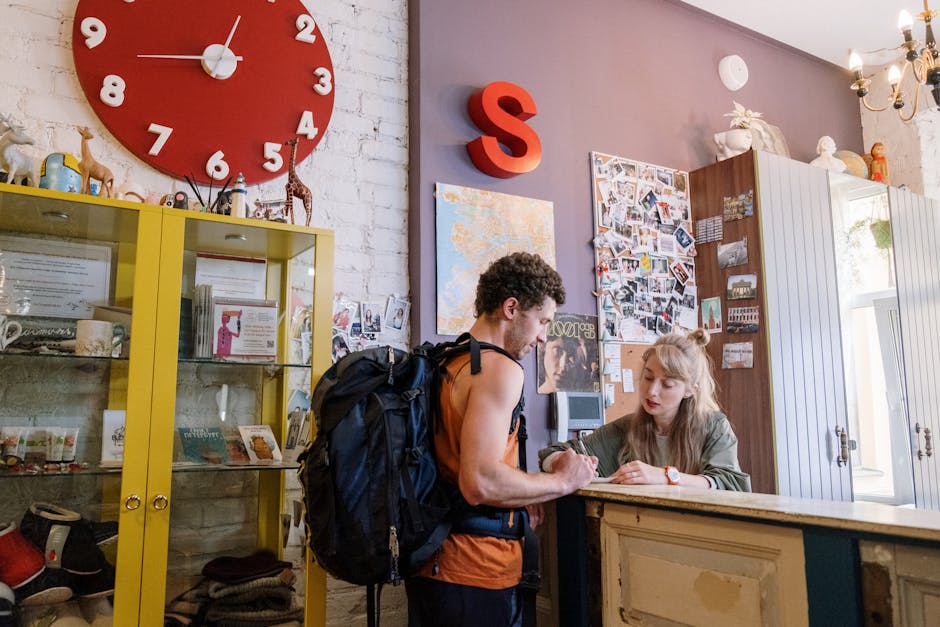
A dusty lane in Chiang Mai’s old city — the kind of street where you’ll find both $6 dorms and $12 private guesthouse rooms within fifty meters of each other.
💰 Daily budget · $18–$32 🛏️ Cheapest hostel price · $4–$8 🚌 Transport cost · $1–$15 per leg ⏱️ Ideal trip length · 3–6 weeks 🎒 Best for · solo travelers, digital nomads, budget-first explorers
I stepped off the overnight bus in Luang Prabang at 5:30 a.m., neck stiff, wallet light, and faced the same question I’d answered in a dozen cities before: hostel dorm or guesthouse private room? The hostel was $5 a night. The guesthouse two blocks away wanted $10 for a double with a fan. I stood on the curb, sweating through my shirt, and realized I had no real system for making this call. I’d been guessing.
Over the next six months and fifteen Southeast Asian cities, I stopped guessing. I started keeping a spreadsheet—yes, actually—logging every bed I slept in, every baht, dong, kip, and ringgit I spent. The numbers told a story that surprised me. This article is that story: a real, line-by-line breakdown of what hostels and guesthouses actually cost, what you get for the difference, and when you’re better off with one over the other.
The Essentials at a Glance
- 🛌 Hostel dorm bed: $4–$10 per night across Thailand, Vietnam, Laos, Cambodia, and Indonesia. Cheapest in rural Vietnam ($3–$5). Priciest in Bangkok and Bali ($8–$12).
- 🚪 Guesthouse private room: $8–$20 per night. Often includes a double bed, private bathroom, and basic breakfast. The premium over a dorm: $4–$10 per night.
- 🍜 Daily food cost: $5–$10 eating local. Street food keeps you low; Western restaurants push you high. Guesthouses with kitchen access can save you $2–$3 a day.
- 🌐 WiFi and workspace: Guesthouses tend to have more reliable connections for remote work. Hostels win on social energy but lose on quiet corners.
- 🔁 The real trade-off: A guesthouse costs 40–80% more per night but gives you privacy, sleep quality, and often a better location away from bar street. The savings math depends on how much those things matter to you.
Hostel vs Guesthouse: The Real Cost Breakdown
Let’s get specific. I pulled data from twelve cities across six countries, cross-checked against Booking.com, Agoda, and my own notebooks. Prices are in USD, rounded to the nearest dollar, and reflect peak season (November–February) rates.
1. Accommodation — The Headline Numbers
In Chiang Mai’s Old City, you can bed down at Green Sleep Hostel for $6 a night in a 10-bed mixed dorm with air conditioning, a thin but functional mattress, and a shared bathroom that gets cleaned twice daily. Three blocks north, Baan Boon Guesthouse rents a double room with private bath, a balcony overlooking a temple, and a simple breakfast of toast and fruit for $16. The difference: $10 per night.
Now multiply that by 14 nights. You’re looking at $84 vs $224. That’s $140 saved—enough for a two-day cooking class, three full-day scooter rentals, or a bus from Chiang Mai all the way down to Kuala Lumpur. The dorm wins the raw cost argument. But it never tells the full story.
In Hoi An, Vietnam, Tribee Hostel charges $5 for a dorm. The nearby Thien Thanh Guesthouse asks $9 for a private room. The gap narrows to just $4. When the premium is that small, the guesthouse becomes the smarter play for anyone over 25 or anyone who values not being woken up by a 3 a.m. check-in.
2. Food — Hidden Costs and Real Savings
Hostels in Southeast Asia often have kitchens, but they rarely let you use them. Guesthouses, especially family-run ones, almost always say yes. In Siem Reap, my guesthouse host taught me to make prahok ktis in her outdoor kitchen—free. I spent $3 a day on market ingredients instead of $7 on restaurant meals. Over a week, that saved me $28.
Hostels do offer free breakfast more often than guesthouses: toast, butter, jam, instant coffee. It’s edible. But guesthouse breakfast tends to include eggs, fresh fruit, and proper coffee. In Bali, Pondok Gabriella in Ubud includes a banana pancake and tea with every $10 room. The equivalent hostel breakfast in the area costs $3–$4 extra.
The net food math: guesthouses save you $1–$3 per day if you cook or get a real included breakfast. Hostels save you $2–$4 per day if you eat cheap street food anyway. It nearly balances out.
3. Transport — Location Is the Hidden Variable
Hostels cluster in backpacker ghettos: Khao San Road in Bangkok, Bui Vien in Saigon, the backpacker strip in Kuta. Guesthouses are more scattered. That means a hostel might save you $2–$3 per day on walkability alone—you can stumble to the night market, the bus stop, and the cheap laundry place without spending on transport.
But guesthouses often sit in quieter neighborhoods with better access to local life. My guesthouse in Yogyakarta cost $8 but was a 20-minute walk from Malioboro Street. A hostel closer to the action cost $7. The $1 difference was worth it for the sleep and the gudeg stall next door that served breakfast for $0.50.
Real example: In Bangkok, if you stay at a hostel on Khao San, you can walk to the Grand Palace and save $2 in tuk-tuk fare. If you stay at a guesthouse in the old town like Baan Noppawong ($14/night), you walk the same 12 minutes. The location advantage depends on the specific property, not the category.
4. Social Life — The Dollar Value of Connection
Hostels sell community. Guesthouses sell quiet. If you’re solo and need travel buddies, a hostel dorm is worth the price of admission alone. I met my best travel friend in a Mad Monkey hostel dorm in Phnom Penh—$7 a night, and we ended up traveling together for three weeks. You can’t put a dollar sign on that.
But if you value eight hours of uninterrupted sleep, a private room in a guesthouse might be the reason you don’t burn out by week three. I’ve seen too many backpackers crash after a month of dorms, spending double on impulse purchases just to feel human again. That’s a hidden cost.
Here’s the honest metric: the $4–$8 per night difference between a dorm and a basic private room is roughly the price of one large beer and a pad thai. If privacy and sleep add more value to your trip than that beer, pick the guesthouse.
5. Total Weekly Cost Comparison
| Expense | Hostel (7 nights) | Guesthouse (7 nights) | Difference |
|---|---|---|---|
| Accommodation | $42 | $84 | +$42 |
| Food (3 meals/day local) | $49 | $42 | -$7 |
| Local transport | $10 | $14 | +$4 |
| Laundry + incidentals | $8 | $6 | -$2 |
| Total per week | $109 | $146 | +$37 |
Based on averages across Chiang Mai, Siem Reap, Hoi An, and Yogyakarta. Your mileage will vary.
🎒 Backpacker Tip: Negotiate weekly rates. Guesthouses want occupancy. In Luang Prabang, I asked for the monthly rate and got my $12 room for $8 a night. Always ask. The worst they can say is no.
Money-Saving Tips
These aren’t generic “travel cheap” platitudes. Every tip here comes from a specific moment when I saved real money—or watched someone else throw it away.
- 🔹 Always walk and compare: In Saigon, a dorm on Bui Vien listed for $9 online. Fifteen minutes north, a guesthouse on a quiet alley offered a double room for $10 cash, no booking fee. The walk saved me $6 a night. Open Maps, find three options within a 10-minute radius, and knock on doors.
- 🔹 Book for two nights, then negotiate: Walk into any guesthouse in Cambodia or Laos with a two-night prepaid booking. On the third night, the owner will often drop the price 20–30% to keep you. Let them see you’re a low-maintenance guest. Leave your shoes at the door. Be easy.
- 🔹 Bring earplugs and a sleep mask for dorms: I use a $3 pair of silicone earplugs from a pharmacy in Chiang Mai. They cancel out the snorer in bunk 7 and the guy who Facetimes his girlfriend at midnight. Without them, a $5 dorm becomes a $5 sleepless nightmare that costs you the next day’s energy.
- 🔹 Eat where the guesthouse owners eat: Ask your host where they buy dinner. In Hoi An, my guesthouse owner sent me to a Cao Lau stall with no English sign. The bowl cost $0.80. The tourist restaurants on the river charged $4.
- 🔹 Use the free stuff: Hostels offer free walking tours, free beer hours, free padlocks, free towel rentals (sometimes). Guesthouses offer free tea, free fruit, free advice on which temple to skip. Never pay for what you can get with a friendly question at the front desk.
Common Mistakes to Avoid
- ❌ Assuming the cheaper nightly rate always wins the total cost war: A $5 dorm might be 45 minutes from everything, costing you $6 a day in transport. A $12 guesthouse in the center saves money and time. Do the full math.
- ❌ Booking guesthouses without checking for noise: Many guesthouses in Southeast Asia are family homes with thin walls. In Luang Prabang, my $10 room was directly above a karaoke session that ran until 11 p.m. The hostel I moved to cost $7 and was silent after 9 p.m. Always check recent reviews for “noise.”
- ❌ Not checking if the guesthouse includes breakfast that actually fills you: A slice of toast and instant coffee isn’t breakfast. If the guesthouse serves proper eggs, fruit, or rice, factor that as $2–$3 saved per day. If it’s just bread, treat it as a snack, not a meal.
- ❌ Overpacking for dorm living: You don’t need three pairs of shoes for a hostel. You need lockable bag space, a small padlock, and the ability to live out of a 40-liter pack. Guesthouses give you more room, which can trick you into carrying things you don’t use. I shipped a pair of hiking boots home from Bangkok after wearing them exactly once.
Quick Checklist
📄 Documents
- Passport with at least 6 months validity
- Printed copies of visa pages and booking confirmations
- Digital backups in email + cloud + USB (I use two separate services)
🎒 Packing
- Earplugs + sleep mask (non-negotiable for dorms)
- Small padlock (for hostel lockers; guesthouses rarely need them)
- Quick-dry towel (hostels charge $1–$2 to rent one; your own pays off in a week)
- Universal sink plug (for doing laundry in guesthouse sinks)
📱 Bookings + Currency
- Agoda and Booking.com for hostels and guesthouses (cross-check prices)
- XE app for live exchange rates
- Local SIM card ($5–$10 for unlimited data in most countries)
- Split cash between two locations (I keep $50 emergency cash in my sock)
🛡️ Safety
- Register your trip with your embassy (free, takes 5 minutes online)
- Send your itinerary to someone at home every 3–4 days
- Know the emergency number for each country (Thailand 1155, Vietnam 113, Cambodia 117)
FAQ
Q: Are hostels always cheaper than guesthouses in Southeast Asia?
A: Hostels are almost always cheaper per night, with dorm beds ranging from $4 to $10 compared to guesthouse private rooms at $8 to $20. However, when you factor in included breakfast, kitchen access, and location, the effective weekly difference can be as low as $25–$40.
Q: Which is better for digital nomads — hostels or guesthouses?
A: Guesthouses generally win for remote work because they offer quieter rooms, more reliable WiFi, and a desk surface. Hostels can work if you find one with a proper coworking space, but expect more noise and less table space. I work best from guesthouses in quieter neighborhoods.
Q: Can you find cheap guesthouses that are actually clean and safe?
A: Yes, but you have to read recent reviews and look for guesthouses that have been open at least two years. I look for mentions of “clean bathroom” and “helpful owner.” In Vietnam and Cambodia, $8–$12 guesthouses are often spotless and run by families who take pride in their home.
Q: Should I book hostels and guesthouses in advance or just show up?
A: For peak season (November–February) in popular spots like Chiang Mai, Bangkok, and Bali, book 2–3 days ahead. In low season, showing up and negotiating gets you better rates. I book the first night online, then negotiate directly for longer stays.
Q: Which option helps me meet other travelers more easily?
A: Hostels are designed for socializing, with common rooms, dormitory layouts, and organized activities. Guesthouses are quieter and more private. If you’re solo and want to meet people, choose a hostel. If you already have travel companions or prefer solitude, a guesthouse is the better fit.
📌 Save this guide for later
Bookmark this page or screenshot the table above. You’ll thank yourself when you’re standing on a hot street in Luang Prabang at 5:30 a.m., trying to decide where to sleep.
Final Thoughts
Neither hostels nor guesthouses are universally cheaper. The smarter choice depends on your travel style, your tolerance for noise, your need for privacy, and your willingness to cook a meal now and then. For a solo traveler on a tight budget who thrives on social energy, a $6 dorm in Chiang Mai is a bargain that pays in friendships and shared memories. For a couple or a tired backpacker in month three, a $12 guesthouse with a private bathroom and a hot shower might be the single best investment you make in your trip.
I’ve slept in both. I’ve loved both. The trick isn’t to pick one and stick with it—it’s to know the real cost, to ask the right questions, and to never let a generic rule replace a specific glance at your own budget and your own energy level. Try a hostel for three nights, then move to a guesthouse for two. Compare. You’ll figure out what you actually value.
Got a hostel or guesthouse story from the road? Drop it in the comments below. And if this helped you save a few bucks, share it with someone who needs to read it. Happy travels.