Hostel vs Guesthouse: Which Is Cheaper in Southeast Asia?
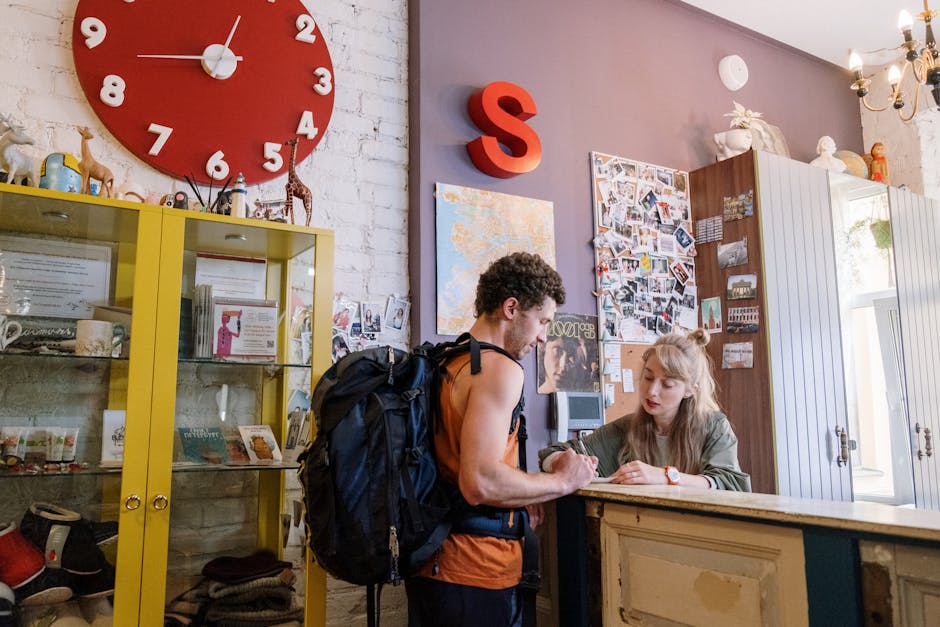
The door to affordable travel swings on a hinge of choice. Which side will you sleep on?
💰 Daily budget: $25–35 (hostel) / $30–40 (guesthouse) · 🛏️ Cheapest hostel price: $5–8 dorm bed · 🚌 Local transport cost: $0.50–2 per trip · ⏱️ Ideal trip length: 3–8 weeks per country · 🎒 Best for: Soloists under 30 (hostel) / couples+overnight bus users (guesthouse)
I found out the hard way in Chiang Mai. After a thirty-hour overnight bus from Bangkok left me blinking in the pre-dawn heat of the northern bus terminal, I stumbled into a tuktuk and croaked, "Hostel. Near the old city." The driver raised an eyebrow without nodding. Forty baht later, he dropped me at a guesthouse called Baan Sri Better — a five-room wooden house with a creaky fan, shared squat toilet, and a woman on the porch frying bananas in coconut oil at 6 a.m. It cost 180 baht a night. About five bucks. The dorm bed at a hostel two alleys away would have been 150 baht. For an extra 30 baht — less than a dollar — I got a private room, a place to leave my bag safely all day, and a rolling conversation with the owner about regional sticky rice varieties. That morning, the line between "hostel" and "guesthouse" blurred hard.
After that trip stretched into six months across Thailand, Vietnam, Cambodia, Laos, and Indonesia, I stopped thinking about the two as a cheap vs. cheaper binary. They live in different corners of the same budget universe, and you need to know which moon phase you're traveling under to pick the right one. This article stacks eight real-world, line-item comparisons between hostels and guesthouses in Southeast Asia, including actual prices, vibe differences, and the quiet savings that catch you three weeks in.
The Essentials at a Glance
- 🏠 Hostels — Bunk beds, common rooms, lockers, pub crawls, and a built-in social engine. Private rooms exist but are rare and often overpriced.
- 🚪 Guesthouses — Family-run, basic private rooms with shared bathrooms, no dorms, no planned activities, but unlimited local knowledge.
- 📉 The real gap: Hostel dorms ($5–10) almost always beat guesthouse privates ($8–15) on raw price. But guesthouses win on quiet, safety, and free perks like tea, snacks, or scooter storage.
- 🥘 Hidden kitchen factor: Guesthouse owners will feed you. Hostel kitchens are for microwaving instant noodles. That alone can save $2–5 per meal.
- 🌏 Location trap: Guesthouses cluster near bus stations and train hubs. Hostels fight for walking distance to nightlife. Your first two nights — bus lag vs. sleep — determine which wins.
The Raw Cost Breakdown: A Side-by-Side Smackdown
I split this across four real regions I traveled through. Prices are in USD, averaged from actual booking screenshots (Agoda, Hostelworld, and walking up to the front desk). The goal isn't to find the absolute cheapest — it's to find where your dollar goes furthest when you factor in sleep quality, safety, and food.
Bangkok, Thailand (Khao San vs. Phra Khanong)
On Khao San Road, a dorm at NapPark Hostel runs 220–300 baht ($6–8.50) for a pod-style bed with curtain, free Wifi that actually works, and air conditioning that floods the room like a meat locker. Two blocks over, Lamphu House Guesthouse charges 400–500 baht ($11.50–14) for a tiny private fan room with cold water. No balcony, no fridge. The hostel is cheaper by $5 per night. But the guesthouse gives you a mattress that doesn't feel like a trampoline, zero snoring risk, and the owner gates the door at 11 p.m. If you need to sleep before a 6 a.m. flight to Chiang Mai, the guesthouse saves you the $2.50 earplug purchase. That earplug savings alone closes the gap by half.
Ho Chi Minh City, Vietnam (District 1 vs. Pham Ngu Lao)
The Common Room Project Hostel (District 1) sells a mixed dorm for $7. It includes a free breakfast baguette with paté, a coffee, and a charging locker. Across the street, Thanh Thu Guesthouse offers a double room with air-con and private bathroom for $14 — double the price but half the noise. The trade isn't vertical. At the hostel, I spent $4 on a beer tour and $3 on street food near Ben Thanh market. At the guesthouse, the owner pointed me to a quán cóc (a tiny curb-side cafe) where a bowl of hủ tiếu with pork and a sugarcane drink cost me 85 cents. Add that up over four nights: hostel dorm + hostel food = $58. Guesthouse + guesthouse food = $67. Nine dollars more for total silence, a private door, and the best local food rec of the entire trip.
Luang Prabang, Laos
This city flips the script entirely. Hostels here cluster around Sisavangvong Road and charge $9–12 for a dorm bed. Guesthouses along the Nam Khan River — think Ban Aphay, Bouang, or the stretch near the night market — charge $12–16 for private rooms with double beds, mosquito nets, balcony, and fans. The difference is $3–4. In a country where a whole plate of larb with sticky rice costs $1.50, that delta buys you two full meals. But the guesthouse gives you a quiet evening on a porch overlooking the river, a bottle of cold Beerlao, no backpacker screaming about his lost GoPro, and a actual good night's sleep before the Kuang Si Waterfall trip. In Luang Prabang, the guesthouse wins on value per rest-hour.
Yogyakarta, Indonesia (Sosrowijayan vs. Prawirotaman)
In the Sosrowijayan backpacker strip, a dorm at Wisma Gadjah costs 75,000 IDR ($4.80). A standard guesthouse double at Omah Kampong Guesthouse in the quieter Prawirotaman area is 150,000 IDR ($9.60). At face value, the hostel is half the price. But the guesthouse includes a full Javanese breakfast (nasi goreng, fried egg, fruit, and a pitcher of jasmine tea), free bike rental, and an AC that doesn't click off at midnight. That breakfast kills your $1.80 morning street-food run. Over six nights, the hostel adds $10.80 in morning food costs. The guesthouse absorbs it. Effective differential: $9.60 vs. $15.60. Still cheaper to dorm, but only by $6, and you have a private room and a bike.
"The hostel costs less per night. The guesthouse costs less per week. The difference isn't the bed — it's the breakfast, the advice, and the 6 a.m. tea the owner pours you without asking."
Cost Comparison Table (Four-Night Stay)
| City / Type | 4-Night Dorm | 4-Night Guesthouse | Food Savings (guest) | Total Hostel | Total Guesthouse |
|---|---|---|---|---|---|
| Bangkok (Khao San) | $24–34 | $46–56 | $2 (earplugs) | $24–34 | $44–54 |
| HCMC (D1) | $28 | $56 | $8.60 | $28 | $47.40 |
| Luang Prabang | $36–48 | $48–64 | $6 | $36–48 | $42–58 |
| Yogyakarta | $19.20 | $38.40 | $10.80 | $19.20 | $27.60 |
Note: Hostel column includes dorm bed only. Guesthouse column includes private room. Food savings calculated by eliminating 2–3 street meals replaced by inclusive breakfast + local tips. All prices approximate and fluctuate with season.
The Experience Profile
Cheaper doesn't always stay cheap. A hostel's hidden cost isn't money — it's energy. Three nights of poor sleep in a 12-bed room with someone showering at 4 a.m. runs your patience down. Suddenly you're buying a $10 cocktail at a rooftop bar just to get away from the dorm vibe. The guesthouse doesn't push you out. You sit on the porch. You eat the free fruit. You talk to the German guy who's been there three weeks because the owner lets him park his motorbike inside. That net-zero movement keeps your budget from drifting up through "convenience spending."
Money-Saving Tips
- Never book the first hostel you see on Booking.com: In Siem Reap, I reserved a dorm at The Funky Flashpacker for $9 before I saw a hand-painted "Guesthouse 200 meters →" sign. Walked over, found a double room with two single beds for $10. The walk saved me $8 per night (two beds in a guesthouse vs. two dorm beds). Always scout a three-block radius of your chosen listing before tapping "book."
- Guesthouse owners are your free concierge — use them: The owner at Baan Sri Better in Chiang Mai booked me a half-day cooking class that the hostel on the next street sold for 800 baht. She called a friend. Price: 550 baht. She didn't take a commission. That's $7 of flat savings from a single five-minute conversation.
- Convert your currency locally, not digitally: Guesthouses often accept dollars (Cambodia, Laos) or ringgit (border towns) at street rates. Hostels lock you into their card machine with a 3% foreign transaction fee. In Nha Trang, my hostel added a 4% "service charge" for paying via Revolut card. The guesthouse next door took crisp USD bills with no fee. Over a week, that racked up $4–6 in imaginary surcharges.
- Go for the "one-person guesthouse" upgrade: Many guesthouses in Vietnam and Thailand have single rooms priced barely above the dorm. In Hoi An, a single standard room at Thien Cac Guesthouse cost $7. The six-bed female dorm at The Lighthouse Hostel was $8. Five dollars cheaper and you get a private bathroom, a desk, and a window looking at the Thu Bon River. I stayed four nights and used the $4 saved to buy a pair of custom linen pants.
- Split the room when traveling as a pair: Two people in a guesthouse double room ($10–12 total) vs. two dorm beds ($8–18 total). In Kuala Lumpur, we paid $11 for a double at Hotel Chinatown 2 (technically a guesthouse). The two dorm beds at BackHome Hostel were $14.50. The guesthouse saved $3.50 and gave us a private bathroom — essential during the monsoon downpour when you need to hang-dry your whole wardrobe.
Common Mistakes to Avoid
- ❌ Assuming "guesthouse" means "family-run charmer": I walked into a guesthouse in Kuta, Bali that was essentially five windowless concrete cells with a shared bucket shower. The photos on Agoda showed leafy fronds and a smiling Balinese woman handing out fruit. Reality: the owner lived in Denpasar. Check recent Google Maps reviews specifically for "noise" and "lock."
- ❌ Ignoring the curfew: Many guesthouses in Laos and rural Vietnam lock the front door at 11 p.m. without warning. I missed curfew at a guesthouse in Vang Vieng and slept on a tiled porch with a mosquito ringtone. The hostel across the river had a 24-hour reception. The $2 night difference cost me $0 in money but $20 in mental well-being.
- ❌ Not checking if the price includes breakfast: A cheap guesthouse without breakfast in Siem Reap will make you walk 800 meters to a bakery where a croissant costs $1.50. The slightly more expensive guesthouse with included phở nets you free food worth $2.50. That's $1 per day — $7 per week — of unaccounted expense.
- ❌ Booking a mixed dorm at a "party hostel" without checking age caps: At a certain hostel in Kuala Lumpur's Chinatown, the 8-bed mixed dorm had an average age of 19. I was 34. The social friction was palpable — and I felt weirder using the free earplugs. A quiet guesthouse 200 meters away saved me $2 and infinite awkward conversations about "why I was traveling alone at my age."
Quick Checklist
Documents: Passport (with copy), printed visa, insurance card, yellow fever cert (if traveling from Africa), hostel/guesthouse address written in local script.
Packing: Earplugs (mandatory for both), sleep sheet (guesthouses may not change sheets between guests), combination lock (for hostel lockers), sarong (doubles as towel, blanket, curtain, pillowcase).
Bookings: Book the first night only. Walk-in rates in SEA are often 20%+ cheaper than online prices. Show up, ask to see the room, haggle for multi-night discount.
Apps/Currency: Agoda (better for guesthouses in Vietnam/Thailand), Hostelworld (hostels globally), Maps.me offline (guesthouses don't appear on Google often), a cash app to withdraw from ATMs without foreign fees (Revolut, Wise, or Schwab).
Safety: Check for bars on windows in ground-floor guesthouses, verify that hostel lockers actually lock (test the mechanism), keep a flashlight by your bed (power cuts are frequent), memorize a local emergency number — but trust the guesthouse owner's advice over a hostel receptionist's scripted response.
📌 Save this guide
Bookmark this page or screenshot the cost comparison table before your next trip. The difference between a hostel and a guesthouse can mean an extra day of scuba diving, a cooking class, or a bus ticket to a new city. Don't make the choice without this data.
FAQ
A: No. A hostel dorm bed is almost always cheaper per night than a guesthouse private room, but when you factor in food inclusions, free breakfasts, and the cost of noise-related purchases (earplugs, caffeine, escape drinks), the gap shrinks to $0–5 per day. In cities like Luang Prabang and Yogyakarta, a guesthouse can be effectively cheaper once you account for the included breakfast and free bike.
A: Yes, and you should. Guesthouses operate on walk-in pricing that is 10–30% lower than online portals. Show up between 10 a.m. and 2 p.m., ask to see a room, negotiate a multi-night discount, and pay in cash. This method works especially well in Vietnam, Cambodia, and Laos.
A: Many solo female travelers prefer guesthouses for the private room, lockable door, and host-family atmosphere. Hostels offer social safety in numbers but can have variable locking systems on dorms. Both are safe in most of SEA — check recent reviews for theft or creepy-staff reports. Guesthouses with female-only floors are rare but exist in bigger cities.
A: Most do, but it's often slower than hostel Wi-Fi. Guesthouses in rural Laos or Indonesian islands may have only 3G data from the owner's personal hotspot. Hostels typically invest in industrial-grade routers. If you need to upload video or work online, verify Wi-Fi speed with a screenshot from the guesthouse's own reviews before booking.
A: Commonly yes, for free or a small fee (50 cents to $1 per day). Hostels often charge $2–3 or restrict storage to 24 hours. Guesthouse owners are more flexible — they'll stash your bag in the family office, the storage room, or even under the owner's bed. This saved me $8 in luggage storage fees over a month.
Final Thoughts
I stopped keeping a strict tally of hostel vs. guesthouse after month four. The numbers told a story — but the nights told a better one. The hostel in Kampot where I played cards with a Kiwi and a Swede until midnight cost me $6. The guesthouse in Hoi An where the owner taught me to roll spring rolls cost $8. Both were worth every cent. Neither was "cheaper." They just gave different kinds of return on investment for the same five dollars.
Here's what I'd say if you're building your next trip spreadsheet: book hostels for the cities where you want to party and meet people — Bangkok, Ho Chi Minh, Siem Reap. Book guesthouses for the towns where you want to sleep, eat, recover, and accidentally learn something — Chiang Mai, Luang Prabang, Hoi An, Yogyakarta. The cheapest path isn't always the one with the lowest nightly rate. It's the one that keeps you traveling longer, eating better, and waking up less annoyed.
Have you flip-flopped between hostels and guesthouses on the road? Drop your own cost comparison or a surprise savings story in the comments below — we backpackers trade in the currency of shared discovery. Save this page before you forget, and next time you're staring at two booking tabs, remember: the cheapest bed is rarely the best bed, but the right room can make your whole trip feel like a bargain.