Hostel vs Guesthouse: Which Is Cheaper in Southeast Asia?
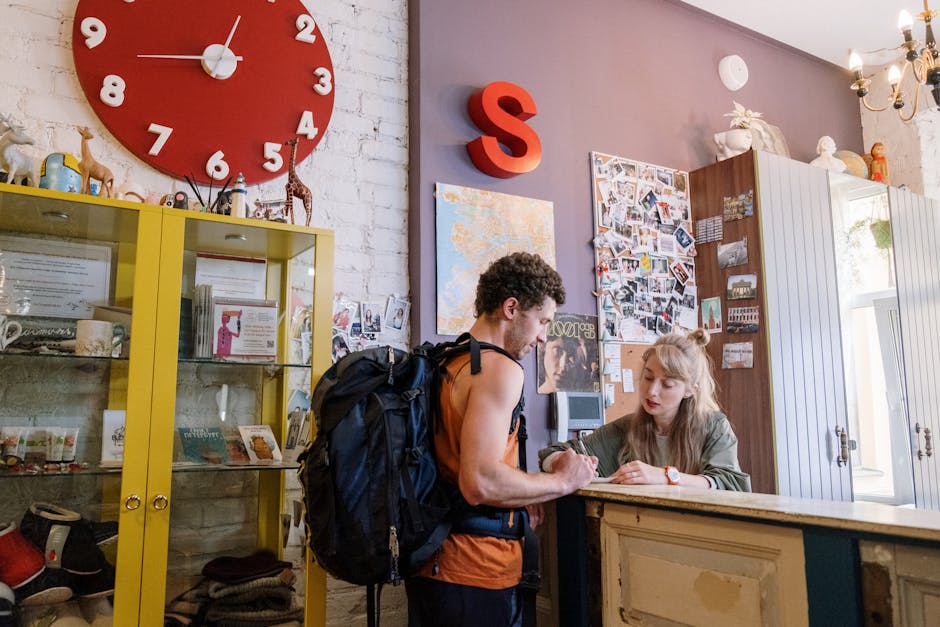
A dorm bed in Chiang Mai for $6 or a private guesthouse room for $15? The answer isn't as simple as the price tag.
💰 Daily budget: $25–35
🛏️ Cheapest hostel dorm: $4 (Kuta, Bali off-peak)
🚌 Local transport cost per trip: $1–3
⏱️ Ideal trip length for savings: 3–6 weeks
🎒 Best for: Solo travelers on a tight budget (hostels) / Couples or small groups (guesthouses)
I've paid $3 for a dorm bed in a Pai hostel that had a swimming pool—and $12 for a guesthouse room in Hanoi that smelled faintly of damp and had a fan that sounded like a motorbike. The Southeast Asia budget debate usually boils down to one question: Which saves you more money—a hostel dorm or a guesthouse private? The real answer depends on how you travel, who you're with, and what trade-offs you're willing to accept. In this article, I'll break down every cost—accommodation, food, transport, activities—with real prices from cities like Chiang Mai, Ho Chi Minh City, and Siem Reap. I'll also throw in the hidden costs (social life, privacy, laundry) that don't show up on the booking site. By the end, you'll know exactly which option fits your route and your wallet.
The Essentials at a Glance
- 🏨 Hostel dorms: $4–12/night. Includes free Wi-Fi, lockers, social vibe. You trade privacy for price and friends.
- 🛌 Guesthouse privates: $8–25/night for a fan room. Often have a shared kitchen or terrace. Better for couples or long stays.
- 🍜 Food costs: Street meal $1–3 in most places. Hostel common rooms help you save on eating out (shared dinners).
- 🚐 Transport: Walking is free. Local bus $0.50–1.50. Songthaew / tuk-tuk $1–5 per trip. Guesthouse location can add (or save) $1–2 daily.
- 💲 Real total per week (solo): hostel $150–200; guesthouse $180–260. Not a huge difference, but the extra $30–60 can stretch your trip by a week.
Breaking Down the Costs
Accommodation: The Obvious Price Tag
In Chiang Mai's Old City, you can snag a dorm bed at a place like Stamps Backpackers for $7–9/night. A double fan room in a guesthouse like Baan Klang Wiang runs about $18–22. On your own, the hostel saves you $10–15 a night. But if you're two people sharing that double? Suddenly the guesthouse costs $9–11 per person—practically the same as a dorm, minus the snoring and the 2 a.m. packing. That's the first rule: guesthouses are almost always cheaper per person when traveling as a duo or trio. For solo travelers, hostels remain the king of cheap unless you find a guesthouse willing to go down to $8 for a simple room—and yes, that happens in places like Pai or Kampot.
Food: The Sneaky Savings
Hostels often have communal kitchens. In Sihanoukville, I stayed at a hostel that hosted a $2 pasta night—all you can eat, made with ingredients guests chipped in for. The dorm crowd also shares restaurant tips: walk three blocks from the tourist strip to the night market and eat pad thai for $1.20. Guesthouses rarely have kitchens, but many in Vietnam and Cambodia are attached to family-run eateries where breakfast is $2 for a bowl of noodle soup. One afternoon in Hoi An, the owner of my guesthouse brought me a free banana pancake while I worked on my laptop. It's these small, unquantifiable savings that make the guesthouse feel cheaper even when the nightly rate is higher.
Transport: Location Is the Wild Card
A hostel in the middle of Bangkok's Khao San Road means you walk to bars and cheap food, but getting to the Grand Palace adds a $3 tuk-tuk ride. A guesthouse in the Banglamphu area might be slightly off the strip, but the same tuk-tuk costs $1.50 if you flag it down two streets away. In smaller towns like Luang Prabang or Battambang, guesthouses are usually on quiet side streets within walking distance of everything. Hostels cluster around the night market, which can be noisy until midnight. Sometimes a slightly more expensive guesthouse that includes a free bike rental saves you $2–4 a day in transport. Always factor the cost of getting from your door to the main attractions before you book.
Activities and Social Life
Hostels are masters of pushing add-ons: pub crawls, cooking classes, boat tours. Not all are overpriced, but they pile up fast. A pub crawl in Ho Chi Minh City with a hostel was $12—I did the equivalent with a few guys I met at a guesthouse for $6 (we bought six tall cans at a Circle K first). Guesthouses often have a notice board with language exchange or free walking tours. The trade-off: fewer built-in friends. If you're extroverted and want instant crew, hostels justify their cost by making you spend less on loneliness (dining alone gets old, and eating out alone costs the same as eating with five people).
Total Weekly Estimate: Solo Traveler
Here's a typical week in Chiang Mai (USD):
| Category | Hostel Dorm | Guesthouse Private (fan) |
|---|---|---|
| Accommodation (7 nights) | $56 (avg $8/night) | $105 (avg $15/night) |
| Food (21 meals, mostly street) | $42 | $49 (often eat at guesthouse café) |
| Transport (local except flights) | $14 | $10 (walkable location) |
| Activities & misc (laundry, drinks) | $28 | $25 |
| Total | $140 | $189 |
The hostel comes out $49 cheaper. But if you split that guesthouse room with another person, your per-person cost drops to $94.50—beating the hostel by $45.50. The numbers change the moment you're not alone.
“Don't book more than two nights at the same place until you check the neighborhood. A guesthouse that's $5 cheaper but adds $3 in daily transport is a false economy. Always map it out on Google Maps first.”
Money-Saving Tips
These strategies come from months of testing on both sides of the hostel/guesthouse divide.
- Befriend a guesthouse owner. If you stay three or more nights, ask for a weekly rate. In Siem Reap, I paid $10/night in a guesthouse that listed for $15—simply by saying “I'll stay five nights if you do $12, then $10 after that.” Always negotiate in person, not online.
- Eat dinner during guesthouse “social hour.” Many family-run guesthouses in Vietnam and Cambodia offer dinner for $2 if you eat with the family—cheaper than any hostel meal, and more authentic. Ask at check-in if they have a family meal option.
- Use hostel common rooms even if you sleep elsewhere. Some hostels in Chiang Mai and HCMC allow non-guests to join their movie nights or free cooking classes. Pop in for a beer, make friends, eat their leftover snacks. Your guesthouse still gives you a quiet bed.
- Do laundry strategically. Guesthouses often charge $2–3 for a service; hostels have self-service washers for $1. But if your guesthouse has a clothesline and you bring a tiny bottle of eco soap, you can hand-wash for zero cost. On a month-long trip, that's a $15–20 saving.
- Book the first night only, then negotiate. Use Hostelworld or Agoda for one night, then walk next door and ask the guesthouse owner what they can do. I've gotten rooms for 30% less by skipping the commission. Hostels rarely negotiate, but guesthouses always will.
Common Mistakes to Avoid
- ❌ Assuming a guesthouse private is always cheaper than two dorms. If you're solo, a dorm is almost always cheaper. Don't book a private just to have space—you'll blow your budget in a week.
- ❌ Ignoring the “free breakfast” trap. Many guesthouses include toast and jam, but the hostel's kitchen might let you cook a proper meal for $1. In Hoi An, a “free breakfast” guesthouse charged extra for coffee. Always read recent reviews about what's actually included.
- ❌ Staying in an area that's cheap per night but expensive per day. A guesthouse in a remote part of Bali's Canggu may seem like a steal, but $3 daily scooter rental + $2 in gas adds up to $35 over a week—eating into your savings. Pick walkable neighborhoods.
- ❌ Not checking noise. Hostels in party areas are loud until 3 a.m. Guesthouses near mosques or main roads can be equally bad. Use Google Maps street view and check the “nights quiet” filter on Hostelworld. One bad night of sleep costs you a day of travel.
Quick Checklist
- Passport (with copies)
- Printed booking confirmations
- Travel insurance card
- Visa (if needed)
- Earplugs & sleep mask
- Padlock (for hostel lockers)
- Quick-dry towel
- Eco soap + clothesline
- First night only pre-booked
- Hostelworld / Agoda comparison
- Messaged guesthouse direct for discount
- Grab or Gojek app (SEA transport)
- Splitwise for group expenses
- Offline maps (Maps.me)
- Small change for local buses
- Lock on bag in dorms
- First night rule: trust gut feeling
- Know hospital location
- Share location with someone home
FAQ
A: For solo travelers, hostels are almost always cheaper because a dorm bed costs $4–12, while a private guesthouse room starts at $8–15 but usually requires two people to match the per-person price. The gap narrows only if you find a very basic fan room for $8–10.
Q: Do guesthouses include breakfast?A: Many family-run guesthouses in Vietnam, Cambodia, and Indonesia include a simple breakfast of toast, eggs, or noodle soup. However, it's rarely a full meal—often just one item. Always confirm if coffee or tea is included. In Thailand, guesthouses typically charge extra for breakfast, while hostels often have free toast or cereal.
Q: Are hostels or guesthouses safer?A: Safety depends on the specific property, not the type. Reputable hostels have lockers, key-card access, and 24-hour staff. Guesthouses may lack lockers but often have a more personal atmosphere where the owner notices unusual activity. For solo women, a well-reviewed hostel dorm can be safer than a cheap guesthouse with absent staff. Always read recent reviews regarding safety.
Q: Can I negotiate the price at a guesthouse?A: Absolutely—especially when you book direct and stay more than two nights. In places like Pai, Luang Prabang, and Battambang, owners will often drop the price by 20–30% if you pay cash and skip the booking platform fees. Always ask politely, and be prepared to walk away. Hostels rarely negotiate on dorm beds, but some will offer a discount on a private room or long stay.
Q: Which is better for digital nomads?A: Guesthouses generally win for working remotes. They offer private rooms with a desk, reliable Wi-Fi (ask first), and less noise. Many in Chiang Mai and Da Nang have co-working spaces next door. Hostels are better if you want networking but often have flaky Wi-Fi in dorms and too much social pressure during work hours. A hybrid approach works: guesthouse for sleep, hostel common area for daytime work and socializing.
Bookmark this page or share with a fellow backpacker—the numbers change as you travel with friends, but the principle stays the same: choose sleeping arrangements based on your group size and daily movement, not just the nightly rate.
Final Thoughts
The cheapest option in Southeast Asia isn't a category—it's a calculation. If you're a solo traveler who wants to stretch your budget by a week every month, stick to hostel dorms and embrace the noise. If you're traveling as a pair or trio, seek out guesthouses and bargain for a weekly rate. If you're somewhere in between—like a couple who also wants to meet people—mix it up: three nights in a guesthouse for privacy, then two nights in a hostel dorm to find new trail buddies. I've done both, and I've never regretted the nights I spent $8 on a dodgy dorm just to share stories with a dancer from São Paulo, nor the nights I paid $15 for a silent guesthouse room after three weeks of constant socializing. The real savings isn't just money—it's the flexibility to adapt the way you sleep to the kind of trip you're having right now. So look at the numbers, but also listen to the road. It will tell you exactly where to lay your head.
Which do you prefer on the road—hostel dorms or guesthouse privates? Drop a comment below or share this article with a travel buddy. And if you're heading to Southeast Asia soon, keep this breakdown in your back pocket.