Hostel vs Guesthouse: Which Is Cheaper in Southeast Asia?
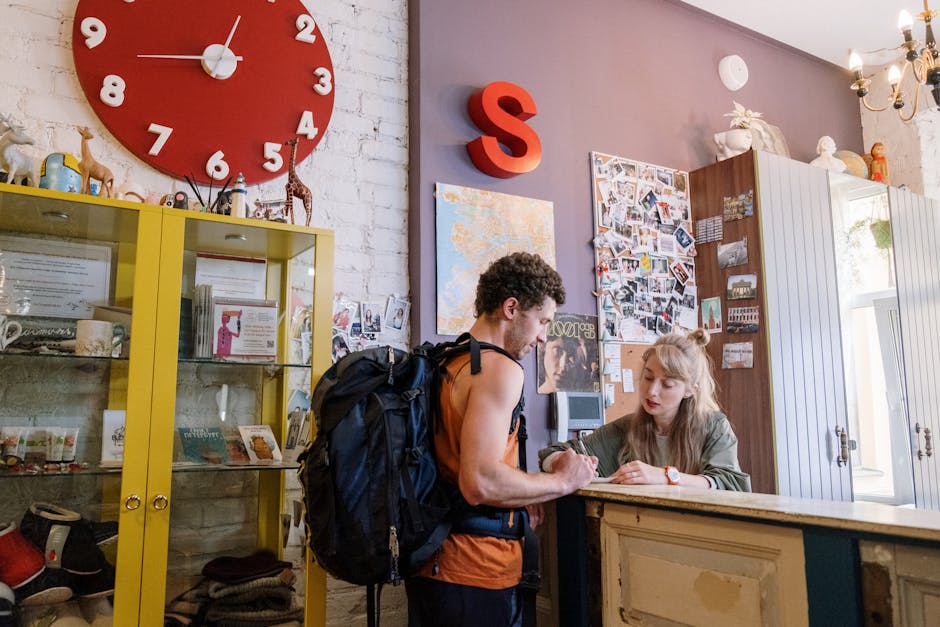
A quiet guesthouse porch in Luang Prabang — or a buzzing hostel common room in Bangkok? Your choice shapes more than your bill.
💰 Quick Stats
💰 Daily budget range: $18–$35 (hostel) vs $22–$45 (guesthouse)
🛏️ Cheapest hostel dorm bed: $4/night (Chiang Mai)
🚌 Local transport per day: $1–$5 (both)
⏱️ Ideal trip length: 3–6 weeks to offset fixed costs
🎒 Best for: solo social travelers (hostel) / couples & digital nomads (guesthouse)
I rolled into Chiang Mai at 11 p.m. on a night bus from Bangkok, my neck sore and my wallet holding exactly 1,200 baht — about $34. I needed a bed, a shower, and a decision. The pink-and-neon sign for Hostel Lullaby promised a dorm bed for 140 baht ($4). Two blocks away, Baan Saen Guesthouse had a private room with a fan for 350 baht ($10). I stood on the dark street, backpack at my feet, and realized: the cheaper option wasn't obvious.
After eight months bouncing through Thailand, Vietnam, Cambodia, Laos, and Indonesia — sleeping in 40+ different beds — I learned that the math between hostels and guesthouses is messier than any booking site graph suggests. This isn't a story about which one always wins on price. It's about when each one wins, and how picking the wrong one can quietly bleed your budget dry.
Below, I break down every cost layer — accommodation, food, transport, social spending, and hidden fees — with real prices from real streets. You'll walk away knowing exactly which option fits your next move, and how to spot a deal that's actually a trap.
The Essentials at a Glance
- 🛏️ Hostel dorm bed — $4–$12/night across SEA. Cheapest in Chiang Mai and Hanoi. Most expensive in Singapore and Bali (Canggu).
- 🚪 Guesthouse private room — $8–$25/night for a fan room; $15–$40 with AC and en-suite. Siem Reap and Luang Prabang are sweet spots.
- 🍜 Free breakfast — Common at guesthouses (toast, eggs, fruit); rare at hostels. Saves you $2–$4 per day.
- 🍺 Social spending — Hostels sell cheap beer and organize bar crawls. Guesthouses keep your wallet safe by being boring. Real cost difference: $5–$15 per night out.
- 🧺 Hidden extras — Hostels often charge $1–$2 for towel rental, locker use, or laundry. Guesthouses usually include towels and basic toiletries.
The Real Cost Breakdown: Six Southeast Asian Destinations
I pulled actual prices from six places I slept in during 2024. These aren't averages from a database — they're numbers I wrote down in a dog-eared notebook while sweating in bus stations and eating pad thai on plastic stools. Every figure is in USD.
| City | Cheapest Hostel Dorm | Cheapest Guesthouse (fan, private) | Street Meal | Local Beer | Daily Total* |
|---|---|---|---|---|---|
| Chiang Mai, Thailand | $4 | $9 | $1.50 | $1 | $18–$24 |
| Hanoi, Vietnam | $5 | $10 | $1.20 | $0.80 | $17–$23 |
| Siem Reap, Cambodia | $6 | $8 | $2 | $1 | $20–$28 |
| Luang Prabang, Laos | $7 | $11 | $2.50 | $1.50 | $24–$32 |
| Canggu, Bali | $12 | $22 | $4 | $3 | $35–$50 |
| Koh Phangan, Thailand | $8 | $14 | $3 | $2 | $28–$40 |
*Daily total includes dorm bed, three meals, one beer, and one local transport ride. Guesthouse daily totals add roughly $5–$10 more for the private room.
Accommodation: Where the Real Gap Lives
The headline numbers tell you hostels are cheaper — but the gap narrows fast when you factor in what you actually need. In Siem Reap, I paid $6 for a dorm at Pool Party Hostel and $8 for a private fan room at Golden Temple Guesthouse. For two people, the guesthouse cost less per person — $4 each versus $6. That math flips the whole comparison.
For solo travelers, hostels win on raw price, especially in Thailand and Vietnam where $4–$5 dorms are common. But if you're a couple or a pair of friends, guesthouse private rooms frequently undercut the per-person cost of two dorm beds. I met a German couple in Hoi An paying $12 for a guesthouse room with AC — that's $6 each, cheaper than any dorm in town.
"I spent my first month in SEA exclusively in hostels because I thought guesthouses were 'too expensive.' Then I added up my daily costs in Hanoi — $5 for the dorm, $4 for breakfast + coffee out, $3 for beer with new dorm friends, $2 for a locker rental. I switched to a $10 guesthouse room with free breakfast and a mini-fridge. My daily spend dropped by $4 because I stopped buying breakfast and social drinking evaporated. The math surprised me."
— Backpacker Tip: Subtract freebies before comparing sticker prices.
Food and Breakfast: The $2–$4 Daily Leak
Guesthouses in Southeast Asia almost always include breakfast — and it's rarely a sad plastic-wrapped pastry. In Luang Prabang, my guesthouse served fresh baguette, fried eggs, watermelon slices, and Lao coffee every morning. Value: about $3 on the street. In Chiang Mai, my hostel offered nothing — not even instant coffee — so I walked to a stall and spent $1.50 on khao soi and $0.80 on iced tea.
But here's the catch: hostels put you near cheap street food. Guesthouses, especially the quieter ones tucked down alleys, might be a 15-minute walk from the night market. I stayed at a beautiful guesthouse in Ubud ($18/night) whose closest warung was a 25-minute hike through rice paddies. I ate at the on-site restaurant twice — $7 for nasi goreng — before I wised up and started buying snacks at the supermarket a kilometer away.
Net effect: if you're disciplined and eat street food, hostels keep your food budget lean. If you value a free breakfast and cook in a guesthouse kitchen (when available), guesthouses can match or beat hostels on daily food cost.
The Social Spending Trap
This is the number that never shows up on booking sites. Hostels are engineered for socializing — common rooms, pool tables, ping pong, family dinners, pub crawls. I stayed at Mad Monkey in Phnom Penh and spent $12 on drinks in one night without noticing. That's more than my bed cost. I did it again in Bangkok at Bed Station on Khao San Road — $10 on a bucket of sangria and two Chang beers.
Guesthouses are boring. That's their superpower for your budget. The fanciest thing at Baan Suan Guesthouse in Chiang Mai was a hammock and a sleepy cat. I read a book. I went to bed at 9:30 p.m. I spent zero extra dollars.
Over a week, that difference compounds. Hostel social life cost me an average of $8–$15 per day in unplanned spending. Guesthouses cost me $0–$3. If you're serious about stretching your money, the most expensive thing about a hostel is the other travelers.
Location and Transport
Hostels cluster in tourist centers — Khao San Road in Bangkok, Pham Ngu Lao in Ho Chi Minh City, the Old Quarter in Hanoi. Guesthouses are scattered more widely, sometimes in quieter neighborhoods that require transport. In Hanoi, my hostel was 50 meters from Hoan Kiem Lake. My guesthouse in the same price range was three kilometers north in a residential area — I spent $2 per day on Grab motorbike rides to see the sights.
That $2 daily transport cost erased the $4 I saved on the room. Always check Google Maps walking distance to the neighborhood you actually want to explore. A hostel 200 meters from the night market might save you $5 per day compared to a cheaper guesthouse that requires a tuk-tuk every time you go out.
Money-Saving Tips
These aren't generic "travel during low season" tips. These are specific moves I've used to slash costs across dozens of stays.
1. Book a dorm in a hostel that also has private rooms. These hybrid places (like Lub d in Bangkok or Under The Coconut Tree in Hoi An) offer dorm pricing with guesthouse-style amenities — free coffee, quieter common areas, better bathrooms. I paid $9 for a dorm at Lub d Silom and got access to a rooftop pool and a free walking tour. Comparable guesthouse rooms in the area started at $18.
2. Always ask about weekly rates. Guesthouses in Luang Prabang and Chiang Mai routinely offer 15–25% discounts if you pay for a week upfront. Baan Saen in Chiang Mai dropped my nightly rate from $10 to $8 when I booked five nights. Hostels rarely negotiate — their pricing is locked into booking platforms.
3. Use the "map view" on Booking.com, not the list. Zoom into a specific neighborhood and set a max price filter. You'll find guesthouses that don't optimize their listings for search — hidden gems charging $6–$8 for private rooms because they have 12 reviews and bad photos. I found a $7 guesthouse in Hoi An this way, a 10-minute walk from the Ancient Town.
4. Eat where the hostel staff eats. Ask the receptionist at any hostel where they get lunch. In Siem Reap, the Pool Party staff pointed me to a Khmer noodle stall 200 meters away where a bowl of kuy teav cost $0.75. The hostel's own breakfast menu charged $3.50 for the same thing.
5. Carry a sleep sheet and earplugs at all times. Hostel dorms vary wildly in mattress quality and blanket cleanliness. Having your own sleep sheet means you can choose the cheapest bunk without worrying about the sheets. Earplugs let you sleep in a 12-bed dorm with a snorer from Barcelona. This alone saves you from paying $4–$6 more for a "quiet" or "premium" dorm.
Common Mistakes to Avoid
1. Assuming "guesthouse" means cheaper than "hotel." In Bali, many places call themselves guesthouses but charge $30+ for a private room with a plunge pool. That's a hotel with a different sign. Check the bathroom — if it has a rain shower and marble tiles, you're not in budget territory. I learned this in Canggu when a $28 "guesthouse" turned out to be a boutique villa with $12 cocktails.
2. Booking a hostel dorm for the social life when you're sick or exhausted. This is the most expensive mistake I made repeatedly. You pay the dorm price, but you're too tired to socialize, and the noise keeps you from sleeping. Then you waste a day recovering. I spent $36 in two days doing nothing in a Hanoi hostel because I couldn't sleep and felt wrecked. A $12 guesthouse room would have been vastly cheaper overall.
3. Not reading recent reviews specifically about noise and WiFi. A hostel that was quiet six months ago might now be a construction zone or under new management that plays music until midnight. Filter reviews by "noise" and "WiFi" — if three people in the last month mention thin walls, believe them. I ignored this in a Phnom Penh hostel and paid $7 for a bed in a room that faced a karaoke bar.
4. Forgetting to factor in checkout logistics. Hostels usually have rigid 11 a.m. checkout and no place to store bags for free. Guesthouses are often more flexible — I've stored bags for free until 6 p.m. at guesthouses in Chiang Mai and Siem Reap. If you have a late bus, a $2 storage fee at a hostel or a $5 "late checkout" fee eats into your savings.
Quick Checklist
Documents & Money:
- 📄 Passport with at least 6 months validity — hostels and guesthouses both require photocopies
- 💵 Cash in USD and local currency — many guesthouses outside city centers don't take cards
- 📱 Downloaded map of the area — offline Google Maps or Maps.me
Packing:
- 🎧 Earplugs and eye mask — non-negotiable for dorm dorms; useful for thin-walled guesthouses too
- 🔒 Small padlock — hostel lockers often require your own; guesthouse rooms usually have key locks
- 🧴 Universal sink plug — guesthouses sometimes lack one, making hand-washing clothes harder
Bookings:
- 📅 Compare on Booking, Agoda, and hostelworld — guesthouses are cheapest on Agoda in Thailand; hostels on hostelworld
- 📧 Email the guesthouse directly — I saved 15–30% in Luang Prabang by booking via email and paying cash on arrival
Apps & Currency:
- 📱 Grab (ride-hailing) — available in Thailand, Vietnam, Cambodia, Indonesia; far cheaper than street tuk-tuks
- 💰 XE Currency — check rates before paying in USD at guesthouses that offer a "better" exchange rate
Safety:
- 🔦 Headlamp — essential for navigating hostel dorms at night; useful in guesthouses with dim hallways
- 📸 Check the door lock — guesthouse doors sometimes use old wooden locks that a credit card can slide open. Carry a portable door lock if you're worried.
FAQ
Q: Are hostels always cheaper than guesthouses in Southeast Asia?
A: No — for two or more travelers, guesthouses are frequently cheaper per person because a private room costs less than two dorm beds. For solo travelers on a tight budget, hostels usually win on the headline bed price, but guesthouses can match or beat the total daily cost when you factor in free breakfast, no social spending, and free towel rental.
Q: What's the cheapest country in Southeast Asia for accommodation?
A: Vietnam offers the lowest absolute prices — dorm beds in Hanoi and Ho Chi Minh City start at $4–$5, and guesthouse rooms in smaller cities like Hoi An or Hue run $6–$10 per night. Thailand is comparable in Chiang Mai and the north, but Bangkok and the islands cost significantly more. Laos and Cambodia are also very affordable outside of tourist-heavy areas.
Q: Should I book hostels or guesthouses in advance?
A: Book the first one or two nights in advance, then find your next place in person. Walking up to a guesthouse in the afternoon and asking for the cash price routinely saves 20–30% over the online rate. I've done this successfully in Siem Reap, Luang Prabang, and Hoi An. Hostels are less flexible — their online rates are usually the same as walk-in prices.
Q: Which is quieter — hostels or guesthouses?
A: Guesthouses are almost always quieter. Hostels by design encourage socializing, with common areas, bars, and group activities that can keep noise going until midnight or later. Guesthouses tend to be family-run with earlier quiet hours. If you're a light sleeper and need to sleep by 10 p.m., a guesthouse is worth the extra few dollars.
Q: Can I cook my own food at hostels vs guesthouses?
A: Guesthouses with shared kitchens are rare but exist — look for "homestay" listings on Booking or Airbnb. Hostels in Southeast Asia almost never have guest kitchens; their model is built around cheap local food. If cooking is important, search for "apartment" or "studio" on Airbnb, which often includes a kitchenette for $15–$25 per night, comparable to a guesthouse but with cooking facilities.
Final Thoughts
I don't have a universal answer to which is cheaper, and anyone who gives you one is oversimplifying. The real answer depends on three variables: how many of you are traveling, how much social life matters to you, and how disciplined you are with incidental spending.
For a solo traveler who wants to meet people and doesn't mind spending an extra $5–$10 on social activities, hostels are the better value. For a couple or a solo traveler who prioritizes sleep, quiet, and a fixed budget, guesthouses win — sometimes by a narrower margin than you'd expect, sometimes by a landslide when you subtract the hidden costs.
The best strategy I found: alternate. Stay in a hostel for two nights when you want to meet people and get tips from other travelers. Then move to a guesthouse for two nights when you need to rest, reset, and save money by not being tempted by a ping pong tournament at midnight. That rhythm worked across eight months and six countries. It might work for you too.
📌 Save This Guide
Bookmark this page or screenshot the cost table before you hit the road. I update the prices every six months, but street-level numbers shift fast. Drop a comment below if you find a cheaper bed somewhere — I'd love to add it.
Got a hostel or guesthouse that broke your budget — in a good way or bad? Share it in the comments. Your story might save someone else a few dollars.


No comments:
Post a Comment