How to Find Delicious Local Food (Not Tourist Food)
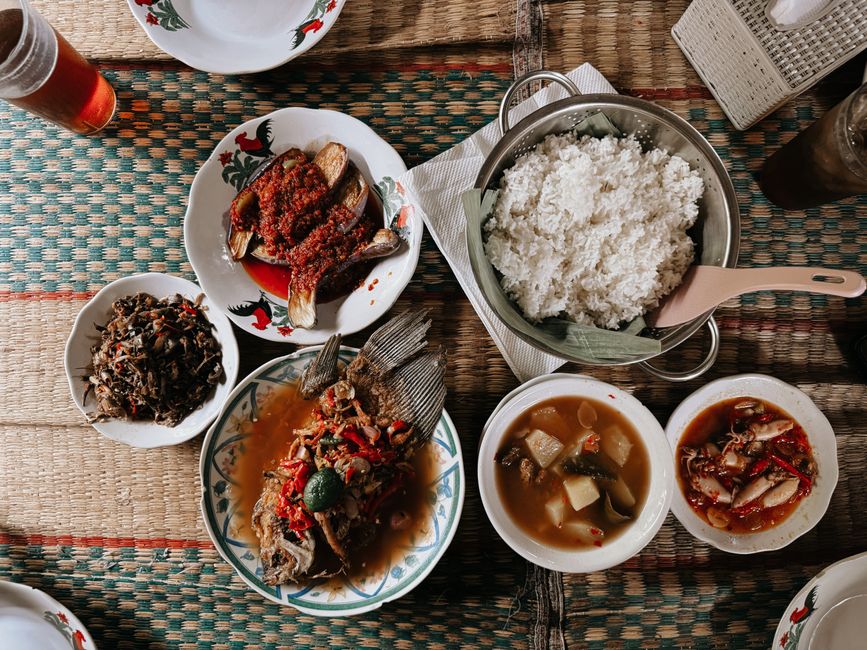
A neighborhood market in Bangkok where the real food lives — no English menus, no inflated prices, just steam and spice and a plastic stool that’s seen decades of early mornings.
⚡ Quick Problem Solver Card
Who this solves for: Travelers sick of overpriced, flavorless food near landmarks. Anyone who wants to eat where locals actually eat.
When to use this advice: The moment you land. Before your first meal. Even while scrolling TripAdvisor in your hotel lobby.
Estimated effort: 2/5 — you’ll download two apps and walk an extra 10 minutes.
Cost range: $2–$8 per meal. Often less than your airport coffee.
Risk level: Low. Worst case? You eat a slightly strange bowl of noodles and laugh about it.
Time saved: Hours. No more wandering into tourist zones and walking out hungry and robbed.
I stood on Khao San Road in Bangkok, sweating through my shirt, holding a skewer of what was supposed to be “authentic Thai street food.” It had the texture of a flip-flop. The color was too orange. The price — 80 baht for three rubbery bites — was a signal I was too tired to read.
I’d been traveling for eleven hours. My neck hurt. The woman selling it didn’t make eye contact. She was already looking past me to the next backpacker with a Lonely Planet in their back pocket. I ate it anyway. Then I felt worse — not just hungry, but duped. I should have known better. I’m a travel journalist. And yet there I was, a walking cliché, paying tourist tax in the most literal way possible.
The problem isn’t that tourist food exists. It’s that it’s so aggressively easy to find. The real stuff hides. It doesn’t have a laminated menu in five languages. It doesn’t have a person waving a plastic tray at you from a distance. It’s tucked down a soi you’d never turn down, serving one dish, and it closes by 2 PM or sells out by 7:15.
This article is the system I built after getting burned in a dozen cities. It’s not a list of “hidden gems” that will be crowded by next month. It’s a strategy. You’ll learn to use local apps before you pack, read markets like a regular, and navigate neighborhoods like someone who lives there — not someone who booked a hotel because it had a pool.
Why This Problem Ruins Trips (And Why Most Advice Fails)
Tourist food is a trap you don’t notice until you’ve already paid. It’s not just the price — it’s the experience. You spend forty minutes walking to a “famous” market stall, stand in line next to other tourists, and eat something that’s been adapted for Western palates. The chili is missing. The fish sauce is diluted. The dish you traveled 6,000 miles to try has been flattened into a theme-park version of itself.
Here’s the real kicker: most advice out there is useless. “Ask a local” sounds great until you realize the person you’re asking is a hotel concierge who gets a commission from the restaurant down the street. “Walk where the locals walk” assumes you can tell the difference between a local neighborhood and a gentrified one. And every blog post promising “10 Hidden Gems” has already been read by 40,000 people — those gems aren’t hidden anymore.
I’ve fallen for every single one of these. I once spent an afternoon in a “local” market in Marrakech that was literally named in a bestselling guidebook. Every stall sold the same seven spice blends at triple the souk price. A man in a djellaba tried to charge me 200 dirham for a handful of dates I could have gotten for 25 two streets over.
The root cause is simple: the food industry adapts to money, not curiosity. If tourists cluster at a certain corner, that corner will sell sweetened pad Thai and pizza topped with french fries. The real food stays where the rent is lower and the customers are more discerning — and you need a different toolkit to reach it.
The Step-by-Step Solution
Phase 1: Download the Right Apps Before You Leave Home
You’re probably on TripAdvisor or Yelp right now. Stop. Those platforms are dominated by tourists reviewing other tourists. The locals are on different apps entirely, and they’re using them to order dinner at 9 PM on a Tuesday.
In Thailand, it’s LineMan and Wongnai. In Vietnam, GrabFood and Now.vn. In Mexico City, Rappi and SinDelantal. In Japan, Tabelog — not Google Maps, not TripAdvisor. Tabelog is brutal: a 3.0 rating on Tabelog is a solid, workmanlike meal. A 3.5 is exceptional. Anything above 3.8 is life-changing.
I once spent a week eating only from restaurants rated 3.6 and above on Tabelog in Osaka. Every single meal was good. One was a bowl of miso ramen at a counter with seven seats, and I still dream about it. The owner didn’t speak English. There was no sign in English. The menu was handwritten on a strip of paper taped to the wall.
To find these apps for any country, search Reddit for “best food delivery app in [city]” or ask in a local Facebook group. Install it before you leave. The app’s map is your secret weapon — it shows you where real people are ordering real food right now, not where a blogger stood for a photo last summer.
Phase 2: Use the Apps as a Discovery Tool (Not Just a Delivery Service)
This is the trick most tourists miss. You don’t have to order delivery. Open the app in your destination and browse the map. Every red dot is a restaurant that real locals pay real money for. Look for clusters — three or four spots close together in a residential area. That’s your dinner plan.
In Ho Chi Minh City, I opened GrabFood at 6:15 PM and saw a clump of markers in District 4, a neighborhood most guidebooks skip entirely. I took a taxi there (45,000 dong, roughly $2) and found a street with four different stalls selling cơm tấm, bánh xèo, and bún bò Huế. I ate grilled pork and broken rice at a plastic table lit by a single fluorescent bulb. The owner, a woman named Cô Lan, had no menu. You just said “cơm tấm” and she handed you a plate. Total cost: 30,000 dong — about $1.25.
The app also shows you pricing in local currency. If you see a spot with prices that are 2x or 3x the local average, skip it. That’s a tourist trap. A bowl of pho in Hanoi should cost 35,000 to 50,000 dong. If an app shows 120,000 dong, you’re paying for air conditioning and a laminated menu.
Phase 3: Hit the Markets — But Do It Right
Every city has a market that’s “for tourists” and a market that’s “for the city’s kitchens.” In Barcelona, skip La Boqueria on Las Ramblas (or go at 8 AM on a Tuesday, before the crowds). Instead, head to Mercat de Sant Antoni, where I found a stall selling jamón ibérico for €12 less per 100 grams than the tourist stalls at La Boqueria. The vendor, a man named Josep, cut me a sample from a leg he’d been aging for 36 months. He didn’t try to sell me anything else. He just nodded and went back to his newspaper.
In Singapore, skip the hawker centers in the guidebooks — yes, even Maxwell Food Centre, which is overrun. Open the app Burpple and look for hawker stalls rated by locals. I ate at a stall in Old Airport Road Food Centre that had a line of office workers at 12:15 PM. The laksa was 5 SGD and came with a spoon handle sticking out of the broth. No sign. No English. Just steam and hunger and a plastic bowl of coconut-spice heaven.
Morning markets are your best bet. Get there before 8 AM. The produce stalls are setting up, the women are making fresh rice noodles, and the meat hasn’t sat out long enough to attract flies. That’s when you’ll find the stuff that doesn’t survive the afternoon heat. At a morning market in Luang Prabang, I watched a woman pound lemongrass with a mortar bigger than my head. She sold me a bag of khao soi paste for 10,000 kip — about 50 cents. I cooked it at my guesthouse that night and it tasted like Laos in a bowl.
Phase 4: Let the Commute Guide Your Fork
The single most reliable source of good local food is the commuter path. Look for a train or bus line that connects a residential area to a commercial district. Get off two or three stops before the main station. Walk the street that runs alongside the tracks. The food there is built for people who need a quick, cheap meal that fills them up for the rest of the day — no frills, no upselling, no Instagram decor.
In Kuala Lumpur, I rode the LRT from KL Sentral to Pasar Senani, got off one stop early at Masjid Jamek, and walked north along Jalan Tunku Abdul Rahman. At 7:30 PM, the sidewalks were packed with people eating nasi kandar from a stall called Restoran Murni. A plate of rice, fried chicken, curry sauce, and three vegetables cost me 7 ringgit. A group of four office workers sat next to me, eating with their hands and arguing about something in Malay. I didn’t understand a word, but I understood the food.
This works everywhere. In London, ride the Overground to Hackney Wick and walk to the market stalls under the bridge. In Barcelona, take the L1 to Mercat de Sant Antoni. In Tokyo, get off at a local station like Shimokitazawa or Koenji — not Shibuya or Shinjuku. The food is cheaper, faster, and made by people who’ve been cooking the same dish for 20 years.
Pro Tips From Someone Who’s Been There
1. Never trust a restaurant that has a picture of the owner holding a celebrity’s hand. Those photos mean nothing. The celebrity was paid to show up. The food will still be average. Look for walls covered in handwritten notes from regulars. That means the food is loved, not just famous.
2. Learn the phrase “What do you eat?” in the local language. Not “Where should I eat?” That’s too easy to brush off. Ask a shopkeeper, a taxi driver stopped at a light, or a woman buying vegetables: “What dish do you eat when you’re tired and hungry?” The answer is almost always a specific stall, not a restaurant.
3. Carry small bills. Street vendors in most countries don’t have change for a large note. In Vietnam, every stall I went to had a sign that said “Please prepare exact change.” I learned the hard way after handing over 200,000 dong for a 30,000 dong bowl of bún chả and getting a sigh and a handful of crumpled notes.
4. Go at odd hours. The best local places open early and close when they run out. That might be 10 AM for a breakfast stall, 2 PM for lunch, or 8 PM for dinner. A place that’s open 24 hours is almost always serving reheated tourist food. Real food has a clock.
5. If there’s a line of people in uniforms, join it. I’ve followed construction workers, nurses, and delivery drivers to meals I still remember years later. If the people who work with their hands are lining up, the food is good, cheap, and fast. That’s a triple win.
🥇 Pro Tip Callout
The single best meal I found in Osaka came from a 3.6-rated Tabelog spot with no website, no social media, and a menu hand-written in Japanese on a piece of cardboard. I ordered by pointing at another customer’s bowl and saying “onegaishimasu.” The ramen cost ¥650 (about $4.30). I still think about it at least once a week.
Common Mistakes Travelers Make With This Issue
Mistake 1: Eating within two blocks of any major landmark. The food within visual range of a famous site is priced for convenience, not quality. Walk ten minutes away — literally two turns down a non-tourist street — and the prices drop by half, the portions double, and the flavor actually exists.
Mistake 2: Relying only on Google Maps ratings. Google Maps ratings in tourist zones are inflated by people who don’t know what the food should taste like. A 4.5-star ramen shop near a train station could be fine. A 4.5-star stall in a local market with 200 reviews from Asian-language profiles? That’s the real deal.
Mistake 3: Going to a “food tour” recommended by your hotel. These tours are often kickback arrangements. The guide takes you to places that pay the hotel a commission. The food isn’t bad, but it’s not the best. And you’re paying $60 for what you could have found yourself for $6.
Mistake 4: Avoiding stalls because they look “dirty.” A clean kitchen is important, but a stall that’s been operating for 30 years has a kind of patina that looks rough to first-timers. The plastic chairs are stained. The floor is wet. The oil in the wok is dark. That’s the patina of thousands of meals cooked fast. If it smells good, eat it. Your stomach is tougher than you think.
⚠️ Real Traveler Mistake
In Marrakech, I followed a “local” guide who promised to show me the best street food. He took me to a stall where the tagine was pre-cooked and microwaved. I paid 80 dirham for a dry chicken leg. Later, a Moroccan friend told me the guide was paid 20 dirham per head by the stall owner. I didn’t ask questions because I was too polite. Don’t be polite. Be hungry.
Your Quick-Action Checklist
Print this or save it to your phone’s notes app. Check off each step before you order your first meal in a new city:
- ☐ Research and install the local food app for your destination (LineMan, GrabFood, Tabelog, Rappi, etc.)
- ☐ Open the app’s map and find a cluster of red dots in a non-tourist neighborhood
- ☐ Cross-reference that location with a quick Google Street View walk — if you see plastic chairs and handwritten signs, go
- ☐ Take public transit 2-3 stops past the central station, then walk back toward the market
- ☐ Carry small bills and exact change in local currency
- ☐ Learn one local phrase: “What do you eat?”
- ☐ Eat at a stall that has a line of workers in uniforms
- ☐ Skip any menu with photos of the food in plastic display cases (unless you’re in Japan — that’s different)
- ☐ Leave before 8 AM for morning markets
- ☐ Trust your nose more than a star rating
Frequently Asked Questions
Q: How do I find local food apps for a specific country?
A: Search Reddit for “best food delivery app in [city]” or ask in a local Facebook expat group. Install it before you travel. The app’s discovery map is more useful than its delivery menu.
Q: Is street food safe to eat if I have a sensitive stomach?
A: In most cases, yes. Look for stalls with high turnover — food that’s constantly being cooked and sold is safer than food sitting under a heat lamp. Avoid stalls where the meat is pre-cooked and wrapped in plastic.
Q: What if I don’t speak the local language?
A: Point, smile, and say “please” in the local language. Use Google Translate for dietary restrictions. Most street vendors are used to non-verbal ordering. If you see something another customer is eating, just point at their bowl and nod.
Q: How can I tell if a market is for locals or tourists?
A: Look at the products. If every stall sells the same handicrafts, spices, or branded souvenirs, it’s a tourist market. If the stalls sell fresh meat, vegetables, and household goods, it’s a local market. Local markets are usually further from the city center and have more elderly customers.
Q: What’s the single best time of day to find real local food?
A: Between 6:30 AM and 8:30 AM. That’s when morning markets peak — workers grab breakfast, produce arrives, and the stalls that sell out by lunch are at their freshest. The afternoon is for naps, not noodles.
Final Word: You’ve Got This
You don’t need to be a food writer or a polyglot to eat well on the road. You just need a willingness to be wrong — to order something weird, sit on a wobbly stool, pay in crumpled bills, and walk away with a full belly and a story.
The first time I used Tabelog in Osaka, I ordered a bowl of ramen that was so rich with pork fat I felt like I’d been hugged from the inside. The second time, I got distracted and clicked a 3.4-rated place. It was fine. Not great. But I didn’t starve, and I learned something. That’s the whole game: try, fail, adjust, try again.
Save this article. Share it with the friend who always books the wrong restaurant. And when you find that perfect stall — the one with no name, no sign, and the best bowl you’ve ever eaten — send me a message. I want to know where it is. Because I’m still looking too.
📌 Save This Guide — bookmark it, screenshot it, share it. The next time you’re standing in a tourist trap holding a rubbery skewer, you’ll wish you had.
Got your own fix? A hack I missed? A stall that changed your life? Drop it in the comments below. Let’s build a better food map, together.


No comments:
Post a Comment