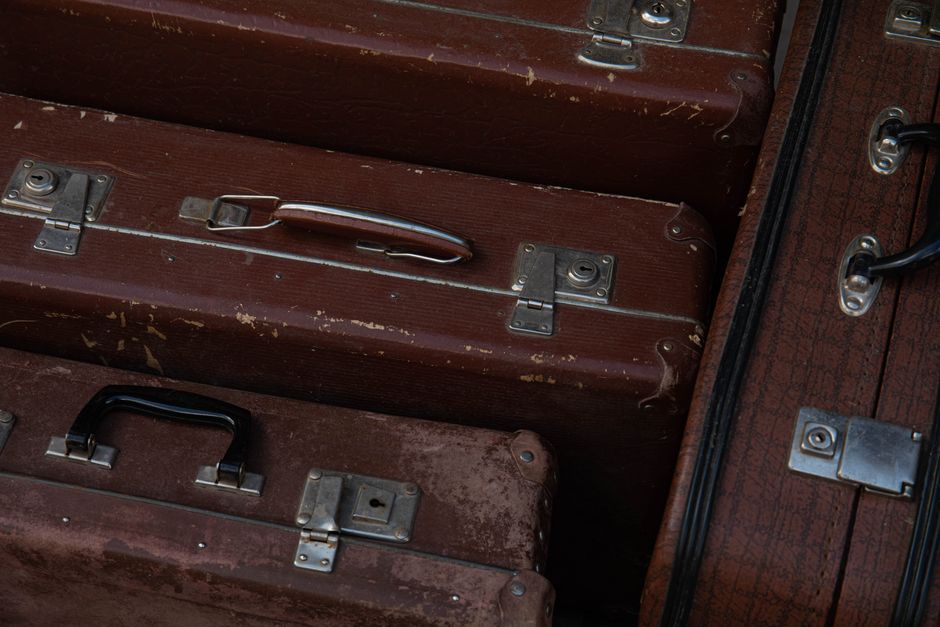
A boarding-gate scale doesn't lie — and neither does your credit card statement after a surprise fee. That suitcase cost me $110 before I even left the terminal.
⚡ Quick Fix: Excess Baggage Fees
Who this solves for: Anyone flying economy with a packed suitcase, digital nomads, parents hauling gifts home, thrift shoppers returning from market trips.
When to use this advice: Before you book — or at least 48 hours before departure.
Estimated effort: 2/5 (takes about 30 minutes of prep) | Cost range: $0 – $35
Risk level: Low | Time saved: 45 minutes at check-in + $50–200 in fees
How to Handle Excess Baggage Fees
I was seven minutes late to my gate at Bangkok's Suvarnabhumi Airport, and it had nothing to do with traffic. I was standing at the check-in counter, wallet open, watching a uniformed woman tap her screen and say, "That'll be 4,200 baht." My bag weighed 27.3 kilograms. The limit was 20. I'd known it was heavy — I'd felt it on the scale at my guesthouse — but I'd convinced myself the airline wouldn't notice.
They always notice.
I paid. I seethed. And I spent the fourteen-hour flight to Dubai scribbling notes on napkins about every single thing I'd done wrong. The ceramic elephant from Chatuchak Market. The three jars of mango sticky-rice mix. The backup sneakers I'd worn exactly zero times. That flight cost me $118 in extra baggage fees — more than the ticket itself.
Since then, I've flown over 90 segments with carry-on only, checked bags on family trips, and shipped boxes home from six countries. I've been scammed by a luggage scale that was off by 1.8 kilos (goodbye, €60), and I've stood in line at the post office in Ho Chi Minh City at 7:45 a.m. to mail a package that saved me $140. This article is the system I built from those failures. No fluff. No "pack lighter!" nonsense. Just real, sometimes ugly, street-level tactics that work.
Why This Problem Ruins Trips (And Why Most Advice Fails)
Excess baggage fees are a tax on hope. You hope the scale at home is accurate. You hope the airline agent is in a good mood. You hope that extra 1.5 kilos won't matter. Then you watch a stranger in front of you get waved through with a duffel the size of a small boulder, and you think the rules are random. They're not. They're enforced exactly when you can least afford it.
Most generic advice fails because it assumes you have infinite time, a perfect luggage scale, and the emotional discipline of a monk. "Just wear your heaviest clothes!" Sure — until you're standing at baggage drop in a wool blazer and hiking boots, sweating through your shirt in a 34°C terminal, and your bag still comes in 2 kilos over. "Ship ahead!" Great advice — if you know where you'll be in five days and you're okay with your belongings vanishing into the void of a regional courier depot.
The real problem isn't weight. It's last-minute discovery. You find out you're over when you have no options left. The fix is reversing that timeline. You need to know your weight — really know it — at least 24 hours before you reach the airport, and you need a plan B that doesn't involve handing over your credit card at the counter.
The Step-by-Step Solution
1. Weigh at Home Like a Forensic Accountant
Buy a luggage scale. Not a bathroom scale you'll step on while holding your suitcase — those are notoriously unreliable because your stance shifts and the bag tilts. I bought a Etekcity digital hanging scale for $12 on Amazon six years ago, and it's still accurate within 0.1 kg. I test it every trip with a 5-kg dumbbell at the gym before I pack.
Here's the ritual: Weigh the empty bag first. Write that number on a piece of masking tape stuck to the handle. Then pack, weigh again, and calculate the difference. If your bag's empty weight is 3.2 kg and your airline's limit is 23 kg, you've got 19.8 kg of actual stuff. That's less than you think. A pair of jeans weighs about 0.7 kg. A laptop with charger? 2.1 kg. A toiletries bag full of travel-size bottles? 1.3 kg. It adds up fast.
I also weigh individual items once per trip and log them in a Notes file. Sounds obsessive. It is. But when I'm standing in a hostel room at midnight deciding between a paperback and a second pair of sandals, I know exactly which one costs me weight — and which one I'll actually use.
🌴 Pro Tip: The "Counter-Scale Double Check"
At the airport, find a postal scale or a checked-baggage kiosk before you queue. Many airports now have self-service bag drops with built-in scales. Use one. If it reads more than your scale at home, you have two choices: repack right there (I've done it on the floor of Changi Terminal 3, using a bench as a table) or pay the fee. Knowledge before the agent sees the number is power.
2. Ship Ahead — But Only the Right Stuff
Shipping items home sounds simple. It's not. I once sent a box from Lisbon to Chicago via CTT Correios — €38 for 8 kg, arrived in 11 days, no issues. I also sent a box from Buenos Aires to New York via Correo Argentino — $62 for 5 kg, arrived three months later with a footprint-shaped dent and a missing lid on my yerba mate gourd.
The trick: Ship only dense, non-fragile, non-urgent items. Books, kitchen tools, winter clothes you won't need for the rest of the trip, souvenirs that aren't sentimental. Use a flat-rate box if your destination country offers it. For the US, USPS Priority Mail Flat Rate boxes are $22.80 for a medium box and $28.75 for a large, regardless of weight. Insure anything worth over $50.
Before you ship, take a photo of the contents, the receipt, and the tracking number taped to the box. Email them to yourself with the subject line "SHIPPED — [CITY] — [DATE]". When the box inevitably goes silent for two weeks, you'll have evidence for the claim.
Timing rule: Ship at least 5 days before you fly domestically, 10 days for international. Use express services (DHL, FedEx, UPS) only if the cost of shipping is less than the airline's excess fee — which it rarely is, but sometimes works for very heavy single items like musical instruments or camping gear.
3. Wear Your Heaviest Clothes — Intelligently
Yes, this advice actually works — but only if you do it with strategy, not desperation. Don't just throw on a hoodie and call it done. Here's what I wore on a flight from Tokyo to San Francisco last March:
- 1 pair of heavy jeans (0.8 kg saved from bag)
- 1 denim jacket with zip-off sleeves (0.6 kg saved)
- 1 pair of leather boots (1.1 kg saved — these are the real heroes)
- 1 rain shell stuffed in the jacket pocket (0.4 kg saved)
Total: 2.9 kg shifted from bag to body. That's the difference between a $90 fee and a free pass. I looked like a confused lumberjack who'd wandered into a Narita terminal, but I wasn't sweating because I'd layered correctly — the jacket came off as soon as I sat down, and the boots loosened after takeoff.
Don't wear: a wool coat unless you're flying from a cold climate (you'll bake in the terminal). Don't wear: multiple layers of thick cotton (it traps heat and shows sweat stains). Do wear: one heavy item per layer — denim, leather, or technical fabrics that compress easily in your seat area.
4. The "Carry-On Bribe" Strategy
If your checked bag is over by 1–2 kg and you look organized, some agents will let you move items to your carry-on. Key word: some. I've had agents at Air India, Ryanair, and American Airlines flat-out refuse. I've had agents at EVA Air, Turkish Airlines, and Air New Zealand wave me through with a wink.
The trick: Have a nearly empty personal item. I use a collapsible tote bag (Sea to Summit Ultra-Sil, 60g) that folds into a pouch the size of a deck of cards. If I'm 1.5 kg over, I pull it out, transfer my laptop, a jacket, and a toiletry bag, and suddenly my checked bag is 0.3 kg under. The agent sees me solving the problem without asking for help. That counts for something.
Pro Tips From Someone Who's Been There
These are the fixes that won't appear in any airline's official advice, because they'd rather you just paid the fee.
- Use a digital kitchen scale for small items. I pack a $9 Ozeri scale (max 5 kg) in my toiletry bag. It's saved me more times than I can count when I'm repacking in a hotel room and need to know whether three t-shirts weigh 0.6 kg or 0.9 kg. Spoiler: they always weigh more than you think.
- Book a "weight allowance" flight on purpose. Some airlines (Emirates, Turkish, Singapore) price tickets by weight allowance, not piece count. A 30 kg allowance on Turkish from Istanbul to Los Angeles cost me $65 more than the 20 kg fare. That's less than the single excess fee would have been — and I got to bring home Turkish delight and a copper cezve without stress.
- Wear a fishing vest. Okay, you'll look ridiculous. But a fishing vest with ten pockets can hold a tablet, two books, a scarf, a hat, a water bottle, and a bag of trail mix — all without counting as a personal item. I wore one through security in Kathmandu and the agent didn't even glance at it. Zero questions, zero fees.
- Use the "Airbnb scale" hack. If your hostel or hotel doesn't have a luggage scale, ask the front desk. Most have one behind the counter. If they don't, buy a cheap USB-rechargeable scale for $10 and leave it in the lobby when you're done. I've done this in four countries. Two times the scale was still there when I came back through.
⚠️ Real Traveler Mistake: The "Bathroom Scale" Lie
I once stood on a bathroom scale holding my suitcase in a hotel in Barcelona, read 24.2 kg, and thought I was fine. The airline's scale at check-in read 26.8 kg. The difference? I'd been leaning slightly forward to keep the bag from slipping, which shifted the reading by over 2.5 kg. Never trust a bathroom scale for checked luggage. Use a hanging scale, or at least set the bag on the floor and weigh yourself with and without it, subtracting your weight. Then subtract another 0.5 kg as a safety margin. Seriously.
Common Mistakes Travelers Make With This Issue
Mistake #1: Assuming "carry-on" means "free." Budget airlines in Europe, Asia, and Australia now charge for overhead-bin carry-ons. A Ryanair "Priority Boarding" add-on with a 10 kg carry-on costs €6–36 depending on the route. If you buy it at the gate, it's €50+. Read the fare rules before you pack.
Mistake #2: Not checking the weight of your carry-on. Many airlines now weigh both bags at check-in. If your personal item weighs 8 kg and your carry-on weighs 10 kg, you're suddenly checking one of them — for a fee. I've seen this happen at IndiGo, AirAsia, and Wizz Air. Weigh everything you're bringing into the cabin.
Mistake #3: Packing "just in case" items. That extra pair of shoes. The sweater for a cold evening that never comes. The third adapter. The paperback you'll finish on the flight but could easily download. Every "just in case" item has a weight cost. Before you zip your bag, ask: "If I don't use this, will I regret carrying it for 12 hours?" The answer is almost always no.
Mistake #4: Ignoring the airline's "total weight" policy. Some airlines (KLM, Air France, Lufthansa) allow weight pooling across checked bags. If two passengers have a combined 46 kg allowance, one bag can be 28 kg and the other 18 kg — no fee. But other airlines (Qatar, Delta) enforce per-bag limits strictly. Know which model you're dealing with before you pack.
Your Quick-Action Checklist
Print this or screenshot it before your next trip. Do these in order:
- ✅ 48 hours before: Weigh your packed bag with a hanging scale. Write the number down. Take a photo.
- ✅ 24 hours before: If you're over by more than 2 kg, identify the 3 heaviest non-essential items and move them to a shipping box or your personal item.
- ✅ 12 hours before: Lay out your "wear-on" outfit — one heavy item per layer, all breathable. Set boots by the door.
- ✅ At the airport: Use a self-service kiosk scale first. If over, repack or shift before you approach the agent.
- ✅ At check-in: Smile, be ready with your tracking number if you shipped anything, and keep your collapsible tote visible. Agents appreciate travelers who look prepared.
Frequently Asked Questions
Q: How much do airlines charge for excess baggage?
A: Most major airlines charge between $50 and $150 per extra kilogram over the limit on international flights, though budget carriers can charge up to $30 per kilogram on domestic routes. For example, Ryanair charges €11 per kg at check-in, while Emirates charges $50 per kg on some routes. Always check your airline's specific fee table before you pack — it changes by route and fare class.
Q: Can I pay for extra weight in advance?
A: Yes, many airlines allow you to purchase additional weight allowance at a discount before departure. Turkish Airlines offers a 5 kg add-on for about $35 if bought online at least 6 hours before the flight. Pre-buying is almost always cheaper than paying at the airport, sometimes by 50% or more.
Q: What's the cheapest way to ship items home from a trip?
A: For most destinations, the cheapest option is the national postal service (USPS, Royal Mail, La Poste, etc.) using a flat-rate box or a slow economy surface service. Expect delivery in 2–8 weeks, but you'll pay roughly $20–40 for up to 10 kg. Avoid courier services unless you need speed or tracking reliability.
Q: Does wearing heavy clothes really fool the airline?
A: It doesn't "fool" anyone — the airline doesn't weigh your body. But shifting 2–3 kg of weight from your checked bag to your person is perfectly legal and commonly done. The key is wearing items you'd actually use during the flight (jacket, boots, sweater) so you're not just carrying dead weight through the terminal.
Q: Are luggage scales accurate enough to trust?
A: A good digital hanging scale ($10–20) is accurate within 0.1–0.3 kg if calibrated properly. Test yours before every trip by weighing a known object (a 5-liter water bottle weighs exactly 5 kg). Replace the battery if readings seem erratic — low battery is the number one cause of scale drift.
Final Word: You've Got This
I still remember standing at that check-in counter in Bangkok, the heat of embarrassment crawling up my neck, watching my bank balance take a hit I hadn't planned for. But I also remember the flight two years later, flying out of Ho Chi Minh City with the same airline, when I walked through check-in with a 19.9 kg bag and a smile. No fee. No stress. Just the satisfaction of knowing I'd beaten the system by paying attention.
Excess baggage fees are one of the few travel problems that are 100% preventable with the right tools and a bit of discipline. You don't need to pack lighter — you just need to pack smarter, weigh accurately, and have a backup plan that doesn't involve your credit card. A $12 scale, a collapsible tote, and a shipping box from the nearest post office are cheaper than any single excess fee.
Save this guide. Share it with a friend who always shows up to the airport with a bulging suitcase. And next time you're at baggage drop, when the agent says "Your bag is fine," you'll know exactly why.
📌 Save This Guide
Bookmark this page or capture a screenshot. When you're packing at 2 a.m. before a flight, you won't remember the details — you'll just need the steps. Your wallet will thank you.
Got a wild excess-baggage story or a fix I missed? Drop it in the comments. I read every one — and I might include yours in the next edition.
No comments:
Post a Comment