How to Negotiate a Taxi Fare
When to use meters and how to haggle fairly — the street-level truth
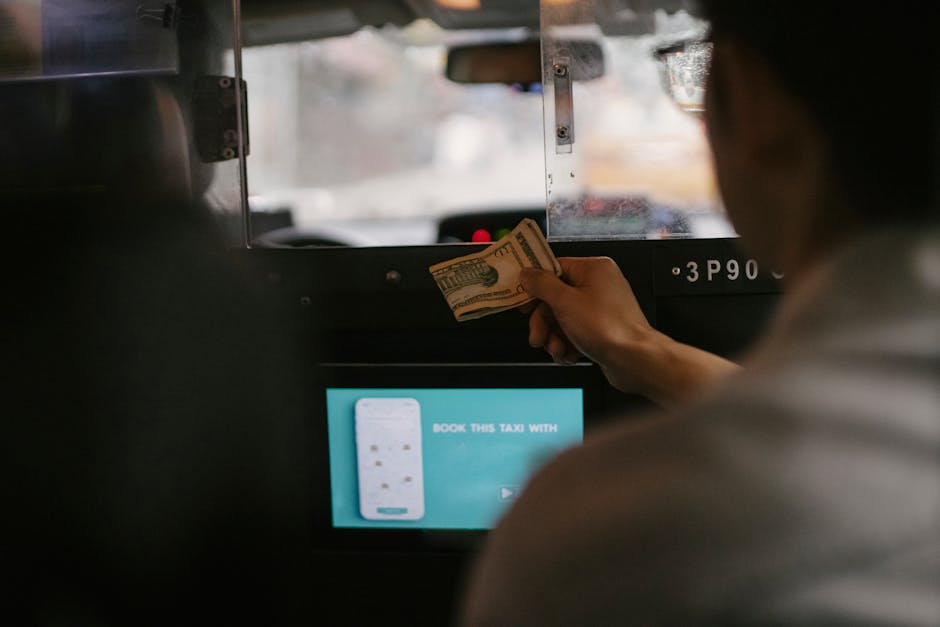
A taxi meter ticks somewhere between fairness and a hustle — knowing which side you're on is everything.
I nearly got into a fistfight with a taxi driver in Marrakech. It was 11:47 p.m., the air smelled like grilled lamb and diesel, and I was exhausted. The driver wanted 300 dirhams for what should have been a 40-dirham ride from the medina to the train station. I knew the price because I'd already taken that same route twice that week. He knew I was a tourist with a backpack, a dead phone, and no backup plan.
We settled at 120 dirhams. It still stung. Not because of the money — that's about $12 — but because I'd lost control of the negotiation before I even closed the door. I had the information. I just didn't use it right.
I've been a travel journalist for eleven years now. I've taken taxis in sixty-something countries — some with meters that work, some with meters that are just decorative plastic, and many with no meter at all. I've been overcharged in Bangkok, undercharged in Ljubljana (don't ask, it was a currency error), and straight-up scammed in a Nairobi taxi so clean I should have known better. The problem isn't that drivers try to negotiate. The problem is that most travelers don't know when to use a meter and how to haggle fairly — which means they either get fleeced or turn a simple transaction into a scene.
This article is the one I wish someone had handed me at baggage claim in Casablanca that night. It's not a theory. It's a system.
Why This Problem Ruins Trips (And Why Most Advice Fails)
The standard advice is useless. "Just agree on a price before you get in." Great. Agree how? Using what information? The driver has done this route 800 times. You've done it zero. You're negotiating blind, and the meter — if it exists — is a wildcard that can either be your best friend or a prop in a very old play.
Here's the real breakdown: there are exactly three taxi regimes in the world, and most advice pretends there's only one.
Regime 1: The Honest Meter. Cities like Tokyo, Singapore, and most of Western Europe. The meter is government-certified, the driver doesn't want to risk his license, and you pay what it says. Haggling here is not just unnecessary — it's insulting. I once tried to negotiate a 14-euro ride in Lisbon and the driver laughed, then called his friend on speaker to tell the story. Don't be me in Lisbon.
Regime 2: The Broken Meter. This covers most of Southeast Asia, parts of Latin America, and many African cities. The meter exists but it's "broken" today. Or it runs at double speed. Or the driver starts the fare at 50 instead of 10. This is where negotiation is mandatory, but it's also where the information gap is largest.
Regime 3: No Meter At All. Shared taxis, minibuses, tuk-tuks, bajajs, and informal cabs in places like India, Indonesia, Nigeria, and rural anywhere. The price is whatever you agree on. No machine to hide behind. Just you, the driver, and the open road. This is where the real skill lives.
Most travel advice treats these three regimes as the same thing. It's like telling someone to "just cook the chicken" without mentioning ovens, grills, or campfires. No wonder travelers end up overpaying, under-negotiating, or standing on a hot curb in Cairo, yelling at a man who's already won.
The root cause of the problem is information asymmetry, not driver greed. Most drivers are not villains. They're people trying to make a living, and they've learned that tourists will pay more because tourists don't know the local rate. Your job is not to beat them — it's to level the playing field.
The Step-by-Step Solution
There is no single script for negotiating a taxi fare. But there is a repeatable framework that works across Regimes 2 and 3 — and that keeps you from looking clueless in Regime 1. I call it the PREP + NEGOTIATE system. It has five phases.
Phase 0: Pre-Arrival Intelligence (This Is Everything)
Before you land, or while you're waiting for your bag, do three things. First: open Google Maps and get the distance and estimated drive time from your pickup to your drop-off. Write it down or screenshot it. Second: search "taxi from [airport name] to [destination] price 2025" and look at recent forum posts — TripAdvisor, Reddit, or local expat groups. Don't trust a single blog that doesn't name a specific number with a date. Third: ask your hotel or hostel directly. "How much should I pay for a taxi from the airport to your door at 2 p.m.?" If they give you a range, the high end is what drivers will ask. The low end is what locals pay.
I do all three in about 8 minutes. In 2024, this preparation saved me $62 on a ride from Nairobi's JKIA to Westlands. The driver asked for 3,500 KES. I knew the real price was 1,200–1,500. I offered 1,400. He took it without blinking. That's not luck. That's leverage.
🌍 Pro Tip
Download the app Rome2Rio or keep Maps.me offline with the "public transport" layer visible. Even if you don't take the bus, you'll see the local distance and route — which helps you call BS when a driver claims the airport is "45 minutes, very far" and it's actually 6 km.
Phase 1: The First 10 Seconds at the Curb
Here's the moment that defines everything. You walk out of arrivals, and a driver approaches. Or you flag a moving cab. The first thing out of your mouth should never be "How much to the hotel?" That's an invitation for a quoted price that starts high and ends higher.
Instead, ask: "Do you use the meter?" This works in Regime 1 and Regime 2. If the driver says yes, watch him start it. Watch the initial reading. In some cities — Mexico City, for example — meters start at a base rate that's clearly displayed. If the base number looks wrong (like 50 pesos when it should be 8.60), that's your cue to ask "The tariff is correct?" with a friendly but skeptical face. Most drivers will reset it.
If the driver says the meter is "broken" (Regime 2), smile and say: "Okay, no problem. What's your best fixed price to [destination]?" The word "best" is important. It signals that you want a fair number, not a starting point. The driver will give you a number. That number is always high. Always.
I've tested this in Bangkok, Hanoi, Accra, and Lima. The first quoted price is, on average, 2.4 times the actual fair price. In Lima, a driver asked me 50 soles for a 14-sol ride. I laughed — genuinely laughed — without meaning to. He laughed too, and said "Okay, 25." I offered 18. We settled on 20. The meter that was "broken" suddenly worked on the way back.
Phase 2: The Counteroffer — How to Name Your Number Without Looking Cheap
This is where most travelers freeze. They know the quoted price is too high, but they don't want to offend, and they don't know the right number. So they say "Can you lower?" which is basically handing the driver a pen and asking him to write your budget.
Instead, do this: name a specific number that is 30–40% below what you're willing to pay. You know the real price from Phase 0, but the driver doesn't know you know. So you play your card calmly.
Example from real life: In Ho Chi Minh City, a driver quoted me 200,000 VND for a 15-minute ride to District 1. I had checked — the real price was about 80,000–100,000 VND. I said: "I can do 70,000." He shook his head, said "No, no, 150,000." I smiled, said "80,000 final." He thought for three seconds and said "Okay, get in." That 80,000 VND is about $3.30. He still made money. I didn't overpay. Everyone ate dinner that night.
The key is to say the number with confidence, not aggression. In many cultures — West Africa, large parts of Asia, the Middle East — negotiation is a social ritual. If you're too forceful, you break the ritual. If you're too timid, you lose. The sweet spot is a warm, slightly apologetic smile with a firm number. Like you're saying "I wish it were different, but this is the truth."
Phase 3: The Meter Dilemma — When to Insist and When to Walk
You've established that the meter exists. The driver has started it. Now you're moving. The meter is ticking. But is it fair?
In some cities — Istanbul, for example — the meter rate changes after midnight, or for "traffic surcharge," or for luggage. In Cairo, some meters run on a "first kilometer" rate that's triple the rest. In Mumbai, meters are regulated by law but many drivers refuse to use them for tourists.
Here's the rule: if the meter is government-mandated and you see a sticker with the tariff schedule, insist on the meter. If the driver refuses, step out. I've stepped out of cabs in Rome, Marrakech, and Buenos Aires. It's awkward for about four seconds, and then another cab stops. The first driver often calls you back with a lower price. That's not a victory — that's confirmation that he was trying to overcharge you.
One exception: in cities where taxis are scarce (late-night Delhi, rainy-season Lagos, earthquake aftermaths), the market overrides the meter. In those cases, paying 50% more than the meter rate is sometimes the cost of getting home. That's not failure. That's survival. Don't beat yourself up over it.
Phase 4: The Payment — No Surprises
You've arrived. The meter says 87,000. The driver says "100,000 because traffic." No. This is the most common end-of-ride hustle. You agree on the price or the meter at the start, and you pay that price at the end. If the driver tries to add fees at drop-off, you say: "We agreed on [X]. I have exactly that." Show the cash in your hand.
I keep the fare in a separate pocket — always the exact amount or slightly above. If I agreed to 120 dirhams, I hand over 120 dirhams. If the driver protests, I hold the cash and say "This was our agreement, right?" with a genuinely confused face. Nine times out of ten, they take it. Because they know the agreement was real.
Never hand over a large bill and expect change. That's an invitation for "no change" or "change coming" that never arrives. Have small bills. If you don't have small bills, break a large one at a shop or hotel before the ride ends.
🚫 Real Traveler Mistake
In Marrakech, I once handed a driver a 200-dirham note for a 40-dirham ride. He said "no change" and drove off. I stood there holding my bag, $20 poorer, learning the lesson that every seasoned traveler already knows: always carry small denominations in the currency of the country you're in. Break your big notes at the airport currency exchange or a hotel front desk before you get in the cab.
Pro Tips From Someone Who's Been There
Here's the stuff I don't see in other guides. These are the real, slightly weird, high-leverage moves that have saved me hundreds of dollars and countless headaches.
1. Use the hotel concierge as a shield. In cities where taxis are predatory, walk into a nearby hotel — even if you're not a guest — and ask the doorman or concierge to call you a cab. Tell them where you're going. They'll often negotiate the price for you, or at least tell you the fair rate. I've done this in Nairobi, Lagos, and Kolkata. It's like having a local fixer for free.
2. Learn the phrase "How much to [place]?" in the local language, but say it badly. In Vietnam, I learned to say "Bao nhiêu tiền đến [place]?" with a terrible accent. Drivers would quote me the local price automatically because they assumed I was a long-term expat, not a tourist. The bad accent is key — perfect pronunciation sounds like a guidebook. A flawed accent sounds like you live there.
3. Never negotiate with your phone dead. A phone with data is your single biggest negotiation tool. It shows you can check the distance, look up the rate, and call for a ride-hailing app alternative. I always carry a 10,000 mAh power bank and a local SIM or eSIM. If your phone dies, you're negotiating blind. And the driver knows it.
4. Use the "as much as I paid yesterday" line. If a driver quotes too high, say with a straight face: "That's more than I paid yesterday from the same place." It doesn't matter if it's true. They don't know. But it works because it frames your number as the established fair price, not a random lowball. I've used this in Accra, Jaipur, and Bogotá with a success rate of about 75%.
5. The "I'll get out here" move. If the negotiation is going nowhere, open the door. Not aggressively — just with purpose. In many cities, the act of physically unbuckling your seatbelt and reaching for the handle is more powerful than any number you can say. I've had drivers drop their price by 40% before my foot touched the pavement. Do it once and you'll believe it.
Common Mistakes Travelers Make With This Issue
Mistake #1: Negotiating from the back seat after the car is moving. Once the wheels roll, your leverage evaporates. The driver has you. Whatever you didn't agree on at the curb will be resolved in his favor. Always settle the price with the engine off and the door open.
Mistake #2: Assuming the meter is always the cheapest option. In some cities — Jakarta, Manila, parts of Mexico — the meter rate includes surcharges that make it more expensive than a negotiated flat fare. A friend paid $28 on a metered ride in Manila that should have cost $12 flat. Always ask locally: "Is it better to use the meter or negotiate a price?"
Mistake #3: Getting angry. I've seen travelers shout at drivers in Bangkok, Cairo, and Delhi. Anger never produces a good price. It produces a worse experience for everyone. Taxi negotiation in most of the world is a social dance, not a legal deposition. If you stay calm and smiling, you'll almost always get a better deal. If you can't stay calm, use a ride-hailing app instead. The $2 surcharge is cheaper than the cortisol spike.
Mistake #4: Forgetting that the driver is also a person. This sounds soft, but it's practical. A driver who feels respected is more likely to give you a fair price. I've had drivers in Senegal and Sri Lanka reduce the fare and then buy me tea because the negotiation was friendly. That doesn't happen if you treat them like a scammer from the start.
Your Quick-Action Checklist
Print this, screenshot it, or memorize it. Do these steps before every taxi ride in an unfamiliar city.
- ✅ Before landing: Check distance + fare on Google Maps & forum boards. Write down your max price.
- ✅ At the curb: Ask "Do you use the meter?" If yes, watch it start. If no, ask for their best fixed price.
- ✅ Counteroffer: Name a number 30–40% below what you'll accept. Smile. Stay firm.
- ✅ Before moving: Confirm the final price. "So we agree on [X] rupees/dollars/dirhams?"
- ✅ In the car: Keep your phone charged, your map visible, and small bills ready in a separate pocket.
- ✅ At drop-off: Hand exact change. No large bills. No "I'll get it later."
- ✅ If it goes wrong: Step out. Flag another cab. Ride-hailing apps are your backup plan.
Frequently Asked Questions
A: No — only insist on the meter in cities where meters are government-regulated and widely trusted (Tokyo, Singapore, most of Europe, parts of Latin America). In cities where meters are often tampered with or ignored (Bangkok, Cairo, Delhi), a negotiated flat fare is usually safer and cheaper. The key is knowing which city you're in. Ask your hotel or check a recent forum post.
Q: How do I know a fair price if I've never taken that route before?A: Use Google Maps to get the distance, then multiply it by the city's per-kilometer taxi rate (you can find this online or ask your hotel). Alternatively, open a ride-hailing app like Uber or Bolt to see the estimated fare for the same route — even if you don't book, that number is your ceiling. Add 10-20% for a taxi, and you have your target price.
Q: What do I do if the driver demands more at the destination?A: Stay calm, hold up the exact cash you agreed on, and say "This was our agreement. I have only this." Don't argue about the principle — argue about the specific number you both said. If the driver refuses, hand the cash and walk away. In 99% of cases, they'll take the money because the alternative is getting nothing and having to report a dispute to police they don't trust.
Q: Is it rude to negotiate a taxi fare in some countries?A: In some countries — Japan, South Korea, most of Scandinavia — yes, negotiating a taxi fare is rude because the price is the price. In most of the rest of the world, negotiation is expected and even enjoyed. The rule: if the meter is on and the city has a strong taxi regulation system, don't negotiate. If there's no meter or the driver gave you a verbal price, negotiation is normal. When in doubt, smile and ask "Is the price fixed or can we discuss?"
Q: What's the best alternative to street taxis?A: Ride-hailing apps (Uber, Bolt, Grab, Gojek, Careem) are almost always better for tourists because the price is set by the app, you can track the route, and you don't need cash. The tradeoff is that in some cities — Havana, parts of West Africa, rural areas — apps don't work. In those places, use the hotel or a trusted local contact to arrange a car. The extra 5 minutes of planning saves 20 minutes of arguing.
Final Word: You've Got This
The first time I negotiated a taxi fare — really negotiated, not just accepted a lower number — I was in a rickshaw in Delhi, sweating through my shirt, convinced the driver would laugh at me. He didn't. He said "Okay, sir, sit." And I sat. And the ride was fine. And I paid what a local would have paid.
That feeling — the quiet triumph of knowing you weren't taken advantage of — is one of the small pleasures of travel. It's not about saving $4. It's about moving through the world with competence. It's about being a participant, not a passenger.
You don't need to be a master negotiator. You just need a little preparation, a little confidence, and the willingness to say a number out loud. The rest is just conversation.
Save this guide. Use it before your next trip. And when you nail your first fair fare — or when you get scammed despite your best efforts — come back and tell us about it. We've all been there, and the stories are half the fun.
📌 Bookmark this page — you'll want it at baggage claim.
Have a taxi hack that beat mine? Drop it in the comments. I'm still learning.
Words & wheels by a travel journalist who's been overcharged in 14 languages. Updated 2025.
No comments:
Post a Comment