What to Do If You Get Lost Without Internet or GPS
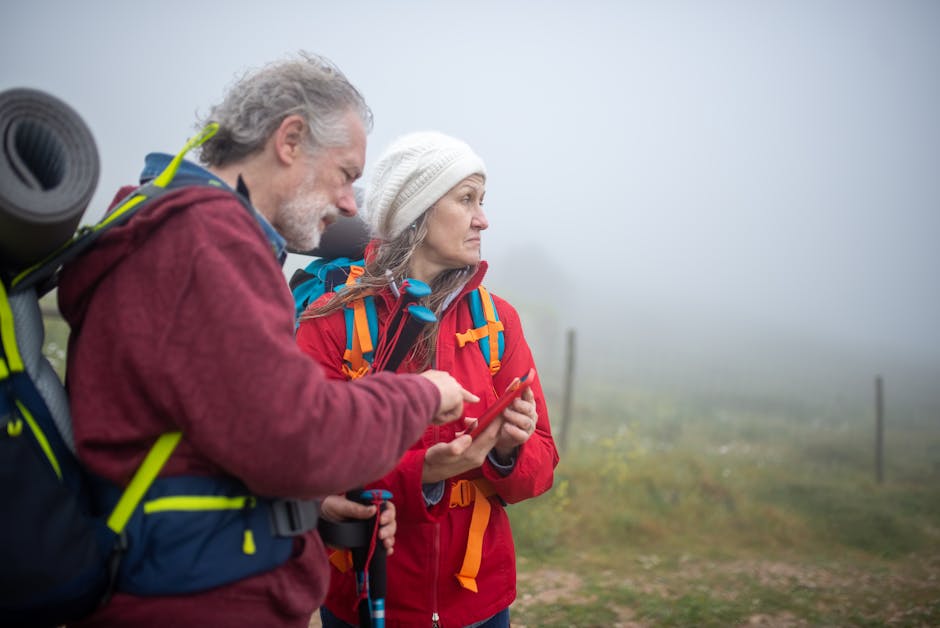
A crumpled paper map, sweat-stained and torn at the creases — the only thing between you and a very bad afternoon in a place where no one speaks your language.
📋 The Quick Verdict
- 👤 Who this solves for: Solo travelers, hikers, road-trippers, anyone whose phone just died
- ⏰ When to use: After you've already lost signal — or before you leave home
- 💪 Effort: 3/5 (requires focus, not fitness)
- 💰 Cost: $2–$15 (a compass and a backup paper map)
- ⚠️ Risk: 2/5 — low if you follow the steps, high if you panic
- ⏳ Time saved: 2–6 hours of wandering per incident
I was two hours deep into a dried-up riverbed in southern Crete, phone battery at 3%, when Google Maps gave me its final, mocking pixel. The signal died. The sun was dropping. I had a half-full water bottle, a sunburn already peeling on my forearms, and absolutely no idea which direction led back to the coast.
That was the moment I learned that being lost isn't a technology problem. It's a thinking problem. And the fix doesn't require a satellite signal — it requires the same three things humans have used for centuries: a map you can hold, the courage to talk to strangers, and the willingness to look at the world around you like a detective.
I've been lost in ten countries across four continents — sometimes for twenty minutes, once for six hours in the Atlas Mountains, and memorably for a full night in a Mexican fishing village where the only English speaker was a parrot who knew the word "cerveza." Every time, I walked out without a GPS, without data roaming, and without calling a rescue service. Here's exactly how I did it, and how you can too.
Why This Problem Ruins Trips (And Why Most Advice Fails)
The usual advice is insultingly vague. "Stay calm." Great, thanks. "Retrace your steps." Sure, if you can remember twenty turn decisions ago. "Ask a local." Solid in theory — but what if the local gestures enthusiastically toward a cliff?
The real problem is threefold. First, panic kills your ability to read the environment. Your brain switches to survival mode and stops processing visual cues. Second, most people don't know how to read a paper map before they need one. They buy it at the airport, stuff it in a backpack, and never open it until the phone dies. By then, it's too late — they haven't oriented the map, they don't know the terrain, and the map might be for the wrong region entirely.
Third, the advice industry romanticizes "getting lost" as a spiritual adventure. Bullshit. Getting lost in a strange city at midnight with no cash and no battery is not a character-building moment. It's a safety risk. The romantic version only works if you have a clear path back. The rest of us need a system.
The good news? The system is simple. You don't need to be a scout or a survivalist. You need three tools — a paper map, a 15-minute orientation drill, and the willingness to ask the right questions in the wrong language.
The Step-by-Step Solution
Step 1: The Pre-Departure Junk Drawer (5 Minutes at Home)
Before you leave your hotel — or better, before you leave your home country — do one thing that costs almost nothing. Open your browser, search for "free tourist map [city name]," and print a PDF. Fold it into quarters. Slide it into your back pocket or the outer sleeve of your daypack.
I used to skip this step. I thought it was quaint. Then I spent 45 minutes walking in circles around Marrakech's medina, trying to find my riad, while my phone displayed a spinning blue circle of death. A shopkeeper selling mint tea finally took pity on me and drew a map in the dust on his counter. I bought his tea, drank it standing up, and followed his dust-map like a treasure hunter. A paper map would have been faster.
If you can't find a free map at the airport or hotel kiosk, spend $2 at a newsagent. The tactile act of unfolding a paper map — feeling the creases, smelling the ink — is itself a grounding ritual. It says: I am here. I am in control. I do not need a battery.
One more thing: Snap a photo of the map on your phone's lock screen while you still have signal. That image stays accessible even after the data dies. It's not a full GPS, but it's a lifeline.
Step 2: The Three-Bearing Trick (When You First Realize You're Lost)
Stop walking. The moment you think "I might be lost," freeze. The worst thing you can do is push deeper into unknown territory hoping it'll resolve itself. It won't.
Find a spot where you can see at least two distant landmarks — a church tower, a hill, a water tower, a tall building with a distinctive color. Now find a third. You want three fixed points you can see from where you stand.
This is the ancient art of triangulation, and it requires exactly zero instruments. Pull out your paper map. Identify those three landmarks on the map. Orient the map so that the landmarks align with their real-world positions in front of you. That means physically rotating the paper until north on the map matches north in reality. (If you have no compass, use the sun: in the northern hemisphere, the sun arcs south; in the southern, it arcs north.)
Now look at where you are. You're somewhere inside the triangle formed by those three landmarks. Cross-reference street names, river bends, or railway lines on the map against what you can see. Within 90 seconds, you can narrow your position to a block, a field, or a single intersection.
I used this trick outside a bus station in Lima, Peru, after my phone was stolen. I used a clock tower, a yellow apartment building, and a billboard for Inca Kola. It took me two minutes to locate myself. The bus station was three blocks behind me. I'd been walking away from it.
🧭 Pro Tip — The Sun Check
Can't find a landmark? Use your watch. Point the hour hand at the sun. Halfway between the hour hand and 12 o'clock is south (northern hemisphere). In the southern hemisphere, point the 12 at the sun, and halfway to the hour hand is north. It's accurate enough to save your day — I've used it in Spain, Nepal, and rural Argentina.
Step 3: Asking Locals the Right Way (Not "Do You Speak English?")
The biggest barrier to asking for help is not language. It's the way you ask. "Do you speak English?" puts the burden on the other person. They often say no out of embarrassment, even if they understand basic phrases. Instead, lead with a universal gesture: hold out your map, point to where you think you are, and make a confused face.
This works everywhere. In a market in Fez, an old man selling dried apricots took my map, rotated it 90 degrees, tapped a spot, then gestured with his chin down a narrow alley. I followed his chin. Three minutes later, I was at the tannery. He didn't speak a word of English. He didn't need to.
In tourist-heavy areas, target older women, shopkeepers who sit outside their stores, and uniformed workers — security guards, street cleaners, ticket booth attendants. They know the city better than anyone and have no incentive to send you in the wrong direction. Avoid groups of young men loitering at busy intersections; they're more likely to give you a false direction for sport. (I learned this after being sent the wrong way by a group in Naples. Twice.)
Phrase to memorize: Learn how to say "Where is [the main square / the train station / this street]?" in the local language. Write it on your map in pencil. The effort alone signals respect, and people will go out of their way to help you.
Step 4: Landmark Chains — The String of Breadcrumbs That Never Drops Signal
Before you leave any place — a hotel, a cafe, a public square — turn around and look at it. This takes five seconds. You're building a mental anchor. Then, as you walk, identify a chain of landmarks that leads from that starting point to where you're going. Don't rely on street names alone. Use sensory hooks: a blue door with a cracked hinge, a bakery that smells like sesame, a telephone pole with a tangle of wires.
When it's time to return, you reverse the chain. This works because human spatial memory is primarily visual, not numerical. Street names are easy to forget. A bright pink shopfront is impossible to miss.
In a rainstorm in Hoi An, Vietnam, I navigated back to my homestay using three landmarks: a woman selling lotus flowers, a motorbike with a broken side mirror, and a drainage grate that gurgled. Not a single street name entered my brain. I made it back in eight minutes.
Pro Tips From Someone Who's Been There
1. The 10-Minute Rule. If you've been walking for more than ten minutes and nothing looks familiar, stop. You've gone too far. Retrace immediately. The further you go, the harder it is to backtrack. I ignored this in a suburb of Barcelona and ended up at a closed train station that was not my train station.
2. Always carry a physical backup of your accommodation. Not just the address — a business card from the front desk, or a matchbook with the logo. Taxi drivers, shopkeepers, and police officers everywhere understand a hotel card. Show it, point, and they'll point back. I once handed a matchbook to a farmer in rural Vietnam. He nodded, put down his hoe, and walked me three kilometers to my hotel.
3. Use the "shadow method" in unfamiliar cities. If the sun is casting shadows, walk so that your shadow falls at a consistent angle relative to your planned direction. This keeps you moving in a straight line. It sounds absurdly simple, but it prevents the subtle curve-circling that happens when you walk without a fixed reference point.
4. Pay attention to how locals move. Are they walking fast or slow? Are they carrying shopping bags or work gear? Their pace and direction often reveal the location of a market, a transport hub, or a commercial street. In Bangkok, I followed a stream of women carrying fabric bundles and found the garment district in ten minutes. No map needed.
5. Accept that you will look stupid. The most freeing realization I ever had as a traveler is that being lost makes you look foolish, and that's fine. The people who help you won't remember your face ten minutes later. Swallow your pride. Ask for help the moment you feel uncertain — not after you've walked three extra miles.
⚠️ Real Traveler Mistake — The Fake Direction
In Cartagena, Colombia, I asked a man selling sunglasses for directions to the old city walls. He smiled, pointed with great confidence, and said "Diez minutos." I walked for thirty minutes and ended up at a bus depot. Why did he lie? Two reasons: he didn't know but didn't want to admit it, and he thought I'd buy sunglasses if I lingered. Always ask a second person to confirm — ideally someone who isn't selling you anything.
Common Mistakes Travelers Make With This Issue
❌ Mistake 1: Trusting a single local without cross-checking. People give wrong directions for many reasons — pride, distraction, language confusion, or simply because they're tourists themselves. Get confirmation from two independent sources before committing to a route.
❌ Mistake 2: Walking with headphones in. You need your ears. Traffic patterns, distant train announcements, the sound of water, the hum of a market — these are all orientation cues. Take the earbuds out. The world talks to you if you let it.
❌ Mistake 3: Waiting until the phone is dead to open the paper map. Open it early. Use it while you still have signal, just to practice. Orient it, find your hotel, trace a route to a cafe. This builds muscle memory so that when the screen goes black, the paper feels like a familiar tool, not a museum artifact.
❌ Mistake 4: Walking uphill away from civilization. In hilly cities, water flows downhill. Rivers, drainage channels, and sewage lines all lead toward lower ground — which is almost always where settlements, roads, and transport are. When in doubt, walk downhill. I followed a stream in a forest in Slovenia and emerged onto a paved road within fifteen minutes.
Your Quick-Action Checklist
- ✅ Before you leave: Print a paper map. Snap a lock-screen photo of it. Save your hotel's business card in your pocket, not just on your phone.
- ✅ The moment you feel lost: Stop walking. Triangulate with three visible landmarks. Orient your map using the sun or a cheap compass.
- ✅ Ask for help the right way: Hold up your map, point to your best guess, use a confused face. Then ask a second person to confirm.
- ✅ Build a landmark chain: Look back at your starting point. Note three sensory anchors. Reverse the chain to return.
- ✅ Backup plan: Know the nearest landmark that a taxi driver would recognize — a train station, a main square, a major hotel. If all else fails, head there.
Frequently Asked Questions
Q: What's the best offline map app for when I anticipate losing signal?
A: Google Maps allows you to download specific regions for offline use — do this before you leave Wi-Fi. Maps.me is a close second and works faster on older phones. Both let you search addresses and get directions without data. But they drain battery. Keep a paper map as your real backup.
Q: How do I read a paper map if I've never done it before?
A: Orient the map so that what's ahead of you is at the top. North doesn't matter as much as alignment — turn the paper until the street grid on the map matches what you see on the ground. Then find your nearest cross street. From there, you can trace a route with your finger. Practice once in your hotel room when you have Wi-Fi, just to confirm you're doing it right.
Q: What if no one speaks my language and I can't pronounce the place names?
A: Write the name on a piece of paper — or show the address from your hotel card. Most people worldwide can read a written address even if they can't understand your pronunciation. Pointing is universal. Combine your written note with a hand gesture that indicates direction, and you'll get a response 90% of the time.
Q: Is it safe to ask strangers for directions at night?
A: Use the same caution you'd use anywhere after dark. Approach families, uniformed staff, or people working in brightly lit shops. Avoid solitary individuals on empty streets. If you feel unsafe, walk into the nearest open business — a convenience store, a pharmacy, a hotel lobby — and ask there. A lit interior is always safer than a street corner.
Q: How do I avoid getting lost in the first place without using GPS?
A: Before you leave your accommodation, take one minute to memorize the route to the nearest major intersection. Walk it once with full attention. Then, every time you turn a corner, look back to see what the corner looks like from the opposite direction. This single habit — I call it "the backward glance" — has prevented more lost afternoons than any app ever could.
Final Word: You've Got This
I still get lost. Last month in a small town in Portugal, I took a wrong turn, ended up at a dead end overlooking a goat pasture, and had to backtrack half a kilometer. My phone had full signal. I didn't use it. I unfolded the tourist map I'd picked up at the train station, found my position using a white church tower and a windmill, and walked back within four minutes.
The feeling was not panic. It was competence. And that's the real gift of learning to navigate without a screen: you stop being a passenger in your own travels. You become the person who can arrive anywhere, drop the phone, and still find the way home.
Print a map. Ask a stranger. Trust your eyes. You've got this.
📌 Save this guide — bookmark it, screenshot it, or print it. The next time your screen goes black, you'll know exactly what to do.
Got a story of getting lost and finding your way? Drop it in the comments — I read every one and I'll share the best ones in a follow-up.
No comments:
Post a Comment