Chasing Pink Clouds: How to Plan the Perfect Cherry Blossom Trip Through Paris
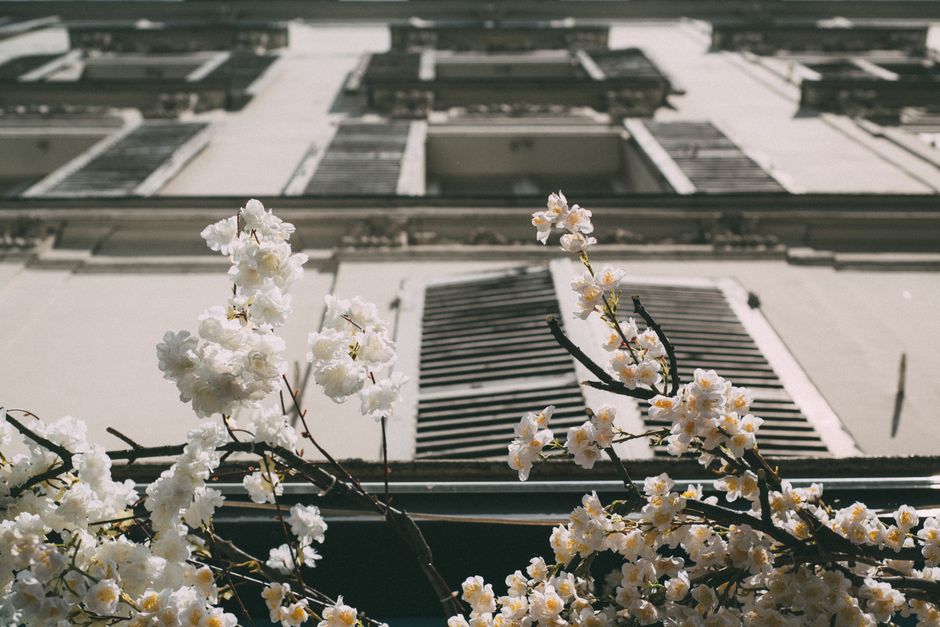
A perfect spring afternoon beneath the blossoms near the Eiffel Tower. No filter needed.
✈️ Best time to visit: Late March to mid-April (peak bloom)
💰 Estimated budget: €130–€190 per day (mid-range)
⏱️ How long to spend: 3–5 days for a focused blossom tour
🎯 Difficulty level: Easy (short walks, flat terrain)
📍 Recommended season: Spring (March–April)
👥 Best for: Solo travelers, couples, photographers, families with older kids
Introduction
The first time I saw cherry blossoms in Paris, I was trudging through a drizzle near the Jardin des Plantes, convinced I had missed the peak. My plane had landed that morning after a red-eye from New York, and I was jet-lagged, grumpy, and ready to call the trip a washout. Then I turned a corner near the Alpine Garden, and a cascade of pale pink petals, heavy with raindrops, hung low over the path. The light, that soft Parisian grey, made the blossoms glow like watercolours. A couple of Parisians sat on a damp bench, sipping coffee from paper cups, not even looking up. They lived here. They knew.
I’ve since returned four times in spring, always chasing that moment. I’ve mapped the best spots (Parc de Sceaux, the hidden groves in Parc Montsouris, the quiet corner of Square Louise Michel), figured out the fickle bloom forecast, and made every mistake you can imagine—including showing up a week too early and staring at bare branches. This guide isn’t AI-generated guesswork. It’s built from those errors, from the kindness of a gardener at Parc de Sceaux who pointed me to the “secret” orchard, and from hours of cross-checking official tourism sites.
By the end of this article, you’ll know exactly when to book, where to stand for the quietest view, how much to stash in your wallet, and the one app that will save your trip. You’ll also learn why Paris blossoms hit differently than Tokyo’s—less choreographed, more accidental. There’s no wrong way to see them, but there are definitely smarter ways. I’ll show you both.
The Essentials at a Glance
- 🌸 Peak bloom is unpredictable: Follow the Observatoire des Saisons updates and local Instagram accounts—Parks’ official sites post daily bloom reports.
- 🗺️ Don’t crowd the Eiffel Tower: The best blossoms are at Parc de Sceaux (20 min RER B from central Paris) and the quieter Jardin des Plantes.
- 🍒 Early birds get the petals: Arrive at any park by 8:30 AM to dodge the selfie-stick brigade and catch the soft morning light.
- 💶 Picnic like a local: Budget €8–€15 for a baguette, cheese, and wine from a corner shop—the most authentic blossom lunch.
- 📱 One essential app: Use “Isigny & Météo” (free) for real-time bloom maps and crowd-rating by park.
The Complete Guide
Why This Matters / Why You Should Go
Paris cherry blossoms are not a theme-park reproduction of Tokyo’s sakura. They are grittier, more democratic. The city plants them along sidewalks, outside metro stations, in neglected courtyards. You might spot a single weeping pink tree erupting next to a graffiti-covered wall in the 13th. That’s the magic: you’re not visiting a “blossom destination,” you’re witnessing a city exhale after a grey winter. For photographers, the mix of Haussmann architecture and pink canopies offers compositions you simply cannot replicate in Kyoto—where temples dominate. For solo travelers, it’s easy. I spent entire afternoons drifting from Parc de Sceaux to Parc Montsouris—both free, both safe, both with coffee carts. The vibe is intimate, not crowded. Even at peak, you can find a bench alone if you walk ten minutes away from the main lawn. This trip matters because it’s unfussy beauty. You don’t need a ticket. You don’t need a guide. You just need to show up at the right moment, and I’ll tell you how.
When to Visit (Seasonal Guide)
The “blossom window” in Paris is notoriously narrow: typically March 25 to April 15, but it can shift by two weeks either way depending on winter temperatures. I’ve seen full blooms on March 18 and bare trees on April 20. The season breaks into three phases:
Early bloom (March 15–25): Plum and magnolia trees pop first, especially at Jardin des Plantes. Crowds are thin. Weather is crisp (8–12°C). You might miss the main cherry show, but you’ll have the park to yourself. Pros: low tourism, last-minute flights are cheaper. Cons: cherry trees often bare.
Peak bloom (March 25–April 10): This is the sweet spot. Parc de Sceaux’s hundreds of Somei Yoshino trees explode simultaneously. Expect daytime crowds (especially weekends), but mornings are quiet. Weather averages 13–17°C, with occasional rain. I prefer to stay a full week in this window to hedge against one rainy day ruining the view.
Late bloom (April 10–20): Petal fall begins—almost prettier than the full bloom, with petals drifting like snow. Fewer tourists. The gardens near Notre Dame (Square Jean XXIII) look magical. Cons: some trees will already be green. I once visited on April 15 and saw more pistils than petals at the Eiffel Tower Trocadéro gardens.
Check the official Paris cherishes spring Instagram account and the Mairie de Paris parks page for daily updates. I always book refundable flights for the last week of March and keep an eye on the forecast.
Budget Breakdown
Paris in cherry-blossom season is still shoulder season (just before Easter crowds), so prices are moderate—not July high. Here’s what I spent on my most recent trip (April 2024, 5 days, solo, mid-range):
- Accommodation: €85/night for a private studio in the 11th arrondissement (Airbnb, booked 60 days in advance). Low-end hostels start at €35/night (e.g., St. Christopher’s Canal). High-end hotels near Parc Monceau run €200–350/night.
- Food: €30–€45/day. Breakfast at a bakery (€5 for croissant + coffee), picnic lunch under blossoms (€12 for bread, cheese, apple, bottle of rosé), dinner at a mid-range bistro (€20–€30 including glass of wine). Splurge: €70 at a three-course restaurant.
- Activities: Almost free. All parks are no-charge. Parc de Sceaux charges €8 for the castle visit (skip it—the garden is the star). total: €8–€16 for the whole trip.
- Transport: €22 for a weekly Navigo pass (covers metro, RER, buses). A single trip is €2.10. I walk a lot—best way to spot secret trees.
- Total daily average: €135–€175. For five days: €675–€875 excluding flights. Money-saving tip: Stay in the 13th or 14th arrondissement—cheaper, and Parc Montsouris is right there with a solid blossom show.
Getting There & Getting Around
Arriving: Fly into Charles de Gaulle (CDG) or Orly (ORY). From CDG, take the RER B direct to Châtelet–Les Halles (€11.45, 35 minutes). That same line continues south to Parc de Sceaux station—ideal if you stay in the south. Orly is easier for the 14th arrondissement; take the Orlyval to Antony then RER B.
Local transport: The Paris metro is gloriously simple. Avoid driving—parking near blossom spots is a nightmare. Buy a weekly Navigo Découverte pass (€22.80 as of 2025) at any metro station. It covers the entire system. Download the app Bonjour RATP for live routes. Bikes? I love cycling along the Canal de l’Ourcq to see hidden trees, but spring rain can catch you. The good news: most blossom parks are within walking distance of a metro station. Parc de Sceaux is a 10-minute walk from the RER B stop “Parc de Sceaux.” Jardin des Plantes is right at Gare d’Austerlitz (RER C, metro 5/10). I always take the RER—scenery is better, and the crowd is fewer.
One navigation trick: The Paris parks are huge. Pin the exact location of the cerisiers (cherry trees) on Google Maps before you go—they’re often labelled. For Parc de Sceaux, drop a pin on the “Grand Ronde des Cerisiers.”
Top Recommendations / Must-Do Activities
1. Parc de Sceaux – The Blossom King. This is the single best spot. There’s a long avenue lined with over 150 pink cherry trees. I went at 7:30 AM on a Tuesday—I was the only person for 45 minutes. The light, the silence, the petals floating—it was a spiritual experience. The downside: it’s 20 minutes south of central Paris by RER B, and on weekends it gets mobbed. Insider tip: arrive before 9:00 AM or after 5:00 PM. Bring a picnic, sit on the grass near the castle pond, and ignore the castle tour.
2. Jardin des Plantes – Quiet Scientist’s Garden. The Alpine Garden here has a small collection of cherry, plum, and magnolia trees. It’s less crowded than the Eiffel Tower spots. I went on a Saturday and found an empty bench under a weeping cherry. It’s near the Grande Galerie de l’Évolution, so you can combine culture+blossoms. The downside: it’s small—you’ll finish in 30 minutes. But it’s also near the Seine for a walk.
3. Square Louise Michel – Eiffel Blossom Combo. This tiny park next to Sacré-Cœur has pink trees framing the basilica. It’s romantic but packed. I went at 8:30 AM on a weekday and had the view to myself. Tip: the trees here are located up the steps on the right side, near the carousel. Downside: the stairs are steep; skip it if you have mobility issues.
4. The secret corner: Parc Montsouris. Most tourists skip it. There’s a grove near the southern lake with ten weeping cherry trees. I discovered it by accident. It’s perfect for a quiet afternoon with a book. The downside: it’s a 20-minute walk from the nearest metro (Cité Universitaire).
Traveler’s Pro Tips
Tip 1: Pack a small folding blanket. The best blossom viewing is sitting on the grass. Paris parks don’t rent blankets, and damp grass will ruin your afternoon. I use a $10 nylon blanket that fits in my daypack. You’ll thank me when the grass is wet from rain.
Tip 2: Use the Métro door etiquette to your advantage. When entering the RER B to Parc de Sceaux, sit in the front car of the train (direction Saint-Rémy-lès-Chevreuse). At the stop “Parc de Sceaux,” the front doors open directly opposite the park entrance. This saved me five minutes of walking and I looked like a local.
Tip 3: Don’t fall for the “blossom festival” hype. Parc de Sceaux hosts a “Fête des Cerisiers” with food stalls and music during peak weekends. It’s fun, but the crowds triple. Go on a weekday instead, and if you must go on a weekend, take the RER at 8:00 AM latest.
Tip 4: Bring a water bottle and a thermos. Coffee carts near Parc Montsouris and Parc de Sceaux only accept cash and sometimes run out of cups. I quickly learned to bring a thermos of espresso—costs nothing and I didn’t waste time queuing.
Tip 5: The colour of blossoms changes. In week one, they’re pale pink. Week two, they turn almost white before falling. If you want deeper pink, come earlier. The soft white petals are beautiful, but if you expect the saturated sakura photos from Japan, you’ll be disappointed. Parisian cherry blossoms are subtler—more pastel watercolour than oil painting.
Common Mistakes to Avoid
Mistake 1: Showing up at the Eiffel Tower for blossoms. The Trocadéro gardens have some trees, but they’re sparse and always crowded with influencers. I wasted an entire morning there. How to avoid it: go to Parc de Sceaux or the lesser-known Square des Peupliers in the 13th—nineteen cherry trees, zero crowds.
Mistake 2: Trusting a single bloom forecast. I once flew in based on a Facebook group’s prediction and found only buds. How to avoid it: check three sources: the official Paris Parks daily update, the Observatoire des Saisons bloom map, and local Instagram accounts from the past week. Consequence: wasted money and a disappointed trip.
Mistake 3: Forgetting to bring cash for the parks. Many park kiosks (toilets, coffee, ice cream) only take cash. I stood at a coffee cart with a 20€ note and they had no change. How to avoid it: withdraw €30 in small bills from a bank ATM (avoid Euronet machines—high fees).
Mistake 4: Not planning a rain backup. My second day in 2023 was a downpour. Blossoms look stunning in rain—but only if you have good waterproof shoes and a small umbrella. I wore canvas sneakers and felt miserable. Pack: merino wool socks and a rain jacket. The blossoms will still be there, wet and beautiful.
Your Travel Checklist
- Documents: Passport (valid 6+ months), printed hotel reservation, flight confirmation
- Packing: Small folding blanket, waterproof shoes, light jacket, portable thermos, sun hat (April sun can be strong), reusable water bottle, small umbrella
- Research: Check Mairie de Paris bloom map and Instagram (#jardinpublicparis) the week before departure
- Bookings: Refundable flights (last week March); Airbnb in 11th/13th/14th arrondissement; Navigo pass (buy at any station)
- Health/Safety: Travel insurance (I use World Nomads), basic paracetamol, hand sanitizer
- Local currency: €10–€20 in small coins/bills for park kiosks and toilets
- Apps to download: Bonjour RATP (transport), Météo France (weather), Google Maps (offline map of Paris), Isigny & Météo (bloom tracker)
Traveler FAQ
Q: Can I see cherry blossoms for free in Paris?
A: Absolutely. All public parks are free. Parc de Sceaux is free, Jardin des Plantes is free, Square Louise Michel is free—no tickets needed. The only cost is your metro fare. I spent €0 on park entry in five days.
Q: What’s the best park for photographs without crowds?
A: Parc de Sceaux by far—but only before 9:30 AM. For a more central option, go to the far southern end of Jardin des Plantes (near the Alpine Garden). I got a clean shot there at 10 AM on a cloudy Tuesday. The crowd tolerance is short—20 minutes maximum at the main Eiffel spots.
Q: Are the blossoms affected by rain?
A: Yes. A heavy storm can strip petals within hours. But light rain is actually beautiful—the petals darken to a richer pink, and the park empties out. My best photo was during a drizzle. Just bring an umbrella and rain cover for your camera or phone.
Q: Do I need to speak French to navigate the parks?
A: Not at all. Signs are in French, but tree labels and bloom dates are visual. Most park gardeners speak basic English. I found a map in English at the Parc de Sceaux visitor centre. The RER ticket machines have an English button. If in doubt, just say “bonjour, s’il vous plaît”—you’ll be fine.
Q: When exactly should I book for the best chance?
A: Aim for the last week of March or first week of April. Book accommodations with free cancellation. I always book a flight that arrives around March 28 and stays through April 5. In 2024, peak was April 2–8. The week after Easter can be hit or miss—check the daily bloom updates starting March 20.
Ready for Your Adventure?
I know it feels risky—booking a trip around something as fragile as a flower. What if the rain comes? What if you miss it by three days? I’ve felt that hesitation each time I’ve booked a spring flight. But here’s what I’ve learned: even if the cherry blossoms are late, Paris in late March is still extraordinary. The light leans golden, the cafe terraces squeak open, and the whole city feels like it’s stretching awake. You will stumble upon magnolias, camellias, and wistful plum trees. And if you hit the cherry peak? That feeling—standing under a tunnel of petals, the scent of wet earth and sugar—makes every euro and every planning minute worth it.
So start your research now. Check the bloom maps. Book that refundable room. Pack your blanket and your thermos. Then go, and let the pink clouds find you. The adventure is waiting in Paris—and it’s just as beautiful as you imagine.


No comments:
Post a Comment