How to Use Buses and Public Transport in Developing Countries
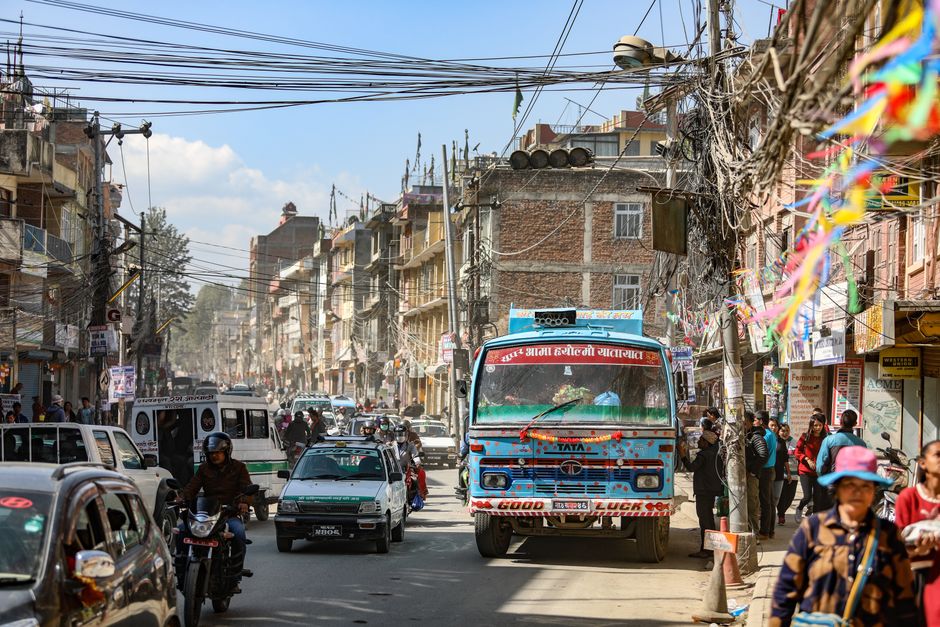
A dusty bus station in rural Kenya, where the real route-finding happens not on a screen but in conversations with strangers who know the road.
⚡ Quick Fix — The Problem-Solver Card
Who this solves for: Solo travelers, backpackers, digital nomads, and anyone who has stared at a bus depot map and felt their stomach drop.
When to use this advice: Before you board. Seriously — read this while you still have WiFi.
Estimated effort: 3/5 (the first day is chaos; day three, you’ll be a local)
Cost range: $0.10 to $15 per ride, depending on country and distance
Risk level: Medium — pickpockets, missed stops, and fake routes are real. But manageable.
Time saved: 2–4 hours per day of taxi-haggling and confusion
I still remember the exact moment I wanted to cry into a bowl of street noodles in Ho Chi Minh City. It was my third day in Vietnam, I was soaked in a tropical downpour, and I had just watched bus number 152 — the one the hostel receptionist swore would take me to the Cu Chi tunnels — sail past me without slowing down. The driver saw me. He just didn't care. My phone was dead. I had no backup map. And the only phrase I knew in Vietnamese was "Cảm ơn," which thank you is lovely but doesn't help when you're stranded at a junction with three different buses idling and none of their route numbers match what Google Maps told you.
That afternoon, I learned a hard truth: public transport in developing countries runs on a logic that is rarely written down and almost never translated. It's a logic of hand gestures, unofficial helpers, folded paper tickets, and routes that change depending on the driver's mood, the day's traffic, or which market is currently selling the best durian.
But here's the thing I've discovered across 14 countries in Asia, Africa, and Latin America — once you crack that logic, it's the best way to travel. Cheaper than taxis by a factor of ten. Faster than walking. And infinitely richer in the kind of accidental encounters that turn a trip into a story. This article is the manual I wish someone had handed me before I boarded that first wrong bus in Saigon.
Why This Problem Ruins Trips (And Why Most Advice Fails)
Let me name the real enemy here: it's not the buses. It's the gap between how transport apps work in wealthy countries and how transport actually works everywhere else.
In London or Tokyo, you open an app, see the next bus in 4 minutes, tap your card, and sit down. The system is legible. It is predictable. It has been designed around the assumption that the user does not speak the local language and does not want to talk to anyone.
In a developing country, the system is relational. It depends on human networks. The bus conductor doesn't wear a uniform — he's the guy in the flip-flops hanging out the door, shouting the destination in a dialect you can't parse. The route map, if it exists, is painted on the side of the vehicle in peeling letters. The schedule is a rumor. The fare changes based on how far you're going, how many bags you have, and whether the driver thinks you look like a tourist who can pay double.
Most generic advice fails because it assumes you can "just use Moovit" or "download the local app." Which is fine — until the app shows a bus that left 40 minutes ago, or the route was changed last week because of a construction project that isn't on any map. I've had Uber drivers in Nairobi cancel on me six times in a row because they didn't want to drive into the neighborhood I was in. I've watched Google Maps confidently direct me onto a bus that was actually a private charter for a wedding party.
The standard advice also ignores the safety angle. The real risk isn't getting robbed at gunpoint — it's getting off at the wrong stop at 10 p.m. in a city you don't know, or handing your phone to a "helpful" local who runs off with it, or boarding a minibus that's overloaded with cargo and has bald tires on a mountain road. Those are the dangers that don't make the guidebooks but that every local knows to avoid.
So forget the generic "be aware of your surroundings" nonsense. Here's what actually works.
The Step-by-Step Solution
1. The Three-App Stack (And When to Ignore It)
Before you arrive, install these three apps: Google Maps (yes, it's imperfect — but it's the best starting point), Moovit (which has surprisingly good data for dozens of developing-world cities), and Maps.me (offline maps with bus routes in many regions). I also add Rome2Rio for long-distance route planning, but I treat it as a suggestion, not a promise.
Here's the trick: never use just one app. Cross-reference. In Mexico City, Google Maps showed me a 20-minute bus route to the Frida Kahlo museum. Moovit showed a 35-minute route on a different line. I asked the hostel owner, who said both were wrong — the first bus had been rerouted a month ago, and the second one was a "tourist bus" that charged triple. The actual local bus was a colectivo that left from a street corner three blocks away and cost 7 pesos. I would have never found it without asking a human.
The rule: Use apps to get a general sense of direction and stop names. Then confirm with two locals — ideally someone who works at your accommodation and someone you meet at a market or street stall. If their answers match, you're good. If they don't, ask a third person.
2. The Art of the Bus Station Reconnaissance
Bus stations in developing countries look like chaos. They are not chaos. They are organized in ways that are invisible to outsiders.
In Nairobi, the main bus terminal at River Road looks like a hive of bees that has been kicked. Minibuses — called matatus — honk, rev, and shout destinations. Drivers grab your arm. Touts yell prices in Swahili. It is overwhelming. But if you stand still for 30 seconds and just watch, you'll notice patterns: matatus heading to the same destination park in the same row. The conductor wears a specific color vest for each route. The fare is posted on a small card taped to the inside of the windshield — in Swahili, but the numbers are readable.
Action step: When you arrive at any bus station, do three things before you board anything. First, find the information board — even if it's painted on a wall. Second, buy a bottle of water from the nearest stall and ask the vendor which bus goes to your destination. Vendors see every bus, every day. They know. Third, walk the entire station end to end once. You'll spot the bus you need, and you'll also spot the exits, the bathrooms, and the stall that sells the best samosas.
In Lima, Peru, the bus system is divided by color-coded lanes and routes that are actually pretty well marked once you know the zone system. But the trick is that the same route number can have two different termini depending on the time of day. Morning buses go to the industrial zone. Evening buses go to the residential area. You need to check the sign in the front window — and if it's too dirty to read, just wave at the driver and shout your destination. He'll either nod or shake his head. That's your answer.
3. The Payment Dance: Cash, Coins, and the Right Amount
Nothing marks you as a tourist faster than pulling out a large bill to pay for a $0.30 bus fare. The driver will either not have change, or he'll give you the wrong change, or he'll pretend he doesn't have change and keep the difference. I've seen it happen in Delhi, Cairo, and Bangkok.
The fix: Before you board, break your large bills at a shop or food stall. Carry a separate pouch or pocket with small denominations — coins and folded notes — equal to the exact fare for at least three rides. In India, that means keeping a stack of 10- and 20-rupee notes. In Egypt, it's 5- and 10-pound notes. In Indonesia, it's 2,000- and 5,000-rupiah coins.
When the conductor comes to collect, hand him the exact amount. No fumbling. No wallet-flashing. Just a clean exchange. It signals that you know what you're doing, and it dramatically reduces the chance of being overcharged.
In Bogotá's TransMilenio, you need a rechargeable card — and the card vending machines often run out of cards by noon. The workaround? Buy a card at any convenience store or ask a local at the station if they have an extra. I paid a teenager 2,000 pesos extra for his spare card. It was worth every peso.
4. Safety: The Practical Protocol
I've taken night buses in Guatemala, chicken buses in Honduras, and shared taxis in rural Morocco. I'm still here because I follow a few non-negotiable rules.
Rule one: Sit near the driver or the door. In minibuses and matatus, the front seats are safer because you can see the road, the driver is less likely to drive recklessly with a passenger next to him, and you can exit quickly if needed. In larger buses, sit in the first few rows on the aisle side — not by the window, which can trap you.
Rule two: Keep your bag on your lap or between your feet, with the strap wrapped around your leg. I've seen people in Nairobi have their bags slashed open from underneath the seat while they were dozing. A zippered inner pocket for your phone and passport is not paranoia — it's basic street competence.
Rule three: Trust your nose and your gut. If a bus smells strongly of gasoline, get off. If the driver looks drunk or is driving aggressively, get off at the next stop. If the bus is overloaded with cargo to the point where the suspension is visibly sagging, do not board. I once declined a bus in La Paz, Bolivia that had 14 people standing in the aisle and a goat strapped to the roof. The next bus was less eventful and arrived safely.
Rule four: Have a backup plan for getting lost. I carry a printed card with the name and address of my accommodation in the local language and a phone number. I also screenshot the Google Maps route before I lose signal. And I keep a power bank charged — not at 80%, but at 100%. A dead phone at 9 p.m. in a city where you don't speak the language is a genuine emergency.
5. The Long-Distance Bus: What They Don't Tell You
Long-distance buses in developing countries are a different beast. I've taken overnight buses from Lima to Cusco, from Hanoi to Sapa, and from Nairobi to Mombasa. Here's what I've learned.
First, the "luxury" bus class is usually worth the extra $5–$10. In Peru, Cruz del Sur's "Imperial" class costs about $35 for a 24-hour ride and includes reclining seats, meals, and a bathroom that doesn't make you question your life choices. The "Standard" class costs $20 and has none of those things. Pay the upgrade.
Second, bring your own snacks and water even if the bus promises a meal stop. The meal stop might be a roadside stall with questionable hygiene, or it might not exist at all. In Morocco, the bus "rest stop" was a patch of sand with a guy selling hard-boiled eggs and warm soda. In India, the meal stop was a restaurant that charged triple what the same thali costs in town. Pack crackers, nuts, and at least 1.5 liters of water.
Third, write down the bus company's phone number and the license plate of the bus. Send it to someone you trust. In many developing countries, buses do get into accidents, and having a record of which bus you're on can be the difference between someone knowing you're delayed and someone wondering why you never arrived. It sounds dramatic. I've done it on every trip for the last five years. It takes ten seconds.
Pro Tips From Someone Who's Been There
1. Learn the hand signals. In Kenya, you flag down a matatu by extending your arm with your palm facing down and waving your fingers toward you. In Vietnam, you flag a xe buýt by raising your hand with the palm open, like a hesitant wave. In Mexico, you point at the ground with your index finger to signal you want the bus to stop. Get these wrong, and you'll either be ignored or accidentally summon a taxi you didn't want.
2. The "Last Stop" trick. When you board a bus and you're not sure where to get off, tell the conductor your destination and then sit in the back. Watch other passengers. When most people get off, you're probably close. If the bus empties and you're still there, the conductor will usually come find you. It's inefficient but reliable.
3. Use the "bus mom." On any bus in a developing country, there is almost always an older woman who is clearly in charge of her family group. Sit near her. Ask her — politely, with a smile — if she knows where to get off for your stop. She will adopt you. She will make sure you don't miss it. I've been "adopted" by bus moms in Ethiopia, Pakistan, and Nicaragua. They are the most reliable navigation system on earth.
4. Don't trust the "last bus" claim. In many cities, touts will tell you a bus is the last one of the night to pressure you into boarding. In Bangkok, I was told at 8 p.m. that the last bus to my guesthouse had already left. I waited anyway. Three more buses came in the next 45 minutes. Always check with a second source before you panic.
5. Carry a small flashlight. Not your phone flashlight — an actual keychain LED light. Bus stations lose power. Streets get dark. And fumbling with your phone in a dark area makes you a target. A $3 flashlight is invisible until you need it, and then it's invaluable.
🌟 Pro Tip That Saved Me $200
In Cairo, I needed to get from Giza to the airport. A taxi driver quoted me 400 EGP. A bus tout said the bus would cost 15 EGP but would take "a little longer." I took the bus. It took 90 minutes instead of 45. But I arrived with 385 EGP still in my pocket, and I got to watch the sunset over the Nile from a window seat. That's not a loss. That's a story.
Common Mistakes Travelers Make With This Issue
❌ Mistake 1: Boarding without confirming the destination with the driver. You asked the conductor, but did you ask the driver? They don't always agree. In Colombo, Sri Lanka, I once boarded a bus that the conductor confirmed was going to Kandy. The driver was actually going to a town 30 km short of Kandy and expected passengers to transfer. I had to argue my way into a refund. Now I always ask both.
❌ Mistake 2: Sitting in the back corner with headphones in. You miss every cue. The conductor's call. The passenger getting off who could have told you it was your stop. The driver's announcement in a language you don't understand. Keep one earbud out. Stay aware.
❌ Mistake 3: Assuming the app is live. In Lagos, Nigeria, Google Maps showed a bus route that had been discontinued for two years. I waited at a stop for 45 minutes before a local told me the route was dead. The app had never been updated. Ask a human before you settle in to wait.
❌ Mistake 4: Not having a backup for your backup. Your phone dies. Your power bank is also dead. The bus depot has no charging port. You have no cash for a taxi. I've been there. Now I carry a physical card with my accommodation address, a local SIM card, and an emergency $20 bill in my shoe. It feels excessive until it saves you.
⚠️ Real Traveler Mistake — I Made This So You Don't Have To
In Hanoi, I handed my phone to a "helpful" man at the bus station who offered to show me the route on Google Maps. He took the phone, pretended to type, then sprinted through the crowd and disappeared. I chased him for 30 seconds, lost him in the market, and spent the next three hours at a Vietnamese police station filing a report. The phone was gone. The lesson: never hand your phone to anyone at a bus station. Hold it yourself. If they want to show you something, they can point.
Your Quick-Action Checklist
Print this or screenshot it before you leave. Check off each item before you board any bus in a developing country.
- ✅ Apps installed: Google Maps, Moovit, Maps.me (offline), Rome2Rio
- ✅ Offline map downloaded for the city you're in
- ✅ Power bank charged to 100% — not 80%, not 90%
- ✅ Local SIM card or eSIM with data active
- ✅ Small bills and coins for at least three fares
- ✅ Printed card with accommodation address in local language
- ✅ Flashlight on keychain or in pocket
- ✅ Emergency cash ($20 equivalent) hidden in shoe or belt
- ✅ Bus company phone number and license plate sent to a friend
- ✅ Snacks and water packed for anything over 2 hours
Frequently Asked Questions
Q: Which public transport app works best in developing countries?
A: Moovit has the best local route data for cities in Latin America, Africa, and Southeast Asia, but you should always cross-reference it with Google Maps and a local human. No single app is reliable everywhere. In my testing across 14 countries, Moovit was correct about 70% of the time, Google Maps about 60%, and local drivers about 95%.
Q: How do I know if a bus is safe to board in a developing country?
A: Look for four things: the condition of the tires (bald = bad), the number of passengers (overloaded = skip it), the driver's demeanor (agitated or distracted = don't board), and whether the bus has a first-aid kit visible near the driver. If three out of four are fine, it's usually okay for a short ride.
Q: How do I avoid being overcharged for public transport as a tourist?
A: Carry exact change in small denominations, watch what locals pay before you pay, and never hand over a large bill that the driver can claim he can't break. If you're unsure of the fare, ask three locals and take the average. In most developing countries, the tourist tax is 50–100% above the local rate.
Q: What should I do if I get on the wrong bus in a foreign country?
A: Stay calm, stay on until the next stop, get off, and re-evaluate. Show the accommodation card to a shopkeeper or vendor. Do not panic-board another bus. I've missed my stop by 20 km before and made it back by taking a shared taxi in the opposite direction. It's fixable.
Q: Is it safe to take overnight buses in developing countries?
A: Yes, with precautions. Choose a reputable company with a physical ticket office, book the front seats or the upper deck, keep your valuables in a money belt under your clothes, and send the bus license plate to someone you trust. Overnight buses are often safer than night taxis and significantly cheaper than flights.
Final Word: You've Got This
The first time you navigate a bus system in a developing country, it feels like a test you didn't study for. The heat, the noise, the language barrier, the conductor who seems annoyed that you exist — it all stacks up. I've sat in bus stations in Guatemala City and Kolkata wondering why I didn't just pay for a taxi like a normal person.
But here's what no one tells you: the bus is where the real trip happens. It's where you sit next to a woman who sells oranges at the market and she offers you one. It's where you see the landscape unfold not through a taxi window but through the open door of a minibus with the wind in your face. It's where you learn that a 30-cent ride can teach you more about a country than any guided tour.
So save this guide. Screenshot the checklist. Charge your power bank. And then go stand at that bus stop with your hand raised and your small bills ready. You'll get on the wrong bus at least once. You'll probably get lost. But you'll also get the kind of stories that make travel worth doing.
I still have the orange from that woman in Guatemala. It's long gone, of course — but I remember the taste.
📌 Save This Guide
Bookmark this page or screenshot the checklist above. You'll thank yourself at 9 p.m. in a bus station somewhere you can't pronounce.
Have your own bus survival trick? Drop it in the comments — I'm still learning.


No comments:
Post a Comment