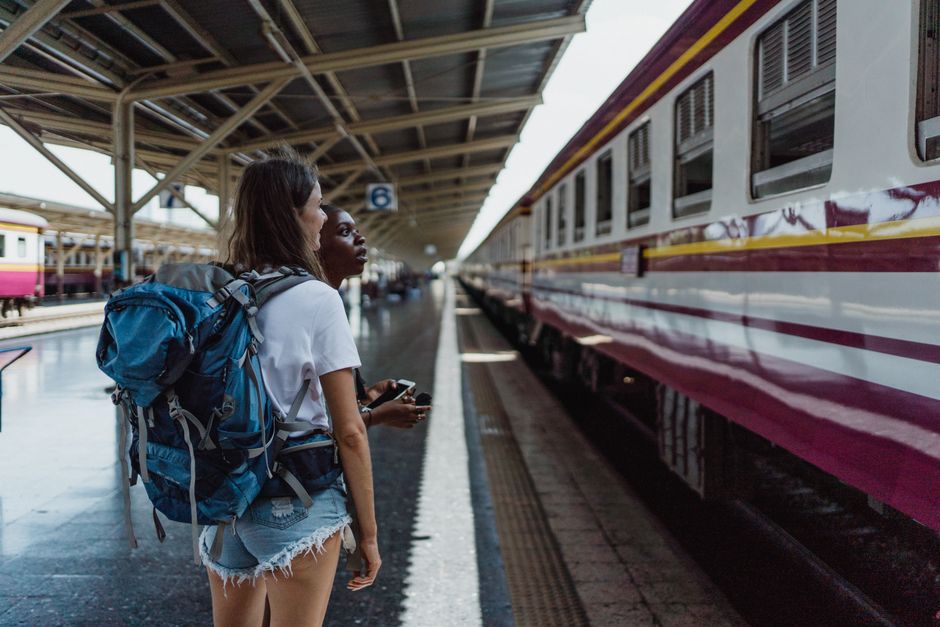
A dusty roadside in northern Thailand — the kind of place where every baht matters and the decision to stay or move hits you hard.
💰 Daily Target: $22–28 solo / $16–20 if sharing rooms
🛏️ Average Dorm Price: $5–9 (SE Asia) / $12–18 (Mexico / Colombia)
🚌 Local Transit Rate: $0.25–2 per ride depending on city
⏱️ Suggested Duration: 12–21 days minimum in one spot to beat the cost of movement
🎒 Target Travel Style: One-bag, cook-some-meals, street-food loyalist who hates booking fees
Is Slow Travel Cheaper Than Fast Travel? A Real Cost Comparison
I lost my favorite towel in a hostel dryer in Medellín at 7 AM. It was a damp, gray thing I’d bought in a Hanoi night market for $3.50, and it smelled like mildew and regret. I stood in the laundry room, staring at the empty machine, and realized I’d spent $47 in the last 48 hours just on moving: a taxi to the bus station, a bus ticket to the next town, a new SIM card because the old one didn’t work in that region, a coffee at a overpriced cafe while waiting for the bus, and a dorm bed in a place with Wi-Fi that died every ten minutes. That’s when the question stopped being theoretical.
I’d been on the road for fourteen months. Some stretches I stayed in one city for three weeks. Other weeks I bounced through four countries like a pinball. My bank account had a very clear opinion on which approach was smarter. The numbers were ugly. But they were also freeing.
Fast travel — the kind where you hit three cities in ten days — feels efficient. You see more, right? Wrong. You spend more, and you remember less. I’ve done both, and I tracked every cent. Here’s the raw breakdown, with names, prices, and the kind of truth that comes from sleeping in a $4 dorm in Chiang Mai and eating street pad thai for breakfast, lunch, and dinner.
The Essentials at a Glance
- Slow travel saved me roughly 38% per month across six months in Southeast Asia vs. the fast-travel months. I spent $1,240 in my slowest month (Kampot, Cambodia) vs. $2,010 in my fastest (Vietnam loop in 18 days).
- Transport is the hidden leak. Buses, trains, flights, tuk-tuks to bus stations, moto taxis to guesthouses — the per-mile cost seems small until you add a move every 3 days.
- Long-term dorm discounts are real. I negotiated $3.50/night at a place in Ninh Binh for a 12-night stay. The walk-in rate was $8.
- Cooking one meal a day at a shared hostel kitchen cut my food bill by 40% in slow mode. Street food is cheap, but buying a single tomato, a cucumber, and some rice? Cheaper.
- Visa runs eat cash. Fast travel across borders means more visa fees, more bus tickets to border towns, and more nights in mediocre guesthouses near checkpoints.
The Real Breakdown: Slow vs. Fast Across Three Regions
I ran the numbers on three distinct legs of my trip. I kept a Google Sheet open in my phone and entered every expense at the end of each day. Yes, every street banana. Every 5-cent kopi. Here’s what I found, and it’s not what the Instagram posts tell you.
Southeast Asia: The Classic Backpacker Circuit
Slow month (Kampot, Cambodia — 22 days in one spot): I rented a bungalow for $90 for the whole month. Not a dorm — a private room with a fan, a cold shower, and a hammock facing the river. I ate at the same family-run stall every day: fried rice with egg and a fried egg on top for $0.75. I bought a bag of local coffee for $2.50 and brewed it in a French press I found at a market. My total spend: $1,240. That includes a week of motorbike rental ($5/day) to explore nearby waterfalls.
Fast month (northern Vietnam loop — 18 days, 6 cities): Hanoi → Sapa → Ha Giang → Cao Bang → Ba Be → back to Hanoi. Every four days, a new bus. Some overnight. Some in minivans with broken AC and a driver who chain-smoked. I spent $2,010 and I was exhausted. Hostel dorms averaged $7/night. Street food in Vietnam is cheap ($1.50 for a bowl of pho), but the transport costs killed me: overnight bus $12–18, local buses $3–5, moto repairs after a flat tire $8. I also paid for two guided treks in Sapa because I didn’t have time to figure it out myself.
"Moving every four days means you constantly pay the 'arrival tax' — the first meal in a new town is always overpriced, the first sim card always a scam, and the first dorm always the worst one they have."
Mexico & Central America: The Gringo Trail Reality
Slow month (Oaxaca City — 17 days): I couchsurfed for five nights, then found a room in a shared apartment for $120 for the next twelve days. The woman who owned it made tortillas every morning and sold them from her window. I bought twelve for $0.30. I walked everywhere. I spent $1,450 total. That includes two nights of mezcal tasting with friends and a day trip to Hierve el Agua for $8.
Fast month (Chiapas + Guatemala in 14 days): San Cristóbal → Palenque → Flores → Antigua. Four buses, one border crossing, three different currencies. I spent $1,980 in two weeks. The bus from Palenque to Flores was $35 alone. The border crossing involved a $5 exit fee, a $3 entry fee, and a $2 shuttle to the next town. I stayed in a $9 dorm in Antigua that had no hot water and a snoring guy in the bunk above me. I ate a lot of sad $3 burritos because I was too tired to find the good street stalls.
Eastern Europe: The Underrated Budget Zone
Slow month (Sofia, Bulgaria — 16 days): I rented a room in a shared flat near the center for €150 ($165). I bought vegetables at the Zhenski Pazar market for pennies. A loaf of bread was €0.40. A beer at a dive bar was €1.50. Total spend: $1,180. I spent most days hiking in Vitosha Mountain, which cost exactly $0 in entry fees.
Fast month (Balkans loop — 12 days, 5 cities): Sofia → Skopje → Ohrid → Tirana → Podgorica. Buses between each. Some were comfortable. One broke down for three hours on a mountain pass. I spent $1,720 in twelve days. Hostels in the Balkans are cheaper than Western Europe, but the frequent border crossings meant I paid for visas (no, not visa-free for everyone — check your passport) and extra nights in transit towns that had nothing to offer.
Money-Saving Hacks
Not the generic "cook your own meals" garbage. I mean real, street-level tricks that require a bit of nerve and a willingness to look foolish.
- Negotiate long-stay rates before you arrive. I messaged a hostel in Kampot on Facebook and asked for a monthly rate. They offered $90 for a private room. The booking site showed $12/night. That’s $360 on the site vs. $90 direct. I sent a screenshot of my passport and paid cash when I arrived. No booking fees, no commission.
- Buy a local SIM card on day one, but don’t buy it at the airport. In Vietnam, the airport SIMs cost $8–12 for 30GB. A shop in the old quarter of Hanoi sells the same plan for $3. I overpaid once. Never again.
- Use the "bus station test." When you arrive in a new city, walk to the local bus station (not the tourist bus drop-off) and check the posted prices. Then compare with what the hostel reception or a random driver quotes you. The difference is often 2–3x. In Oaxaca, the colectivo to the ruins was $0.50 from the station. The hostel tried to sell me a "shuttle" for $3.
- Eat where the people with calloused hands eat. In Kampot, I followed a group of construction workers to a lunch spot that had no sign. The menu was spoken. I ate a plate of rice and stir-fried morning glory with pork for $0.40. The tourist street nearby sold the same dish for $2.50.
- Carry a spork and a small Tupperware container. I cannot stress this enough. Markets, bakeries, and some street stalls will give you leftovers or extra portions if you look like you’re willing to eat them on the spot. In Sofia, a baker handed me a free banitsa because I had my own container and she didn’t need to waste a paper bag. It’s tiny, but it adds up.
Common Budget Mistakes to Avoid
- Buying water bottles every day. I see backpackers spending $1–2 per day on single-use plastic bottles. Buy a reusable bottle and a $0.50 bottle of purification drops. In three months, that saves you $90–180. That’s a week of accommodation in most of the world.
- Paying for "tourist transport" from the airport. The bus from Suvarnabhumi Airport to central Bangkok costs 60 THB ($1.70). The taxi costs 500 THB ($14). I see people with big backpacks paying for the taxi because they’re tired. Tired is expensive. Take the bus. It’s 45 minutes longer and it saves you a real meal budget for three days.
- Booking accommodation on the same day you arrive. You always pay more for last-minute panic bookings. Arrive in the morning, drop your bag at a luggage storage ($1–2), then walk and scout. In Chiang Mai, I found a dorm for $4/night that wasn’t listed on any app. The receptionist just had a sign in the window.
- Assuming all street food is cheap. In some places, tourist-heavy street stalls charge double or triple what the local version costs. In Hoi An, banh mi from the famous stall costs $2.50. The stall two blocks away, with no line and a grumpy old woman making them, costs $0.80. Same bread. Same filling. Go to the grumpy one.
Quick Pack & Prep Checklist
Documents & Money:
- 📄 Passport with at least 6 months validity + 2 photocopies stored separate from the original
- 💳 Two debit cards from different banks (one always fails. Always.)
- 💵 $100–200 in USD as emergency backup (works for bribes, border crossings, and overbooked hostels)
Offline Utility Apps:
- 🗺️ Maps.me — offline maps with exact bus stop locations
- 📱 Google Translate with offline language packs downloaded before departure
- 📞 Airbnb — not for booking, but for messaging hosts directly about long-term rates
Niche Gear That Actually Matters:
- 🧴 A universal sink plug (many cheap hostels don’t have one, and washing clothes in a sink without a plug is miserable)
- 🔌 A short extension cord with multiple outlets — hostel dorms always have one socket per six people
- 🧵 A tiny sewing kit — a broken backpack strap or a ripped trouser seam can derail a week if you can’t fix it
Backpacker FAQ
Q: How much money do I actually save per month if I travel slow?A: Based on my six-month tracking, slow travel saved me between $580 and $770 per month compared to fast travel across the same regions. The biggest saving was transport (55% less), followed by accommodation (22% less due to long-term discounts).
Q: Is slow travel boring? Don't you run out of things to do?A: I was worried about this too. Turns out, staying in one place for three weeks means you actually make friends, find the free walking tour that locals do, and discover the one cafe that has good coffee and a cat that sits on your lap. Fast travel gave me photos. Slow travel gave me a routine I looked forward to.
Q: What's the minimum time I need to stay in one place to see a cost benefit?A: The sweet spot is 10–14 days minimum. Anything less than a week, you're still paying the "arrival tax" of higher-priced meals, transport from the station, and the first night's premium rate. After 10 days, hostel owners will negotiate, you know where to eat, and you stop buying things you don't need.
Q: What about flights? Isn't slow travel impossible if I have a round-the-world ticket?A: A RTW ticket forces a certain pace, yes. But even with flights between continents, you can slow down within a country. I flew into Bangkok, then spent 22 days in Kampot, 18 days in Chiang Mai, and 14 days in Luang Prabang. The flights between those places cost me $180 total. The slow ground travel inside each region saved me $600.
Q: Is slow travel safer than fast travel?A: In my experience, yes. When I rushed, I made dumb decisions — took a sketchy late-night bus, trusted a stranger who offered a cheap room, ate food that made me sick because I was too hungry to be picky. Slow travel let me scout neighborhoods, meet people who actually lived there, and build a mental map of where I could and couldn't go after dark.
Final Thoughts
I’m not some minimalist guru who preaches that slow is the only way. I’ve had incredible fast-travel weeks — the kind where every day felt like a new planet and I met ten people I genuinely liked. But the cost was real, and the exhaustion was real. Slow travel isn’t a lifestyle sermon. It’s a math equation. When I stayed put, my wallet breathed. When I moved, it bled.
The best trip I ever took was the one where I spent three weeks in a $90 bungalow in Kampot, reading books in a hammock, eating $0.40 plates of rice, and not feeling the need to prove anything to anyone. I left that town knowing the name of the woman who sold me coffee, the stray dog that slept under my stairs, and the exact time the sunset hit the river. That’s not a souvenir you can buy on a bus.
📌 Save this guide — bookmark it, screenshot it, share it with someone who's planning a trip. And if you've got your own slow vs. fast cost story, drop it in the comments. I want to see your numbers.