In This Article
- Why Visit Okinawa in 2026?
- Best Time to Visit Okinawa: Month-by-Month Breakdown
- Getting to Okinawa and Getting Around
- Where to Stay in Okinawa: Best Areas and Accommodations
- Top Beaches and Outdoor Adventures in Okinawa
- Okinawan Food You Must Try: A Culinary Guide
- Cultural Experiences and Historical Sites
- Sample 5-Day and 7-Day Okinawa Itineraries for 2026
- Final Thoughts: Making the Most of Your Okinawa Trip in 2026
Why Visit Okinawa in 2026?
Picture this: electric-blue water lapping against powder-soft sand, ancient stone castles whispering tales of a lost kingdom, and a pace of life so relaxed it instantly recalibrates your soul. That’s Okinawa, and in 2026, this subtropical paradise is more compelling than ever. This isn’t just a beach destination; it’s a cultural crossroads where East Asia meets the Pacific, offering an entirely different rhythm from the neon pulse of Tokyo or the historic temples of Kyoto. The Okinawa Japan travel guide 2026 points to a year where improved infrastructure meets untamed natural beauty, making it the perfect window to explore. You’ll find a destination deeply committed to preserving its environment, with coral restoration projects flourishing and eco-tours gaining momentum. Beyond the postcard views, you’re stepping into one of the world’s designated Blue Zones, where the local diet and lifestyle contribute to extraordinary longevity. Visiting in 2026 means catching the islands at a sweet spot: new direct flight routes are opening accessibility, yet the remote outer islands retain their untouched, castaway feel. Whether you’re a solo adventurer chasing waterfall hikes, a family looking for gentle, safe shores, or a foodie ready to dive into a bowl of soul-warming Okinawa soba, the archipelago delivers an adventure that feels both thrilling and deeply restorative. The warmth of the locals, known for their omotenashi hospitality mixed with island ease, turns a simple trip into a meaningful connection. The Okinawa Japan travel guide 2026 experience is about slowing down, breathing in the salt air, and discovering a side of Japan that feels worlds away from the mainland.
What’s New in Okinawa for 2026
Travelers using this Okinawa Japan travel guide 2026 will find fresh reasons to book their tickets. The long-awaited expansion of Naha Airport’s international terminal is fully operational, streamlining arrivals and reducing wait times significantly. Several luxury eco-resorts are opening on Ishigaki and Miyako islands, focusing on low-impact design that blends seamlessly with the coastline. In Naha, a revitalized riverside dining district is bringing a modern twist to traditional Ryukyuan cuisine, with open-air terraces perfect for balmy evenings. For history buffs, Shuri Castle’s main hall reconstruction is entering its final phase, offering a rare chance to witness master craftspeople using ancient joinery techniques. The Okinawa Japan travel guide 2026 also highlights new marine activities, including night-time paddleboarding through bioluminescent plankton, a phenomenon particularly vibrant this year. Digital nomads will appreciate new coworking spaces popping up in Chatan and Nago, complete with ocean views, making long-term stays more feasible than ever before.
Unique Culture and History of the Ryukyu Islands
Okinawa’s identity is profoundly shaped by the Ryukyu Kingdom, which thrived for centuries as a maritime trading hub linking Japan, China, Korea, and Southeast Asia. This legacy is everywhere, from the distinct architecture of ruined castles to the graceful movements of traditional dance. You’re not just seeing Japanese culture here; you’re experiencing a unique blend born from international exchange. The Okinawa Japan travel guide 2026 encourages you to look beyond the surface: visit the quiet pottery village of Tsuboya, where artisans still shape local clay into shīsā lion-dog guardians that protect homes from evil spirits. Listen to the melancholic strains of the sanshin, a three-stringed instrument whose sound instantly evokes tropical nostalgia. The language itself, Uchinaaguchi, is distinct, though elders primarily speak it. Respecting local customs, like the deep reverence for ancestors visible in elaborate tombs dotting hillsides, adds rich context to your visit. The royal court’s influence lives on in the vibrant bingata dyeing technique, producing textiles with patterns of flowers, birds, and waves. Indulging in awamori, the indigenous rice spirit aged in clay pots, is a direct taste of history. Every cultural encounter here tells a story of resilience, adaptation, and a proud island identity that survived the kingdom’s annexation and the ravages of war.
Is Okinawa Worth the Trip from Mainland Japan?
Absolutely, and this Okinawa Japan travel guide 2026 will show you why the journey is an essential part of any comprehensive Japan itinerary. The flight from Tokyo or Osaka clocks in between two and three hours, a small time investment for a complete geographic and cultural shift. Where mainland Japan offers meticulously manicured gardens and mountain temples, Okinawa delivers untamed jungles, coral reefs, and a distinctly laid-back, almost Caribbean, atmosphere. The climatic difference alone is transformative, especially if you’re escaping early spring chills or late autumn grey skies. The value proposition is strong, too: accommodation and dining often feel more affordable than major mainland cities, particularly for the quality and freshness of the seafood. You’re not duplicating experiences; you’re complementing them. After days of intense sightseeing in Kyoto’s crowded bamboo groves or navigating Tokyo’s subway, the open roads and empty beaches of Okinawa offer a therapeutic counterbalance. The cultural education continues but takes a different form—less about shoguns and geisha, more about island kingdoms and sea traders. For those seeking a holistic Japan experience that encompasses both hyper-modern efficiency and timeless island tranquility, the detour south is not just worth it; it’s unforgettable.
Best Time to Visit Okinawa: Month-by-Month Breakdown
Timing is everything when planning your island escape, and this Okinawa Japan travel guide 2026 breaks down the archipelago’s rhythms so you can match the season to your travel style. Unlike mainland Japan’s four distinct seasons, Okinawa dances to a subtropical beat, with warm currents keeping winters mild and summers intensely vibrant. The concept of “best” truly depends on your priorities: are you hunting for the lowest airfare, the most crystal-clear diving conditions, or the electric atmosphere of a harvest festival? The Okinawa Japan travel guide 2026 philosophy is that there’s no bad time to visit, just different flavors of paradise. Peak summer delivers the classic beach holiday with a side of typhoon drama, while winter offers whale watching and a quiet, local charm that package tourists rarely see. Spring brings gentle sunshine perfect for hiking before the humidity settles in, and autumn treats you to warm seas without the midsummer crowds. Understanding the monthly shifts helps you pack intelligently and set realistic expectations. The shoulder seasons are increasingly popular for a reason: you get the best balance of weather, water temperature, and breathing room on the sand. Use this guide to pinpoint your ideal window for chasing sea turtles, witnessing the first cherry blossoms in Japan, or simply soaking in a hot spring with an ocean view as a cool breeze passes through.
Okinawa’s Seasons at a Glance
Okinawa’s seasonal rhythm is a gentle swing rather than a dramatic pendulum. Spring arrives early, with mild temperatures hovering around 20°C (68°F), making March through May perfect for exploring botanical gardens and castle ruins without breaking a sweat. The ocean warms up enough for swimming by April, well ahead of mainland Japan. Summer unleashes the full subtropical force from June to August, with blazing sun, temperatures soaring past 30°C (86°F), and humidity that wraps around you like a warm blanket. This is prime beach season, packed with energy and water sports. Autumn, from September to November, is a slow exhale; the sea remains bath-warm well into October, but the crowds thin out dramatically after September’s typhoon peak. Winter, from December to February, is Okinawa’s best-kept secret. Temperatures rarely dip below 15°C (59°F), meaning you can hike in a light jacket while the rest of Japan shivers. The water clarity is exceptional, attracting divers in thicker wetsuits, and the low-season tranquility offers a more intimate connection with local life. The Okinawa Japan travel guide 2026 notes that this mild winter makes the islands a phenomenal year-round destination.
Weather, Typhoon Season, and What to Pack
The Okinawa Japan travel guide 2026 addresses the elephant in the room: typhoon season. Running officially from June to November, with a statistical peak in August and September, these tropical storms are a reality of life here. However, advanced forecasting means they rarely catch travelers off guard, and modern hotels are built to withstand them. A typhoon day might mean hunkering down with convenience store snacks and watching the spectacular show from your window, often followed by brilliant sunshine. For summer packing, think lightweight, breathable fabrics, a sturdy UV umbrella for sudden squalls, and a high-SPF, reef-safe sunscreen that’s non-negotiable. A quick-dry towel and waterproof phone pouch are brilliant additions for beach hopping. Winter visitors should pack layers: a light fleece or hoodie for evenings, as the wind can bite on the coast. Comfortable walking shoes with good grip are essential year-round due to slick limestone paths. Don’t forget insect repellent for the evenings, especially on the forested outer islands. The key is versatility; you’re as likely to be hiking to a waterfall as you are dining in a chic Naha izakaya, so casual-chic is the unwritten dress code. A reusable water bottle is also a smart, eco-conscious choice, as the heat demands constant hydration.
Festivals and Events in 2026 You Shouldn’t Miss
Aligning your trip with a local festival turns a beautiful vacation into an unforgettable cultural immersion. This Okinawa Japan travel guide 2026 highlights key events to anchor your itinerary. Summer explodes with energy during the Naha Tug-of-War, a colossal event typically held in October, involving a 200-meter rope and thousands of participants, followed by spirited street celebrations. If you visit in July, the Ocean Expo Park Fireworks Festival illuminates the sky above the iconic Churaumi Aquarium, a breathtaking spectacle. For a deeper cultural dive, the Shurijo Castle Festival in late October features a majestic Ryukyu dynasty parade with locals dressed in elaborate period costumes, recreating royal processions. Spring is marked by the Naha Hari, or dragon boat races, where teams paddle furiously to the beat of drums, a tradition dating back centuries. The Orion Beer Festival in August is a lively, modern affair with live music and local brews flowing freely under the stars. On Miyako Island, the Paantu Festival, while date-variable, is a powerful UNESCO-recognized ritual where mud-covered figures chase villagers to ward off evil spirits. Check the 2026 event calendar specifically, as some dates shift with the lunar calendar. Attending these events offers a direct line into the island’s communal spirit and joyous relationship with tradition.
Getting to Okinawa and Getting Around
Navigating a chain of islands scattered across the East China Sea sounds daunting, but the reality, as this Okinawa Japan travel guide 2026 reveals, is a well-oiled machine of planes, ferries, and open roads. The gateway to your adventure is overwhelmingly Naha, the vibrant capital on Okinawa’s main island, though an increasing number of regional airports are opening up direct access to the outer gems. The journey itself is part of the thrill, watching the deep blue ocean stretch out beneath you as you island-hop. This guide emphasizes the critical importance of matching your transportation choices to your itinerary style. If your dream is to chase waterfalls up north, sample taco rice in roadside cafes, and stop spontaneously at every scenic cape, then four wheels are non-negotiable. If you’re sticking to Naha’s urban tapestry of markets, pottery shops, and monorail-accessible historic sites, public transit will serve you perfectly. The Okinawa Japan travel guide 2026 strategy for island hoppers is to treat the main island as a hub and then take short, scenic flights to the outer islands, where the pace of life slows to a crawl. Understanding the logistics upfront saves precious vacation time and ensures you spend less time staring at schedules and more time staring at the horizon.
Flights to Naha and Other Airports
The primary aerial gateway for any Okinawa Japan travel guide 2026 trip is Naha Airport (OKA), which handles a constant stream of flights from major Japanese cities like Tokyo’s Haneda, Osaka’s Itami, and Nagoya. International connections from Seoul, Taipei, Shanghai, and Hong Kong make it a convenient standalone destination for Asian travelers. Low-cost carriers like Peach and Jetstar offer incredibly competitive fares from mainland Japan, but book early in 2026 for peak summer dates. Beyond Naha, direct flights increasingly bypass the main island altogether. Miyako Airport (MMY) and New Ishigaki Airport (ISG) receive direct services from Tokyo and Osaka, allowing you to wake up in the capital and be snorkeling in Yaeyama waters by midday. For reaching the smaller islands like Yonaguni or Kume, JAL and ANA subsidiary airlines operate multiple daily turboprop flights from Naha. Booking domestic flights through the airline’s Japan website often unlocks special visitor fares that are significantly cheaper than international portals.
Ferries and Island Hopping in Okinawa
For those who prefer the journey to be as scenic as the destination, this Okinawa Japan travel guide 2026 confirms that ferries are a soulful, if slower, alternative. From Naha’s Tomari Port, high-speed ferries and car ferries connect to the nearby Kerama Islands, a national park boasting some of the clearest water on earth. Tokashiki and Zamami islands are just an hour away, making them perfect day trips. For the ambitious Yaeyama archipelago, where Ishigaki serves as the hub, ferries are the lifeblood of exploration. Regular services whisk you to Taketomi Island’s preserved Ryukyu village, Iriomote’s dense jungle, and the remote star-sand beaches of Hateruma. The Okinawa Japan travel guide 2026 recommends booking ferry tickets a day in advance during summer and always checking the sea conditions, as services to remote islands suspend during high waves. The experience of approaching a tiny, green island from the water, with flying fish skimming the bow wave, captures the true spirit of Okinawan adventure.
Renting a Car vs. Public Transportation
The single most important logistical decision for your trip, according to this Okinawa Japan travel guide 2026, is whether to rent a car. On the main island, public transportation is limited to the efficient Yui Rail monorail within Naha and buses that serve major corridors but are infrequent in remote areas. If your itinerary includes the stunning northern Yanbaru region, Cape Manzamo, or the Churaumi Aquarium, renting a car is essential for freedom and efficiency. An International Driving Permit is mandatory, and driving is on the left side of the road. The expressway, though tolled, dramatically cuts travel time up the coast. Parking is plentiful and generally affordable, even at major resorts. Conversely, if you’re sticking strictly to Naha’s core for a short city break focused on Shuri Castle, Kokusai Street, and the pottery district, a car becomes a pricey hassle. The monorail and taxis will cover your needs perfectly. For the outer islands like Miyako or Ishigaki, a rental car is almost mandatory to reach secluded capes and hidden snorkeling spots, as bus services are skeletal. The Okinawa Japan travel guide 2026 strongly recommends booking your rental car months ahead for 2026 travel, as fleets are limited and demand spikes sharply in summer.

Where to Stay in Okinawa: Best Areas and Accommodations
Choosing the right base is crucial for your Okinawa Japan travel guide 2026 experience. The main island stretches over 100 kilometers, and each region offers a dramatically different vacation vibe. You won't find a single "best" place—only the best place for your travel style. From neon-lit urban centers to sleepy subtropical coves, the accommodation spectrum ranges from five-star luxury resorts to traditional Ryukyu-style guesthouses. Public transportation is excellent in Naha but sparse elsewhere, so your choice directly impacts how you'll explore. If you plan to island-hop as part of your Okinawa Japan travel guide 2026 itinerary, you might split your stay between the main island and a remote paradise. Booking early is wise for 2026, as popular resorts fill up months in advance during cherry blossom season and Golden Week.
Naha: Urban Convenience and Nightlife
Naha serves as the beating heart of Okinawa and the most logical starting point for any Okinawa Japan travel guide 2026. Staying here means you're steps away from the monorail, making airport transfers a breeze without needing a rental car. The city truly comes alive after sunset along Kokusai Street, where live music spills out of second-floor bars and the aroma of sizzling street food fills the air. Accommodation options in Naha skew toward business hotels, boutique guesthouses, and a few luxury chains, all priced more affordably than beachfront resorts. The trade-off is obvious: you won't have a sandy shoreline outside your door, but you gain unmatched access to cultural sites like Shuri Castle and the Tsuboya Pottery District. For nightlife seekers and solo travelers following this Okinawa Japan travel guide 2026, the Naha scene offers craft beer bars, awamori tasting rooms, and late-night izakayas that stay open until dawn. Parking is notoriously expensive and scarce in the city center, so if you're staying here, plan your rental car pickup for the day you head north. The Makishi Public Market area provides the highest concentration of walkable dining, making it an ideal neighborhood to book your hotel.
Onna and the Central Coast: Resort Bliss
If your mental image of Okinawa involves waking up to turquoise water views, Onna Village and the surrounding central coast will deliver exactly that. This stretch of coastline, roughly an hour's drive north of Naha, is where you'll find the classic Okinawa Japan travel guide 2026 resort experience. Massive hotel complexes like the Halekulani, Hyatt Regency Seragaki, and Ritz-Carlton cluster along Cape Manza and Moon Beach, offering private beach access, infinity pools, and world-class spas. These properties cater heavily to honeymooners and families, with kids' clubs and marine activity desks that can arrange snorkeling or glass-bottom boat tours right from the hotel pier. The area isn't just about luxury giants—mid-range options like the Moon Ocean Ginowan and numerous condo-style rentals give self-catering families a foothold in paradise without the eye-watering price tag. Staying in Onna puts you within a fifteen-minute drive of the Blue Cave, Cape Manzamo's iconic elephant-trunk cliff, and some of the island's best diving shops. The downside is limited public transit, so a rental car is non-negotiable for exploring beyond your resort. Many restaurants cluster along Route 58, but evening entertainment is subdued compared to Naha—nights here revolve around sunset cocktails and stargazing from your balcony. Booking a room with an ocean-facing terrace is worth every extra yen for the sunrise views over the East China Sea.
Remote Islands: Miyako, Ishigaki, and Kerama Getaways
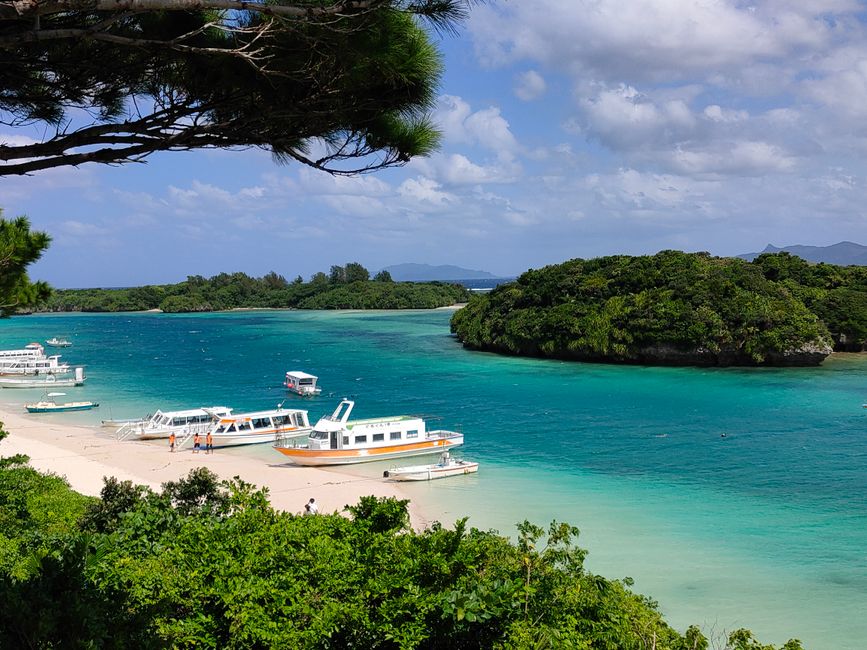
For the ultimate escape in your Okinawa Japan travel guide 2026, venture beyond the main island entirely. The Kerama Islands sit just a one-hour ferry from Naha, making them accessible for overnight trips to some of Japan's clearest waters. Tokashiku Beach on Tokashiki Island is famous for swimming alongside wild sea turtles in shallow water. Further south, Miyako Island feels like a different country altogether, connected to three smaller islands by dramatic bridges spanning impossibly blue channels. Resorts here, like the Shigira Bayside Suite Allamanda, offer deep luxury, but the real draw is the raw natural beauty of Yonaha Maehama Beach and the snorkeling at Yaebiji. Ishigaki, a short flight from Naha, serves as the gateway to the Yaeyama archipelago and boasts the stunning Kabira Bay, where glass-bottom boats glide over a protected emerald lagoon. Accommodation on Ishigaki ranges from the sprawling Fusaki Beach Resort to intimate minshuku family-run inns in the island's interior. The remote islands require advance flight and ferry planning for 2026, as inter-island routes have limited seats and sell out during summer holidays. Cellular service can be spotty on outer beaches, so download offline maps before leaving your hotel. Each island has its own distinct personality—Miyako for sheer beach perfection, Ishigaki for jungle-meets-sea adventure, and the Keramas for quick-access castaway dreams.
Top Beaches and Outdoor Adventures in Okinawa
The outdoor offerings in this Okinawa Japan travel guide 2026 go far beyond just lying on sand. Okinawa's subtropical latitude means warm waters year-round and a landscape sculpted by ancient coral uplift. The main island alone boasts dozens of swimmable beaches, but the real magic happens when you strap on a mask and fins or lace up hiking boots to explore the jungle interior. Many beaches operate on a seasonal schedule, officially opening for swimming between April and October, though the water remains pleasant well into November. Beach facilities vary widely—developed resort beaches offer showers, lockers, and rental gear, while hidden coves might have no amenities at all. Pack reef-safe sunscreen, as Okinawa's coral ecosystems are fragile and chemical sunscreens are increasingly discouraged. A waterproof phone pouch and water shoes will dramatically improve your experience on rocky shorelines. Whether you're chasing underwater ruins, waterfall-fed pools, or empty stretches of white sand, 2026 promises new eco-tour operators and improved trail access in several nature parks.
The Best Snorkeling and Diving Spots
Okinawa's underwater world is the crown jewel of any Okinawa Japan travel guide 2026, offering visibility that often exceeds thirty meters. The Blue Cave at Cape Maeda remains the most famous snorkeling site on the main island, where sunlight refracts through a submerged cavern to bathe the water in an ethereal cobalt glow. Arrive by 8 AM to beat the tour bus crowds and the afternoon chop that can stir up sediment. For divers, the Kerama Islands deliver world-class experiences with healthy hard coral gardens and frequent encounters with hawksbill turtles and manta rays. The Yonaguni Monument, a submerged rock formation resembling an ancient underwater temple, draws advanced divers to its mysterious terraces near Taiwan's coast. Ishigaki's Manta Scramble is exactly what it sounds like—a cleaning station where giant manta rays swoop overhead while divers kneel on the sandy bottom and watch the show. Beginners shouldn't feel left out of this Okinawa Japan travel guide 2026; the shallow lagoons of Miyako's Shigira Bay and the calm inner reef of Odo Beach on the main island offer gentle, current-free snorkeling perfect for first-timers. Most dive shops provide full equipment rental and English-speaking guides, but booking ahead for 2026 is essential during the June-to-September peak. A prescription mask can be a game-changer if you wear glasses, and many shops stock them upon request.
Hidden Beaches and Secluded Coves
Escaping the crowds requires a bit of local knowledge, and this Okinawa Japan travel guide 2026 is here to share a few treasures. On the main island's northern tip, Okuma Beach offers a kilometer of pale sand backed by pine forest, with far fewer visitors than the central resort strip. The adjacent private beach at the Okuma Private Beach & Resort allows day-use access for a fee that's worth the pristine conditions and rental kayaks. Gorilla Chop, a weathered rock formation near Onna, hides a small sandy cove accessible only by a steep staircase carved into the cliff—the effort deters tour buses and rewards you with shockingly clear water for a main-island spot. On Miyako Island, Sunayama Beach's natural stone arch frames a postcard-perfect lagoon that stays relatively quiet on weekdays outside of August. The Kerama Islands hold the ultimate hidden gems. Zamami's Furuzamami Beach dazzles with coral gardens starting just meters from shore, while the uninhabited island of Nagannu offers day-trip castaway vibes from Naha. When visiting these spots, carry out all trash and avoid touching or standing on coral. A lightweight beach umbrella provides essential shade since many secluded coves lack rental facilities. The early morning low tide often reveals tidal pools teeming with small reef fish and starfish.
Hiking, Waterfalls, and Nature Parks
Okinawa's interior jungle offers a lush counterpoint to its coastal beauty, and your Okinawa Japan travel guide 2026 should include at least one inland adventure. Yanbaru National Park, occupying the mountainous north, earned UNESCO World Heritage status for its endemic species and ancient subtropical forest. The Hiji Waterfall trail is the park's standout hike, a relatively easy ninety-minute round trip through a fern-filled valley that ends at a slender cascade plunging into a swimmable pool. Look for the endangered Okinawa rail, a flightless bird that darts across the trail with surprising speed. On Ishigaki, the Omoto Mountain trail climbs through dense jungle to panoramic views over Kabira Bay and the surrounding ocean, best tackled in the early morning before humidity peaks. The Todoroki Waterfall near Nago requires a short but steep hike down a paved path, rewarding you with a powerful cascade that's especially dramatic after the May rainy season. For a gentler nature experience, the Southeast Botanical Gardens showcase tropical flora and offer capybara encounters that delight families. Wear proper footwear—Okinawa's limestone trails become dangerously slick after rain, and snakes including the venomous habu are active in brushy areas, so stick to marked paths. Many trailheads lack vending machines, so carry ample water and electrolytes. The subtropical sun burns even through canopy cover, so a hat and insect repellent are non-negotiable for a comfortable hike.
Okinawan Food You Must Try: A Culinary Guide
Food is the soul of any journey, and an Okinawa Japan travel guide 2026 would be incomplete without a deep dive into the island's unique cuisine. Okinawan cooking stands apart from mainland Japanese food, shaped by Ryukyu Kingdom trade with China and Southeast Asia, plus a post-war American influence. The result is a pork-centric, boldly flavored, and deeply comforting culinary tradition. The local diet is often cited as a factor in Okinawa's famous longevity, built around nutrient-dense ingredients like bitter melon, purple sweet potato, and seaweeds. Eating your way through the islands means bouncing between sizzling market stalls, family-run soba shops, and beachside food trucks. Don't leave without sampling awamori, the indigenous rice spirit aged in clay pots, which serves as the foundation for countless toasts and the occasional next-morning regret. The 2026 dining scene continues to evolve, with a new wave of young chefs reinterpreting classic dishes in exciting ways while old-guard establishments preserve recipes passed down through generations.
Iconic Dishes: Goya Champuru, Taco Rice, and More
Any Okinawa Japan travel guide 2026 must spotlight goya champuru, the island's defining stir-fry. The name means "something mixed," and the dish combines bitter melon with tofu, egg, and Spam or thinly sliced pork belly. The bitterness of the goya is an acquired taste, but the savory umami of the pork and the creamy softness of the island tofu balance it beautifully. Rafute, slow-braised pork belly simmered in soy sauce, awamori, and brown sugar until it practically dissolves, showcases the Okinawan mastery of pork. Okinawa soba bears no resemblance to mainland buckwheat noodles—these thick, chewy wheat noodles swim in a rich pork and bonito broth topped with stewed pork ribs, fish cake, and red pickled ginger. Taco rice, a glorious fusion born near the American bases, layers seasoned ground beef, shredded cheese, lettuce, and tomato over a bed of white rice. It's the ultimate comfort food, found everywhere from school cafeterias to dedicated specialty shops in Kin Town. Soki soba features tender spare ribs that slip off the bone, while the deep-fried sea grapes known as umibudo pop in your mouth like oceanic caviar.
Where to Eat: From Makishi Market to Local Izakayas
The ground floor of Makishi Public Market in Naha, known as "Okinawa's Kitchen," offers the freshest introduction to local ingredients. Browse stalls piled high with vibrant purple sweet potatoes, spiky sea urchins, and slabs of pork belly, then head upstairs to the food court where vendors cook your selections on the spot. For an authentic izakaya experience, duck into the narrow alleys of Naha's Yatai Mura, a collection of tiny food stalls each seating only a handful of diners around a central kitchen. Here you can sample awamori flights alongside small plates of jimami tofu, a creamy peanut-based tofu unlike anything on the mainland. This Okinawa Japan travel guide 2026 recommends seeking out the port-town restaurants in Itoman and Yomitan, where fishermen's families serve some of the island's freshest sashimi at lunchtime prices that feel like a typo. On Ishigaki, the miso-braised Ishigaki beef at local grill houses rivals any Wagyu experience at a fraction of the cost. Roadside farmers' markets, or "michi-no-eki," dot the island and sell fresh mangoes, pineapple, and sugarcane juice. Don't overlook convenience stores either—FamilyMart and Lawson stock Okinawa-exclusive Spam musubi and purple sweet potato treats that make perfect beach snacks.
Okinawan Sweets and Unique Drinks
The sweet side of an Okinawa Japan travel guide 2026 revolves around beni-imo, the vibrant purple sweet potato that appears in tarts, ice cream, and fluffy cakes. Okashi Goten's beni-imo tart is the ubiquitous souvenir sweet, a delicate pastry shell filled with smooth purple potato cream that's genuinely delicious rather than just a gimmick. Sata andagi, deep-fried sugar doughnuts with a crisp exterior and cake-like interior, are sold warm at street stalls and make an irresistible afternoon snack. Chinsuko, crumbly shortbread cookies made with lard, come in flavors ranging from classic sugar to brown sugar and coconut. For drinks, awamori is the island's liquid heritage—a distilled rice spirit that differs from sake in its production method and earthy complexity. Aged awamori, called kusu, develops deep vanilla and caramel notes and is served on the rocks or with a splash of water. Orion Beer, brewed in Nago, is the crisp, light lager that dominates every vending machine and beach bar, perfectly suited to the subtropical heat. Non-alcoholic highlights include sanpin tea, a jasmine tea introduced through Chinese trade that's served iced at most restaurants, and the ultra-refreshing shikuwasa citrus juice, squeezed from a tiny green lime-like fruit packed with tart, tropical flavor.

Cultural Experiences and Historical Sites
The soul of Okinawa isn't just found in its turquoise waters, but in its distinct Ryukyu heritage. Unlike mainland Japan, the archipelago has its own royal history, spiritual practices, and a pace of life that feels worlds away from Tokyo's neon rush. Exploring the cultural sites in this Okinawa Japan travel guide 2026 will give you a deeper understanding of the unique identity that shapes these islands. From reconstructed royal palaces to solemn memorials, the history here is tangible and deeply moving.
You'll notice the influence of Chinese, Southeast Asian, and Japanese aesthetics blending seamlessly in the architecture and crafts. The local religion, centered around female shamans called *noro* and the veneration of ancestors, adds a spiritual layer to the landscape. As you visit these sites, remember that you are walking through a former kingdom with a distinct language and set of customs that locals work hard to preserve. The 2026 calendar is packed with local festivals that bring these traditions to life, so time your visit around a *matsuri* if you can.
Respectful engagement is key. Many sacred sites, especially *utaki*, require quiet contemplation. Photography is allowed in most public areas, but drone flying is strictly prohibited at all UNESCO World Heritage sites and memorial parks. Hiring a local guide for a day can transform your understanding of these places, turning ruins into vivid stories of kings, traders, and battles. Whether you are a history buff or a casual traveler, dedicating time to the island's heritage is essential for a balanced trip.
Shuri Castle and Ryukyu Kingdom Heritage
No exploration of Ryukyu history is complete without visiting Shuri Castle, the epicenter of the kingdom that ruled these waters for 450 years. While the main hall suffered a devastating fire in 2019, the 2026 rebuilding effort is a historic event in itself, offering visitors a rare chance to witness master craftsmen using ancient techniques. You can observe the intricate wood joinery and the application of the signature red lacquer, a process that prioritizes historical authenticity over speed. The surrounding castle park, including the majestic Shureimon Gate and the viewing platforms overlooking Naha, remains fully accessible and stunning.
Walking through the Seiden restoration site, you gain appreciation for the craftsmanship that defines Ryukyu architecture. The dragon pillars and the vermilion hues aren't just decorative; they symbolize the kingdom's power and its tributary relationship with China. A new digital museum on-site has been enhanced for 2026, using augmented reality to overlay the completed castle onto the current construction skeleton. It’s a brilliant way to visualize the past while standing in the present. Don't skip the *una* courtyard, where coronation ceremonies once took place, and notice the distinct red-and-white striped tiles that are unique to royal structures.
To dig deeper into the kingdom's legacy, pair your castle visit with a stop at the Tamaudun Royal Mausoleum, a short walk away. This stone tomb houses the remains of Ryukyu kings and queens, and its architectural style mirrors that of the castle itself. The atmosphere here is solemn and shaded, offering a quiet contrast to the bustling reconstruction zone. Together, these sites form the core of the Ryukyu Kingdom World Heritage cluster and provide a profound look at an island nation that was once a vital maritime trading hub.
Traditional Ryukyu Dance and Craft Workshops
To truly feel the rhythm of the islands, immerse yourself in the performing and visual arts that have been passed down for generations. Ryukyu dance (*Ryukyu buyo*) is a mesmerizing blend of graceful, slow movements and vibrant, colorful costumes that often tell stories of court life, love, and nature. In 2026, several cultural centers in Naha and Onna Village offer shortened, visitor-friendly performances followed by hands-on workshops where you can learn the basic hand gestures. The movements are subtle but meaningful—a flick of the wrist can symbolize the ocean waves, while a specific gaze represents looking at the moon.
For a tactile souvenir, skip the generic shops and join a craft workshop. *Yachimun* (Okinawan pottery) is famous for its thick walls and bold, earthy glazes. In the pottery village of Tsuboya, you can sit at a wheel and shape the local clay under the guidance of a fourth-generation artisan. Alternatively, try your hand at *bingata* dyeing, a vibrant stencil-dyeing technique using natural pigments to create patterns of flowers, birds, and ocean motifs on fabric. These workshops typically last an hour and allow you to take home a truly personal piece of Okinawa, whether a teacup with a wobbly rim or a brightly colored handkerchief you stamped yourself.
War Memorials and Peace Parks
The tropical serenity of southern Okinawa belies the ferocious ground battle that consumed the island in 1945. A visit to the war memorials is a sobering, necessary part of understanding the modern Okinawan psyche, heavily shaped by a deep-rooted desire for peace. The Okinawa Prefectural Peace Memorial Park, located on the cliffs of Mabuni where the battle ended, is a sprawling complex that combines a museum, a prayer area, and the "Cornerstone of Peace"—a series of massive black granite slabs inscribed with the names of every person who died in the conflict, regardless of nationality. The sheer scale of the names, constantly updated and numbering over 240,000, is a visceral reminder of the human cost of war.
The Peace Memorial Museum has undergone extensive renovations for 2026, featuring interactive testimonials and personal artifacts that tell the story from the civilian perspective. The exhibits don't focus on the military strategy but on the survival and suffering of the local population, including students forced into battle. Walking through the silent halls, you’ll hear audio recordings of survivors recounting their harrowing experiences. It’s an emotionally heavy experience, but one that fosters a profound respect for the resilience of the Okinawan spirit.
Nearby, the Himeyuri Peace Museum offers a more intimate, heartbreaking lens on the tragedy. It commemorates the Himeyuri student nurse corps—high school girls and their teachers who were mobilized to serve in cave hospitals and faced unimaginable horrors. The museum stands on the site of a former cave hospital and displays photographs and personal letters, putting young faces to this history. Visiting these parks isn't just about looking back; it's about recognizing the message of peace that Okinawa actively broadcasts to the world today. Many travelers leave flowers or fold paper cranes, joining a continuous, collective prayer for a world without conflict.
Sample 5-Day and 7-Day Okinawa Itineraries for 2026
Crafting the perfect schedule for Okinawa depends entirely on your travel style—are you a beach bum, a culture vulture, or an island-hopping adventurer? This Okinawa Japan travel guide 2026 outlines two distinct paths: a classic 5-day route focusing on the main island's greatest hits, and a longer 7-day expedition that takes you to the outer paradise of the Kerama Islands. Both itineraries assume you are renting a car, which is non-negotiable for maximizing your time outside of Naha's monorail corridor.
Traffic on the main island can be surprisingly dense, particularly around Chatan and Naha during commuting hours (8 AM–9 AM and 5:30 PM–7 PM). Factor in buffer time when moving between stops. Additionally, 2026 marks the continuation of the Shuri Castle reconstruction viewing, so I have built that into the cultural day. Whether you have a long weekend or a full week, these plans balance adventure, relaxation, and cultural immersion without making you feel like you're on a forced march. Remember to pre-book popular water activities and island ferries via your hotel concierge or online platforms, as they fill up quickly during the summer peak.
5-Day Classic Okinawa Itinerary
Day 1: Naha Arrival and Culinary Immersion. Land at Naha Airport, pick up your rental car, and settle into accommodation near Kokusai Street to dive straight into the urban energy.
Day 2: Royal History and Pottery Trails. Spend the morning observing the Shuri Castle reconstruction and exploring the Tamaudun Mausoleum, then head to the Tsuboya pottery district to shop for *yachimun* tableware and try a short wheel-throwing class.
Day 3: Coastal Drive and American Village. Drive north along the scenic coastal route, stopping at Cape Zanpa for dramatic lighthouse views, then spend the late afternoon and evening in Chatan's American Village for seaside dining and sunset shopping at the boardwalk.
Day 4: Ocean Expo and Northern Forests. Dedicate the entire day to the Motobu Peninsula, visiting the Churaumi Aquarium early to beat the crowds, followed by a stroll through the lush, tropical dream center arboretum and a late lunch of soba noodles in a local village.
Day 5: Peace Memorial and Departure. Drive south to the Peace Memorial Park for a quiet morning of reflection, then visit the Okinawa Outlet Mall Ashibinaa near the airport for last-minute souvenir snacks like *chinsuko* cookies before your evening flight.
7-Day Island-Hopping Adventure
Day 1: Naha Layover and Local Flavors. Arrive and check into a Naha hotel, spending the evening sampling street food at the Makishi Public Market and tasting *awamori* at a standing bar.
Day 2: South Island Battlefield Tour. Visit the Naval Underground Headquarters and Himeyuri Peace Museum to gain a deep historical perspective, then drive to the scenic Cape Kyan lookout point for a contemplative end to the day.
Day 3: Ferry to Tokashiki Island. Take a high-speed ferry from Tomari Port to Tokashiki in the Kerama Islands, check into a beachside pension, and snorkel directly from Aharen Beach among healthy coral reefs.
Day 4: Kerama Blue Snorkeling Safari. Join a full-day boat tour to the uninhabited islands of the Kerama National Park, swimming with sea turtles in crystal-clear visibility that defines the legendary "Kerama Blue" hue.
Day 5: Return to Main Island and Chatan Sunsets. Catch a morning ferry back to Naha, pick up a new rental car, and head to a beachfront resort in Chatan to unwind and enjoy a craft beer at sunset.
Day 6: Northern Yanbaru Forest Trek. Drive into the Yanbaru National Park for a guided kayak trek through mangrove forests and a hike to a secluded waterfall, keeping an eye out for the endemic Okinawa rail bird.
Day 7: Shuri Castle and Departure. Witness the ongoing restoration of Shuri Castle, enjoy a final bowl of *soki soba* in Naha, and grab a box of purple sweet potato tarts from the duty-free before flying out.
Final Thoughts: Making the Most of Your Okinawa Trip in 2026
Traveling through Okinawa in 2026 offers a rare gift: the opportunity to witness a kingdom literally rebuilding itself while continuing to offer some of the most pristine island escapes in the Pacific. This isn't a destination that reveals itself through a rushed checklist. The true magic happens in the spaces between activities—the unexpected conversation with a pottery master, the roadside stand selling fresh pineapple, or the quiet moment when you realize the water really is that shade of blue. As you plan using this Okinawa Japan travel guide 2026, give yourself permission to slow down and embrace the local concept of *uchinaa time*, where schedules are gentle suggestions rather than rigid commands.
The duality of Okinawa is striking and beautiful. You can spend your morning standing in a solemn cave that once served as a wartime hospital, and your afternoon floating weightlessly over a coral garden teeming with neon fish. This emotional spectrum is not something to shy away from but to embrace. The island’s deep commitment to peace, forged through immense suffering, makes the natural joy of its beaches and forests feel even more precious. In 2026, the fresh exhibitions at the memorial parks and the visible progress at Shuri Castle make this contrast more vivid than ever, offering a narrative of resilience that will stay with you long after your tan fades.
Packing with intention will serve you well here. Beyond the obvious swimwear and reef-safe sunscreen, bring a light, respectful cover-up for entering sacred sites and temples, and a reusable water bottle to combat the subtropical humidity. Most importantly, bring a sense of curiosity and respect. Learn to say *nifee-deebiru* (thank you) instead of the standard Japanese *arigato*, and watch the locals’ faces light up. Okinawa is a place that rewards genuine connection over transaction. Whether you hike through the Yanbaru forest, island-hop across the Kerama archipelago, or simply sit by the sea with a cold Orion beer, you will find that this chain of islands carves out a permanent, peaceful corner in your memory.
Gear for this trip
As an Amazon Associate I earn from qualifying purchases.


No comments:
Post a Comment