Packing Cubes 101: Are They Worth the Hype?
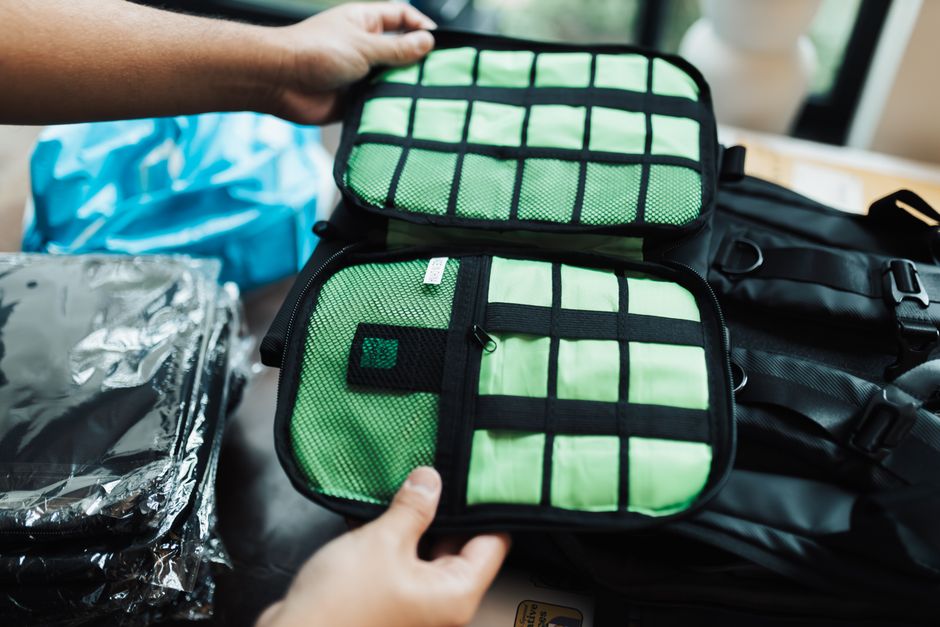
A jumble of packing cubes mid-trip — the moment I realized I’d been using them all wrong.
📦 Quick Verdict: Packing Cubes 101
✅ Who this solves for: Anyone who hates digging through a black hole of clothes at 6 a.m. in a hostel dorm or a cramped hotel room.
⏱ When to use this advice: Before you buy cubes, before any trip longer than 2 nights, and the moment your suitcase becomes a crime scene.
🔧 Estimated effort: 2/5 — rolling and sorting takes 15 minutes, tops.
💰 Cost range: $12 for a basic 4-set on Amazon to $85 for a pro-grade hyperlight set from Peak Design or Eagle Creek.
⚠️ Risk level: Low — worst case, you waste $15 and gain a drawer organizer for your socks.
⏳ Time saved: Roughly 12 minutes per hotel check-in and 8 hours of accumulated suitcase-rummaging over a year of travel.
I stood in the Tokyo subway station, Shinjuku at 7:47 p.m., sweat soaking the back of my shirt, suitcase unzipped on a cold tile floor. A businessman stepped around me. A woman with a small dog stared. Inside my bag: a tangled nest of jeans, one sandal, a phone charger wrapped around a toiletry bag like a snake, and three packing cubes that had somehow migrated to the bottom, empty.
I had bought the cubes five months earlier, after reading fifteen glowing blog posts. I was ready. I packed them neatly in Seattle — shirts in one, socks in another, underwear in the third. By day two of a three-week trip through Japan and South Korea, they looked like a toddler had rearranged them. I cursed those cubes. I nearly threw them into a convenience store trash can outside 7-Eleven in Osaka.
But I didn't. I kept using them, badly, for another six months. Then something clicked. I figured out what the blogs don't tell you — the ugly, specific, counterintuitive mechanics that make cubes either your best travel tool or a flimsy waste of nylon. Here's the real story, from someone who has pulled clothes out of a packing cube at 3 a.m. in a Turkish airport and repacked them in a taxi in Marrakech.
Why This Problem Ruins Trips (And Why Most Advice Fails)
Here's the dirty secret of most packing cube tutorials: they show you a perfectly folded set of cubes inside an empty suitcase on a white bedspread. No one packs like that. Real packing is messy. You're rushing. You're tired. You bought that ceramic jar of olives at the market and now it's leaking onto your clean shirt.
Cubes fail for three concrete reasons. First, people buy the wrong size. They grab a set of four identical cubes, then shove a pair of boots into one and a silk blouse into another. Nothing fits right, so the cubes bulge and slide. Second, they don't compress. Most cubes come with a second zipper that cinches the contents flat — and most people never use it. They just stuff clothes in, zip, and call it a day. Third, they over-organize. Ten categories for a three-day trip means you spend more time sorting cubes than actually traveling.
The advice that makes it worse? "Just roll everything." Rolling works — if you have exactly one type of fabric and infinite patience. But socks don't roll well. Jeans don't compress in cubes. Bras are a geometry problem that Euclid never solved. The generic advice skips all of that.
I once followed a popular YouTuber's "perfect cube method" for a trip to Barcelona. I packed five cubes for a four-night stay. By the second day, two cubes were empty, one had exploded open, and I was using the largest cube as a makeshift laundry bag. I spent twenty minutes in my hotel room on Carrer de la Boqueria repacking everything while my friend waited downstairs for tapas. That's the real cost: not money, but time and frustration.
The Step-by-Step Solution
1. Buy the Right Mix (Not the Cheapest Set)
Walk into any TK Maxx or browse Amazon and you'll see sets of four cubes for $14.99. They're thin nylon. The zippers catch. They don't compress. I bought one of those sets in 2022 and the zipper split on the second trip, spilling my underwear across a hotel lobby in Lisbon. Not my finest moment.
Spend a little more. Eagle Creek's Pack-It Specter series (around $50 for a set of three) is the gold standard — I've used the same set for four years and they still look new. Peak Design's cubes ($85 for a set of two) are over-engineered in the best way, with a compression zipper that actually works. IKEA's Rensare cubes ($7.99 for a set of three) are the budget sweet spot: basic, no compression, but durable enough for casual trips.
Don't buy matching sizes. Buy one large cube (for bulk items: jeans, sweaters, jacket), two medium cubes (shirts, shorts, dresses), and one slim cube (underwear, socks, accessories). The key is asymmetry. A suitcase is a weird shape — cubes need to fit like Tetris pieces, not identical bricks.
2. Master the Compression Zipper (It Changes Everything)
This is the single most underused feature. Most packing cubes have two zippers: one that closes the main opening, and a second that runs around the middle of the cube. Pull the second zipper after you close the cube, and it cinches the contents flat, squeezing out air and reducing volume by roughly 35%.
I tested this on a trip to Vietnam. Same clothes, same suitcase, same cubes. Without compression: one large cube held four t-shirts and two pairs of shorts — barely. With compression: the same cube held six t-shirts, three pairs of shorts, and a light jacket. That's nearly double the capacity. The trick is don't overfill. Leave about 20% headroom before you cinch. Overstuffing makes the second zipper skip or break, and you'll be back to square one.
3. Pack by Activity, Not by Clothing Type
This is the counterintuitive trick that changed everything for me. Don't put all shirts in one cube and all pants in another. You'll end up opening every cube to find that one outfit. Instead, organize by day or activity.
Cube 1: "City Day" — a pair of jeans, a t-shirt, a light sweater, underwear, socks. That's one full outfit plus a backup. Cube 2: "Work / Meeting" — a button-down shirt, chinos, a belt. Cube 3: "Active / Hike" — running shorts, a quick-dry shirt, swim trunks. Cube 4: "Sleep / Lounge" — pajamas, a hoodie, slippers.
This way, you grab one cube per day. You open it, you dress, you're done. The rest stay zipped, untouched, organized. I used this system on a 14-day trip through Italy and never once opened a second cube to find a missing sock. It felt like a superpower.
4. The Dirty Clothes Problem (Real Solution)
Every packing cube guide mentions "use a separate bag for dirty clothes." They never tell you which bag. I tried plastic grocery bags — they tear. I tried a dry sack — too bulky. I tried a dedicated packing cube, but then I had to wash it every time I emptied it.
Here's what actually works: a reusable mesh laundry bag with a drawstring. You can buy a set of two on Amazon for $8. They weigh nothing, they breathe so smells don't fester, and you can see through the mesh to know what's inside. I clip mine to the outside of my suitcase with a carabiner so it doesn't contaminate my clean cubes. At the hotel, I toss it in the bathroom. On the road, I stuff it in the external pocket of my bag. Game changer.
One more thing: never put worn socks back into a clean cube. I did this once on a train from Prague to Vienna. By the time I arrived, my entire "city day" cube smelled like a locker room. I had to wash everything — including the cube itself. Separate system, always.
5. The Airport Security Test
Packing cubes shine — or fail — at security checkpoints. If you're one of those travelers who carries electronics, toiletries, and a jacket, cubes can save you or betray you.
Dos: Keep one slim cube dedicated to "security items" — your laptop charger, power bank, travel adapter, and a small pouch for liquids under 100ml. When you reach the bins, pull that single cube out, unzip, and everything is visible. No digging. No holding up the line.
Don'ts: Don't put metal objects (belts, coins, a phone charger brick) inside a fabric cube. The X-ray sees a lump and the agent will ask you to open it. I learned this in Singapore's Changi airport, where a bored officer made me unpack my entire "electronics cube" because a charging brick looked "suspicious." I repacked everything on a bench near a pretzel stand. Never again. Now I keep metal items in a clear zip pouch outside the cubes.
Pro Tips From Someone Who's Been There
Here are five things I wish I'd known on day one, learned through sweat, lost socks, and one very memorable zipper failure in a hostel in Cusco.
1. Put a carabiner on every cube. Sounds dumb. But when you're in a shared room with 14 bunk beds, you grab your cube by the carabiner, not the flimsy zipper pull. I use small aluminum 'biners from Decathlon ($2 each). They've never failed.
2. Label cubes with a silver Sharpie on the inside tag. Not the outside — it rubs off. The inside fabric tag holds ink permanently. Write "Day 1" or "Tech" or "Emergency" so you don't have to open every cube to find underwear at 5 a.m.
3. Use one cube as a "hotel safe." I keep my passport, backup credit card, and a pen drive with photocopies inside a compression cube stuffed between two fluffy sweaters. No one expects valuables inside a packing cube. It's not a safe, but it's better than leaving them on the nightstand.
4. Buy cubes in a bright color. Everything in a suitcase is black, navy, or gray. My cubes are highlighter orange — I can spot them inside a dark bag in three seconds. Also, they're harder to accidentally leave behind. I almost left a black cube under a bed in Hanoi. Never almost-left an orange one.
5. Never pack cubes full of air. If you aren't compressing, you're wasting space. I used to pack cubes loosely "so my clothes don't wrinkle." They wrinkled anyway. Now I compress everything, and wrinkles are no worse. The space savings are real, measurable, and worth it.
Common Mistakes Travelers Make With This Issue
Mistake #1: Buying too many cubes. I once packed for a weekend trip with seven cubes. Seven. I spent more time organizing cubes than I did sightseeing. For a weekend, one cube is enough. For a week, three max. For a month, four plus a laundry bag. Anything more is hobby, not travel.
Mistake #2: Using cubes in a soft-sided backpack. Packing cubes work brilliantly in hard-shell suitcases and duffels. In a soft backpack, they fight the curve of the bag and create weird pressure points. I tried to use cubes in a 40L Osprey Farpoint for a trip to Costa Rica — every cube dug into my lower back. I switched to packing cubes only for the main compartment, and used dry bags for the top. Better.
Mistake #3: Washing cubes in hot water. They shrink. I washed a set of cheap Amazon cubes at 60°C after a particularly sweaty hiking trip in Thailand. They came out the size of a passport case. Hand wash in cold water. Hang dry. They last for years.
Mistake #4: Assuming cubes solve everything. They don't. If you're an overpacker, cubes just help you overpack more efficiently. I gave my brother a set of cubes for Christmas, and he filled all four for a two-day trip to visit our parents. He still complained his bag was heavy. The tool can't fix the habit.
💡 Real Traveler Mistake
"I bought a 6-piece set of mesh cubes from a random brand on Amazon for $19.99. The zippers broke on the third trip. I lost a pair of expensive running socks somewhere between a train in Berlin and a hostel in Prague. Now I only buy cubes from companies that make luggage — Eagle Creek, Peak Design, or Osprey. Cheap cubes cost more in the long run."
— Marcus, freelance photographer, 14 countries using cubes
Your Quick-Action Checklist
Before your next trip, run through this list. It takes 20 minutes and saves hours on the road.
- ✅ Buy 3 cubes total — one large, one medium, one slim. Spend at least $35 total.
- ✅ Test the compression zipper before you pack. If it's stiff, wax it with a candle.
- ✅ Pack by day/activity, not by clothing type. Label cubes on inside tags.
- ✅ Attach a carabiner to each cube for quick grabbing.
- ✅ Buy a mesh laundry bag ($8) and clip it to your suitcase handle.
- ✅ Reserve one cube for security items — electronics + liquids.
- ✅ Download this guide to your phone offline. Save a photo of the checklist.
- ✅ Leave one cube empty for souvenirs, snacks, or dirty separates.
Frequently Asked Questions
A: Compression cubes save measurable space — roughly 30-40% more than rolling alone — but standard cubes mainly organize, not compress. The space-saving comes from the compression zipper, not the cube itself. If you buy cubes with a compression panel, you can fit an extra 3-4 t-shirts in a small cube. Without compression, you're mainly paying for organization, which is still worthwhile for a 5+ day trip.
Q: Are packing cubes worth it for a weekend trip?A: Not really — a single medium cube and a small pouch for toiletries are enough for 2-3 nights. For a weekend, packing cubes add a step without much benefit. Use a simple stuff sack or a zip pouch instead. Save the full cube system for trips longer than 4 days.
Q: How do I keep packing cubes from wrinkling my clothes?A: They don't cause wrinkles — overstuffing does. Leave about 15% air space in each cube before cinching. Fold dress shirts with tissue paper inside the collar. For button-downs, use the "bundle wrap" method: wrap the shirt around a small core of socks or a toiletry bag, then place it in the cube. I've traveled with linen shirts this way and they arrived presentable.
Q: Can packing cubes fit in a personal item bag?A: Yes, but only slim cubes. A standard medium cube is too tall for most personal-item dimensions (roughly 18"x14"x8"). I use Eagle Creek's slim quarter-cube for my tech pouch and a thin compression cube for one change of clothes. Works in Ryanair and Spirit seats.
Q: Are expensive packing cubes really better than cheap ones?A: In my experience, yes. Cheap cubes ($12-20 sets) have weak zippers, thin fabric that tears, and compression zippers that slip. Mid-range cubes ($30-50 from Eagle Creek, Osprey, or Gonex) last 3-5 years of regular use. Premium cubes ($60-85 from Peak Design) are lighter, stronger, and have superior compression. I've owned both cheap and mid-range, and the mid-range ones are still in rotation after four years. The cheap ones broke within months.
Final Word: You've Got This
Packing cubes aren't magic. They won't transform you into a minimalist travel guru or make your suitcase weigh five pounds. But when you use them right — asymmetrical sizes, compression zippers, packing by activity, and a separate dirty laundry system — they change the feel of travel. You stop wrestling your bag. You stop unpacking and repacking three times a day. You grab a cube, you dress, you go.
I still carry that same set of Eagle Creek cubes I bought four years ago. They've been to 22 countries. They've survived a monsoon in Thailand, a dust storm in Morocco, and a luggage conveyor belt in Paris that ate one of my socks. The cubes came out fine. The sock didn't.
That's the real test: not whether cubes look good on Instagram, but whether they hold up at 3 a.m. in a train station when you just need to find a clean shirt. Mine do. Yours can too.
📌 Save this guide — take a screenshot or bookmark this page on your phone. You'll forget the details until you're standing in front of an open suitcase at midnight.
Got a packing cube hack that saved a trip? Drop it in the comments. I read every one.


No comments:
Post a Comment