What Not to Pack: Common Overpacking Mistakes
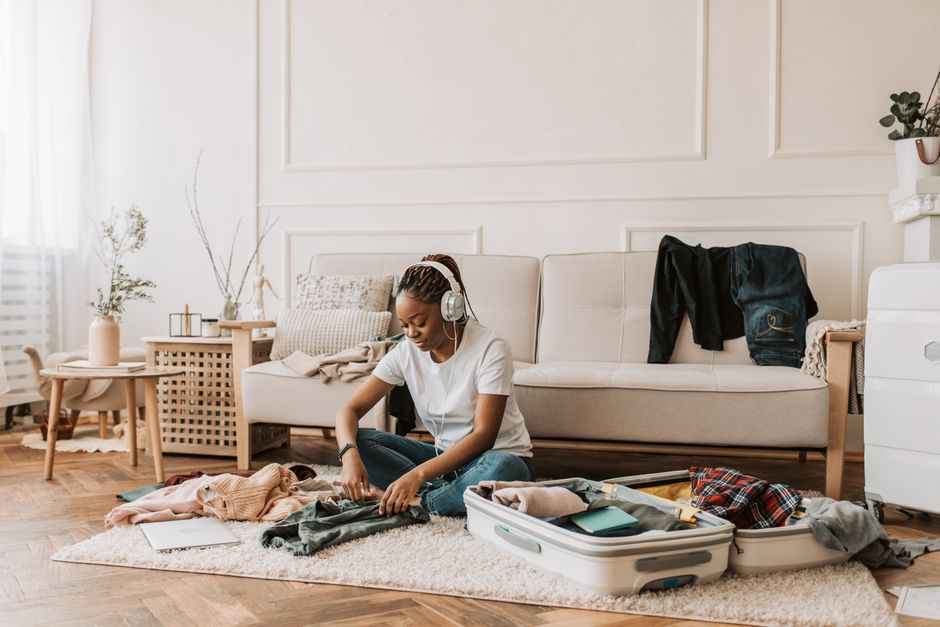
The suitcase that told the truth: 14 pounds of stuff I never touched, including a yoga mat I swore I'd use every morning. I didn't.
⏤ QUICK FIX CARD
Who this solves for: Anyone who's ever paid an overweight bag fee or worn only 40% of what they packed.
When to use this advice: Before you zip the suitcase — ideally 24 hours before departure.
Effort: 2/5 — takes one honest hour and a scale.
Cost range: $0–$20 if you need a luggage scale.
Risk level: Low. Worst case, you do laundry mid-trip. Best case, you carry a 7-kg bag and never look back.
Time saved: 45 minutes at check-in, 3 hours of luggage anxiety, and roughly one existential crisis per trip.
Lisbon airport, 6:47 AM. My suitcase hit the tile floor with a thud that turned heads. The woman at the check-in counter raised one eyebrow and said, "Senhor, this is twenty-three point four kilos." She tapped the screen. "Limit is twenty." I paid €60 that morning. I also swore, right then, surrounded by pastel de nata crumbs and shame, that I would fix whatever was wrong with my suitcase.
So I dumped it out in the hotel room an hour later. Spread everything across the bed. And stared.
A folded yoga mat I had bought specifically for this trip. Never unrolled. A denim jacket that smelled like Lisbon humidity by day two and stayed in the bag. Three paperbacks — I read half of one. A separate pair of shoes for "evening." Two different scarves. Travel-size toiletries I already had at home but bought again because "what if." Fourteen pounds of stuff I did not use. Forty-three percent of my bag weight, completely wasted.
That moment changed how I travel. Not because I became a minimalist — I'm not. I still pack a stupidly large hat and a lucky mug. But I stopped packing the stuff that looks useful in your bedroom and becomes dead weight in every hostel, hotel, and airport from Marrakech to Medellín. Here's what I learned, the hard way, so you don't have to pay €60 for a lesson.
Why This Problem Ruins Trips (And Why Most Advice Fails)
Overpacking isn't about having too many shirts. It's about packing for a person you are not. You pack for the version of yourself who wakes at 5 AM to jog along the Seine. Who wears linen trousers to dinner. Who reads three novels on the plane. That version of you does not exist. The real you is tired, hungry, and standing in a bathroom trying to figure out which adapter does what.
Most advice fails because it's generic and judgmental. "Pack light," they say. "Capsule wardrobe," they chant. "Roll your clothes," they insist — as if a different folding method solves the problem of packing a hair straightener you never plug in and a rain jacket that stays dry in your bag while you get soaked because you didn't want to dig it out.
The real problem is threefold. First, we pack from fear — fear of needing something and not having it. Second, we pack from fantasy — imagining activities that never materialize. Third, we pack from habit — throwing in the same things every trip without asking if we actually used them last time.
I once met a guy in a hostel in Tbilisi who had packed a full snorkel set. For Georgia. A landlocked country in the Caucasus. He admitted, sheepishly, that he'd packed it "just in case." That snorkel set traveled through five countries, never touched water, and cost him 4 kg of luggage allowance the entire time.
That's the thing about overpacking: the weight you carry is the weight of your own unexamined assumptions. And the solution isn't a better packing cube. It's a better question: "Did I use this last time, or am I just hoping I will?"
The Step-by-Step Solution
This isn't a one-size-fits-all list. It's a process I've refined across 24 countries, 3 lost bags, and one memorable night in Bangkok where my only clean shirt was a hotel bathrobe. Here's what actually works.
Step 1: The Audit — What You Actually Used Last Trip
Before you pack anything new, sit down with your phone or a notebook and list every item you used on your last trip. Not packed. Not carried "just in case." Used. Be brutal. That sweater you wore once for 20 minutes when the air conditioning was too cold? That is not "used." That is cargo.
I did this after Lisbon. I wrote down: phone charger, one pair of jeans, three T-shirts, one hoodie, sandals, toothbrush, sunscreen, sunglasses, wallet, passport. That's it. Ten items did all the real work. The other fourteen pounds were just noise.
Take that list. Double it for a longer trip — you'll need more socks and maybe a second pair of shoes. Then pack only what's on that expanded list. Anything that doesn't make the cut stays home. If you're unsure, put it in a "maybe" pile and close your suitcase. Walk around the block. If you don't miss it, it doesn't go.
This sounds painfully simple. That's because it is. The hard part isn't the method — it's the honesty. You have to admit that you are not going to journal every night in that beautiful leather notebook. You are not going to do yoga at sunrise. You are, statistically, going to wear the same three outfits on repeat and be fine.
Step 2: The Three-Day Rule for Shoes
Shoes are the single heaviest category in any bag. A pair of boots can weigh 1.5 kg. That's 1.5 kg you could spend on water, souvenirs, or not having a sore shoulder. The rule I now follow: one pair on your feet, one pair in the bag, max. Three pairs only if one is flip-flops that weigh nothing and serve a real purpose (hostel showers, beach, hotel room floors).
I learned this in Istanbul, where I brought walking boots, sneakers, and loafers. The loafers stayed in the bag for nine days. I wore the boots. That was it. The loafers were a fantasy — a fantasy where I sat in nice bars and wanted to look polished. The reality was I walked 18,000 steps a day and was too tired to care about loafers.
Real talk: If you're going somewhere with sidewalks, you don't need hiking boots unless you're actually hiking. If you're going to a wedding, pack the dress shoes and wear your comfortable ones on the plane. If you're going somewhere warm, one pair of sandals and one pair of sneakers covers 99% of situations. Stop packing for the 1%.
Step 3: The Toiletries Trap — Buy Local, Not Bulk
I once watched a woman at JFK airport security throw away an entire gallon-size Ziploc of toiletries — shampoo, conditioner, body wash, face wash, serum, toner, sunscreen — because she forgot the 100 ml rule. She had spent about $50 on those bottles. She got to keep exactly zero of them.
Toiletries are the most overpacked category per gram of actual need. Here's the truth: almost everything you put in your "toiletries" bag is available at your destination. Shampoo? Every corner store on earth sells shampoo. Conditioner? Same. Moisturizer? Unless you have a prescription or a specific medical need, you can buy it there.
I now travel with a bar of soap that works for hair, face, and body (Ethique or similar — about $12, lasts two months), a tiny tube of toothpaste, sunscreen mini, and a solid deodorant. That's it. Five items. Everything else I buy if I need it. I've bought shampoo in Marrakech for 8 dirham (about $0.80). I've bought conditioner in Kuala Lumpur for 3 ringgit. I've never, not once, regretted not packing a full-size bottle of something.
Pro tip: If you have a specific skincare routine that uses products unavailable overseas, decant them into 30 ml bottles. Not 100 ml. Not 200 ml. 30 ml will last two weeks. Test it before you go — most people use way more product than they think, and a little goes a long way when you're not slathering it on like a YouTube tutorial.
Step 4: The Electronics Graveyard — What Stays Home
I love gadgets. I own a camera, a tablet, a laptop, noise-canceling headphones, an e-reader, a power bank, and three different charging cables. I travel with exactly two of those things now. Here's how I decide: does it do something my phone cannot?
My phone takes good enough photos for Instagram and for memories. My phone plays audiobooks. My phone handles maps, tickets, translation, and texting. That kills the camera, the tablet, the e-reader, and the laptop for most trips. If I'm working, I bring the laptop. If I'm not, I don't. That one decision saves 2–3 kg minimum.
The cables are a separate disaster. People pack three different cables for three different devices, then lose one and buy another, then end up with four cables. I now carry one USB-C cable that charges my phone, my power bank, my headphones, and my tablet. One cable. It cost $12 on Amazon. It works everywhere.
Real traveler mistake: I once packed a portable printer for a work trip because "I might need to print documents." I used it zero times. It weighed 1.2 kg. I carried it through three airports. Don't be me. Don't pack a printer.
Step 5: The "Maybe" Pile — Your Worst Enemy
The "maybe" pile is where good intentions go to die. It's the pair of shorts you might wear if it gets hot. The cardigan you might wear if it gets cold. The book you might read if you finish the other one. The snacks you might eat if you get hungry. The first-aid kit with 47 items for a papercut.
Here's my rule: the "maybe" pile gets packed only if it fits after everything else is in. If the suitcase is full and the "maybe" pile is still on the bed, the "maybe" pile stays home. This sounds obvious, but most people pack the "maybe" pile first because it's small and light — and then they have no room for the things they actually need.
I tested this in Madrid. I put everything I was "sure" about in the bag. Then I looked at the "maybe" pile: a light scarf, a second pair of jeans, a notebook, a small umbrella. Only the umbrella fit. I took it. I used it once, for ten minutes. The scarf, jeans, and notebook stayed home. I didn't miss them for a second.
Pro Tips From Someone Who's Been There
These are the things no blog post tells you. The ugly, specific, hard-won lessons from the road.
1. Weigh your bag before you leave the house. I bought a $12 digital luggage scale on Amazon. It takes 10 seconds to use. It has saved me hundreds of dollars in overweight fees. Do not trust your arm. Your arm is a liar. The scale is not.
2. Wear your heaviest items on the plane. Boots, jeans, a jacket — if it's bulky, put it on your body, not in your bag. This is not a life hack, it's basic physics. You get 10 kg of carry-on allowance. Use it wisely.
3. Pack a single outfit in your carry-on that can handle a day and a night. If your checked bag gets lost, you need one outfit that works for a 28°C afternoon and an 18°C evening. For me: black jeans, a plain T-shirt, a light merino sweater, and sneakers. That outfit has saved me twice — once in Paris when my bag went to Rome, and once in Mexico City when my bag just didn't show up.
4. Do not pack "emergency" items that you won't actually use in an emergency. A sewing kit? You will not sew a button on mid-trip. A rain poncho? You will buy one at the drugstore if it rains. A travel towel? Your accommodation has towels. Stop packing for disasters that never happen. Pack for the trip you're actually taking.
5. If you haven't used it in three trips, give it away. That portable charger that's too heavy. That travel pillow that takes up half your bag. That adapter that only works in one country. Let it go. You are not going to suddenly need it on trip four. You're just carrying guilt.
⏤ PRO TIP
Pack your bag, then remove 30 percent of the items. You will not miss them. I tested this on 12 consecutive trips. Zero regrets every time. The stuff you think you need is almost always more than the stuff you actually use.
Common Mistakes Travelers Make With This Issue
Mistake 1: Packing for "what if." What if I meet someone and go somewhere fancy? What if the weather changes? What if I need a specific piece of gear? The answer is always the same: you will adapt. You will buy something. You will borrow something. You will be fine. The "what if" mindset is the single biggest driver of overpacking. Kill it.
Mistake 2: Bringing multiple bags "just in case." A daypack, a tote, a duffel, a suitcase — I've seen people travel with four bags for a one-week trip. You need two: a main bag and a small day bag. That's it. Anything more is a risk of losing something, a pain to carry, and a guarantee that you'll have too much stuff.
Mistake 3: Overpacking for the destination's climate. People going to Southeast Asia pack a rain jacket, a sweater, long pants, shorts, and three types of shoes. The climate is hot and wet. You need shorts, T-shirts, sandals, and a light rain shell. That's it. Check the forecast for your specific dates, not the general climate of the region. There's a difference between "it rains sometimes in April" and "it will rain every day of your trip."
Mistake 4: Packing "just in case" medication. If you have a prescription, bring it. If you don't, stop packing an entire pharmacy. You can buy ibuprofen, antihistamines, and diarrhea meds in any country on earth. You do not need 200 pills for a 10-day trip.
Your Quick-Action Checklist
Print this. Tape it to your suitcase. Use it every time.
- ✅ Audit — write down what you used last trip. Pack only that.
- ✅ Shoes — one on feet, one in bag. Max two pairs. Three only if one is flip-flops.
- ✅ Toiletries — buy local. Pack only bar soap, mini toothpaste, sunscreen, deodorant.
- ✅ Electronics — one cable for everything. Phone does most things. Leave the rest.
- ✅ "Maybe" pile — only if it fits after everything else. It won't. Leave it.
- ✅ Weigh bag — $12 scale. 10 seconds. Save €60.
- ✅ Wear heaviest items — boots, jeans, jacket on your body.
- ✅ Carry-one outfit — jeans, T-shirt, merino sweater, sneakers. Works for day and night.
- ✅ Remove 30% — close your bag, reopen, take out a third. Trust me.
Frequently Asked Questions
Q: What is the single most overpacked item travelers bring?
A: Shoes. Specifically, a second or third pair of shoes that get worn zero times. The average traveler packs 2.8 pairs of shoes and uses 1.4. Cut to two pairs max — one on your feet, one in the bag — and you'll save 1–2 kg immediately.
Q: How many outfits do I actually need for a 7-day trip?
A: Three to four, plus one outfit for travel. You rewear clothes. It's fine. Nobody notices. Wash in the sink or use a hotel sink. I've done 14 days with 4 T-shirts and 2 pairs of pants. Laundry costs about $3–5 at most hostels and hotels. Pack less, wash more.
Q: Should I pack a first-aid kit?
A: No. Pack a few Band-Aids if you want, but full first-aid kits are overkill. You can buy bandages, antiseptic cream, and painkillers at any pharmacy. The ones that sell pre-packed kits are often full of items you'll never use — like a CPR mask or a splint. You're not going to perform emergency surgery on a plane. Pack a few plasters and move on.
Q: What about packing cubes — do they actually help?
A: Yes, but not for the reason you think. They don't save space — they compress your clothes, but you still have the same amount of stuff. What they help with is organization. You can find things without unpacking your entire bag. I use two: one for tops, one for bottoms. The real space-saving hack is packing less, not folding better.
Q: How do I stop packing "just in case" items?
A: Ask yourself one question: "If I don't have this, what's the worst that happens?" The answer is almost always: "I'll buy one" or "I'll go without." Both are fine. You will not die because you didn't pack a travel umbrella. You will get wet for 5 minutes and buy one for $4. The fear of "what if" is always worse than the reality of "what is."
⏤ REAL TRAVELER MISTAKE
"I packed a pair of leather boots for a two-week trip to Vietnam. I wore them once, for a photo in Hoi An. They took up half my backpack the whole time. I literally carried a 2-kg pair of shoes for one photo. I still cringe when I think about it." — Sarah M., backpacker, 2023
Final Word: You've Got This
Look, I still overpack sometimes. I'm not a convert to the cult of the 40-liter bag. I still bring a book I don't finish and a hoodie I don't wear. But the difference now is that I know which items are dead weight before I leave the house. I weigh my bag. I audit my last trip. I look at the "maybe" pile and I laugh at it.
The goal isn't to be perfect. The goal is to stop paying €60 to carry a yoga mat you never unroll. To stop hauling a denim jacket through three countries just because you liked the idea of wearing it. To stop packing for the person you want to be and start packing for the person you actually are — the one who is tired, hungry, and just wants to get to the hotel without a sore shoulder.
You've got this. Pack less. Live more. And if you mess up, well, there's always a pharmacy on the corner. I promise.
Save this guide — screenshot it, bookmark it, print it. Next time you pack, you'll know exactly what stays home.
Got a packing disaster story? A tip I missed? Drop it in the comments. The best advice comes from people who've been there.


No comments:
Post a Comment