
Why a Weekend Trip to Bangkok is the Perfect Quick Getaway
There’s a certain electric energy that hits you the moment you step out of Suvarnabhumi Airport. The humid air, the distant hum of tuk-tuks, the scent of sizzling street food drifting from every corner — it’s sensory overload in the best possible way. A weekend trip to Bangkok might sound ambitious, but for travelers craving a rapid recharge of culture, cuisine, and chaos, this city delivers like no other. With direct flights from major hubs across Asia, Australia, and beyond, you can leave on a Friday evening and be sipping coconut water by a rooftop infinity pool by Saturday noon.
What makes Bangkok so compelling for a short escape is its sheer density of experiences. You don’t need weeks to scratch the surface. Within 48 hours, you can kneel before the Emerald Buddha at Wat Phra Kaew, haggle for vintage denim at Chatuchak Market, slurp boat noodles along a centuries-old canal, and still have time for a world-class Thai massage. The city compresses a continent’s worth of contrasts into a single metropolitan sprawl. Gleaming mega-malls like ICONSIAM sit a short ferry ride from wooden shophouses where artisans still hand-beat bronze bowls. That collision of worlds is precisely why this city rewards the weekend warrior.
For first-timers, a weekend trip to Bangkok also serves as the ultimate gateway to Southeast Asia. The city’s infrastructure is remarkably tourist-friendly, with an expanding network of MRT and BTS Skytrain lines that make zipping between neighborhoods surprisingly efficient. English signage is widespread, street food vendors are endlessly patient with charades-style ordering, and the Thai baht stretches far further than most travelers expect. A feast of pad kra pao with a crispy fried egg costs less than a latte back home.
But beyond logistics and affordability, Bangkok offers something harder to quantify: a genuine warmth that lingers long after you’ve boarded your return flight. It’s the grandmother at the morning market who insists you try a sample of her mango sticky rice. It’s the canal boat driver who flashes an impossibly wide grin as he navigates the khlongs. A weekend here isn’t just a checkmark on a bucket list — it’s a full-throttle immersion into a living, breathing urban ecosystem that refuses to be tamed. The jet lag will be worth it.
Bangkok’s Unique Blend of Tradition and Modernity
Few cities on earth straddle the past and future with the grace of Bangkok. One moment you’re standing beneath the golden spires of Wat Arun as monks in saffron robes chant morning prayers, the next you’re riding a driverless MRT train past digital billboards advertising the latest crypto exchange. This isn’t a city that preserves history behind velvet ropes — it weaves it into daily life. Spirit houses, adorned with fresh marigolds and Fanta bottles, sit at the foot of glass skyscrapers. Elders burn incense outside designer boutiques. The sacred and the commercial coexist without contradiction.
Nowhere is this duality more vivid than in the city’s food scene. Michelin-starred restaurants like Sorn and Le Du reinterpret royal Thai recipes with molecular precision, yet the most transcendent meal of your trip might come from a cart perched on a crumbling curb in Yaowarat. That vendor has likely been perfecting her single dish for three decades — a living culinary lineage served on a plastic plate for 60 baht. A weekend trip to Bangkok lets you sample both extremes without having to choose sides. You can start your evening with a negroni at a Thonglor speakeasy hidden behind a washing machine facade, then end it on a plastic stool devouring charcoal-grilled pork skewers at 2 a.m.
The city’s creative class thrives in this tension. Galleries like the Bangkok Art and Culture Centre showcase avant-garde installations critiquing consumerism, while just across the street, devotees queue for hours to receive a sacred sak yant tattoo from a master monk using a bamboo needle. This is a metropolis where ancient animist beliefs mingle with cutting-edge fashion, where temple fairs blast Thai pop music alongside traditional likay theater. You don’t observe Bangkok’s culture — you wade straight into it, and within a single weekend, it reshapes how you see the world.
Is 48 Hours Enough? Setting Realistic Expectations
Let’s be candid: you won’t see everything. Bangkok is a sprawling megacity of over 10 million people, and even locals spend a lifetime uncovering its secrets. But 48 hours is absolutely sufficient to capture the city’s essence if you plan strategically. The key is accepting that you’ll miss plenty — and that’s perfectly fine. A weekend trip to Bangkok works best when you resist the urge to treat it like a checklist marathon. Pick three or four must-do experiences, anchor them to specific neighborhoods, and leave generous gaps for spontaneous detours. The magic often happens in those unplanned moments: stumbling upon a hidden courtyard temple, getting invited to share a bottle of Sangsom rum by friendly strangers, or losing yourself in a labyrinthine alley market.
To maximize a short stay, base yourself in a central district like Sukhumvit or Silom to minimize transit time. Prioritize early mornings — the city is cooler, temples are quieter, and the light for photography is sublime. Use the Skytrain and MRT religiously during peak traffic hours, and save taxis for late-night returns. With disciplined time management, you can cover the Grand Palace complex, a canal boat ride, a street food deep-dive, and a rooftop sunset in a single well-orchestrated day. The second day can focus on shopping, a cooking class, or a day trip to the floating markets if you’re feeling ambitious. You’ll leave exhausted but deeply satisfied — and already plotting your return.
When to Visit: Weather and Crowds in 2026
Bangkok’s climate is broadly divided into three seasons, and choosing wisely can make or break your weekend trip to Bangkok. The cool season from November through February remains the sweet spot. Temperatures hover around a pleasant 26–30°C (79–86°F), humidity drops to manageable levels, and the city buzzes with festivals like Loy Krathong and Chinese New Year. This is peak tourist season, so expect larger crowds at major temples and higher hotel rates — book at least six weeks in advance for decent deals.
March through May brings the punishing heat season, with temperatures regularly soaring past 38°C (100°F). Sightseeing becomes a sweaty endurance test, though this is also when Songkran — Thailand’s legendary water festival — transforms the entire city into a joyous water fight in April 2026. The rainy season runs from June to October, characterized by short, dramatic afternoon downpours rather than all-day washouts. September and October see the heaviest rainfall, but hotel prices plummet and the city feels delightfully uncrowded. For 2026 specifically, consider that the rainy months may bring occasional flooding in certain low-lying areas, so pack quick-dry clothing and a sturdy umbrella. Whenever you go, early mornings are your best friend — regardless of season, the hours before 10 a.m. offer the most comfortable exploration window.
Visa and Entry Requirements for Thailand (2026 Update)
Thailand continues to welcome tourists with relatively hassle-free entry policies in 2026, though regulations can shift. Travelers from over 60 countries — including the United States, Canada, the UK, Australia, and most EU nations — enjoy visa-free entry for stays up to 30 days when arriving by air. This makes a weekend trip to Bangkok refreshingly straightforward for passport holders from these regions. However, ensure your passport has at least six months validity beyond your arrival date and contains a few blank pages for stamps. Immigration officers may also ask for proof of onward travel, so keep a digital copy of your return flight confirmation handy.
For visitors from countries not on the visa exemption list, Thailand’s eVisa system has streamlined the application process significantly. Applications can be submitted entirely online through the official Thai eVisa portal, typically requiring a digital passport photo, flight itinerary, hotel booking, and proof of sufficient funds. Processing takes three to five business days in most cases. As of early 2026, Thailand has also fully integrated its biometric entry system at major airports, which means fingerprint and facial scans upon arrival — a quick process that adds perhaps 90 seconds to immigration clearance. Always check the Tourism Authority of Thailand’s official website for the latest updates before booking your flights, as visa policies can change with minimal notice.
Getting to Bangkok: Flights, Airports, and Transfers
Reaching the Thai capital has never been easier, with both of Bangkok’s airports handling a combined network of flights that blankets nearly every corner of the globe. For a weekend trip to Bangkok, flight selection is critical — you want to maximize time on the ground rather than in transit. The city’s two airports serve different purposes: Suvarnabhumi Airport (BKK) is the heavyweight international hub, a sleek glass-and-steel complex that processes the bulk of long-haul arrivals. Don Mueang International Airport (DMK), the older sibling, has reinvented itself as a bustling base for budget carriers and regional low-cost connections. Understanding which airport you’re flying into shapes your entire arrival experience, from immigration queues to transfer logistics.
When booking for a short weekend escape, prioritize flight timings that align with Bangkok’s rhythms. Landing late on a Friday evening is ideal — you’ll clear immigration during off-peak hours, then wake up Saturday morning already in the heart of the action. Red-eye flights from the Middle East, East Asia, and Australia often deliver this perfect timing. Avoid arrivals during Bangkok’s notorious rush hours (7–9 a.m. and 5–8 p.m.) unless you enjoy sitting in gridlock on the expressway. Return flights late Sunday night or very early Monday morning squeeze every possible hour out of your 48-hour window. Many regional carriers now offer “weekend special” fare buckets explicitly designed for short-stay travelers, so search with flexible date tools to uncover these deals.
Beyond flight logistics, consider the psychological adjustment of arriving in a city that operates at full sensory volume. Bangkok hits newcomers with a wall of heat, noise, and motion the second automatic doors slide open. Prepare by downloading essential apps before departure: Grab (Southeast Asia’s Uber equivalent), Google Maps with offline Bangkok maps, and a currency converter. Screenshot your hotel address in Thai script — this small gesture saves immense confusion when communicating with taxi drivers. The city rewards preparation, and a smooth arrival sets the tone for an unforgettable weekend.
Choosing Between Suvarnabhumi (BKK) and Don Mueang (DMK)
Suvarnabhumi Airport, Bangkok’s primary international gateway, handles most full-service carriers including Thai Airways, Emirates, Singapore Airlines, and all long-haul flights from Europe and the Americas. Its facilities are modern and sprawling, with an efficient Airport Rail Link connecting directly to the city’s MRT and BTS networks. Immigration queues can be lengthy during peak arrival waves, but the sheer volume of counters keeps things moving. Inside, you’ll find plentiful currency exchanges, SIM card vendors, and a decent selection of restaurants — including a surprisingly good food court on the lower level where airport staff eat at local prices.
Don Mueang, by contrast, is the domain of budget airlines. AirAsia, Nok Air, and Thai Lion Air dominate its terminals, offering rock-bottom fares from destinations across Asia. The airport is older and noticeably less polished than Suvarnabhumi, with a more chaotic check-in experience and fewer premium amenities. However, it compensates with speed — domestic and regional flights often disembark and clear baggage in record time. Don Mueang lacks a direct rail link to the city center, so you’ll rely on buses, taxis, or ride-hailing apps for the 45-minute journey into downtown. For a weekend trip to Bangkok, the choice often comes down to your origin: if you’re flying internationally from outside Asia, you’ll almost certainly land at Suvarnabhumi. Regional budget travelers may find Don Mueang offers irresistible savings that free up cash for a nicer hotel.
Best Airlines and Flight Deals for a Weekend in 2026
Securing a well-priced flight for a weekend trip to Bangkok in 2026 requires a blend of strategic timing and carrier awareness. Full-service airlines like Singapore Airlines, Cathay Pacific, and Qatar Airways frequently run flash sales with weekend-friendly schedules, often including generous baggage allowances and the ability to select seats in advance — valuable perks when every hour counts. For travelers departing from Europe, Middle Eastern carriers like Emirates and Etihad offer seamless connections through Dubai and Abu Dhabi, with late-night departures that land in Bangkok by early afternoon the following day. From North America, transpacific routes via Tokyo, Seoul, or Taipei on ANA, Korean Air, or EVA Air provide similarly efficient connections.
Budget carriers remain the go-to for regional travelers. AirAsia’s extensive network feeds Bangkok from cities like Kuala Lumpur, Singapore, Jakarta, and Hong Kong at fares that occasionally dip below $50 one-way during promotions. Scoot, Jetstar, and VietJet offer comparable value. The sweet spot for booking typically falls six to eight weeks before departure, though subscribing to airline newsletters and fare alert services can surface last-minute weekend steals. In 2026, several carriers have also introduced flexible booking options that allow date changes without penalty — a useful safety net for short trips where rescheduling could salvage an entire weekend. Always compare prices on aggregators like Skyscanner or Google Flights, but book directly through the airline to avoid complications during check-in or irregular operations.
Airport to City: Taxi, Train, or Grab?
From Suvarnabhumi, the Airport Rail Link is the undisputed champion for speed and affordability. The express train whisks you to Makkasan Station in about 25 minutes for roughly 45 baht, where you can transfer to the MRT metro. The slightly slower City Line connects to Phaya Thai BTS station, seamlessly plugging you into the Skytrain network that serves Sukhumvit and Silom. Trains run from 6 a.m. to midnight, clean and air-conditioned, making them ideal for solo travelers with manageable luggage. During heavy traffic, the rail link easily beats any road-based option.
Taxis offer door-to-door convenience but come with caveats. Always insist on the meter — if a driver refuses, exit and find another. From Suvarnabhumi, expect to pay 300–450 baht including tolls and the 50-baht airport surcharge for the 45–60 minute ride to central Bangkok. From Don Mueang, fares run slightly lower, around 250–400 baht. The ride-hailing app Grab operates at both airports and eliminates language barriers and meter negotiations. Designated Grab pickup points are clearly marked, and you’ll know the exact fare before the driver arrives. For groups of three or more, the cost difference between a Grab and the train shrinks significantly, making door-to-door comfort the smarter choice. Avoid unlicensed touts inside the terminals — they prey on disoriented newcomers and charge triple the standard rate.
Where to Stay for a Weekend in Bangkok: Best Areas and Hotels
Choosing where to lay your head during a weekend trip to Bangkok can feel overwhelming given the city’s sheer scale and the dizzying array of accommodation options. The right neighborhood shapes your entire experience, determining whether you roll out of bed into a serene temple courtyard or stumble directly into a neon-lit street food paradise. Bangkok’s accommodation landscape in 2026 spans every conceivable budget and aesthetic, from $15 hostel pods with rooftop co-working spaces to $800-per-night riverside suites where butlers draw rose-petal baths. The sweet spot for most weekend travelers sits in the $80–200 range, where boutique hotels deliver genuine character, rooftop pools, and locations that slash transit time to near zero.
The cardinal rule for a short stay is simple: minimize travel friction. Bangkok traffic can be punishing, and spending an hour each way commuting from a distant hotel eats precious time better spent exploring. The three neighborhoods detailed below — Sukhumvit, the Riverside, and Old Town — each offer a radically different flavor of the city. Your choice should align with your weekend priorities. Night owls and first-time urban explorers gravitate toward Sukhumvit’s polished chaos. Couples and special-occasion splurgers find their bliss along the Chao Phraya River. Culture purists and history buffs plant themselves in Rattanakosin, where the city’s soul resides. Whichever you pick, book early — Bangkok’s best boutique properties fill up weeks in advance, especially for weekend dates in the cool season.
One final lodging tip: prioritize hotels with rooftop pools. This isn’t mere indulgence — after a sticky morning of temple-hopping, plunging into cool water while gazing at the skyline is genuinely restorative. Many mid-range properties now feature compact but stylish infinity pools that rival far pricier competitors. Also confirm that your hotel is within a 10-minute walk of a BTS or MRT station. That single factor will save you hours of frustration and hundreds of baht in unnecessary taxi fares over a weekend.
Sukhumvit: Nightlife and Convenience
Sukhumvit Road stretches like a concrete artery through the heart of modern Bangkok, and its central reaches — roughly between Soi 1 and Soi 63 — pack more dining, drinking, and shopping into a single strip than most cities manage in their entirety. For a weekend trip to Bangkok, Sukhumvit’s greatest gift is its BTS Skytrain line, which runs directly overhead and connects you to Siam’s mega-malls, Chatuchak Market, and the river ferry piers within minutes. The neighborhood never really sleeps; at 3 a.m., you’ll still find street-side noodle stalls ladling broth and speakeasy bars humming behind unmarked doors.
Accommodation here runs the gamut. The area around Soi 11 and Soi 13 is party central, with hotels like the Aloft and Solitaire offering comfortable rooms steps from rooftop bars and nightclubs. For something more refined, the side streets off Thonglor (Soi 55) and Ekkamai (Soi 63) house boutique gems like The Salil Hotel and Volve Hotel Bangkok, where Japanese-influenced design meets impeccable service. Budget travelers cluster near Nana and Asok, where hostels like The Yard Hostel provide garden-shaded sanctuaries improbably tucked behind busy thoroughfares. The dining scene is staggering: from Michelin-starred street food at Jay Fai’s original shophouse to omakase counters hidden in sub-sois, you could spend a month eating here and barely scratch the surface. For first-timers seeking maximum energy and minimum transit headaches, Sukhumvit delivers unapologetically.
Riverside: Scenic Views and Luxury Stays
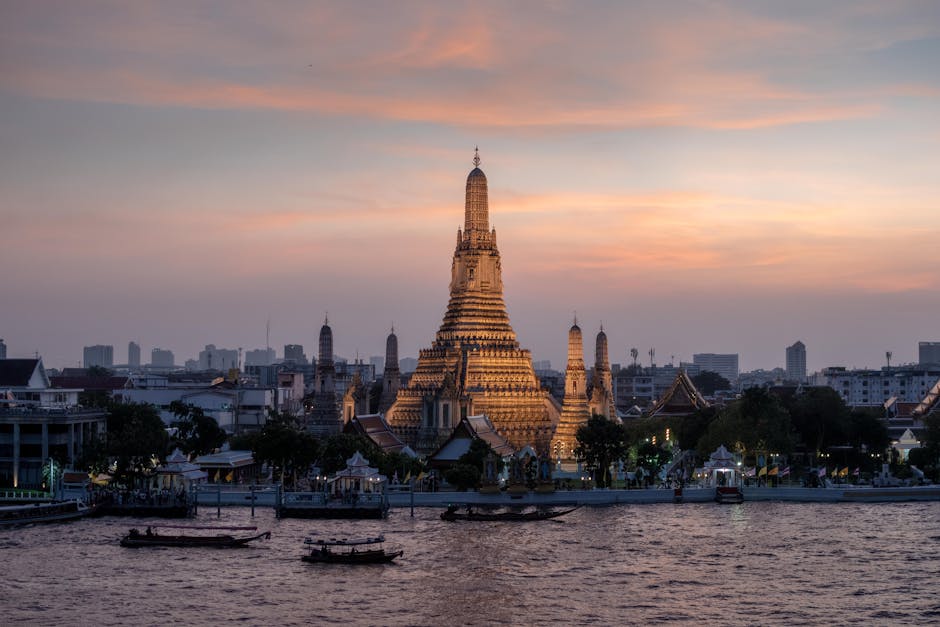
The Chao Phraya River is Bangkok’s liquid soul, and staying along its banks offers a perspective on the city that feels worlds removed from the concrete canyons of Sukhumvit. The riverside is where Bangkok’s most iconic luxury hotels hold court, their names whispered reverently by seasoned travelers: Mandarin Oriental, The Peninsula, Capella Bangkok, and the Four Seasons. These properties don’t just offer rooms — they deliver experiences. Dawn breaks gently over the water as long-tail boats putter past, their engines a distant thrum. At dusk, the Temple of Dawn glows gold across the river, and hotel terraces fill with guests sipping Champagne as the sky performs its nightly color show.
A weekend trip to Bangkok on the riverside comes at a premium, but the value is undeniable for those seeking romance or a celebratory escape. The Peninsula’s tiered infinity pools gaze directly at the skyline, while Capella’s villa-style suites feature private plunge pools mere meters from the water’s edge. Even mid-range options like Ibis Bangkok Riverside and Anantara Riverside offer riverfront pools and shuttle boat services that turn a simple hotel transfer into a scenic cruise. The main trade-off is connectivity: you’ll rely heavily on hotel shuttle boats, river ferries, and taxis to reach BTS stations. The closest Skytrain link is Saphan Taksin, accessible via a short ferry ride from most riverside hotels. But the inconvenience fades when you’re sipping a lemongrass-infused cocktail on a teak terrace, watching the river slide endlessly
Day 1: Temples, Palaces, and the Chao Phraya River
Your first day on a weekend trip to Bangkok dives straight into the city's spiritual and royal heart. The Chao Phraya River serves as your liquid highway, connecting three of the most spectacular temples and the former capital's most atmospheric districts. Start early—Bangkok's heat builds quickly, and the morning light makes the golden spires truly unforgettable.
Dress respectfully today. Shoulders and knees must be covered at all temple sites. Lightweight, loose fabrics will keep you comfortable without violating dress codes. Sarongs are available for rent at most entrances if you arrive unprepared, but bringing your own saves time in queues.
Carry a refillable water bottle and apply sunscreen before you leave your hotel. You'll be outdoors for much of the morning and afternoon, and dehydration can sneak up fast in Bangkok's humidity. The river breeze helps, but shaded spots are limited at some stops.
Morning at the Grand Palace and Wat Phra Kaew
Begin your weekend trip to Bangkok at the Grand Palace complex, opening its gates at 8:30 AM. Arriving fifteen minutes before opening places you ahead of the tour bus crowds and gives you a few precious moments of relative quiet in the Outer Court. The complex was the official residence of the Kings of Siam since 1782, and its layered history reveals itself in every gilded chedi and mirrored mosaic.
Wat Phra Kaew, the Temple of the Emerald Buddha, sits within the Grand Palace grounds and houses Thailand's most revered Buddha image. The 66-centimeter statue, carved from a single block of jade, sits high on a golden altar and changes its seasonal robes three times a year in a ceremony presided over by the King himself. The murals encircling the temple walls depict the entire Ramakien epic—Thailand's national adaptation of the Ramayana—and reward close inspection with their vivid detail and storytelling.
Allocate a full two hours here. The complex sprawls across 218,000 square meters, and rushing through misses the point. Download a free audio guide on your phone before arriving, or hire a licensed guide at the entrance for roughly 500 baht. They'll point out details you'd otherwise walk past, like the miniature Angkor Wat model or the demon guardians flanking the gates.
Practical tip: The official entrance fee is 500 baht per person, payable in cash. ATMs cluster near the entrance, but withdrawal fees add up. Bring Thai baht from your hotel or a downtown exchange booth with better rates. Avoid anyone outside the gates claiming the palace is closed—it's a persistent scam directing tourists to overpriced tuk-tuk tours.
Wat Pho and the Reclining Buddha
A ten-minute walk south from the Grand Palace brings you to Wat Pho, one of Bangkok's oldest temples and home to the enormous Reclining Buddha. The 46-meter-long, gold-leaf-covered statue fills the entire viharn, and the soles of its feet display intricate mother-of-pearl inlays depicting the 108 auspicious characteristics of the Buddha. Walk the length of the statue slowly—the scale only registers when you see the serene face from different angles.
The temple grounds house over a thousand Buddha images, the largest collection in Thailand. After viewing the Reclining Buddha, wander through the courtyard lined with towering chedis decorated in colorful ceramic tiles. Four royal chedis commemorate the first four Chakri kings, their bright floral patterns standing out against the sky.
Wat Pho is also the birthplace of traditional Thai massage. The temple's massage school offers 30-minute sessions for around 260 baht—a fraction of spa prices elsewhere and a perfect break for tired legs. Expect firm pressure and assisted stretching. The therapists are trained rigorously, and the experience feels more therapeutic than indulgent.
Wat Arun: The Temple of Dawn
Cross the Chao Phraya River by ferry from the Tha Tien pier near Wat Pho. The four-baht crossing takes three minutes and deposits you directly at Wat Arun, the Temple of Dawn. Its iconic central prang rises 79 meters above the riverbank, encrusted with thousands of pieces of Chinese porcelain and colored glass that glitter when sunlight hits them.
Climb the steep central steps for a panoramic view of the river winding past the Grand Palace and Wat Pho on the opposite bank. The stairs are genuinely steep—hold the handrails and take your time, especially on the descent. The climb is worth every step for the perspective it gives on old Bangkok's layout and the contrast between ancient spires and the modern skyline beyond.
Entry costs 100 baht. Visit in the morning when the sun illuminates the porcelain mosaics directly. The temple earned its name from the dawn light that once reflected off its surface, signaling morning to river traders. Photographers will find the best shots from the riverbank just after disembarking the ferry, where the full height of the prang reflects in the water.
Afternoon Longtail Boat Ride Through the Canals
After Wat Arun, hire a longtail boat from the pier for a tour through Bangkok's khlongs—the canals that once earned the city its nickname, "Venice of the East." Negotiate a price before boarding. Expect to pay around 1,000 to 1,500 baht for a one-hour private journey through the Thonburi canals. The driver will navigate narrow waterways lined with wooden stilt houses, tiny temples, and overhanging tropical foliage.
This is the Bangkok that predates the skyscrapers. You'll pass families cooking on verandas, children waving from docks, and monitor lizards sunning themselves on concrete embankments. The canal life moves at a different rhythm, and the longtail's roaring engine punctuates stretches of surprising quiet. Stop at the Artist's House, a 200-year-old teak home turned gallery and café, for a cold drink and a glimpse of traditional puppet shows held daily.
Wear the life jacket provided. The water splashes occasionally, so stow phones and cameras in a dry bag. Morning rides offer cooler temperatures, but an early afternoon trip still catches good light and gives your feet a rest before the evening.
Evening at Asiatique The Riverfront
Conclude your river-focused day at Asiatique, a converted warehouse district transformed into an open-air night market and entertainment complex. Reach it via the free shuttle boat from Saphan Taksin BTS station, running every fifteen minutes from 4 PM onward. The river breeze at dusk, combined with the twinkling lights strung across the promenade, creates a relaxed, family-friendly atmosphere.
Browse boutique shops selling locally designed clothing and handicrafts, then choose from over forty restaurants lining the waterfront. The Calypso Cabaret show runs nightly if you're in the mood for a glamorous performance. For something simpler, grab a cold Singha beer and a plate of grilled river prawns at one of the outdoor seafood stalls while watching the illuminated boats cruise past.
Day 2: Markets, Street Food, and Rooftop Bars
Day two of your weekend trip to Bangkok shifts from sacred spaces to the city's legendary market culture and modern indulgences. Today is about sensory overload in the best possible way—the aroma of sizzling garlic, the chaos of bargain hunting, and the glittering skyline from above. Comfortable walking shoes remain essential, and carrying a lightweight tote bag gives you somewhere to stash market purchases.
Bring cash in small denominations. Many market vendors and street food stalls don't accept cards, and breaking 1,000-baht notes at a stall selling 40-baht mango sticky rice frustrates everyone involved. Hit an ATM early or exchange currency at SuperRich, which consistently offers the best rates and has branches across the city center.
Morning at Chatuchak Weekend Market (If Visiting on a Weekend)
If your weekend trip to Bangkok falls on a Saturday or Sunday, dedicate your morning to Chatuchak Weekend Market, one of the world's largest outdoor markets. With over 15,000 stalls spread across 27 sections, it's a sprawling labyrinth selling everything from vintage denim and handcrafted ceramics to live turtles and rare tropical plants. Arrive by 9 AM via the BTS Skytrain to Mo Chit station or the MRT to Chatuchak Park—both drop you steps from the main entrance.
The market can overwhelm quickly. Grab a free map from the information kiosk near the clock tower and focus on a few sections rather than attempting to cover everything. Section 2 and 3 offer locally designed clothing and accessories. Section 7 houses artisans selling handmade soap, candles, and textiles ideal for gifts. Section 26, the antiques area, hides genuine treasures among the reproductions if you have a sharp eye.
Negotiate with a smile. Vendors expect some haggling, but the starting prices are already low. Aim for a 10-20% discount rather than aggressive bargaining. A friendly "lot noi dai mai?" (can you reduce a little?) delivered with a smile works better than stern demands. Stay hydrated—the covered walkways trap heat, and the aisles grow crowded by noon. Coconut water vendors stationed throughout the market sell fresh, chilled coconuts for around 40 baht, the perfect refreshment.
Alternative: Exploring Chinatown (Yaowarat) on a Weekday Morning
If your weekend trip to Bangkok includes a weekday, Chinatown delivers an equally immersive morning experience with a completely different flavor. Yaowarat Road pulses with gold shops, Chinese medicine apothecaries, and wholesale markets that have operated for generations. Start at the Odeon Circle gate and walk east along Yaowarat, ducking into the narrow sois that branch off the main drag.
Sampeng Lane, a kilometer-long alley running parallel to Yaowarat, offers chaotic wholesale shopping where Bangkok's shopkeepers source their inventory. The lane squeezes tight—expect to shuffle shoulder-to-shoulder past stalls selling hair accessories, fabric, toys, and kitchenware at rock-bottom prices. It's not glamorous, but it's real Bangkok commerce in its rawest form.
Visit Wat Traimit at the western end of Yaowarat to see the Golden Buddha, a 5.5-ton solid gold statue accidentally discovered when its plaster casing cracked during transport in the 1950s. The temple museum tells the remarkable story. Entry costs 40 baht, and the air-conditioned exhibition hall offers a welcome respite from the morning heat.
Lunchtime Street Food Tour: Must-Try Dishes
Bangkok's street food scene defines the city's culinary identity, and lunch on day two should be a deliberate tasting tour rather than a single sit-down meal. The Bang Rak district, often called the "Village of Love" and clustered around Saphan Taksin BTS station, concentrates some of the city's most celebrated street food vendors within walking distance of each other.
Start with a bowl of boat noodles at one of the narrow shophouses lining the alleys near the river. These small, intense bowls—rich with pork blood broth, tender meat, and crisp pork rinds—cost around 20 baht each. Ordering three or four is standard practice. The small portions are intentional, letting you sample different variations.
Next, seek out a pad kra pao stall, identifiable by the cloud of holy basil-scented smoke rising from a blazing wok. This stir-fry of minced pork, holy basil, garlic, and chili over rice with a crispy fried egg on top is Bangkok's unofficial national dish. Ask for it "ped ped" if you want full spice, or "mai ped" for a milder version. The egg yolk should run into the rice when pierced.
Save room for a plate of som tam, the green papaya salad pounded fresh to order in a clay mortar. The vendor will ask how many chilies you want—"nueng" (one) is sensible for first-timers. The combination of sour lime, funky fish sauce, sweet palm sugar, and crunchy peanuts creates an addictive balance.
Afternoon Shopping: Siam Paragon, MBK, or Terminal 21
Escape the afternoon heat in Bangkok's air-conditioned shopping malls, each offering a distinct experience connected by the BTS Skytrain. Siam Paragon represents luxury retail, with flagship designer boutiques, a gleaming gourmet supermarket in the basement, and an impressive aquarium on the lower level. The food court, Gourmet Paradise, serves excellent versions of street food classics in spotlessly clean surroundings—ideal if the street stalls felt intimidating.
MBK Center, one BTS stop away at National Stadium, is the anti-Paragon. Seven floors of small vendor stalls sell mobile phone accessories, knockoff goods, luggage, and electronics. Bargaining is expected here. A pair of elephant-print harem pants might start at 400 baht and settle at 200. The fourth floor food court offers cheap, authentic Thai dishes with river views from the windows.
Terminal 21, located at Asok BTS station, thematizes each floor around a different world city. The Istanbul floor sells textiles and lamps, the Tokyo floor focuses on fashion, and the San Francisco floor houses the food court. Prices stay reasonable, and the concept makes browsing genuinely entertaining even if you buy nothing.
Sunset Rooftop Bar Experience
End your weekend trip to Bangkok with a sunset drink above the city. Rooftop bars have become a Bangkok signature, and the skyline from above—with the Chao Phraya winding between towers and the distant glow of temple roofs—provides a fitting finale. Sky Bar at Lebua State Tower, famous from The Hangover Part II, offers iconic views and a strict dress code: no shorts, no sandals, no sleeveless shirts for men.
For a more relaxed vibe, try Tichuca Rooftop Bar in Thonglor, where a giant LED-lit "tree" structure creates a jungle-like canopy above the bar. Arrive by 5:30 PM to secure a seat for the sunset transition. Cocktails run 400-600 baht, and the prices buy the atmosphere as much as the drink. The city lights flicker on in waves as dusk settles, and the day's heat finally eases. It's a moment to reflect on two days well spent in Southeast Asia's most dynamic capital.
Must-Try Food and Drink for a Weekend in Bangkok
Food is the reason many travelers book a weekend trip to Bangkok in the first place. The city's culinary landscape spans Michelin-starred street stalls, generations-old shophouse restaurants, and night markets that turn eating into a full-contact sport. Bangkok doesn't just feed you—it teaches you new ways to taste, combining sweet, sour, salty, bitter, and spicy in every meal.
Approach eating here with curiosity and a flexible schedule. The best meals often appear unplanned—a fragrant cloud of charcoal smoke from a grilled pork skewer cart, a queue of office workers waiting patiently at a nameless stall, or a dessert vendor calling out as she pushes her cart through a soi. Follow the locals. If a stall has a line, join it.
Food safety concerns are understandable but largely unfounded at busy stalls. High turnover means ingredients stay fresh. Look for stalls where food is cooked to order in front of you, oil looks clean, and multiple customers are eating happily. Carry hand sanitizer and stick to bottled water, but don't let fear keep you from the best meals of your trip.
Iconic Thai Dishes You Can’t Miss
Pad Thai serves as the gateway dish for many visitors, and Bangkok's best versions transcend the sweet, ketchup-heavy imitations found abroad. Thip Samai, operating since 1966 near the Golden Mount, wraps their pad Thai in a thin egg crepe and chars the noodles slightly for a smoky edge. The prawn version, topped with two enormous river prawns, justifies the 200-baht price and the inevitable queue. They cook over charcoal, which imparts a flavor gas burners can't replicate.
Tom yum goong, the hot and sour shrimp soup, balances lemongrass, galangal, kaffir lime leaves, and chili in a broth that hits every receptor on your tongue simultaneously. The creamy version adds evaporated milk for richness; the clear version delivers a cleaner, sharper heat. Street stalls in the Phetchaburi Soi 5 area serve exceptional renditions loaded with fat river prawns for under 100 baht.
Massaman curry, a Muslim-influenced dish with Persian roots, slow-cooks beef or chicken in coconut milk with cinnamon, cardamom, tamarind, and peanuts until the meat collapses. It's milder than green curry, deeply aromatic, and often cited as one of the world's best dishes. The version at Krua Apsorn, a beloved local chain, comes studded with tender chunks of beef and whole shallots that melt into the sauce.
Khao soi, the northern Thai coconut curry noodle soup, has migrated south and become a Bangkok obsession. The bowl arrives with soft egg noodles in a rich, turmeric-stained curry, topped with a tangle of crispy fried noodles, pickled mustard greens, shallots, and a squeeze of lime. Ong Tong Khao Soi near Ari BTS station serves an exemplary version with fall-apart braised chicken leg.
Best Street Food Areas and Night Markets
Yaowarat Road in Chinatown transforms after sunset into Bangkok's most exhilarating street food strip. Neon signs blaze overhead as vendors set up carts and fold-out tables crowd the sidewalks. The action concentrates around the intersection of Yaowarat and Phadung Dao Road. Here you'll find Nai Ek Roll Noodles, serving peppery pork soup and crispy pork belly that earned a Michelin Bib Gourmand. A few steps away, Pa Tong Go Savoey fries dough sticks to order, dipping them in pandan custard or condensed milk.
Jodd Fairs, the sprawling night market behind CentralPlaza Rama 9, took over when the original Ratchada Train Market closed. The layout feels more polished—wider lanes, proper drainage, and designated seating areas—but the food remains serious. The grilled pork ribs stall, visibly stacked with meat racks and dripping in a tamarind-based glaze, draws crowds all night. Volcano pork ribs, served on a raised platter with a flaming bone protruding dramatically, are designed for Instagram but taste genuinely good.
Wang Lang Market, on the Thonburi side of the river near Siriraj Hospital, operates during daylight hours and caters to locals rather than tourists. The narrow lanes squeeze past stalls selling crispy fish cakes, grilled banana sticky rice, and deep-fried taro. The southern Thai rice salad stall, khao yam, assembles a riot of herbs, shredded coconut, dried shrimp, and fermented fish dressing that tastes like nothing else in the city. Take the Chao Phraya Express boat to Wang Lang pier—the market entrance is directly ahead.
Sukhumvit Soi 38, though smaller than its heyday, still holds a cluster of excellent stalls near Thong Lo BTS station. The mango sticky rice here, made with Nam Dok Mai mangoes and coconut cream that's been simmered with pandan leaf, sets the standard. The pad see ew stall next door chars wide rice noodles with soy sauce and Chinese broccoli in a blazing wok, the caramelized edges providing a smoky sweetness that defines the dish.
Refreshing Thai Drinks and Desserts
Cha yen, Thai iced tea, is the country's unofficial beverage—strong Ceylon tea sweetened with condensed milk and evaporated milk, poured over ice until the glass sweats. Street vendors pull the tea between two containers from a height, aerating it into a frothy, amber stream. It's sweet, creamy, and cuts through chili heat better than water. Order it "wan noi" for less sugar if the standard version feels too intense.
Fresh fruit shakes, blended to order from whatever looks ripest at the stall, cost 30-50 baht and taste impossibly vibrant. Mango shakes dominate, but seek out guava, passion fruit, or custard apple for something less common. Vendors

Bangkok Nightlife: From Khao San Road to Thonglor
As the sun sets and the oppressive heat lifts, Bangkok transforms into a neon-drenched playground. Your weekend trip to Bangkok isn't complete without sampling the city's legendary nocturnal offerings, which range from grungy backpacker chaos to rooftop sophistication. Navigating this spectrum is half the fun, and the city's efficient BTS Skytrain and abundant taxis make hopping between districts surprisingly easy, even late at night. Whether you're looking to dance until dawn, sip meticulously crafted cocktails, or take in a uniquely Thai performance, the capital has a scene tailored precisely to your mood.
Understanding the geography of Bangkok's nightlife is key to a successful evening. The old town leans toward raucous, budget-friendly streets, while the Sukhumvit corridor offers polished sophistication. For a truly local experience, you might even find yourself at a late-night street-side bar, sitting on plastic stools and sharing a bottle of Sangsom rum with friends. The sheer variety can be overwhelming, so we've distilled the essential experiences into three distinct categories to help you maximize your precious 48 hours.
Backpacker Vibes on Khao San Road
Khao San Road is a rite of passage, a sensory assault in the best possible way. Despite its relatively short length, this street packs in more energy than entire neighborhoods in other cities. For a first-time weekend trip to Bangkok, it offers an unpretentious, easy entry point into the city's nightlife. The air is thick with the smell of sizzling pad thai, booming bass lines from competing bars, and the chatter of travelers from every corner of the globe. You don't come here for a quiet drink; you come here to be swept up in the beautiful chaos.
Start your evening by grabbing a Chang beer from a street vendor and simply wandering. The people-watching is unparalleled, from tattooed backpackers to laughing locals. As the night progresses, the street closes to vehicles and becomes a pedestrian-only party. Many bars offer live music, and the seating spills directly onto the pavement, blurring the line between the bar and the street. For a slightly elevated view, head to one of the rooftop bars overlooking the strip, like the one at D&D Inn, where you can observe the madness from a safe distance with a cheap cocktail in hand. Don't be shy to sample the exotic fried insects from a cart; scorpion on a stick makes for a legendary, if crunchy, photo. The party here typically winds down around 2 AM, but plenty of nearby side-street bars keep the vibe going until sunrise.
Chic Cocktail Bars in Thonglor and Ekkamai
If Khao San is a rowdy house party, Thonglor and Ekkamai are an exclusive, dimly lit lounge. This sophisticated neighborhood, centered around Sukhumvit Soi 55 and Soi 63, is where Bangkok's stylish elite and in-the-know expats come to play. A weekend trip to Bangkok that skips this area misses the city's suave, contemporary soul. The cocktail culture here is world-class, with speakeasies tucked behind unmarked doors and award-winning mixologists who treat their craft with near-religious devotion. It's a far cry from the buckets of cheap booze elsewhere, and the price tag reflects the quality and ambiance.
The scene here is less about dancing on tables and more about deep conversation in impeccably designed spaces. Start at a pioneer like Iron Balls Distillery, where the bar itself is a work of art and the gin and tonics are a perfectly balanced revelation. For a truly hidden experience, seek out J. Boroski, a moody, arched-ceiling speakeasy with no menu; simply tell the bartender your preferred spirits and flavors, and they'll create a bespoke potion. Another must-visit is Rabbit Hole, concealed behind an unmarked wooden door that stands in stark contrast to the sleek, multi-level drinking den within. Most of these bars have a smart-casual dress code, so leave the flip-flops at the hotel. Bar-hopping along Thonglor's main strip is a pleasure, as each venue offers a completely unique design language and soundscape, from jazz to deep house.
Unique Night Experiences: Muay Thai and Ladyboy Shows
Nightlife in Bangkok extends far beyond bars and clubs; it encompasses breathtaking live performances that are deeply woven into the country's cultural fabric. For an evening you'll never forget on your weekend trip to Bangkok, trade a dance floor for a ringside seat or a dazzling theatrical spectacle. Two experiences stand out as truly unique and unmissable: the raw, visceral power of Muay Thai and the glittering, over-the-top artistry of a ladyboy cabaret. Both offer a window into different, but equally authentic, facets of modern Thai identity.
Muay Thai, or Thai boxing, is a national obsession, and watching a live fight is a pulse-quickening experience. The sport is a symphony of brutal strikes, clinch work, and a spiritual ritual known as the Wai Khru Ram Muay, which fighters perform before battle. The two main stadiums are Rajadamnern and the newer Lumpinee Boxing Stadium, both hosting fights on multiple nights each week. The crowd's energy is infectious, as raucous betting ensues around you, adding a layer of frantic excitement to every elbow strike and roundhouse kick. For a completely different kind of spectacle, a ladyboy show is a celebration of glamour and illusion. Calypso Cabaret at Asiatique The Riverfront is the most famous, offering a polished, Broadway-style revue with elaborate costumes, choreographed lip-syncing, and a family-friendly atmosphere. The performers are true professionals, and the show is a glittering, high-energy homage to beauty and entertainment that leaves audiences thoroughly dazzled.
Hidden Gems and Off-the-Beaten-Path Experiences
While the Grand Palace and Wat Pho are essential, the true magic of a weekend trip to Bangkok often reveals itself when you stray from the well-trodden tourist trail. Escaping the crowds allows you to discover a more serene, authentic side of the city, where local life unfolds along ancient canals and within lush tropical pockets. These hidden gems require a bit more effort to reach, typically involving a long-tail boat or a local ferry, but the reward is a profoundly different perspective on the metropolis. It’s in these quieter spaces that Bangkok’s historic identity as the "Venice of the East" comes back to life, far from the roar of traffic and the glare of shopping malls.
Setting aside just half a day for one of these adventures can completely transform your understanding of the city. You'll trade the cacophony of tuk-tuks for the gentle splash of water against a wooden pier and the hum of cicadas. These experiences are not about ticking off a major landmark, but about soaking in an atmosphere. They offer the perfect counterbalance to the high-energy itinerary of temple-hopping and nightlife that fills the rest of your 48 hours, proving that Bangkok is a city of surprising tranquility for those who know where to look.
Artist’s House (Baan Silapin) and Canal Art
Tucked away on the Thonburi side of the Chao Phraya River, Baan Silapin, or the Artist's House, is a creaking 200-year-old wooden building that serves as a sanctuary for creativity. Reaching it is an adventure in itself, best accessed via a long-tail boat ride through the khlongs (canals) that offers a glimpse of a vanishing riverside lifestyle. This isn't a sterile gallery; it's a living, breathing space where local artists create and display their work, and the ground floor opens into a small, peaceful courtyard facing the water. The atmosphere is one of profound calm, a world away from the city center.
The highlight is the traditional Thai puppet show, performed daily for free by a passionate local troupe. The intricate puppets, manipulated with stunning skill, tell stories from classical literature, accompanied by live musicians. You can also purchase small, handcrafted puppets and artworks as unique souvenirs. Grab a cool drink from the small café, dangle your feet over the water, and watch monitor lizards glide silently through the khlong. The surrounding alleyways are now adorned with vibrant street art, turning the entire neighborhood into an open-air gallery. It's a perfect, soul-enriching pause on a busy weekend trip to Bangkok.
Green Lung: Bang Krachao Cycling Escape
Known as Bangkok's "Green Lung," Bang Krachao is a vast, protected island in a dramatic oxbow bend of the Chao Phraya River. This is the city's secret garden, where no tall buildings are allowed, and the landscape is a dense tapestry of mangrove forests, raised walkways, and meticulously kept botanical gardens. Accessing it involves a quick ferry from Wat Klong Toey Nok pier, and upon arrival, you'll find numerous bike rental shops steps away. Trading the city's concrete for a bicycle and a canopy of palm trees is the ultimate decompression on a weekend trip to Bangkok.
The best way to explore is by cycling along the elevated, narrow concrete paths that snake through the jungle. The air here is noticeably cleaner and cooler. You can easily spend a few hours getting lost, following signs to the Sri Nakhon Khuean Khan Park, where you'll find lotus-filled lakes and bird-watching towers. Another essential stop is the Bang Nam Phueng Floating Market, a weekend-only affair that’s far more authentic and less touristy than its famous counterparts. Here, you can sample local delicacies like grilled banana sticky rice and refreshing coconut juice while sitting on bamboo platforms over the water. The whole experience feels like a rural village transported just 30 minutes from the skyline, a surreal and deeply restorative contrast.
Local Floating Markets Without the Crowds
The iconic image of a floating market is a must-see for many, but the famous Damnoen Saduak often feels more like a floating tourist trap. For a more authentic experience that respects your limited time and desire for genuine interaction, seek out the markets that locals still frequent. These spots offer the same vibrant colors, delicious food, and canal-side charm without the aggressive selling and overwhelming crowds. They allow for a more relaxed and genuine connection with a traditional way of life that’s fast disappearing, making them a hidden highlight of any weekend trip to Bangkok.
Khlong Lat Mayom is a top choice, located closer to the city center and easily reachable by taxi. It’s a charming mix of land-based and canal-side stalls where you can point at sizzling skewers of grilled pork and bowls of boat noodles, then sit on a low stool by the water to feast. For an even more local feel, Taling Chan Floating Market, open only on weekends, offers a small but delightful waterside experience where vendors cook in their boats and you can take a cheap canal tour of the surrounding orchards. The boat tours here are the real draw, taking you past stilted houses and sleepy waterways. Arrive before 10 AM to see these markets at their most lively and authentic, when the morning rush of local shoppers is still in full swing.
Packing and Practical Tips for a Smooth Weekend Trip
A successful weekend trip to Bangkok hinges on smart preparation. The city's tropical climate, cultural norms, and fast-paced logistics demand a packing strategy and practical know-how that differs significantly from a typical Western city break. Showing up unprepared can mean wasted time, uncomfortable moments, and missed opportunities. But a few key items in your bag and a handful of essential apps on your phone will smooth your path, allowing you to glide through temples, markets, and transit with confidence and ease. This practical groundwork is the secret to maximizing every single hour of your 48-hour adventure, ensuring that logistical hiccups never distract from the magic of the city.
What to Wear: Temple Dress Code and Weather Considerations
Packing for Bangkok in 2026 means prioritizing lightweight, breathable fabrics like cotton and linen to combat the year-round heat and humidity. The key to comfort on your weekend trip to Bangkok is dressing in layers for the freezing BTS Skytrain and shopping malls, where air conditioning is notoriously aggressive. A light scarf or a compact cardigan is a non-negotiable item, serving double duty for warmth indoors and as a cover-up at sacred sites. Leave jeans at home; they're too heavy and dry too slowly in the tropical moisture. Instead, choose loose-fitting trousers, flowy skirts, or comfortable shorts for general exploring.
However, temple etiquette is strictly enforced, and you will be denied entry to the Grand Palace and other sacred sites if you're not dressed appropriately. This means your knees and shoulders must be covered for both men and women. The best strategy is to wear a breezy maxi skirt or long pants and a t-shirt or blouse with sleeves. While sarongs are often available for rent at temple entrances, relying on this can waste precious time in long queues. As for footwear, comfort is king. You'll be doing a lot of walking, so supportive sandals or cushioned sneakers are ideal. Crucially, choose shoes that are easy to slip on and off, as you'll be removing them before entering every temple's main hall and some shops.
Money, SIM Cards, and Transportation Apps
Managing money and connectivity efficiently is vital for a frictionless weekend trip to Bangkok. While credit cards are widely accepted in upscale malls, hotels, and restaurants, Thailand is still very much a cash-based society for street food, markets, and local transport. Always carry a sufficient amount of Thai Baht in small denominations. The best exchange rates are consistently found at SuperRich exchange booths, identifiable by their bright orange signage, with branches in major malls and at the BTS Asok and Phrom Phong stations. Avoid exchanging large sums at the airport, where rates are less favorable.
A local SIM card is your gateway to navigating the city and is incredibly affordable. Upon arrival at Suvarnabhumi Airport, head to the arrivals hall after baggage claim and look for counters from AIS, TrueMove, or dtac. A tourist SIM package with ample high-speed data for a week costs just a few hundred Baht, and the staff will install and activate it for you instantly. With data sorted, your smartphone becomes your command center. Download Grab for ride-hailing and food delivery; it's the local equivalent of Uber and operates with transparent pricing. For the BTS Skytrain and MRT, Google Maps provides excellent step-by-step directions, including platform numbers and exit gates. The BTS Skytrain is your fastest and most air-conditioned friend for beating the city's legendary traffic.
Staying Safe and Healthy in Bangkok
Bangkok is a remarkably safe city for tourists, with violent crime being rare, but petty theft and health concerns demand a dose of street smarts. The most common risk on a weekend trip to Bangkok is falling victim to a scam. The classic "Grand Palace is closed" ruse, where a friendly stranger informs you a major site is shut and offers an alternative tour via tuk-tuk, still operates. Politely but firmly decline and check for yourself; these landmarks are almost always open. Always negotiate a fixed price for a tuk-tuk ride before getting in, or simply use the Grab app to avoid confusion entirely. Keep your bag zipped and worn across your body on crowded streets and public transport, just as you would in any major global city.
Your health is another critical piece of preparation. The tropical heat can be brutal, and dehydration is a real threat. Make drinking bottled water a constant habit; never drink tap water, and be mindful of ice in street-side drinks, as it should be made from purified water (most reputable vendors use commercial ice with holes through the cubes). Sunscreen and a hat are non-negotiable for outdoor temple exploration. For food, the street stalls are a highlight, but follow the crowd: eat at busy places with high turnover to ensure freshness. Pack a small, basic medical kit with plasters, rehydration salts, and medicine for stomach upsets, just in case. Comprehensive travel insurance that covers medical evacuation is an absolute essential before you fly.
Making the Most of Your Bangkok Weekend: Final Tips
A 48-hour weekend trip to Bangkok is a masterclass in controlled chaos, a whirlwind that you orchestrate rather than simply endure. You've navigated the gilded spires of ancient temples, plunged into the neon-lit labyrinth of its nightlife, and stolen moments of tranquility in its hidden green spaces. The city has thrown its full sensory spectrum at you—the scent of incense, the sizzle of a street-food wok, the distant hum of a long-tail boat. As your weekend draws to a close, the key is to resist the urge to judge your trip by what you missed and instead revel in what you absorbed. You did not simply see Bangkok; you felt it, tasted it, and moved with its unique pulse. This city rewards the flexible, the curious, and those who understand that a missed turn often leads to the most memorable discovery. Your final hours are not a checklist to be completed, but a last chance to soak in the city's intoxicating energy before you board your flight home, already planning your return.


No comments:
Post a Comment