Top Summer Destinations in The Ultimate Food Guide to Bangkok, Thailand
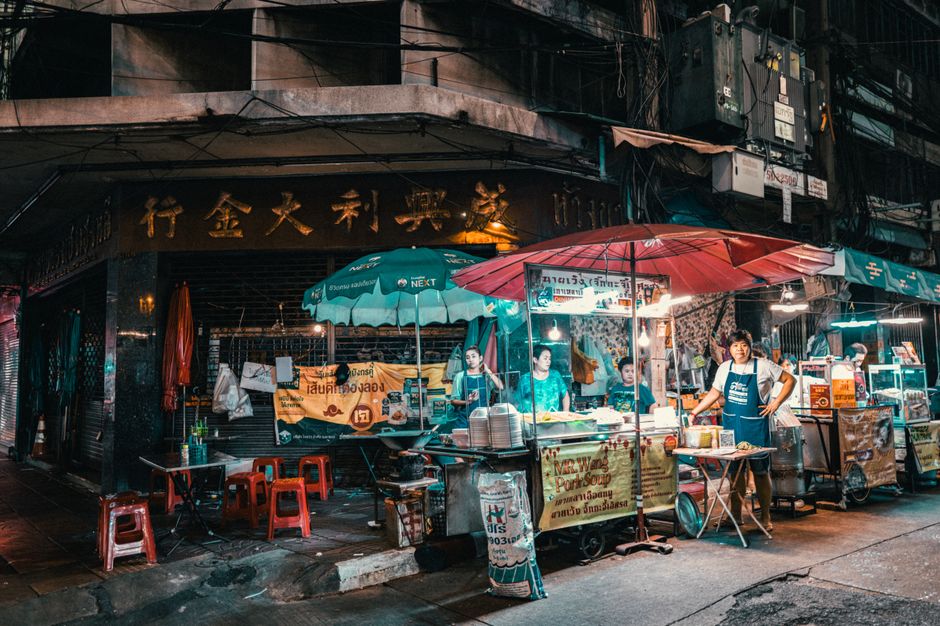
A vendor ladles fragrant boat noodles onto a bed of bean sprouts – the steam mingles with the Bangkok heat, and the payoff is immediate.
☀️ Quick Stats
Best months: March–May (expect 35–38°C, but the food is worth the sweat)
💰 Daily budget (street-food savage): 600–900 THB (~$17–$25) for three meals and endless iced teas
⏱️ Ideal trip length: 5 days – enough to hit four major markets and one cooking class
🎯 Difficulty level: Moderate (navigating soi alleys in the heat tests your patience but rewards you with som tam)
🌡️ Avg. temp: 33°C feels like 40°C once you're walking on concrete – bring a sweat towel
👥 Best for: Solo eaters, small groups of two to four, and anyone who thinks MSG is a flavor group
The first thing that hits you isn’t the heat. It’s the fermented shrimp paste. That sharp, briny funk that hangs over the alley behind Wat Pho like a personal invitation. I arrived in mid-April, right in the thick of Songkran—the water festival that turns the entire city into a soaked, laughing battlefield. My sandals squelched for three days. My phone screen fogged up every time I stepped out of a 7-Eleven. And I loved it. But I also made a mistake: I followed a glowing blog recommendation to a “hidden gem” restaurant near Khao San Road. The pad thai was gloppy, the spring rolls were clearly frozen, and I paid 300 baht for watery iced coffee. The lesson? Bangkok in summer is not a gentle place. It is loud, sticky, and completely unforgiving if you let it punk you. But if you lean into the chaos—if you let the sweat drip and the tuk-tuk horns honk and the papaya salad vendor scold you for asking for less chilli—the food becomes a kind of reward. Every bite of that cool, coconut-laced khao man gai tastes like a small victory.
The Essentials at a Glance
- 🌴 Best time for night markets: Doors open at 4:30 PM, but real eats happen after 7 PM when the heat relents and the crowds thin.
- 🍜 Street-food budget rule: If a meal costs more than 80 THB ($2.20) you're in the wrong spot—unless you're at a proper riverside restaurant, which is a different category entirely.
- 🚇 Transport hack: The MRT runs with A/C that could freeze a penguin. Use it to hop between food hubs (Hua Lamphong, Sam Yan, Sukhumvit).
- 🫑 Spice tolerance: “Mai phet” (not spicy) still arrives with a ghost pepper kick. Say “mai phet met noi” (less spicy) and look earnest.
- 💧 Hydration: 7-Eleven sells giant bottles of cold water for 7 THB. Buy two. You will finish both before your next stop.
The Complete Summer Guide
Summer in Bangkok is not a season; it’s a negotiation. The sun is a hovering bully, but the city’s food culture offers shade—literal and culinary—in the most unexpected places. Here’s how to eat your way through the hottest months without losing your mind.
Morning: The Wet Market Wake-Up (Samut Prakan & Or Tor Kor)
Set your alarm for 5:30 AM. I know. But the reward is a bowl of khao tom pla (fish rice soup) at Raw Material, a tiny stall that’s been serving Bangkok’s dockworkers for three decades. The broth is clear, fragrant with galangal and kaffir lime, and studded with chunks of snakehead fish. By 6:30 AM the sun is already mean, but the market canopy keeps you cool enough to sip your soup without sweating into it. At Or Tor Kor (MRT Kamphaeng Phet exit 3), the air is thick with the perfume of ripe mangoes and grilled pork skewers. I bought a half-kilo of mangosteen for 40 THB ($1.10) and sat on a plastic stool, peeling the purple husks while a woman stirred a giant wok of stir-fried morning glory. The fruit was cold, almost crisp, and so sweet that my teeth ached. That moment—sitting in the middle of a bustling market at 7:15 AM, juice running down my wrist—is why I keep coming back in summer.
Midday: The Siesta War (A/C Oasis & Khao San’s False Friends)
Between noon and 2 PM, Bangkok becomes an open-air oven. Do not fight it. Head to a department-store food court—I like the one at CentralWorld (6th floor, “Mega Plaza” section). The A/C is industrial-strength, and the food is surprisingly legit. A plate of pad see ew with wide rice noodles costs 60 THB ($1.70). The woman at the noodle stall saw me hesitate and added an extra squirt of chili vinegar without me asking. That’s real Bangkok hospitality—unforced, transactional, warm. Avoid the Westen-food stalls that charge triple for “imported cheese pizzas.” They taste like cardboard. I made that mistake once.
If you’re near Khao San Road, don’t be fooled by the cheap-looking fried spring rolls. Those vendors know the tourist gaze and charge 80 THB for six pieces that have been sitting under a heat lamp since breakfast. Instead, walk two minutes to Soi Rambuttri and order pad thai goong from the woman with the orange cart. It’s 50 THB, she uses tamarind sauce from a jar, and the shrimps are still pink and snappy. Is it the best pad thai in Asia? No. But it’s honest. And in summer, honesty tastes better than pretension.
Afternoon: The Canal Food Float (Khlong Toei & Riverside Noodles)
I hired a long-tail boat for an hour (600 THB, negotiable if you wave cash) and glided through Khlong Toei’s back canals. The water is the color of old coffee, and the air smells of diesel and jasmine. But every few hundred meters, a floating vendor appears—usually a grandmother in a straw hat, selling khanom farang kudi chin (Portuguese-Thai cupcakes made from rice flour and egg yolk) or khao lam (sticky rice in bamboo tubes). I bought two khao lam for 20 THB. The coconut milk had separated in the heat, but the top layer was crunchy and sweet. A truly imperfect meal. I loved it.
Back on land, the Wang Lang Market (Thonburi side, near Siriraj Hospital) is a good bet for late-afternoon grazing. The som tam vendor there uses a mortar the size of a small bucket. She pounds the chili and garlic with a force that rattles the table. I asked for “spicy but not air-raid siren spicy.” She laughed and dropped in only half a dozen bird’s-eye chilies. The papaya was shredded into impossibly thin strands, and the lime juice made my eyes water. It cost 35 THB.
Evening: The Night Market Crawl (Liab Duan & Ratchada Train Market)
Sunset brings a temporary reprieve. Liab Duan Night Market (north of the city, a Grab ride from MRT Phra Ram 9) is a sprawling chaos of lightbulbs and squealing speakers. I found a stall grilling moo ping (pork skewers) over charcoal that smelled like my grandmother’s barbecue. The pork was marinated in coconut milk and turmeric, served with a sticky-sweet dipping sauce and a handful of cucumber slices. Three skewers for 30 THB. I ate them standing up, sweating, dodging teenagers on motorbikes.
Across the market, a vendor with a glass case sold khao soi for 50 THB. The curry broth was a little thin—probably because she’d added extra coconut milk to stretch the stock in the heat. But the crispy noodles on top were perfect, shattering at the touch of my spoon. I thought about complaining about the watery broth, but then I remembered: this is summer in Bangkok. Everything is a little compromised. The ice melts fast, the soup simmers longer, and the cook is trying to survive the heat just like you. The truth is, even a flawed bowl of khao soi tastes better than anything you’ll find on a food blog from San Francisco.
📍 Local Tip: The Ghost Alley Secret
Behind Wat Pho (the temple of the Reclining Buddha), there’s a short soi called Trok Mor. It’s a dead end, barely wide enough for two people. But at dusk, a woman named Jinda sets up a grate and grills pla kamin (turmeric fish) wrapped in banana leaves. Her recipe uses fresh turmeric from her brother’s farm in Ayutthaya. The fish is moist, stained yellow, and tastes like earth and fire. She’s there from 5 PM until she runs out—usually by 7 PM. Grab a small stool. The fish is 70 THB. The experience is priceless.
Summer Traveler's Pro Tips
- Learn the “wai” and use it with food vendors. A slight bow with palms together signals respect. I’ve had vendors give me extra pieces of fried chicken because I remembered to wai before ordering. It’s not a flex—it’s just showing you’re not a tourist who expects the world on their terms.
- Bring a reusable bag and a portable fan. Plastic bags are banned in many markets now (good), and a handheld fan (40 THB at 7-Eleven) can turn a 5-minute wait at a noodle stall into a tolerable breeze session.
- Schedule a mid-afternoon stay in a spa-like hotel lobby. Many high-end hotels (e.g., the Marriott at Sukhumvit 22) have ground-floor lobbies with A/C that you can cool down in without being a guest. Order a single iced tea (120 THB) and sit for an hour. The security staff won’t bother you if you’re polite.
- Cash is still king for street food. Don’t trust an ATM that offers you a “dynamic conversion rate.” Always choose local currency (THB) at the machine. You’ll save 3–5% on each withdrawal.
- Make a backup food plan for Songkran (April 13–15). Many street vendors close or operate reduced hours. Grab a bowl of khao man gai from the stall near your hotel before noon, because after 1 PM, the water wars begin and no one cares about your hunger.
Common Summer Travel Mistakes
1. Wearing flip-flops to a night market. I learned this the hard way. A man selling grilled squid accidentally splattered hot oil near my feet. The plastic melted onto my skin. Wear closed-toe sandals or sneakers, even if you feel silly.
2. Ordering “Thai iced tea” from a tourist-zone vendor. They use powdered creamer and a liquid sugar syrup that tastes like cough medicine. Instead, buy chaa yen from a proper stall—usually a dark brown glass bottle of iced tea with a layer of condensed milk on the bottom. It’s cheaper (25 THB vs. 80 THB) and actually made from tea leaves.
3. Assuming “dry” means no spice. I asked for a “dry” pad krapow (stir-fried basil with pork) at a stall near the Victory Monument. The woman nodded and then threw in a handful of dried red chilies. I cried for three minutes. The pork was delicious. I cried again.
4. Not buying a SIM card at the airport. TrueMove and AIS have booths near baggage claim. A 7-day unlimited data SIM costs 199 THB ($5.50). Without data, you’ll waste time searching for Wi-Fi to read maps, and you’ll miss that viral-video-worthy mookata (grill-fry hotpot) spot that only exists on Line chat groups.
Your Summer Travel Checklist
| Category | Item | Note |
|---|---|---|
| 📄 Documents | Passport (valid 6 months) | Copy saved on cloud + hotel safe |
| 📄 Documents | Visa exemption (30 days for most) | Confirm your country’s status online |
| 🌡️ Heat prep | Electrolyte powder packets | Mix into water; cheaper than Gatorade |
| 🌡️ Heat prep | Broad-spectrum SPF 50 (reapply every 2 hours) | Your skin will still burn if you skip. |
| 🌡️ Heat prep | Aloe vera gel (travel size) | For the inevitable sunburned neck |
| 📱 Bookings | Advance Grab (ride-hailing) on Day 1 | Link credit card; avoid cash disputes |
| 📱 Bookings | Cooking class (e.g., Ba Pa Ya) | Book at least 2 days ahead for afternoon slots |
| 📱 Offline apps | Google Maps (download Bangkok region) | Saves data when roaming |
| 📱 Offline apps | Line (messaging) + Wongnai (food reviews) | Wongnai is the Yelp of Thailand; download it |
Traveler FAQ
Q: Is it too hot to eat street food in Bangkok during summer?A: Not if you plan around the heat. Eat at dawn (5–8 AM) and after sunset (7 PM onward). Midday is for A/C-friendly food courts and iced drinks. The heat also means fewer tourists, so shorter lines at the best stalls.
Q: What’s the safest way to drink water at a food stall?A: Ask for bottled water (nam plao khuat) – it’s usually 5–10 THB. Avoid ice unless you see it being made from a closed cube machine (most stalls now use safe factory ice, but always double-check). If you’re cautious, bring a reusable bottle and fill it at your hotel’s water dispenser.
Q: Do I need to tip at street food stalls?A: No. Tipping is not expected and can actually be confusing. If you want to show appreciation, hand over exact change and say “khob khun krap/ka.” That’s enough. For guides or higher-end restaurants, a 10% tip is appreciated but not required.
Q: Can I find vegetarian or vegan food in Bangkok’s street markets?A: Yes, but it requires asking. Look for “jay” (เจ) signs – these indicate vegan/vegetarian stalls, especially in Chinatown (Yaowarat) and near temples. Many pad thai vendors will skip the fish sauce and egg if you ask politely. Beware of oyster sauce; ask for “nam man hoi” (vegetarian oyster sauce made from mushrooms).
Q: What’s the best way to avoid food poisoning in the heat?A: Eat food that is cooked in front of you and served hot. Avoid pre-made salads or reheated items that have sat out in the sun. Vendors with a long queue of locals are usually a safe bet. And never eat raw meat in summer – the heat is already a breeding ground for bacteria. Stick to grilled, fried, or boiled options.
Ready for Your Summer Adventure?
Bangkok in summer is not a postcard. It’s a fume-filled, sweat-stained, deliciously chaotic mess. You will stand in an alley, eating skewers off a plastic tray while a motorbike brushes your elbow. You will stick to your chair. You will discover that the best iced tea isn’t the one in the glass case but the one the vendor pours from a dented thermos hidden under her cart. And you will leave with a stomach full of khao man gai and the kind of tan that comes from walking between food stalls, not from lying on a beach.
Save this guide. Share it with someone who’s been on the fence about traveling during the hot season. And when you come back—because you will—send me a note about the dish that made you sweat through your shirt. I want to hear about it.
📌 Save This Guide For Later
Bookmark this page or screenshot the stats card. Your future summer self will thank you.
Have you eaten your way through a Bangkok summer? Drop your best (or worst) street-food moment in the comments below. I’m listening.