Where to See Puffins in the Wild: Iceland, Maine, Norway, and the Faroe Islands
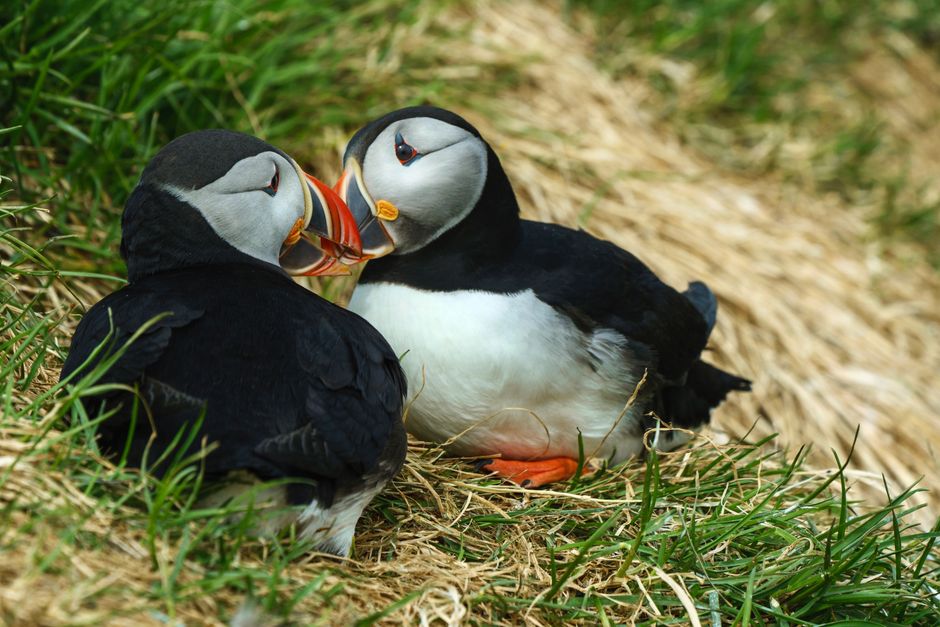
An Atlantic puffin perched on a sea cliff in Iceland—one of the world’s best places to see these charismatic seabirds up close.
✈️ Best time to visit: May–August (peak breeding season)
💰 Estimated budget range: $150–$350/day (mid-range, including accommodation, food, and local transport)
⏱️ How long to spend: 4–7 days per destination for a thorough puffin-watching trip
🎯 Difficulty level: Easy to moderate (most colonies are accessible via short hikes or boat tours)
📍 Recommended season: Summer (June–July for best chick-viewing)
👥 Best for: Solo travelers, families with older kids, couples, and wildlife photography enthusiasts
Introduction
I still remember the first puffin I ever saw. It was on a damp June morning on the island of Runde, off the coast of Norway. I had hiked for an hour through mist and mud, questioning my decision to wear trainers instead of proper boots. Then, as I crested a grassy ridge, the fog lifted for just a moment. There, no more than fifteen feet away, stood a puffin. It blinked at me with that tragicomic expression—mournful eyes, a beak striped like a clown’s nose—and then waddled to the edge of the cliff and launched itself into the sea. I laughed out loud. I’d seen puffins in documentaries, but nothing prepared me for the sheer personality of the bird in the wild.
Since that trip, I’ve made it my mission to visit the world’s best puffin colonies. I’ve stood on the sea cliffs of Látrabjarg in Iceland, taken a rickety boat to Machias Seal Island off the coast of Maine, and watched thousands of puffins swirl above the cliffs of the Faroe Islands. I’ve talked to local guides, missed ferries, gotten sunburned and rained on, and I’ve learned what works—and what doesn’t—when you’re chasing these birds. This guide is my honest, boots-on-the-ground take on the top destinations for viewing puffins in the wild. I’ll give you specific locations, real costs, seasonal realities, and the little tricks that make the difference between a good puffin trip and a great one.
The Essentials at a Glance
- 🐧 Iceland is the puffin capital of the world—home to about 60% of the global Atlantic puffin population, with colonies like Látrabjarg and the Westman Islands offering easy access from Reykjavík.
- 🛶 Maine’s Machias Seal Island is the only puffin colony in the United States you can visit without a special permit, but you must book a tour months in advance (I’ve been shut out twice).
- 🏔️ Norway’s Runde Island and the Faroe Islands offer your best chance for solitude—fewer tourists, dramatic landscapes, and puffins that nest right beside hiking trails.
The Complete Guide
Why This Matters / Why You Should Go
Puffins are not just cute birds. They are bellwethers of ocean health. Their populations have declined dramatically in recent decades due to warming seas and overfishing. Seeing them in the wild is not only a privilege; it supports conservation efforts through eco-tourism. I’ve watched puffins return to the same burrow year after year, carrying sand eels for their single chick. It’s a tiny, fierce drama of survival that makes you care deeply about the oceans we share.
Each destination offers a different experience. Iceland gives you convenience and spectacle: you can see puffins in the morning and be back in Reykjavík for lunch. Maine offers a taste of wilderness and the chance to see puffins without crossing the Atlantic. Norway and the Faroe Islands demand more effort—longer hikes, unpredictable ferry schedules—but reward you with isolation and landscapes that feel prehistoric. If you’re a photographer, the Faroes are a dream; if you’re traveling with kids, Iceland’s well-managed tours are ideal. Choose based on your tolerance for crowds and your appetite for adventure.
When to Visit (Seasonal Guide)
The puffin breeding season runs from late April to mid-August, but timing is everything. In Iceland, colonies are most active from late May through July. I visited the Westman Islands in early June and saw puffins carrying fish to their burrows. By August, many chicks have fledged, and the birds start heading out to sea. The same is true for Maine: June is prime, but July works if you want to see puffin chicks (called “pufflings”) peeking out of burrows. Weather is a wildcard. I’ve sat in fog on Machias Seal Island for three hours and seen nothing but gray. Pack patience.
Norway’s puffins peak in June and July, but the season is shorter due to latitude. On Runde, I saw birds from early May to late July. Faroe Islands puffins arrive in April and leave by August. The best month is June—midnight sun means you can watch them at 11 PM, which is surreal. Crowds are worst in July (school holidays). I recommend late May or early June for the best balance of bird activity and low tourist numbers.
Budget Breakdown
I’ve broken down costs based on my own trips. Prices are per person per day for a mid-range experience (excluding international flights).
- Iceland (Reykjavík base): Accommodation $100–$200 (guesthouse to mid-range hotel); food $40–$60 (one restaurant meal, groceries for rest); puffin tour $80–$120 (half-day boat tour to islands); car rental $60–$100/day. Daily total: $280–$480. Money-saver: Skip the car; take the bus to the Westman Islands ($40 round trip).
- Maine (Cutler base): Accommodation $80–$150 (local B&B or inn); food $30–$50; puffin boat tour $95–$130 (mandatory guide); no car needed if staying in Cutler. Daily total: $205–$330. Book your tour six months ahead—they sell out by March.
- Norway (Ålesund base): Accommodation $90–$160; food $40–$70 (Norway is expensive); ferry to Runde $30; guided hike $50. Daily total: $210–$310. Tip: camp on Runde for $25/night.
- Faroe Islands (Tórshavn base): Accommodation $120–$200; food $50–$80; ferry to Mykines $50; local bus $10. Daily total: $230–$340. Money-saver: stay in a hostel or use the public bus system.
Getting There & Getting Around
Iceland: Fly into Keflavík. From Reykjavík, take a bus to the ferry terminal for the Westman Islands (1.5 hours). The ferry costs $40 and runs 3–4 times daily in summer. Alternatively, drive to Látrabjarg (5 hours from Reykjavík) on Route 62/63. The road is paved except the last 10 km of gravel. Rent a 4x4 if you’re nervous about dirt roads.
Maine: Fly into Bangor, Maine. Rent a car and drive 2.5 hours to Cutler. The boat to Machias Seal Island leaves from the Cutler Harbor. Parking is limited. I arrived at 6:30 AM for an 8 AM departure and got the last spot. Book your tour with Bold Coast Charter Company—they’re the only licensed operator. The ride is 45 minutes and can be rough. Take seasickness pills even if you think you’re fine.
Norway: Fly into Ålesund. Take a bus (line 330) to Runde—about 1.5 hours, $30. The bus stops at the Runde Environmental Center. From there, it’s a 30-minute walk to the puffin cliffs. The trail is steep and muddy. Wear proper hiking boots (I learned this the hard way). For self-drive, the road is paved but narrow.
Faroe Islands: Fly into Vágar Airport. Take a bus to Tórshavn (45 minutes, $15). From Tórshavn, take the ferry to Mykines (2 hours, $50). Book the ferry online weeks ahead—it’s small and fills up. Once on Mykines, you can walk to the puffin cliffs (1.5 hours). The path is well-marked but involves a steep climb. There’s a local guide who does a daily walk for $20—worth it for his stories about the island’s history.
Top Recommendations / Must-Do Activities
In Iceland, don’t miss the Westman Islands’ puffin tour with Viking Tours. We circled the island in a small RIB boat, and the puffins were so close I could see their orange feet. The guide told us the population had rebounded after a rat eradication program. It felt hopeful. The downside: the RIB is wet and fast. I was soaked by the end.
On Machias Seal Island, the blind system is unique. You sit in a camouflaged wooden box, and puffins walk right past—sometimes within three feet. The island is closed to free walking; you’re confined to the blind for an hour. It’s claustrophobic but incredible. I shot my best puffin photos there. The downside: the fog is so common that my tour was delayed by a day. Build buffer time into your trip.
Runde Island has a trail called the “Puffin Panorama” that takes you along the edge of the cliffs. In late June, I saw over a hundred puffins on the grassy slopes. The light at 10 PM was golden and soft. It’s free and open-access, but the trail is narrow—I nearly slid off a muddy patch. Go with a local guide from the Environmental Center if you’re nervous.
In the Faroe Islands, the hike to the Mykines lighthouse is the best. You pass through a colony of puffins that are so accustomed to people that they barely move. I sat five feet from one and watched it groom its feathers for ten minutes. The downside: the ferry schedule is unreliable. I missed my return ferry and had to stay overnight in a tiny guesthouse. It worked out, but pack emergency snacks.
Traveler’s Pro Tips
Bring binoculars with image stabilization: Puffins are small and fast, especially in flight. I use a pair of Canon 10x20 IS binoculars—they cost $400 but are worth every penny. You’ll see details (like the grooves on their beaks) that you’d miss otherwise.
Dress in layers for the boat rides: Even on a sunny day, sea winds cut through you. I wear a thin merino base layer, a fleece, and a waterproof shell. On my Iceland trip, I saw tourists in shorts and T-shirts who were shivering within minutes. Don’t be that person.
Use a waterproof bag for camera gear: Salt spray kills electronics. I use a dry bag from Sea to Summit ($35). During my Maine trip, a wave crashed over the bow and soaked my friend’s camera bag. His gear died. Mine survived.
Learn to identify puffin calls: They sound like a low, growling “arrr.” If you hear it, stop and look low—puffins often call from burrows hidden in the grass. On Faroe Islands, I heard a call and found a burrow with a chick visible by following the sound.
Book everything early: Puffin tours sell out. I missed Machias Seal Island twice because I called in April. Book by February for June trips. The same goes for Faroe ferry tickets. Set a calendar reminder.
Common Mistakes to Avoid
Mistake 1: Visiting too late in the season. I showed up in Iceland in mid-August once and found empty cliffs. Puffin colonies thin out by early August. Always check the local breeding calendar. The best puffin activity is in June. July is okay, but August is a gamble.
Mistake 2: Not respecting the weather. I tried to hike to the puffin cliffs on Runde in a light drizzle without rain pants. Within 20 minutes, I was soaked and cold. The mist turned into a downpour. I turned back. Check the forecast and bring full rain gear—waterproof jacket and pants. Puffin watching is a maritime activity; you will get wet.
Mistake 3: Getting too close to burrows. Puffins dig burrows that collapse easily. I saw a tourist step near an edge, and the soil crumbled. The burrow was exposed, and the chick inside was panicked. Stay on marked trails. If you see a hole in the ground, avoid it completely. The penalty for a collapsed burrow can be a dead chick.
Mistake 4: Forgetting to bring cash. On Mykines, the ferry and the guesthouse only accept cash (Danish kroner). I had to borrow money from a Swedish couple. Always carry local currency, especially on islands.
Your Travel Checklist
- Documents: Passport (valid 6+ months), printed ferry/tour confirmations, travel insurance card.
- Packing: Waterproof jacket and pants, hiking boots (broken in), binoculars with strap, camera with telephoto lens (200mm minimum), dry bags, reusable water bottle, sunscreen (sun reflects off water).
- Research: Download offline maps (Maps.me works), check ferry schedules daily, read recent puffin colony reports (some sites have temporary closures).
- Bookings: Tours and ferries (3–6 months ahead), accommodation (2 months ahead), rental car if needed.
- Health/Safety: Seasickness pills, basic first aid kit, insect repellent (midges on Faroe Islands are brutal in June).
- Local currency: Icelandic króna, US dollar (Maine), Norwegian kroner, Faroese króna (Danish kroner accepted).
- Apps: Windy (for sea conditions), BirdNET (puffin call identification), local bus/ferry apps.
Traveler FAQ
Q: What’s the single best month for puffin viewing in Iceland?
A: June. The weather is mild, the days are long, and both adults and chicks are active. I saw the highest numbers in mid-June, with puffins carrying fish to burrows every few minutes.
Q: Can I see puffins in Maine without a boat tour?
A: No. Machias Seal Island is the only colony accessible to the public, and it requires a licensed tour. The cost includes a spot in a viewing blind, which is the only legal way to see them on the island.
Q: Are puffins tame in the Faroe Islands?
A: Remarkably so. Because hunting is banned on Mykines, puffins have little fear of humans. I could approach within ten feet before they showed any concern. But don’t test their comfort—stay on trails.
Q: What if it rains on my puffin tour?
A: Puffins still feed in light rain, but heavy rain drives them to shelter. Most tours still run, but visibility drops. I recommend booking a flexible tour that offers a rain check. In Maine, Bold Coast Charter has a “weather guarantee” that gave me a free rebook after a storm canceled my trip.
Q: Do I need a telephoto lens for puffin photography?
A: Yes, especially in Iceland and Maine. Puffins are small, and you’ll want at least a 200mm lens to fill the frame. On Mykines, you can get away with a 100mm because they’re so close. I use a 100–400mm zoom that gives me flexibility.
Ready for Your Adventure?
Chasing puffins is not a passive activity. It demands planning, patience, and a willingness to get damp. But every time I watch a puffin take off from a cliff—that clumsy waddle, that sudden burst of flight—I’m reminded why I keep coming back. These birds are not just photo opportunities. They are reminders that the wild world still exists, fragile and defiant, on sea cliffs and remote islands. If you’ve been hesitating because of cost or logistics, I get it. I’ve been there. But start small. Pick one destination, book that tour, pack your rain gear. The puffins are waiting. And trust me, the first one you see will change how you think about travel—and about the ocean itself.


No comments:
Post a Comment