
In This Article
- Why Ride the Annapurna Circuit on a Motorcycle?
- Understanding the Annapurna Circuit Route
- Best Time to Ride the Annapurna Circuit
- Choosing the Right Motorcycle for the Circuit
- Permits, Paperwork, and Legal Requirements
- Essential Gear and Packing List
- Safety Tips for Riding the Annapurna Circuit
- Accommodation, Food, and Fuel Stops
- Final Thoughts: Is the Annapurna Circuit Motorcycle Adventure Right for You?
Why Ride the Annapurna Circuit on a Motorcycle?
The Annapurna Circuit has long been a bucket-list trek for hikers from every corner of the globe. But for those who prefer two wheels and an engine over two boots and a walking stick, this legendary loop offers something even more special. An Annapurna Circuit motorcycle guide opens up a world where the journey itself becomes the destination, not just the tea houses along the way. Riding this route means trading blistered feet for wind in your face, and slow uphill slogs for the satisfying roar of a Royal Enfield climbing through the clouds.
When you ride the circuit instead of walking it, you transform a three-week trek into a dense, intense adventure that fits into a shorter window while losing none of the majesty. You will cross the same high passes, spin prayer wheels in the same ancient villages, and stare up at the same 8,000-meter peaks. The difference is the sheer scale of terrain you can cover in a single day. What takes a trekker three days of walking can be a morning ride, leaving your afternoons free for exploring side valleys or simply sipping tea while watching the light change on Annapurna II.
This route is not for the faint of heart, and that is precisely the point. The physical challenge of motorcycling at altitude, the mental focus required on loose gravel switchbacks, and the logistical puzzle of permits and fuel all combine into a ride that demands respect. Yet the reward is immense. Few places on Earth let you ride from subtropical jungle to high desert in a single week. The Annapurna Circuit motorcycle route delivers exactly that, with a side of hospitality that has been welcoming travelers for generations.
You will also find that motorcyclists are received with genuine curiosity and warmth in the mountain villages. Locals are accustomed to trekkers, but a rider on a motorcycle often sparks conversations, invitations for tea, and offers of help if you look lost. That human connection is harder to find when you are one of hundreds of hikers passing through. On a bike, you become a bit of an event, and that opens doors that might otherwise stay closed.
Practicality matters too. Carrying your own gear on a motorcycle means no porters, no fixed itinerary, and no waiting for a group. You set your own pace, stop when a view demands it, and change plans on a whim. That freedom is the heart of any great motorcycle journey, and the Annapurna Circuit delivers it in spectacular fashion.
The Thrill of Himalayan Riding
Riding a motorcycle through the Himalayas is unlike any other riding experience on the planet. The roads are raw, the altitude is punishing, and the scenery is so overwhelming that you will find yourself pulling over constantly just to process it. The Annapurna Circuit motorcycle guide begins with understanding that this is not a relaxed cruise on smooth tarmac. It is a full-body, full-mind engagement with the mountain environment.
The thrill starts the moment you leave the lowlands and begin climbing. The air cools, the vegetation changes, and the road narrows into a ribbon of dirt and rock carved into the mountainside. You will navigate river crossings, dodge wandering yaks, and lean into corners with thousand-foot drops on one side. Every kilometer brings a new test of your throttle control, your balance, and your nerve. The famous stretch between Chame and Manang is a masterclass in high-altitude riding, with loose gravel and steep climbs that will have your heart pounding in the thin air.
Crossing Thorong La Pass at 5,416 meters is the ultimate prize. The road is rough, the oxygen is scarce, and the cold bites even in good weather. But standing at the top with your motorcycle, prayer flags snapping in the wind, is a moment you will replay for the rest of your life. The descent toward Muktinath is equally thrilling, a long series of switchbacks that demand total concentration. This is riding at its most pure and most demanding.
Cultural Immersion at Your Own Pace
One of the greatest advantages of riding the Annapurna Circuit on a motorcycle is the ability to immerse yourself in the region's rich culture without being tied to a trekking schedule. The circuit passes through a remarkable diversity of ethnic communities, from the Hindu villages of the lower valleys to the Tibetan Buddhist settlements of Manang and Mustang. Each village has its own character, its own festivals, and its own way of welcoming travelers.
On a motorcycle, you can linger in a place that speaks to you. Maybe you want to spend an extra day in Kagbeni, wandering its medieval alleys and watching monks chant at dawn. Or perhaps the apple orchards of Marpha call you to stop, sample brandy, and chat with the orchard owners. Trekkers often have to push on to keep to their itinerary, but riders with their own wheels can simply decide to stay. That flexibility is a form of luxury that no five-star hotel can match.
You will also notice that arriving by motorcycle changes the dynamic of your interactions. Children wave and cheer as you pass. Shopkeepers come out to look at your bike. In the evening, you might find yourself sharing stories with a lodge owner over a glass of butter tea, comparing notes on road conditions and weather. These spontaneous moments are the real heart of the Annapurna Circuit motorcycle experience, and they happen more often when you arrive on two wheels.
Understanding the Annapurna Circuit Route
The Annapurna Circuit is a loop of roughly 300 kilometers through the Annapurna mountain range in central Nepal. Starting and ending in the lakeside city of Pokhara, the route traditionally runs counterclockwise, following the Marsyangdi River upstream, crossing the Thorong La Pass, and descending through the Kali Gandaki Valley. For motorcyclists, this direction is strongly recommended because it allows for gradual acclimatization to the altitude before tackling the pass.
An Annapurna Circuit motorcycle guide must be honest about one thing: this is not a route for beginners. The roads vary wildly, from smooth asphalt near Pokhara to deeply rutted dirt tracks, river crossings, and high-altitude passes that can be snow-covered even in spring. You will need solid off-road skills, a well-maintained machine, and a healthy respect for the mountains. But for riders who have those things, the circuit offers a riding experience that is truly world-class.
The route can be broken into distinct sections, each with its own character. The lower Marsyangdi Valley is lush and green, with terraced rice fields and subtropical forests. As you climb toward Manang, the landscape becomes drier and more stark, with juniper scrub and dramatic rock walls. Beyond the pass, the Kali Gandaki Valley opens into the high desert of Mustang, a rain-shadow region that feels more like Tibet than the Nepal you see in postcards. Finally, the descent past Tatopani and Beni returns you to green hills and the relative comfort of paved roads.
Fuel is available in most major towns along the route, but it is wise to carry a spare canister for the stretch between Chame and Muktinath. Petrol quality can vary, and in remote areas you may buy fuel from a shopkeeper who stores it in plastic jugs. A small funnel and a fuel filter are worth their weight in gold. Likewise, spare tubes, a puncture kit, and basic tools are essential, as motorcycle repair shops are few and far between once you leave the main towns.
Permits are required for the Annapurna Conservation Area and are easily obtained in Pokhara or Kathmandu. You will need your passport, a couple of passport photos, and a small fee. Checkpoints along the route will ask to see your permits, so keep them in a waterproof pouch that is easy to reach. Riding without permits can result in fines and delays, so sort this out before you leave.
Accommodation is plentiful in the form of tea houses and lodges. Most have basic rooms, shared bathrooms, and a dining hall with a wood stove. As a rider, you can usually park your motorcycle right outside your door or in a courtyard. This makes packing and unpacking much easier than it is for trekkers, who often have to carry everything up narrow staircases.
Key Towns and Milestones
The Annapurna Circuit is defined by a string of memorable towns, each marking a shift in altitude, climate, and culture. Knowing these milestones helps you plan your riding days and understand where you are in relation to the big climbs and descents.
Besisahar is the traditional gateway to the circuit. The road from Pokhara is paved and easy, but from here the real adventure begins. The track narrows and climbs into the Marsyangdi Valley. Many riders stop for their first night here to sort gear and make any final adjustments.
Chame is the district headquarters of Manang and a major acclimatization stop. At 2,710 meters, it sits in a valley surrounded by pine forests and offers hot springs nearby. The road to Chame is rough but manageable, with several river crossings that can be tricky after heavy rain.
Manang is the largest village on the northern side of the pass and the last major stop before Thorong La. At 3,540 meters, it is a place to rest, eat well, and prepare for the high altitude. Many riders spend an extra day here to acclimatize and explore the glacial lakes above the village.
Muktinath, on the far side of the pass, is a sacred site for both Hindus and Buddhists. The temple complex and the eternal flame make it a fascinating stop. From here, the road descends rapidly into the Kali Gandaki Valley, and the riding becomes faster and more open.
Marpha and Kagbeni are two of the most photogenic villages on the entire circuit. Marpha is famous for its apple orchards and brandy, while Kagbeni feels like a medieval fortress town. Both are worth a longer stop to wander the narrow lanes and soak in the atmosphere.
Road Conditions and Terrain
Honesty is essential in any Annapurna Circuit motorcycle guide, and the honest truth is that road conditions on this route are wildly unpredictable. What is a smooth dirt track in October can be a muddy nightmare in April. Construction is ongoing along many sections, and landslides regularly change the landscape. Riders must be prepared for everything from deep sand to loose rocks to water crossings.
The lower sections near Besisahar and the final stretch approaching Pokhara are generally the easiest, with paved or well-packed gravel roads. The middle sections, particularly between Chame and Manang, are the most challenging. Expect steep climbs, tight switchbacks, and surfaces that shift under your tires. A lightweight dual-sport or adventure bike is the ideal machine. Heavy touring bikes will struggle, and street bikes are simply not suitable.
The descent from Thorong La to Muktinath is steep and technical. The road is a series of hairpin bends on loose rock, and your brakes will get a serious workout. Go slow, use engine braking, and stop often to let the bike cool down. The stretch from Muktinath to Marpha improves quickly, but the riverbed sections near Kagbeni can be sandy and tricky.
Rain and snow change everything. A dry river crossing in the morning can become impassable by afternoon if there is heavy rain upstream. Always ask locals about conditions ahead, and never attempt a water crossing that looks deeper than your knees. The mountains do not forgive arrogance, and the best riders know when to wait.
Best Time to Ride the Annapurna Circuit
Timing is everything on the Annapurna Circuit. The riding window is narrow, and choosing the wrong season can turn a dream ride into a dangerous ordeal. The best months for an Annapurna Circuit motorcycle trip are October, November, March, and April. These months offer the most stable weather, the clearest mountain views, and the safest road conditions. That said, each season has its own personality, and the smart rider plans accordingly.
Autumn is the classic choice. October and November bring crisp air, brilliant blue skies, and the tail end of the monsoon. The landscape is still green from the summer rains, and the high passes are usually free of deep snow. This is also the busiest time on the circuit, so expect company on the trail and in the tea houses. For many riders, the trade-off is worth it for the reliable weather.
Spring offers a different kind of beauty. March and April are warmer in the lowlands, and the rhododendron forests burst into bloom. The air can be hazier than in autumn, which softens the mountain views slightly, but the flowers and the longer daylight hours are a real bonus. Avalanche risk can be higher in spring as temperatures rise, so check conditions before attempting the pass.
The monsoon season, from June through September, is best avoided. Landslides are common, river crossings become dangerous, and the views are often hidden by clouds. Winter, from December through February, brings heavy snow to the high passes, making Thorong La impassable for all but the most experienced riders with proper cold-weather gear. If you are new to Himalayan riding, stick to the shoulder seasons.
No matter when you ride, start your days early. Mountain weather is most stable in the morning, and afternoon clouds can roll in quickly. An early start also gives you more time to deal with mechanical issues or roadblocks without riding in the dark. The Annapurna Circuit rewards patience and punishes haste.
Seasonal Weather Patterns
Understanding the seasonal weather patterns is the first step in planning a successful Annapurna Circuit motorcycle trip. The region has four distinct seasons, and each one changes the riding experience dramatically.
Post-monsoon autumn, from late September to November, is the sweet spot. The monsoon rains have washed the dust from the air, leaving crystal-clear views of the peaks. Daytime temperatures in the valleys are comfortable, though nights at altitude drop below freezing. The high pass is usually open, and the trails are in their best condition of the year.
Spring, from March to May, is warmer but hazier. Pre-monsoon clouds start building in the afternoons, and by late April, the first rains may arrive. The rhododendrons are spectacular in March, and the days are long. However, the rising temperatures increase the risk of rockfall and avalanches on the high slopes.
The monsoon, from June to September, brings heavy rain, leeches in the lowlands, and frequent landslides. Riding is possible but miserable, and many tea houses close for the season. Winter, from December to February, is dry but brutally cold. The pass is often closed by snow, and even the lower valleys can see freezing temperatures at night.
Festivals and Events Worth Planning Around
Nepal is a country of festivals, and timing your ride to coincide with a major celebration can add a rich cultural layer to your Annapurna Circuit motorcycle adventure. The two biggest festivals, Dashain and Tihar, usually fall in October and November. During these times, villages come alive with music, feasting, and family gatherings. Roads may be busier with local travel, but the atmosphere is unforgettable.
Losar, the Tibetan New Year, is celebrated in February or March in the Buddhist villages of Manang and Mustang. If you are riding in early spring, you may catch masked dances, prayer ceremonies, and special foods. The Yartung Festival in Mustang, usually in August, features horse racing and archery, though it falls during the monsoon and is harder to reach.
Planning around these events requires flexibility. Accommodation can fill up quickly during festivals, and some businesses may close. But the chance to see a Himalayan village in full celebration mode is worth the extra effort. Ask locally once you are on the road, as dates shift with the lunar calendar each year.

Choosing the Right Motorcycle for the Circuit
The Annapurna Circuit is not a racetrack. It is a slow, technical, and physically demanding ride through riverbeds, landslides, and high mountain passes. The right motorcycle makes the difference between an unforgettable adventure and a painful struggle. Riders often make the mistake of choosing the biggest bike they can find. On this route, lighter is almost always better. You will be picking the bike up after falls, wrestling it through sand, and squeezing past jeeps on narrow cliff edges.
Your choice should balance reliability, ground clearance, and parts availability. In Nepal, the most common adventure bikes are the Royal Enfield Himalayan, the Honda CRF250L, and the Yamaha XTZ 125. Each has its own character. The Himalayan offers comfort and torque for carrying luggage. The CRF is taller and lighter, perfect for aggressive riders. The XTZ is underpowered for two-up riding but nearly unbreakable and incredibly cheap to fix.
Consider your own skill level honestly. If you have never ridden off-road on a loaded bike, do not start with a heavy 650cc machine. The route crosses Thorong La at 5,416 meters. At that altitude, engines lose significant power, and the air is thin enough to make even picking up a dropped bike exhausting. A lighter motorcycle will save your energy for the views.
The condition of the bike matters more than the model. A well-maintained 150cc bike will outperform a clapped-out 450cc. Check the chain, sprockets, brake pads, and suspension before leaving. Ask the rental shop when the oil was last changed. If they hesitate, walk away. Your life depends on the machine’s reliability in places where a tow truck simply does not exist.
Rental vs. Bringing Your Own Bike
Renting a motorcycle in Nepal is the most common choice for foreign riders. It avoids the logistical nightmare of international shipping and customs. Pokhara and Kathmandu have dozens of rental shops, and prices for a decent Himalayan range from $25 to $40 per day. You can negotiate a lower rate for a month-long rental. The shop will usually provide a basic tool kit, a spare tube, and sometimes a helmet.
The downside of renting is unknown maintenance history. Some shops are excellent. Others are happy to send you into the mountains with worn brake pads and a bent handlebar. You must inspect the bike thoroughly before signing anything. Check the frame for cracks, test the brakes on a steep hill, and ensure the lights and horn work. Take photos of every scratch so you are not blamed for pre-existing damage later.
Bringing your own bike into Nepal is possible via air freight or overland through India. It is expensive and time-consuming. You will need a carnet de passage, which acts as a passport for the vehicle. The paperwork can take weeks, and you will be responsible for all customs duties if anything goes wrong. For a single trip of two or three weeks, bringing your own bike rarely makes sense.
However, if you are on a multi-country expedition, your own bike has a huge advantage: you know its history. You know exactly how it handles, what spares it needs, and how it sounds when something is wrong. For most riders, though, the rental option is faster, cheaper, and perfectly adequate for the Annapurna Circuit motorcycle guide experience.
Recommended Bike Types and Models
The ideal bike for the Annapurna Circuit has long-travel suspension, a low seat height relative to your inseam, and a simple air-cooled engine. Liquid cooling is fine, but it adds complexity. Air-cooled bikes like the Royal Enfield Himalayan are easy to fix and have fewer parts to fail. The Himalayan’s 411cc engine produces enough torque for steep climbs even when heavily loaded.
The Honda CRF250L is another favorite. It weighs less than 150 kg, has excellent ground clearance, and is nearly indestructible. Its smaller engine means you will ride slower, which is actually safer on the circuit’s blind corners. For riders on a tight budget, the Yamaha XTZ 125 or Hero Xpulse 200 are excellent choices. They sip fuel and can be repaired in almost any village.
Avoid large adventure bikes like the BMW GS 1200 or the KTM 1290. They are too heavy for the river crossings and too wide for the narrow jeep tracks. If you drop one, you will need help to lift it. The extra power is useless on a road where you rarely exceed 40 km/h. For the Annapurna Circuit, think nimble, not powerful.
Whatever you choose, make sure it has a sturdy rear rack and crash bars. You will drop the bike at some point. Crash bars protect the engine cases and your legs. A rear rack lets you carry luggage low and secure, which improves handling on loose gravel. Do not carry a heavy backpack. Strap everything to the bike and keep your body free to move.
Permits, Paperwork, and Legal Requirements
Riding the Annapurna Circuit legally requires more than just a motorcycle and a sense of adventure. Nepal has strict rules for foreign riders, and the checkpoints along the route are not optional. You will be asked for your permits at multiple police and national park posts. Riding without the correct paperwork can result in fines, being turned back, or having your bike impounded.
Start by understanding the two main permits: the TIMS card and the Annapurna Conservation Area Permit, or ACAP. Both are required for the full circuit. You can obtain them in Kathmandu or Pokhara before you set off. The process takes a few hours and requires passport photos and a copy of your passport. Some offices will want to see your motorcycle registration and your international driving permit.
Keep your permits in a waterproof pouch. You will need to show them at checkpoints in Besisahar, Chame, Manang, and Muktinath. The officials are generally friendly, but they take their jobs seriously. Do not argue with them. A smile and a few words of Nepali go a long way. The word "namaste" works wonders.
Remember that the Annapurna Circuit is a restricted area in parts. You cannot simply ride wherever you want. The route follows the main trail and the new road network. Straying onto unmarked tracks could land you in serious trouble, especially near the border with Tibet. Stick to the known route and ask locally if you are unsure about a particular turn.
Necessary Permits for Foreign Riders
The ACAP permit costs around NPR 3,000 for foreign nationals. It is issued by the National Trust for Nature Conservation. You can buy it at the tourism board office in Kathmandu or at the ACAP counter in Pokhara. The permit is valid for a single entry and must be carried with you at all times. You will be fined heavily if you are caught inside the conservation area without it.
The TIMS card, or Trekkers’ Information Management System card, costs about NPR 2,000 for independent trekkers. It is issued by the Trekking Agencies’ Association of Nepal. The card is designed to track your location for safety purposes. In the event of an accident or a landslide, the authorities will know roughly where you are. This is genuinely useful on a route as remote as the Annapurna Circuit.
Some riders confuse the TIMS card with a guide requirement. You do not need a guide to ride the circuit on a motorcycle. The guide rule applies mainly to trekkers in certain restricted areas. However, if you are riding alone and have limited off-road experience, hiring a local guide on a separate bike is not a bad idea. They know the road conditions, the best tea houses, and how to handle breakdowns.
Carry at least four passport photos with you. You will need them for the permits, for the motorcycle rental agreement, and sometimes for local police checkpoints. Having extra photos saves you from hunting for a photo studio in a small mountain town.
Motorcycle Documentation and Insurance
You must carry the motorcycle’s registration document, known as the blue book, at all times. If you are renting, the shop should provide a copy. The original stays with the owner, but a clear photocopy is usually accepted at checkpoints. Make sure your name is written on the rental agreement and that the agreement matches the bike’s license plate.
An International Driving Permit, or IDP, is required by law. Nepal does not recognize a standard foreign license alone. You need an IDP that is valid for Nepal. Some travelers report being waved through without one, but that is changing. The police are becoming stricter, especially on the Annapurna Circuit. Getting an IDP is cheap and easy in most countries. Do not skip it.
Insurance is the most overlooked part of the Annapurna Circuit motorcycle guide. Your travel insurance probably does not cover motorcycle accidents in Nepal unless you have a specific adventure sports add-on. Read the fine print. If you are injured and need a helicopter evacuation from Manang or Thorong La, the bill can exceed $5,000. Without proper coverage, you will pay out of pocket.
Motorcycle rental shops in Nepal do not provide comprehensive insurance. You are responsible for any damage to the bike. Before you leave, agree on a damage policy in writing. Some shops will charge you for a scratched mirror. Others are more reasonable. Ask what happens if the bike is stolen or if the engine seizes. A clear agreement prevents a huge argument when you return.
Essential Gear and Packing List
Packing for the Annapurna Circuit is a balance between warmth, protection, and weight. You will start in subtropical heat and finish in freezing mountain air. The temperature difference can be 30 degrees Celsius in a single day. You need gear that layers well and packs small. Every extra kilogram on the bike makes the river crossings and rocky climbs harder.
Your riding gear must protect you from both impact and wind chill. A lightweight mesh jacket is useless above 3,000 meters. A heavy winter jacket is unbearable in the lowlands. The solution is a three-layer system: a moisture-wicking base layer, an insulating mid-layer, and a waterproof, windproof outer shell. This works for both your torso and your legs.
Do not underestimate the sun. At high altitude, the UV radiation is intense. You will burn even on cloudy days. A balaclava or neck gaiter protects your face from sun and dust. Sunglasses or a tinted visor are essential. Snow blindness is a real risk near Thorong La, especially in spring when the pass is still white.
Hydration matters more than food. The dry mountain air dehydrates you quickly, and you will not feel thirsty until it is too late. Carry a hydration bladder in a backpack or a bottle in a tank bag. Stop every hour to drink. Symptoms of altitude sickness are made worse by dehydration, so make this a non-negotiable habit.
Riding Gear for High-Altitude Conditions
Start with a full-face helmet. Open-face helmets are common among locals, but they offer no protection in a crash. A dual-sport helmet with a peak and a wide visor works best. It shields your eyes from low sun and gives you room to breathe. Make sure the helmet fits snugly. A loose helmet is almost as dangerous as no helmet at all.
Your hands and feet are the first to freeze. Buy a good pair of waterproof, insulated gloves. Heated grips are a luxury, but even a cheap pair of handlebar muffs makes a huge difference. For your feet, wear waterproof adventure boots with good ankle support. Do not ride in sneakers. You will need to put your feet down constantly in sand and gravel, and a twisted ankle ends the trip.
A proper motorcycle jacket with CE-rated armor is worth the investment. Look for one with vents for the lowlands and a removable thermal liner for the mountains. The same goes for pants. Jeans offer zero protection in a slide. Kevlar-lined riding jeans are a decent compromise if you want to look casual in the tea houses.
Finally, pack a high-visibility vest or a reflective strip on your jacket. The Annapurna road is shared with jeeps, trucks, and buses. In dusty conditions, visibility drops to a few meters. A bright vest makes you easier to see and could save your life on a blind corner.
Tools, Spares, and Emergency Kit
Carry a basic tool kit even if the rental shop provides one. It should include a wrench set, screwdrivers, pliers, zip ties, duct tape, and a tire pressure gauge. Check that the tools fit your bike’s specific bolts. A generic kit may not include the right size for your axle nut or chain adjuster.
Spare parts are cheap and light. Bring a spare clutch lever, brake lever, spark plug, and a set of fuses. A punctured tube is the most common breakdown on the circuit. Carry two spare inner tubes and a patch kit. Learn how to change a tube before you leave. Doing it for the first time in freezing rain at 4,000 meters is a miserable experience.
Your emergency kit should include a basic first aid kit, a headlamp, a whistle, and a space blanket. Add altitude sickness medication like Diamox, but consult a doctor first. A small power bank keeps your phone charged for navigation and emergencies. Phone signal is surprisingly good in many villages, but do not rely on it.
Pack everything in dry bags or panniers. The river crossings are not deep, but rain and dust get into everything. A roll-top dry bag keeps your clothes and sleeping bag dry. Strap everything down tightly and check the straps every morning. Loose luggage is a hazard to you and to other riders on the trail.
Safety Tips for Riding the Annapurna Circuit
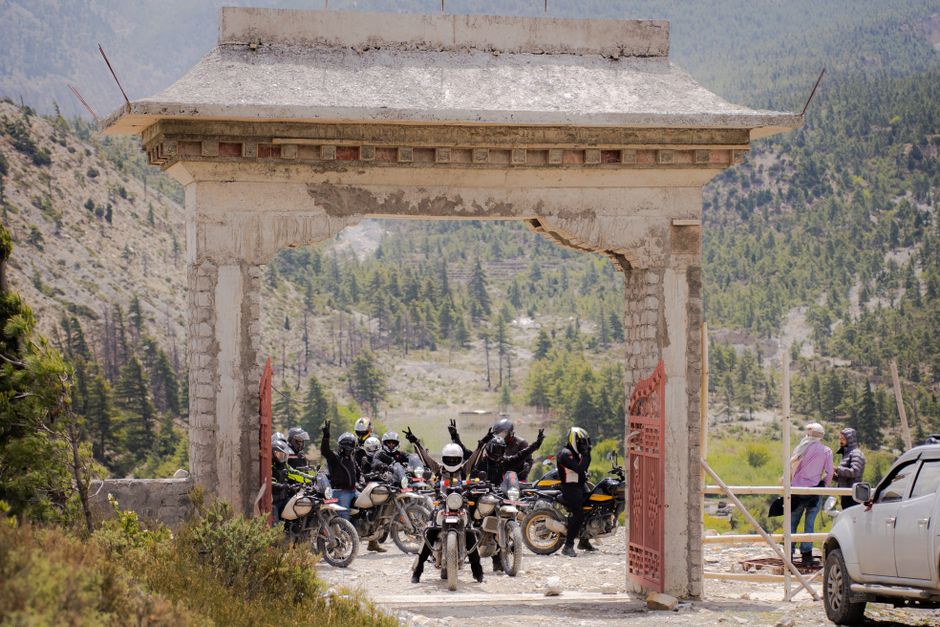
Riding the Annapurna Circuit on a motorcycle is one of the most rewarding adventures you can undertake in 2026, but it demands respect. This is not a leisurely coastal cruise. The combination of high-altitude passes, unpaved switchbacks, river crossings, and unpredictable weather creates a riding environment where preparation and caution matter more than raw skill. The riders who have the best experiences are rarely the fastest ones. They are the ones who understand that every kilometer on this route is earned through patience and good judgment.
Before you even kick the engine over in Besisahar, make sure your motorcycle is in top mechanical condition. The Annapurna Circuit motorcycle guide you follow should emphasize that local repair shops exist, but their parts availability is limited to common Indian and Nepali models. If you are riding a Royal Enfield Himalayan, a Honda CRF, or a Bajaj Dominar, you will find spares more easily. If you are on a European adventure bike, carry spare brake pads, clutch levers, and tubes. A snapped clutch cable on a remote section above Chame can mean a very long and expensive recovery.
Ride within your sightlines at all times. Many of the cliffside sections between Jagat and Dharapani are cut into sheer rock faces with no guardrails. Oncoming jeeps and trucks take the center of the road out of necessity, not arrogance. When you see dust rising ahead, pull into the widest available spot and stop. Let them pass. The road is a shared, living thing here, and the local drivers know its every pothole better than you ever will. Give them room and they will usually give you a friendly wave.
Weather changes fast in the Himalayas. A clear blue morning can turn into a hailstorm by early afternoon, especially between March and May. Carry a proper waterproof outer layer that you can pull on without unpacking your entire bag. Wet hands and wet gloves lead to numb fingers, and numb fingers lead to missed brake inputs on gravel descents. Waterproof glove covers are cheap, light, and worth their weight in gold on the Annapurna Circuit.
Finally, ride with a buddy or at least stay within sight of other riders you meet along the way. The route is popular enough in 2026 that you will rarely be completely alone during peak season, but there are stretches, particularly after Manang heading toward Thorong La, where traffic thins out dramatically. If you take a fall and cannot lift your bike alone, having someone nearby is not a luxury. It is a necessity.
Navigating Challenging Road Sections
The Annapurna Circuit motorcycle guide would be incomplete without a frank discussion of the road itself. The route has improved dramatically over the last decade, but "improved" is a relative term. From Besisahar to Chame, you will encounter a mix of rough pavement, gravel, and mud. The section between Syange and Jagat is notorious for its steep drops and narrow switchbacks. Take these turns in first gear, sit back on the seat, and keep your weight over the rear wheel for traction. Do not coast through with the clutch pulled in. You need engine braking and throttle control to manage the loose surface.
River crossings deserve special mention. Most have been bridged in recent years, but seasonal runoff can still flood low-lying sections, particularly after heavy rain or during the late spring melt. Before entering any water crossing, stop and watch a local vehicle go through first if possible. This shows you the deepest line and the firmest bottom. If no one is around, walk the crossing in your boots before riding it. A wet ignition system or a hydrolocked engine will end your day immediately. Keep your revs steady, stay in first gear, and do not stop mid-stream.
The climb from Chame to Manang is where the landscape opens up and the road surface becomes a mix of hard-packed dirt, loose gravel, and the occasional patch of slick clay. The switchbacks here are long and sweeping, which tempts riders to carry too much speed. Resist that temptation. The outside edges of these corners are often soft, and a front tire washing out at altitude is a serious problem. Brake before the turn, not in it, and look ahead to where you want the bike to go. Your eyes lead the motorcycle, so keep them on the exit of the corner, not the cliff edge.
Beyond Manang, the road to Thorong La base camp deteriorates further. This is high, exposed terrain with no vegetation and very little margin for error. The final push to the pass itself is often covered in snow until late April or even May. In 2026, check with local riders or tea house owners in Manang before attempting the high section. If the pass is closed to motorcycles, do not try to be the exception. A stuck bike at 5,400 meters is not an adventure. It is an emergency.
Altitude Sickness and Health Precautions
Altitude sickness is the single most underestimated risk on the Annapurna Circuit. Motorcyclists are actually at higher risk than trekkers because they ascend much faster. A trekker might take five days to walk from Besisahar to Manang. A rider can cover the same distance in a single long day. That rapid gain does not give your body time to acclimatize, and the consequences can be severe. Acute Mountain Sickness, or AMS, can strike anyone regardless of fitness level or age.
The first rule is to ascend slowly. Spend at least two nights at elevations above 2,500 meters before attempting to go over Thorong La. A sensible plan is to sleep in Chame one night, then Manang the next, and only then consider the pass. If you feel a headache, nausea, dizziness, or unusual fatigue, stop ascending immediately. These are early warning signs. Rest, drink water, and do not push higher until the symptoms resolve. If they worsen, descend. Descending even 500 meters can produce a dramatic improvement.
Hydration is your best friend at altitude. The dry mountain air and the physical exertion of riding combine to dehydrate you faster than you realize. Drink at least three to four liters of water per day. Tea and soup count, but alcohol does not. Avoid alcohol entirely above 3,000 meters. It suppresses your breathing at night and masks the early symptoms of AMS. Many riders make the mistake of having a celebratory beer in Manang and then sleeping poorly, which only compounds the problem the next morning.
Carry basic medications with you. Diamox is widely used as a preventative for altitude sickness, but it is not a substitute for proper acclimatization. Consult a travel doctor before your trip and understand the correct dosage. Ibuprofen can help with mild altitude headaches. If you develop a persistent cough, extreme lethargy, or confusion, these are signs of more serious conditions like HAPE or HACE. In that case, descent is not optional. It is urgent. The Annapurna Circuit motorcycle guide you follow should always prioritize your health over your itinerary.
Accommodation, Food, and Fuel Stops
One of the great joys of riding the Annapurna Circuit is that you do not need to carry camping gear. The route is lined with tea houses and small guesthouses that have been welcoming travelers for decades. In 2026, the standard has improved considerably, with many places offering private rooms, hot showers, and even Wi-Fi. That said, this is still a remote mountain region. Power outages happen, hot water is often solar-heated and limited, and the menu will be simpler than what you find in Pokhara or Kathmandu.
Plan your daily distances around available accommodation. A comfortable riding pace on this route is between 60 and 100 kilometers per day, depending on road conditions and how often you stop for photos. You will find places to stay in every major settlement, including Besisahar, Jagat, Dharapani, Chame, Pisang, Manang, and Muktinath. During peak trekking seasons in April, October, and November, the most popular tea houses fill up by mid-afternoon. If you arrive late, you may end up sleeping in a dormitory or riding further than you wanted to. Start your riding day early and aim to be off the road by 4 p.m.
Most accommodation on the circuit operates on a simple model. The room itself is inexpensive, sometimes as little as 500 to 1,000 Nepali rupees per night. In exchange, guests are expected to eat their meals at the same tea house. This is a fair arrangement that keeps the local economy alive. Do not bring outside food into a tea house dining room and eat it in front of the owners. It is considered rude. The food is hearty and affordable, and the dining rooms are where you will meet other travelers and swap stories from the road.
Hot showers are a luxury, not a guarantee. Many tea houses have solar showers that work beautifully on sunny afternoons and not at all in the early morning. If a hot shower is important to you, take it as soon as you arrive rather than waiting until after dinner. Some places charge a small fee for hot water, usually 100 to 200 rupees. Cold showers are always free, though at 3,500 meters in October, they are not for the faint of heart. A quick wash with a wet wipe and a basin of warm water is a perfectly respectable alternative.
Where to Stay Along the Route
Your first night on the road will likely be in Besisahar or the nearby village of Bhulbhule, depending on when you collect your motorcycle and permits. Besisahar has the widest range of guesthouses, from simple local lodges to slightly more comfortable hotels with secure parking. Secure parking matters. Always ask where you can park your motorcycle overnight. Most tea houses have a courtyard or a locked gate, and you should use it every single night without exception.
Further up the valley, Chame is a popular second or third night stop. It sits at 2,670 meters and offers a good selection of tea houses with reliable food and warm blankets. The temperature drops sharply after sunset, so choose a place with a heated dining room if possible. The traditional wood-burning stoves in the common area are the heart of every tea house, and you will spend your evenings huddled around one with a cup of hot lemon ginger honey tea.
Manang is the most important acclimatization stop on the circuit. At 3,540 meters, it is a proper village with bakeries, gear shops, and even a small cinema hall that shows mountaineering films. Spend at least two nights here before attempting Thorong La. The extra day is not wasted. Use it to rest, hydrate, and explore the surrounding trails on foot. Your body will thank you when you are breathing comfortably at the pass.
After crossing Thorong La, the landscape changes completely as you descend into the Mustang region. Muktinath is the first major settlement on the western side and a sacred pilgrimage site for both Hindus and Buddhists. Accommodation here is plentiful but can be busy with pilgrims. The next comfortable stop is Jomsom, which has a small airport, better hotels, and the first real coffee you will have seen in days. From Jomsom onward, the road improves dramatically, and you can cover ground quickly toward Tatopani and eventually Pokhara.
Eating Well and Finding Fuel
Food on the Annapurna Circuit is simple, filling, and designed to fuel long days of physical effort. Dal bhat is the national staple and the best value meal you will find anywhere. It consists of rice, lentil soup, vegetable curry, and often a small portion of pickle or papad. The best part is that most tea houses offer free refills on the rice and lentils. For a hungry rider, this is the best deal in the Himalayas. Eat it with your hands if you want to blend in with the locals.
Beyond dal bhat, most menus feature fried rice, chow mein, momos, and a rotating selection of potato dishes. Breakfast is usually porridge, pancakes, eggs, or Tibetan bread with honey. In Manang and Jomsom, you will find bakeries selling apple pie, cinnamon rolls, and fresh bread. The apple orchards of the Mustang region are famous, and a slice of warm apple pie after a cold ride is one of the great pleasures of this journey. Do not skip it.
Fuel stops are spread out, but they exist in all the major towns. In 2026, you will find petrol pumps in Besisahar, Chame, Manang, Jomsom, and Tatopani. However, pumps in the mountains sometimes run dry, especially during supply disruptions or bad weather. Many local shops sell petrol in recycled water bottles as a backup. This is more expensive, but it will get you to the next proper pump. Carry a small fuel canister or at least a sturdy one-liter bottle for emergencies. When you see a working pump, fill up even if your tank is half full. The next one might not have fuel.
Do not expect premium fuel anywhere on the route. The petrol available is adequate for the small-displacement bikes that dominate Nepali roads, but high-compression European engines may run poorly on it. If you are riding a KTM or BMW, consider carrying an octane booster. More importantly, check your fuel range before setting out each morning. The distance between reliable fuel stops can be 80 to 100 kilometers, which is fine for most adventure bikes but worth calculating carefully if your tank is small.
Final Thoughts: Is the Annapurna Circuit Motorcycle Adventure Right for You?
The Annapurna Circuit motorcycle guide you have just read is not a casual weekend suggestion. It is a serious undertaking that will test your riding skills, your patience, and your ability to adapt when things do not go according to plan. The road is rough, the altitude is real, and the weather can be unforgiving. If you are looking for a relaxed, low-stress holiday, this is not it. But if you are looking for one of the most spectacular motorcycle journeys on the planet, you have found it.
What makes this ride special is not just the scenery, though the scenery is staggering. It is the rhythm of the journey itself. You wake up in a stone tea house, drink sweet milk tea as the sun hits the peaks, and spend the day riding through valleys that feel untouched by time. You stop for lunch in a village where yaks wander through the streets. You cross a pass so high that the sky feels close enough to touch. And then you descend into a desert landscape that looks more like Tibet than Nepal. No other road in the world offers that kind of variety in a single day.
Ultimately, the question is not whether the Annapurna Circuit is worth riding. The question is whether you are ready for it. If you are comfortable on loose surfaces, if you respect the mountains and their weather, and if you are willing to slow down and let the journey unfold at its own pace, then the answer is yes. Go. Plan carefully, ride humbly, and let the Himalayas leave their mark on you. They will.
Gear for this trip
- Royal Enfield Himalayan Motorcycle
- Adventure Motorcycle Helmet
- Waterproof Insulated Motorcycle Gloves
- Adventure Motorcycle Boots
- Portable Motorcycle Tool Kit
As an Amazon Associate I earn from qualifying purchases.


No comments:
Post a Comment