
In This Article
- Why Morocco is a Motorcycle Rider's Dream Destination
- Essential Planning for Your Moroccan Motorcycle Adventure
- The Ultimate Moroccan Motorcycle Routes: An Overview
- Route 1: The High Atlas Loop – Marrakech to Ouarzazate via Tizi n'Tichka
- Route 2: The Sahara Gateway – Ouarzazate to Merzouga via the Draa Valley
- Route 3: The Atlantic Coast Cruise – Essaouira to Agadir
- Route 4: The Imperial Cities Circuit – Fes, Meknes, and the Middle Atlas
- Practical Tips for Riding in Morocco: Fuel, Food, and Accommodation
- Final Thoughts: Your Moroccan Motorcycle Adventure Awaits
Why Morocco is a Motorcycle Rider's Dream Destination
Morocco delivers a sensory overload that few countries can match, and experiencing it on two wheels transforms a simple trip into a full-blown adventure. The geography itself is a dramatic story, shifting from the rugged peaks of the Atlas Mountains to the rolling dunes of the Sahara within a single day of riding. You are not just commuting through landscapes; you are actively participating in them. The roads twist through red-rock gorges, sweep across barren plateaus, and hug coastal cliffs, offering a variety of riding that keeps your throttle hand engaged and your mind constantly amazed.
The infrastructure for adventure travel is surprisingly robust. Fuel stations are frequent enough along major routes, and the hospitality culture is deeply ingrained. You will find that the best motorcycle routes in Morocco are not just about the tarmac; they are about the accessibility of the wild. You can be grinding through a technical mountain pass in the morning and sipping mint tea in a centuries-old medina by afternoon. This contrast, this constant shift in scenery and culture, is the core of the country’s appeal for riders.
The Allure of the Open Road: From Coast to Desert
The diversity of terrain makes every day feel like a new expedition. One moment you are carving through the cedar forests of the Middle Atlas, the scent of pine in the air, and the next you are descending into the lunar landscapes of the Anti-Atlas. The transition is not gradual; it is sudden and breathtaking. The asphalt here often feels like a ribbon laid across an untouched world, where the horizon stretches endlessly and the sky dominates your field of vision.
Riding from the Atlantic coast toward the Sahara is a lesson in geology and geography. You feel the moisture leave the air, watch the vegetation thin out, and sense the temperature rise. The open road here offers a freedom that is hard to find in Europe or North America, where traffic and regulation can dampen the spirit of exploration. Here, the road is an invitation to disconnect and simply ride.
Cultural Encounters Along the Way
Morocco is a crossroads of Arab, Berber, and African cultures, and the road is the thread that connects them. Stopping for fuel or a coffee is never just a transaction; it is an interaction. Berber villages cling to mountainsides, and the local children often wave as you pass, their smiles as wide as the valleys. Taking the time to stop and greet people, even with a simple "Salam," opens doors to genuine hospitality.
You will be invited to share meals, witness traditional crafts, and hear stories that have been passed down for generations. These encounters happen spontaneously, often in places far from the tourist trail. The motorcycle acts as an icebreaker, a symbol of curiosity and adventure that locals respect. It allows you to access the rhythm of daily life in a way that a tour bus simply cannot.
Best Time to Ride: Weather and Seasonal Considerations
Timing is crucial for a Moroccan ride. The summer months, from June to August, bring intense heat, especially in the desert regions where temperatures can easily exceed 45°C (113°F). Riding in that kind of heat is not just uncomfortable; it is dangerous. Conversely, the high mountain passes of the Atlas can be snow-covered and impassable from December through February. The ideal windows are spring and autumn.
March to May offers blooming landscapes and moderate temperatures, perfect for crossing the Atlas. September to November provides clear skies and warm days, with cooler nights in the desert. If you are planning to tackle the best motorcycle routes in Morocco that combine mountains and sand, aim for late April or early October to experience the best of both worlds.
Essential Planning for Your Moroccan Motorcycle Adventure
A successful trip to Morocco requires more than just a sense of adventure; it requires logistical groundwork. The country is welcoming, but it operates on its own rhythm. Understanding the paperwork, the road conditions, and the local driving etiquette will save you time and stress. You need to think about your route, your machine, and your own physical well-being. The goal is to spend your energy on the ride, not on solving avoidable problems.
Planning also involves a mental shift. You are not just booking a vacation; you are preparing for an expedition. This means being flexible with your itinerary, patient at checkpoints, and prepared for the unexpected. The best motorcycle routes in Morocco are best enjoyed by riders who embrace the unpredictable nature of travel in North Africa.
Choosing Your Motorcycle: Rent or Bring Your Own?
Renting in Morocco is often the most practical choice for international riders. Numerous reputable rental companies in Marrakech, Casablanca, and Agadir offer well-maintained adventure bikes, such as BMW GS models or KTM Adventures. Renting eliminates the cost and complexity of shipping your own bike, dealing with customs, and risking damage to your personal machine. It also means you have local support if something goes wrong.
Bringing your own bike makes sense for long-term travelers or those with specific machine requirements. You will need your Carnet de Passage en Douane (CPD) for customs, your registration, and a valid driver's license with an International Driving Permit. The temporary import process is generally straightforward but requires patience. For most riders, a rental with full insurance is the simpler, smarter option.
Navigating Moroccan Roads: Maps, GPS, and Local Knowledge
While paper maps offer a great overview, GPS is invaluable for navigating Moroccan cities and finding specific trailheads. Download offline maps for the entire country before you arrive, as cell service can be spotty in the mountains and desert. Apps like Maps.me or Organic Maps are popular among riders for their detailed topographical data. However, GPS is not infallible in Morocco.
Roads change, tracks wash out, and the shortest route is not always the best route. Always ask locals for current conditions before heading into remote areas. A quick conversation with a truck driver or a café owner can alert you to construction zones or flooded wadis. Combining digital navigation with human intelligence is the key to staying on track and out of trouble.
Safety, Gear, and Health Precautions
Safety starts with your gear. Morocco’s climate demands layers. You need a well-ventilated jacket for the heat, but also a waterproof layer and thermal liner for the cold mountain passes. A full-face helmet, sturdy boots, and riding gloves are non-negotiable. The sun is intense, so carry a neck gaiter and high-SPF sunscreen. Hydration is your most critical safety tool; a hydration pack is essential for desert stretches.
Health-wise, ensure your routine vaccinations are up to date, and consider Hepatitis A and Typhoid. Do not drink tap water; stick to bottled or filtered water. Road conditions vary wildly, so watch for potholes, gravel, and unexpected animals. Ride defensively, especially in urban areas where traffic rules are often treated as suggestions.
The Ultimate Moroccan Motorcycle Routes: An Overview
Choosing a route in Morocco is like choosing a dish from a world-class menu; everything looks incredible. The country is compact enough to offer significant variety in a single week but vast enough to require a lifetime of exploration. The best motorcycle routes in Morocco can be broken down into distinct circuits, each with its own character and challenges. Whether you crave mountain twisties, desert solitude, or coastal breezes, there is a loop designed for you.
These routes are best viewed as starting points. The true magic often lies in the detours, the unmarked tracks, and the small villages that do not appear on major maps. Use these circuits as a skeleton, and do not be afraid to add your own meat to the bones.
Route 1: The High Atlas Loop
This is the classic Moroccan ride, centered around the Tizi n'Tichka pass and the stunning Dades Gorge. You will climb through switchbacks with panoramic views of snow-capped peaks and descend into the lush valleys of the south. The route passes through traditional Berber villages where the pace of life has remained unchanged for centuries.
Route 2: The Sahara Gateway
This ride heads southeast toward the dunes of Erg Chebbi near Merzouga. The road flattens out, the landscape turns to stone desert, and the horizon becomes a shimmering line. It is a journey into silence and space, punctuated by oases and the occasional camel caravan.
Route 3: The Atlantic Coast Cruise
For a completely different vibe, follow the coast from Essaouira south to Agadir and beyond. The air is cool and salty, the roads are smooth, and the surfing towns offer a laid-back atmosphere. It is a relaxing ride with plenty of fresh seafood and beautiful ocean views.
Route 4: The Imperial Cities Circuit
This cultural loop connects Marrakech, Fes, Meknes, and Rabat. The riding is less about extreme landscapes and more about history and architecture. You will navigate city traffic, explore ancient medinas, and experience the rich urban tapestry of Morocco.
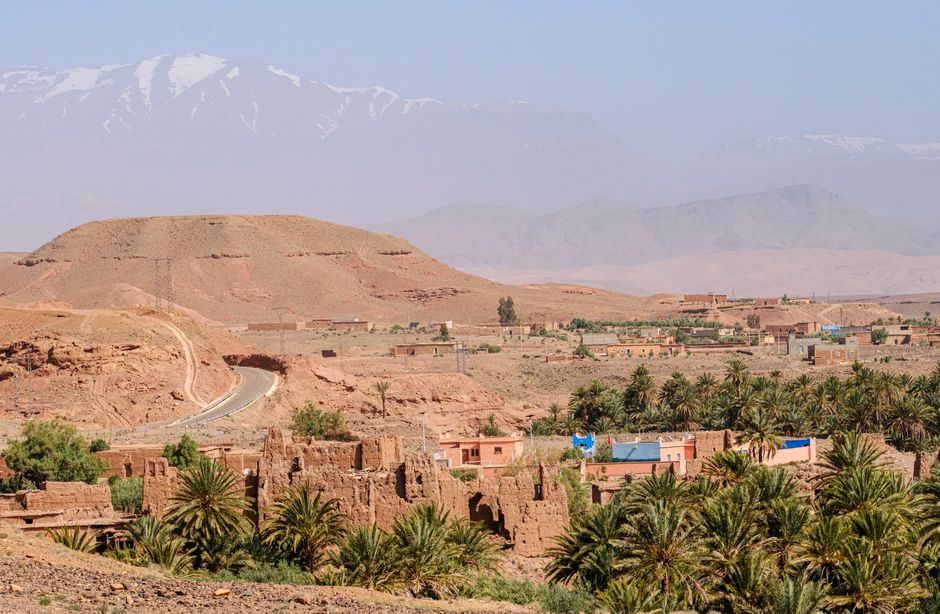
Route 1: The High Atlas Loop – Marrakech to Ouarzazate via Tizi n'Tichka
This is the ride that puts Morocco on every motorcyclist's map. Leaving the chaos of Marrakech behind, you climb rapidly into the High Atlas on one of North Africa's most spectacular roads. The N9 twists upward through red-earth valleys and Berber villages, with snow-dusted peaks appearing on the horizon. It is a demanding but deeply rewarding start to any Moroccan motorcycle adventure.
The road surface is generally good, but be ready for trucks, overloaded buses, and the occasional donkey cart. Fuel stops are available in small towns along the way, though it is wise to top up in Marrakech before departure. Altitude changes quickly, so layer up even on warm days.
Riding the Tizi n'Tichka Pass: Hairpins and Panoramic Views
Tizi n'Tichka sits at 2,260 meters, making it the highest major road pass in North Africa. The climb features a relentless series of switchbacks that test your cornering rhythm and clutch control. Each hairpin opens onto a wider view of terraced valleys and distant ridgelines that seem to fold into one another.
Traffic thins as you gain elevation, but slow-moving lorries create overtaking challenges. Wait for clear sightlines and avoid passing on blind corners. The air cools noticeably near the summit, and wind can be fierce, so secure loose straps on your luggage before starting the ascent.
There are several pull-offs near the top where vendors sell fossils and minerals. A short stop here lets you shake out your wrists and absorb the scale of the landscape. Descending toward Ouarzazate, the terrain shifts from green slopes to arid, rocky plateau almost within a few kilometers.
Exploring Ait Ben Haddou and the Road of a Thousand Kasbahs
Just before Ouarzazate, a short detour leads to Ait Ben Haddou, a UNESCO-listed ksar that has starred in films from Lawrence of Arabia to Gladiator. Park at the riverbed and walk across the stepping stones to explore its earthen towers and narrow alleys. The climb to the old granary at the top rewards you with a sweeping view of the surrounding desert.
The route south from here follows the Road of a Thousand Kasbahs, where fortified mud-brick strongholds rise from palm groves at irregular intervals. Many are crumbling, but a few have been restored and welcome visitors. The light in late afternoon turns the walls a deep amber, making this one of the best motorcycle routes in Morocco for photography stops.
Keep your speed moderate through villages, as children and animals often appear near the roadside. The road is mostly straight here, which gives your body a chance to recover from the mountain pass.
Ouarzazate: Hollywood of Africa and Gateway to the Desert
Ouarzazate feels like a frontier town built for travelers and filmmakers alike. Its massive Taourirt Kasbah dominates the center, a labyrinth of crenellated walls and hidden courtyards worth an hour of wandering. The town's film studios have hosted productions like The Mummy and Game of Thrones, and some offer guided tours of surviving sets.
Accommodation ranges from simple auberges to comfortable riads with secure parking, which matters when you are traveling by motorcycle. Ask about locked courtyards or garages before booking. Restaurants cluster around the main square, serving tagines and grilled meats that restore energy after a long day in the saddle.
This is also your last reliable place to withdraw cash, buy spare parts, or find a mechanic before heading deeper into the desert. Treat Ouarzazate as a reset point: check tire pressures, lubricate the chain, and study the next day's route. From here, the Sahara proper begins to feel very close.
Route 2: The Sahara Gateway – Ouarzazate to Merzouga via the Draa Valley
This leg transforms the ride from mountain drama to desert immersion. The N9 heads southeast, skirting the edge of the Anti-Atlas before descending into the Draa Valley, one of Morocco's longest river systems. Though the river often runs underground, its presence is felt in the dense palm groves and green fields that line the road for over a hundred kilometers.
The riding here is more relaxed, with long straights and gentle curves. Heat becomes a factor, especially in spring and summer, so carry plenty of water and start early. This section of the best motorcycle routes in Morocco is about rhythm and distance rather than technical cornering.
The Draa Valley: A Lush Oasis of Palms and Ancient Villages
The Draa Valley feels almost surreal after the rocky plateaus above Ouarzazate. Millions of date palms form a green ribbon through the desert, punctuated by fortified villages called ksour. Each bend in the road reveals another cluster of mud-brick homes rising above the canopy.
Towns like Agdz and Zagora make natural rest stops, with cafes and small shops lining the main road. Zagora's famous sign pointing to Timbuktu, 52 days away by camel, is a classic photo opportunity. The pace of life slows noticeably here, and you will likely find yourself stopping often just to take in the contrast between green fields and barren mountains.
Watch for irrigation channels crossing the road and patches of sand blown onto the tarmac. These can be slippery, especially in the morning when dew lingers on the surface.
Into the Dunes: Approaching Erg Chebbi
Beyond the Draa Valley, the landscape empties out. The road cuts across stony desert plains where the horizon shimmers with heat. Distances between villages grow longer, and fuel stations become scarcer, so fill up in Alnif or Rissani before the final push.
Then, without warning, Erg Chebbi appears: a wall of golden dunes rising nearly 150 meters from the flat desert floor. The sight is arresting, even for riders who have seen photos before. The tarmac continues to the edge of the dunes, but soft sand begins immediately beyond it. Do not attempt to ride a heavily loaded street bike into the erg.
Rissani, just before Merzouga, is worth a brief stop for its lively souk and historic gate. It is the last true town before the dunes and a good place to buy a scarf for the dust.
Merzouga: Camel Treks and Desert Camps
Merzouga is a small village that exists almost entirely for the dunes. Most visitors leave their motorcycles at a hotel or guarded parking area and continue by camel or 4x4 into the sand. A sunset camel trek to a Berber camp is the signature experience, with dinner, music, and a night under astonishingly clear skies.
Choose a camp that offers mattress beds and proper blankets if you are visiting outside summer. Temperatures drop sharply after dark, and the desert wind can be relentless. Many camps now have basic showers and solar power, but luxury should not be expected.
For riders, the appeal is the contrast: park the bike, step into another world, then return the next morning to continue the journey. Budget at least one full night in Merzouga to appreciate the dunes at both sunset and sunrise. The shifting colors of the sand are worth every kilometer of desert highway.
Route 3: The Atlantic Coast Cruise – Essaouira to Agadir
This coastal run offers a completely different flavor of Moroccan riding. Cool ocean air replaces desert heat, and the road hugs the shoreline for long stretches between laid-back surf towns and dramatic cliffs. It is an easier, more relaxed ride than the mountain or desert routes, making it an ideal finale for a multi-day tour.
The N1 and smaller coastal roads are generally well maintained, though sea fog can reduce visibility in the early morning. Traffic is lighter than in the north, and the atmosphere feels breezy and unhurried. This is a route for enjoying the ride itself rather than rushing to a destination.
Essaouira: Windswept Beaches and Portuguese Heritage
Essaouira is a walled port city with a distinctly Atlantic character. Its ramparts, built by Portuguese engineers in the 18th century, look out over a wide bay where fishing boats bob and windsurfers carve through steady breezes. The medina is compact and easy to navigate on foot, with whitewashed walls and blue shutters giving it a calm, almost Mediterranean feel.
Parking a motorcycle near the medina can be tricky. Most riders use the guarded lots just outside the main gates and walk in. The seafood stalls near the port grill fresh sardines and prawns to order, a cheap and delicious lunch before hitting the road.
Essaouira's constant wind keeps temperatures mild even in summer, making it a comfortable stop after hotter inland riding. It is also a good place to find surf shops, cafes, and relaxed guesthouses with secure bike storage.
The Coastal Road: Cliffs, Surf Towns, and Seafood Stops
South of Essaouira, the road alternates between sweeping cliff-top views and descents into sandy coves. Small surf towns like Taghazout appear along the way, each with a distinct vibe. Taghazout in particular has grown from a sleepy fishing village into a low-key surf hub with cafes and hostels facing the waves.
The coastline here is rugged, with argan trees clinging to the hillsides. You may see goats standing in the branches, a bizarre and photogenic sight. The road surface is mostly smooth, but watch for sand drifts near beach access points and the occasional pothole after heavy winter rains.
Lunch options are simple and excellent: grilled fish, calamari, and fresh bread at roadside stands. Take your time on this stretch. It is one of the most scenic and least stressful parts of any Moroccan motorcycle itinerary.
Agadir: Modern Resort and Gateway to the Anti-Atlas
Agadir feels different from anywhere else in Morocco. Rebuilt after a devastating earthquake in 1960, it is a modern city with wide boulevards, beachfront hotels, and a marina full of restaurants. For riders, it offers the best range of services on the coast: tire shops, mechanics, and well-stocked supermarkets.
The long crescent beach is the main attraction, backed by a promenade perfect for an evening stroll. Agadir is also the starting point for routes into the Anti-Atlas mountains, a less-visited region of dramatic gorges and palm-filled valleys. Riders with extra days can use the city as a base for day trips into the interior.
Secure parking is widely available at hotels and the marina, which makes it easy to relax and clean the dust off your bike. After the mountains and the desert, Agadir's easygoing coastal energy is a fitting place to end a long ride.

Route 4: The Imperial Cities Circuit – Fes, Meknes, and the Middle Atlas
For riders who want to balance incredible riding with deep cultural immersion, the Imperial Cities Circuit delivers on every front. This loop takes you through the spiritual heart of Morocco, climbing from the ancient medina of Fes into the cedar-scented coolness of the Middle Atlas before descending to the imperial grandeur of Meknes and the Roman ruins of Volubilis. It is a route of contrasts, where bustling medieval streets give way to silent forest roads and rolling agricultural plains. The tarmac is generally excellent, making it one of the best motorcycle routes in Morocco for those who prefer sweeping corners and cultural stops over technical off-road challenges. Allow at least three days to do it justice, though four gives you breathing room to linger over mint tea and hidden courtyards.
The circuit works well as a standalone adventure or as a cultured finale after tackling the southern desert routes. Traffic around Fes and Meknes can be intense, so plan your arrival and departure times carefully. Early mornings are golden, both for light and for empty roads. You will also notice the temperature dropping noticeably as you climb into the Middle Atlas, so pack layers even if you have been sweating in the lowlands all week.
Fes: Navigating the Ancient Medina and Beyond
Fes is glorious chaos on two wheels. The ville nouvelle has wide boulevards and modern fuel stations, but the old city is a labyrinth of narrow alleys, donkey carts, and pedestrians who appear from nowhere. Do not attempt to ride into the medina itself. Instead, park at a guarded lot on the edge, such as near Bab Bou Jeloud or the Merenid Tombs viewpoint, and explore on foot. Your motorcycle will be safer, and your sanity will remain intact.
The ride up to the Merenid Tombs at sunset is worth the short climb. From this vantage point, you look down over the entire walled city, hearing the call to prayer ripple across the rooftops. It is a moment that reminds you why you came to Morocco by motorcycle rather than by tour bus. The road is steep and cobbled in places, so take it slowly, especially on a loaded adventure bike.
For accommodation, choose a riad with secure parking nearby. Many riads in the medina cannot accommodate vehicles, but several on the outskirts offer guarded lots or garages. Ask before booking. Your host can usually arrange a trusted guardian for a small tip, which is money well spent for peace of mind. Fes is also an excellent place to service your bike, with several mechanics familiar with European and Japanese models in the industrial quarter.
The Middle Atlas: Cedar Forests and Berber Villages
Leaving Fes behind, the N8 climbs steadily toward Ifrane, a town so clean and orderly it feels transplanted from the Swiss Alps. The road is a rider's delight: smooth, winding, and progressively greener with every kilometer. Ifrane makes a pleasant coffee stop, but the real magic begins as you continue toward Azrou and the cedar forests beyond. Here, ancient trees create dappled tunnels of light, and the air smells of resin and damp earth.
The cedar forests around Azrou are home to Barbary macaques, and you will likely see them at the roadside. Resist the urge to feed them; they are bold and will happily investigate your panniers if you linger too long. Park in designated areas and keep your snacks secured. The forest roads are well maintained, but watch for wandering livestock and the occasional lumber truck taking more than its share of the lane.
Beyond Azrou, the landscape opens into high plateau country dotted with Berber villages. Storks nest on minarets, shepherds tend flocks, and the pace of life slows visibly. This is a wonderful section to simply ride without a fixed agenda, pulling over for photographs or a glass of tea in a village café. The sense of remoteness is profound, yet you are never more than an hour from a proper town.
Meknes and Volubilis: Roman Ruins and Imperial Grandeur
Dropping back down from the Middle Atlas, Meknes feels calmer and more manageable than Fes. Its imperial walls are monumental, and the Bab Mansour gate is one of the finest in Morocco. Riding the ring road around the medina gives you a sense of its scale without the stress of entering the old city. Park near Place El Hedim and explore the granaries, stables, and mausoleum on foot.
Just thirty minutes north lies Volubilis, the best-preserved Roman site in Morocco. The ride there rolls through olive groves and wheat fields, with the ruins appearing suddenly on a rise ahead. Park in the official lot and wander among the mosaics and fallen columns. It is astonishing to stand in a Roman forum with your motorcycle helmet in hand, the Atlas Mountains hazy on the horizon. The site is exposed and hot, so go early or late in the day.
From Volubilis, you can close the loop back to Fes in under two hours, or continue west toward Rabat if your journey continues. The roads are fast and well surfaced, making for a satisfying final stretch. This circuit proves that the best motorcycle routes in Morocco are not only found in the desert; they are also woven through the living history of the country's imperial heartland.
Practical Tips for Riding in Morocco: Fuel, Food, and Accommodation
Riding in Morocco is a joy, but a little preparation goes a long way. The country is modernizing quickly, yet services can still be sparse once you leave the main corridors. Understanding how fuel, food, and lodging work will make your journey smoother and more enjoyable. These practical tips apply whether you are riding a rented GS through the Atlas or a small dual-sport through the desert. Keep them in mind, and you will spend less time worrying and more time enjoying the ride.
Moroccans are famously hospitable, and travelers are generally welcomed warmly. A few words of French or Arabic open doors and hearts. Even basic greetings go a long way at fuel stations, cafés, and auberges. Carry cash, as cards are not always accepted outside major cities, especially for fuel and small purchases. With those basics covered, let us dive into the specifics.
Fuel Stops and Range Anxiety
Fuel stations are common along national routes but can be separated by 100 kilometers or more in remote areas like the High Atlas or the desert south. The golden rule is simple: fill up whenever you see a station and your tank is below half. Do not assume the next town will have fuel, even if your map suggests it should. Stations in small villages sometimes run dry or close early.
- Carry a spare fuel canister if your bike has less than 250 km of range.
- Most stations accept cash; some take cards in cities.
- Fuel is cheaper than in Europe, typically around 14–15 dirhams per liter.
- Attendants usually fill the tank for you; a small tip of 2–5 dirhams is appreciated.
Diesel and unleaded are widely available, but premium grades can be inconsistent in rural areas. Stick to reputable brands like Afriquia, Total, or Shell when possible. If you are planning a long desert stretch, ask locally about fuel availability before setting out. Your hotel or riad host will know the current situation better than any app.
Eating Well on the Road: From Tagines to Street Food
Moroccan food is one of the great pleasures of riding here. Lunch stops become memorable events, whether you are eating a slow-cooked tagine in a mountain village or grilled sardines by the coast. Roadside cafés and truck stops serve hearty, inexpensive meals that will keep you fueled for hours. Look for places crowded with locals; that is always a good sign.
- Tagine, couscous on Fridays, and brochettes are staples everywhere.
- Fresh orange juice is cheap, safe, and perfect for hot days.
- Avoid raw salads at very basic roadside stalls; cooked food is safer.
- Carry bottled water and electrolyte sachets for long desert rides.
Street food is generally safe if it is cooked fresh in front of you. Msemen, a flaky flatbread with honey, makes a great quick breakfast before an early start. In the evening, a bowl of harira soup with dates and chebakia is a comforting way to end a long day. Trust your instincts, and do not be afraid to try new things; the food is one of the reasons this is among the best motorcycle routes in Morocco for sensory travelers.
Where to Stay: Riads, Auberges, and Desert Camps
Morocco offers a wonderful range of accommodation for motorcyclists. In cities, riads provide an atmospheric stay within the old medinas, often with rooftop terraces and courtyards filled with birdsong. Many have no direct vehicle access, so ask about secure parking before booking. Some riads partner with nearby guarded lots, while others have private garages a short walk away.
- Rural auberges and gîtes are simple, friendly, and often family-run.
- Desert camps in Merzouga or Zagora offer an unforgettable night under the stars.
- Most hotels will let you park your motorcycle in a courtyard or lobby if you ask nicely.
- Expect to pay 150–400 dirhams for a decent double room outside major tourist zones.
In mountain and desert regions, auberges are the motorcyclist's best friend. They are used to travelers, often have a garage or secure yard, and serve home-cooked meals. The owners can advise on road conditions and hidden routes. Booking ahead is wise in peak season, but outside summer you can usually just roll up and find a bed. A good night's sleep in a safe, welcoming place makes every ride better.
Final Thoughts: Your Moroccan Motorcycle Adventure Awaits
Morocco rewards the rider who arrives with an open mind and a willingness to adapt. The roads are not always perfect, the schedules are not always precise, and the traffic can be bewildering. But every challenge is matched by moments of pure wonder: a mountain pass wreathed in cloud, a desert highway stretching to the horizon, a cup of tea shared with a stranger who becomes a friend. The best motorcycle routes in Morocco are not just lines on a map; they are invitations to slow down and truly see a country that has welcomed travelers for centuries.
Whether you choose the high passes of the Atlas, the silence of the Sahara, or the imperial sweep of Fes and Meknes, you will return with stories that outlast any souvenir. Prepare your bike, pack light, and leave room in your schedule for the unexpected detour. That unplanned gravel track or roadside tagine stop often becomes the highlight of the trip. Ride with patience, smile often, and let Morocco set the rhythm. Your adventure is waiting, and the road ahead is wide open.
Gear for this trip
- Motorcycle Hydration Pack
- Motorcycle Tank Bag
- Motorcycle Riding Gloves
- Motorcycle Rain Suit
- Motorcycle GPS Device
As an Amazon Associate I earn from qualifying purchases.


No comments:
Post a Comment