In This Article
- Why Ride a Motorcycle in the Atlas Mountains?
- Best Time to Ride: Weather and Seasons
- Planning Your Route: Top Motorcycle Roads
- Choosing the Right Motorcycle for the Terrain
- Essential Gear and Packing List
- Navigating Moroccan Roads and Traffic
- Cultural Etiquette and Berber Hospitality
- Safety Tips for High-Altitude Riding
- Final Thoughts: Your Atlas Adventure Awaits
Why Ride a Motorcycle in the Atlas Mountains?
Morocco’s Atlas Mountains are not just a backdrop—they are a living, breathing ribbon of asphalt and gravel that demands to be ridden. For motorcyclists, this North African range offers a rare combination of high-altitude passes, ancient Berber villages, and terrain that shifts from red-rock canyons to snow-dusted peaks within a single morning. Unlike the polished alpine routes of Europe, the Atlas feels raw and unfiltered. You share the road with laden donkeys, blue-robed nomads, and the occasional herd of goats, yet you can still open the throttle on sweeping curves that rival any Continental pass.
This Atlas Mountains Morocco motorcycle guide exists because riding here is not simply about covering distance. It is about earning every kilometer. Fuel stops are sparse. Road surfaces change without warning. Signage can be minimal. But the reward is an immersive ride through landscapes that have shaped trade routes, dynasties, and desert caravans for centuries. You will feel the altitude in your lungs and the sun on your neck, and by the end of each day, you will understand why so many riders call this the most underrated motorcycle destination on earth.
The Allure of the High Atlas
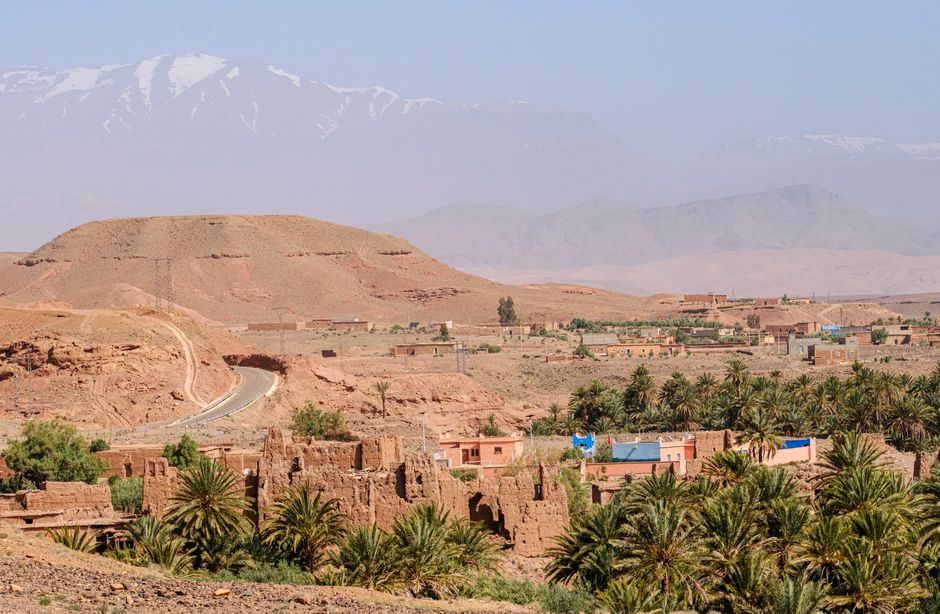
The High Atlas range runs diagonally across Morocco, forming a natural barrier between the Atlantic-influenced north and the Sahara-bound south. Its peaks rise above 4,000 meters, and the roads that cross them are engineering marvels built during the French protectorate. Riding here means climbing from palm-filled valleys into pine forests, then descending into lunar plateaus where the only shade comes from a passing cloud. The scale is immense, and the silence between villages is profound.
What draws riders back is the contrast. One hour you are sipping mint tea in a mud-brick village, the next you are carving switchbacks above a gorge. The light changes constantly, turning the mountains pink at dawn and deep purple at dusk. It is a sensory overload that no photo can fully capture.
What Makes This Ride Unique
Most mountain ranges offer either technical riding or cultural immersion. The Atlas delivers both at once. You can ride a perfectly paved pass in the morning, then detour onto a piste that leads to a weekly souk where Berber traders haggle over livestock and spices. The roads are not sanitized for tourism. This is a working landscape, and that authenticity is exactly what makes the riding feel so alive. Add in the affordability of fuel, food, and simple guesthouses, and you have a long-distance adventure that does not require a billionaire’s budget.
Is It Right for You?
If you are comfortable on a mid-sized adventure or touring motorcycle and can handle occasional gravel, loose rock, and unpredictable traffic, then yes. You do not need to be a Dakar racer to enjoy the main passes, but you should have solid throttle control and a calm reaction to livestock in the road. Riders who prefer perfectly predictable surfaces or who dislike heat and dust may find sections frustrating. For everyone else, the Atlas is a masterclass in rewarding, real-world adventure riding.
Best Time to Ride: Weather and Seasons
Timing your ride through the Atlas Mountains is the single most important planning decision you will make. The range creates its own weather systems, and conditions can vary wildly between the northern foothills and the southern slopes. In general, the best riding happens when daytime temperatures stay between 15°C and 28°C and overnight lows remain above freezing at pass level. That window is narrower than many riders expect, especially if you plan to camp or ride early in the morning.
This Atlas Mountains Morocco motorcycle guide recommends checking pass-specific forecasts, not just city weather for Marrakech or Ouarzazate. A sunny 25°C day in the lowlands can translate to 8°C and fog at 2,200 meters. Always pack layers, and never assume that a clear morning will stay clear by the summit.
Spring: The Ideal Window
From late March through May, the Atlas comes alive. Snowmelt feeds the rivers, wildflowers carpet the valleys, and daytime temperatures are perfect for riding. The Tizi n’Test and Tizi n’Tichka passes are usually fully open by April, though early spring can still bring surprise snow showers at the highest elevations. This is the busiest season for motorcycle tour groups, so book guesthouses in advance if you are traveling on a fixed schedule. The light is crisp, the air is clean, and the mountains look their absolute best.
Summer: Heat and High Passes
June through August is hot below 1,500 meters, with valley temperatures often exceeding 38°C. The solution is to ride early, rest during midday, and stay high. The passes themselves remain pleasant, but the approach roads through the Haouz plains can be brutal. Carry more water than you think you need, and consider a cooling vest if you are not acclimated to desert heat.
Autumn: Cooler Rides
September and October are the sleeper months. The summer crowds have thinned, the heat has eased, and the light takes on a golden quality that photographers love. Nights get chilly, especially above 2,000 meters, but daytime riding is superb. Rain chances increase slightly in late October, so pack waterproof gloves and a good jacket liner.
Winter: Snow and Closures
From November to February, the high passes can close without notice due to snow and ice. Riding is possible on lower routes, but the classic mountain crossings are often impassable. Unless you specifically want a cold-weather challenge, save the Atlas for spring or autumn.
Planning Your Route: Top Motorcycle Roads
The Atlas Mountains are crisscrossed by a network of paved passes, gravel pistes, and canyon roads that can fill a week or a month depending on your pace. Most riders base themselves in Marrakech or Ouarzazate and loop through the most famous passes, but the real magic often lies in the smaller connecting roads that link Berber villages and hidden valleys. This section of the Atlas Mountains Morocco motorcycle guide covers the essential routes you should not miss, plus a few lesser-known tracks for riders who want to escape the tour groups entirely.
Fuel planning is critical. Stations are concentrated in larger towns like Asni, Taddert, Ouarzazate, and Boumalne Dades. Top up whenever you see a working pump, even if your tank is half full. Carry a small reserve bottle if your bike has limited range, and always confirm the next fuel stop with locals before setting out on a long stretch.
The Tizi n’Test Pass
The Tizi n’Test is the older, narrower, and more dramatic sibling of the Tizi n’Tichka. It connects Marrakech to Taroudant via a twisting ribbon of asphalt that climbs to 2,092 meters. The southern side is an endless series of tight switchbacks carved into the mountainside, with sheer drop-offs and no guardrails. This is not a road for speed—it is a road for rhythm. Every corner reveals a new layer of the range, from olive groves to bare granite peaks. The pass is also the gateway to the Tinmel Mosque, one of the most important historical sites in Morocco, and a perfect rest stop before the final descent. Allow a full day for this crossing, and be prepared for sections of broken pavement, especially after winter.
The Tizi n’Tichka Pass
The Tizi n’Tichka is the highest major road pass in Morocco at 2,260 meters, and it is the primary route between Marrakech and Ouarzazate. The road is wider and better maintained than the Tizi n’Test, but it carries far more traffic, including overloaded trucks and tourist buses. The climb from the north is a long, sweeping ascent through red-earth hills and small villages. The summit is often windy and cool, even in summer. The southern descent is faster and more open, with stunning views over the pre-Saharan plateau. Because it is a main artery, the Tichka is best ridden early in the morning before the trucks build up. It is not the most technical pass, but it is the most accessible and a perfect introduction to high-altitude riding in Morocco.
Dades and Todra Gorges
East of Ouarzazate, the Dades Valley and Todra Gorge offer some of the most photogenic riding in the entire country. The road through the Dades Gorge winds between rose-colored rock walls and ancient kasbahs, with a famous series of switchbacks known as the “Snake Road” near the top. Todra Gorge is a narrow canyon with a paved road running directly through its floor, flanked by 300-meter cliffs. Both areas have simple hotels and cafes, making them ideal overnight stops.
Off-the-Beaten-Path Tracks
For riders on dual-sport or adventure bikes, the pistes around the Jebel Saghro massif and the Mgoun Valley offer solitude and raw beauty. These unpaved tracks connect remote Amazigh villages and require careful navigation, good tires, and a willingness to ride slowly. Always tell someone your route before heading out.

Choosing the Right Motorcycle for the Terrain
The Atlas Mountains Morocco motorcycle guide starts with one crucial decision: your bike. The terrain swings from smooth tarmac to rocky pistes, river crossings, and sandy washes within a single afternoon. Your choice shapes comfort, safety, and how much of the landscape you can actually explore.
Most riders find the sweet spot between 650cc and 1000cc. Smaller bikes feel nimble on gravel but struggle on long highway transfers. Bigger machines devour the road yet become exhausting when the surface turns loose. Weight matters more than horsepower once you leave pavement.
Consider your route honestly. If you plan to stick to tarmac passes like Tizi n'Tichka, a road-biased adventure tourer works beautifully. If the Todra Gorge piste or the trails around Jebel Saghro call you, lean toward something lighter and more off-road capable. The right motorcycle transforms a demanding ride into a joyful one.
Ground clearance also deserves attention. Rocky sections hide boulders that punish low-hanging exhausts and oil pans. Look for at least 200mm of clearance, plus a skid plate that can take actual impacts without cracking.
Finally, think about seat height and luggage weight. You will pick the bike up at least once, probably on a gravel slope at altitude. A machine you can manage when tired beats a spec-sheet hero every time.
Adventure Bikes: The Best All-Rounders
Adventure bikes dominate this region for good reason. A middleweight like the Yamaha Ténéré 700, KTM 790 Adventure, or BMW F 850 GS handles highway miles comfortably while remaining manageable when the road disappears. These machines offer upright ergonomics, long-travel suspension, and enough wind protection for cold mountain mornings.
If you prefer more road comfort, a larger Africa Twin or R 1250 GS brings stability and power. The trade-off appears in deep sand or technical climbs, where the extra 40 kilograms becomes noticeable. Still, experienced riders pilot big ADVs through every major Atlas pass without drama.
Choose tubeless spoked wheels if possible. They survive punctures better and make trailside repairs far simpler than wrestling with a tube on a hot roadside. Whatever you pick, make sure crash bars and a solid bash plate come fitted before you load your luggage.
Dual-Sport and Enduro Options
For riders prioritising off-road capability, a dual-sport or lightweight enduro bike opens up the most remote pistes. A KTM 690 Enduro R, Husqvarna 701, or a simple DR-Z400 carries less weight, turns quicker, and floats over terrain that would swallow a heavy adventure bike.
The compromise is comfort. Long transfer days on paved roads feel buzzy, fuel range shrinks, and wind protection disappears. Pack light and plan shorter daily distances. Many guided tour operators in Morocco actually use these bikes for exactly that reason, combining them with support vehicles for luggage.
If your Atlas Mountains Morocco motorcycle guide ambitions include the gnarliest tracks around M'Goun or the high plateau passes, this category earns its place. You will work harder on the road but smile wider in the dirt.
Renting vs. Bringing Your Own
Renting in Marrakech or Agadir has become the easiest path for most international riders. Reputable companies maintain late-model bikes, supply luggage systems, and offer roadside support. You save weeks of shipping, customs paperwork, and the risk of damage to your own machine.
Bringing your own bike makes sense only for extended multi-month journeys or if you are deeply attached to your setup. Temporary import procedures for Morocco are straightforward, but ferry costs, insurance, and wear add up quickly. For a two-week Atlas loop, renting almost always wins on cost and convenience.
Essential Modifications and Accessories
Add handguards, a sturdy skid plate, and crash bars before departure. A USB charging port on the handlebars keeps your phone and GPS alive. Upgrade the seat if you can, and fit a small tank bag for documents. These few changes dramatically improve daily comfort and reliability.
Essential Gear and Packing List
Packing for the Atlas Mountains means preparing for four seasons in a single day. Morning starts in the valleys can hover near freezing, while afternoon sun on exposed passes pushes temperatures past thirty degrees. Rain, dust, and strong winds all make regular appearances, even during typically dry months.
Your luggage system matters as much as what goes inside it. Soft panniers handle drops better than rigid aluminium boxes and squeeze through narrow village lanes more easily. Keep total luggage weight under twenty-five kilograms, including tools and water. Every extra kilo steals energy at altitude.
Layering beats bulk. A good base layer, a warm mid-layer, and a windproof outer shell cover most conditions. Pack clothes that dry overnight and resist odour, because laundry stops may be days apart. Merino wool earns its price tag here.
Hydration deserves top priority. Carry at least three litres of water per day, and more if your route crosses remote southern sections. A hydration bladder lets you sip without stopping, which keeps you sharp on technical terrain.
Finally, keep your critical documents in a waterproof pouch. Your passport, driving licence, bike rental agreement, and insurance papers need to survive river crossings and dust storms. A small handlebar bag offers quick access at police checkpoints without unloading the whole bike.
Protective Riding Gear
An adventure helmet with a peak and good ventilation works best. The peak blocks low sun, and wide eye ports fit goggles when dust gets heavy. Carry clear and tinted visors or a drop-down sun shield for changing light.
A quality textile jacket with armour and a removable thermal liner covers more conditions than leather. Look for large vents and waterproofing. Riding trousers should offer the same flexibility, ideally with zippered thigh vents for hot valley sections.
Gloves and boots complete the kit. Bring two pairs of gloves: one vented for heat and one waterproof for cold or rain. Stiff motocross-style boots protect ankles on rocky trails but make walking awkward, so an adventure boot with a lugged sole offers the best compromise.
Navigation and Communication Tools
A dedicated GPS unit with offline maps of Morocco remains the most reliable option. Phone apps work well but overheat on handlebar mounts and drain batteries quickly. Load your route as GPX tracks, not just waypoints, especially for off-road pistes.
Carry a paper map as backup. The Michelin Morocco map shows road quality and fuel stations, which GPS screens sometimes hide. A local SIM card with data costs little and helps you check weather or contact your rental company. Tell someone your route each morning if travelling solo.
Camping vs. Hotels: What to Bring
Hotels and guesthouses line most popular routes, so you can travel light. If camping, add a compact tent, a three-season sleeping bag, and a small stove. Wild camping is tolerated in remote areas but ask permission near villages.
A silk sleeping bag liner adds warmth in cold mountain hotels and keeps you clean in budget accommodation. Pack a headlamp, earplugs, and a small travel towel regardless of your sleeping choice. These tiny items earn their space every single night.
Tools and Spare Parts
Carry a basic tool kit with tyre levers, a puncture repair kit, zip ties, duct tape, and a multi-tool. Add spare clutch and brake levers if your bike model is uncommon in Morocco. A small 12V air compressor saves enormous effort after a flat in the middle of nowhere.
Navigating Moroccan Roads and Traffic
Moroccan roads reward alert, adaptable riders. The paved mountain passes offer world-class riding, but they also carry trucks, overloaded buses, donkey carts, and pedestrians sharing the same narrow strip of tarmac. You will learn to expect the unexpected around every blind corner.
Traffic rules exist, yet local practice often diverges. Roundabouts operate on a fluid mix of priority and eye contact. Indicators may signal intention or simply be forgotten. The key is to ride predictably, avoid aggression, and stay visible without being confrontational.
Speed limits are posted and occasionally enforced with radar. Small towns and villages demand extra care, as children and animals appear without warning. Reduce speed well before entering settlements, and be ready for speed bumps that sometimes lack signage.
Riding after dark is best avoided outside cities. Unlit vehicles, missing road markings, and wandering livestock create serious hazards. Plan your days to reach lodging before sunset, especially on unfamiliar mountain roads.
The Atlas Mountains Morocco motorcycle guide experience improves dramatically when you embrace local rhythm. Leave early, take breaks often, and treat every interaction as an opportunity to learn. The road culture here is generous and welcoming once you understand its pulse.
Understanding Local Driving Habits
Moroccan drivers communicate through subtle signals. A quick flash of headlights often means "I am coming through" rather than "you go first." Trucks may indicate left to show it is safe to overtake, or right to warn of oncoming traffic. Learn these cues and use them yourself.
Overtaking happens in places that feel uncomfortable to visitors. Leave room, stay patient, and never follow a vehicle too closely. On mountain descents, watch for buses and trucks swinging wide across the centre line. Your best defence is positioning yourself where others can see you early.
In towns, mopeds and scooters filter aggressively. Keep a steady line and let them pass. Horns are used constantly, but rarely with anger. A short beep simply says "I am here," and you should use yours the same way.
Dealing with Checkpoints and Police
Police checkpoints appear regularly on main roads and at town entrances. Most are routine document checks. Slow down, remove your sunglasses, and greet the officer politely in French or Arabic. Hand over your passport, licence, and registration when asked.
Stay calm and friendly. Officers are generally professional and often simply curious about your journey. A smile and a few words of thanks go a long way. Keep documents accessible so the stop takes seconds rather than minutes. Never photograph checkpoints or police buildings.
Road Conditions and Hazards
Paved roads range from freshly smooth to badly broken. Potholes, gravel patches, and subsidence appear without warning. Ride within your sightline and adjust speed before corners, not during them. In spring, snowmelt can wash debris across the road.
Off-road pistes bring their own challenges. Sand accumulates in valleys, rocks hide in shadows, and river crossings vary with recent rainfall. Walk deep or fast-flowing water before committing. After heavy rain, check with locals about track conditions before heading into remote areas.
Fuel Availability and Range
Fuel stations cluster in towns and along main highways, but disappear completely in remote mountain regions. Plan for at least 250 kilometres of range, and top up whenever you see a station at half tank. Carry a small reserve bottle if your bike has limited capacity.
Most stations sell unleaded and diesel. Premium fuel is less common outside cities. Pay in cash, as card machines are unreliable. In very remote areas, small shops may sell fuel from bottles, but quality varies. Use these only in emergencies and filter if possible.

Cultural Etiquette and Berber Hospitality
Riding through the Atlas Mountains isn't just a visual experience—it's a deep dive into one of North Africa's most enduring cultures. The Berber, or Amazigh, people have called these valleys home for thousands of years. Understanding a few basic customs will transform your Atlas Mountains Morocco motorcycle guide from a simple ride into a meaningful human journey.
A genuine smile and the Arabic greeting "Salam alaikum" open more doors than any amount of money. Berber hospitality is legendary, but it comes with expectations of mutual respect. Never rush an interaction. Time moves differently in the mountains, and your willingness to pause for a glass of tea speaks volumes about your character.
Dress modestly even when it's hot. For men, shorts are acceptable in tourist areas but long trousers show respect in remote villages. Women riders should keep shoulders and knees covered. This isn't just about tradition—it's practical protection from sun, wind, and the occasional curious glance.
When entering a home or community building, remove your riding boots. Hosts often offer slippers or simply expect socked feet. Keep your helmet and gloves with your bike, not slung over your shoulder as an afterthought.
Money matters should be handled discreetly. If you're invited for tea or a meal, offer to contribute, but don't be surprised if your host refuses. A small gift—dates, sugar, or fresh bread from a market—is a thoughtful gesture that respects the reciprocity of Berber culture.
Respecting Local Customs
Ramadan changes everything. If you're riding during this holy month, avoid eating, drinking, or smoking in public during daylight hours out of respect for those fasting. Many cafes will be closed, so plan fuel and food stops carefully. Your Atlas Mountains Morocco motorcycle guide should note Ramadan dates for 2026 before you book.
Public displays of affection are frowned upon, even between married couples. Keep physical contact minimal in villages and markets. Handshakes between men are common, but wait for a woman to extend her hand first—many prefer a hand over the heart with a slight nod instead.
Friday is the holy day. Expect shops to close around midday for prayers, and avoid playing loud music near mosques. The call to prayer echoing off canyon walls while you're stopped at a viewpoint is one of the most moving sounds you'll ever hear—let it wash over you rather than competing with it.
Alcohol is rarely available outside larger cities like Marrakech. Drinking in public is illegal and deeply offensive in conservative communities. Save the celebratory beer for your riad back in the city, not a mountain pass overlook.
Interacting with Berber Communities
Learn three phrases in Tamazight and watch faces light up. "Azul" means hello, "Tanmirt" means thank you, and "Labas?" asks how are you. Even if your pronunciation is shaky, the effort signals genuine respect. These small exchanges often lead to invitations you'd never find in any guidebook.
Children may run toward your bike, curious and excited. Slow down, wave, and never toss candy or money from your saddle. This creates a begging dynamic that harms communities. Instead, stop, greet them properly, and if you want to give something, offer pencils or notebooks to a local schoolteacher rather than directly to kids.
Markets, or souks, are the beating heart of Berber commerce. Haggling is expected, but keep it lighthearted and proportional. A few dirhams means little to you but sustains a family. Never photograph goods or stalls without asking, and if a vendor says no, accept it gracefully and move on.
If you're invited into a home, bring a small gift. Sugar, tea, or fruit are always welcome. Remove your shoes at the door, sit where directed, and accept whatever is offered—even if it's just a cushion on the floor. Refusing hospitality is a serious slight.
Food and Tea: The Social Ritual
Moroccan mint tea is not a beverage—it's a ceremony. The first glass is bitter like life, the second sweet like love, the third gentle like death. Accept all three if offered. Hold your glass with two hands if the pour is from high above, and never refuse tea outright. Even a symbolic sip honors your host.
Meals are often communal, eaten from a shared tagine with bread as your only utensil. Use your right hand only—the left is considered unclean. Tear bread with your fingers, scoop from the section directly in front of you, and never reach across the dish. Your host will push choice morsels toward you; accept them warmly.
Photography Etiquette
Never point your camera at a person without explicit permission. In many Berber communities, particularly among older generations, being photographed is believed to capture part of the soul. Ask with a smile and a gesture toward your camera, then show the result afterward. If someone declines, lower your lens immediately and thank them anyway.
Photographing women is especially sensitive. Many will turn away or cover their faces. Respect this without pushing. Landscape and architecture shots are generally fine, but be mindful near military checkpoints or government buildings—put the camera away entirely in those zones.
Safety Tips for High-Altitude Riding
The Atlas Mountains demand respect. Riders who treat these passes like a casual Sunday cruise quickly find themselves in trouble. Your Atlas Mountains Morocco motorcycle guide must prioritize safety above all else, because the margin for error at 2,000 meters is razor-thin. Preparation, patience, and humility are your best tools.
Before you leave each morning, do a full bike check. Brake pads wear faster on mountain descents, chain tension shifts with temperature, and tire pressure changes with altitude. A five-minute inspection can prevent a life-threatening failure on a remote switchback where help is hours away.
Ride your own pace. The mountains are not a race track. Passing opportunities are rare and often deceptive. If a local truck is crawling uphill, wait for a clear straightaway with full visibility. The consequences of impatience here are not a scratched fairing—they're a long fall.
Altitude Sickness and Hydration
Most Atlas passes top out between 2,000 and 2,260 meters. While this isn't extreme altitude, symptoms can still appear, especially if you've flown in from sea level a day earlier. Headaches, dizziness, nausea, and unusual fatigue are warning signs. Don't push through them—descend a few hundred meters and rest.
Hydration is your first defense. The dry mountain air dehydrates you faster than you realize, and wind blast from riding accelerates the process. Carry at least two liters of water per person per day, and sip regularly even when you don't feel thirsty. Electrolyte tablets are lightweight insurance against cramps and headaches.
Avoid heavy meals before high passes. A full stomach diverts blood to digestion when your body needs it for oxygen transport. Light snacks—dates, nuts, flatbread—keep energy steady without the sluggishness. Caffeine and alcohol both dehydrate, so limit both during long riding days.
Weather Changes and Lightning
Mountain weather changes in minutes. A clear blue sky at 10 a.m. can become a thunderstorm by noon. Always carry a waterproof layer, even in summer. Hypothermia is a real risk when you're wet, wind-chilled, and far from shelter. A compact rain suit in your pannier is worth its weight in gold.
Lightning is a serious threat on exposed passes. If a storm catches you above the tree line, avoid being the tallest object. Pull over away from lone trees and metal signposts. Crouch on the ground with feet together if lightning is striking nearby, but don't lie flat. Better yet, descend to lower elevation immediately.
Check the forecast each morning, but treat it as a rough guide. Local knowledge from your riad host or a passing shepherd often beats an app. If clouds are building over the peaks by mid-morning, adjust your route or timing accordingly. The mountain will still be there tomorrow.
Riding on Loose Gravel and Switchbacks
Atlas roads are a mixed bag. Some sections are smooth asphalt, others are crumbling gravel with potholes the size of bathtubs. The surface can change without warning around a blind corner. Slow down before you reach the unknown, not after you're already in it.
On gravel, keep your weight back slightly and your arms relaxed. Avoid sudden throttle, brake, or steering inputs—smoothness is everything. Use engine braking on descents rather than grabbing the front brake, which can lock the wheel and send you sliding. If the rear wheel skids, ease off gently rather than stomping harder.
Switchbacks demand total concentration. Enter wide, turn late, and exit tight. Look through the corner to where you want to go, not at the drop-off beside you. If a hairpin is too tight for a single pass, don't be embarrassed to do a three-point turn. Every rider has done it, and it beats a trip over the edge.
Emergency Preparedness
Cell coverage is patchy in the mountains. Download offline maps before you leave, and carry a physical map as backup. Tell someone your planned route and expected arrival time each day—your riad host or a family member back home. If you don't arrive, they need to know where to start looking.
Carry a basic first aid kit with bandages, antiseptic wipes, painkillers, and any personal medications. Add a space blanket, a small headlamp, and a multi-tool. These items weigh almost nothing but can make a stranded night survivable. A portable battery pack for your phone is equally essential.
Know the emergency numbers. In Morocco, dial 190 for police and 150 for ambulance. But understand that response times in remote areas can be hours. Your best rescue plan is self-sufficiency: enough water, warm layers, and the sense to turn back when conditions deteriorate beyond your skill level.
Final Thoughts: Your Atlas Adventure Awaits
The Atlas Mountains don't care how many miles you've ridden or how expensive your gear is. They reward preparation, humility, and a willingness to slow down. This Atlas Mountains Morocco motorcycle guide has given you the routes, the gear advice, and the cultural insights—but the actual journey is yours to discover. No two riders experience these passes the same way, and that's precisely the point.
You'll remember the small moments most vividly. The shepherd waving from a hillside as you round a bend. The first sip of mint tea in a village where no one speaks your language. The feeling of your tires gripping a switchback you weren't sure you could handle. These are the experiences that stay with you long after the bike is parked and the luggage is unpacked.
Plan carefully, but leave room for spontaneity. The best Atlas adventures often happen when a route changes, a storm forces an early stop, or an invitation leads you somewhere unplanned. Trust the mountain, trust the people, and trust your own judgment. You've prepared for this.
As you crest that final pass and look back at the road snaking behind you, take a breath. You came as a rider, but you'll leave as a traveler. The Atlas Mountains have been welcoming adventurers for centuries, and in 2026, they're waiting for you. Pack your gear, check your bike, and go find your own story in the High Atlas.
Gear for this trip
- Adventure Motorcycle Helmet
- Motorcycle Textile Jacket with Armor
- Waterproof Motorcycle Gloves
- Adventure Motorcycle Boots
- Motorcycle Hydration Backpack
As an Amazon Associate I earn from qualifying purchases.


No comments:
Post a Comment