In This Article
- Why Ride the Death Road on a Motorcycle?
- Understanding the Death Road: History and Geography
- Is Riding the Death Road Legal and Safe in 2026?
- Planning Your Death Road Motorcycle Trip
- Motorcycle Preparation and Gear Essentials
- Riding the Death Road: Step-by-Step Route Guide
- Safety Tips and Riding Techniques for the Death Road
- Final Thoughts: Is the Death Road Motorcycle Adventure Worth It?
Why Ride the Death Road on a Motorcycle?
The North Yungas Road, known to the world as Bolivia's Death Road, has carved its legend into the collective imagination of adventurers everywhere. It is a ribbon of crumbling asphalt and dirt that clings to the side of the Andes, plunging from the freezing altiplano down into the humid Amazon basin. For years, mountain bikers have dominated this route, flying down the gravity-fed descent in a blur of dust and adrenaline. But for a growing number of riders, there is a far more compelling way to experience this icon of danger: on two motorized wheels.
Riding the Death Road on a motorcycle changes the experience entirely. You are not just surviving the descent; you are mastering it. The road demands throttle control, precise braking, and a constant awareness of the edge, which often drops away into a green abyss. It is a ride that tests your nerve and your machine in equal measure. This Death Road Bolivia motorcycle guide is written for riders who want to understand what it truly takes to conquer this legendary stretch of road in 2026.
The appeal goes beyond just the thrill. A motorcycle gives you the freedom to stop, to breathe in the silence of the cloud forest, and to photograph the waterfalls that crash down the cliff faces. You are not tied to the schedule of a tour van or the pace of a group of cyclists. You set your own rhythm, which is essential when navigating a road where a single mistake can be your last.
Moreover, the motorcycle community in Bolivia is tight-knit and welcoming. Riders who make the pilgrimage to the Death Road often share a bond forged by mutual respect for the mountain. You will swap stories in Coroico, compare mud splatters, and understand a truth that only those who have ridden the edge can fully grasp: the Death Road is not just a destination; it is a rite of passage.
For many, the decision to ride comes from a desire to experience the road in its rawest form. A mountain bike descends with gravity; a car isolates you behind glass. A motorcycle exposes you to the elements—the cold wind at the top, the sticky heat at the bottom, and the fine mist of clouds that can reduce visibility to nothing. It is an immersive, physical experience that stays with you long after you have returned to La Paz.
This guide will walk you through everything you need to know, from the history of the road to the practicalities of getting your bike there and riding it safely. Whether you are an experienced adventure rider or a confident road rider looking for a new challenge, the Death Road demands preparation and respect. In the sections that follow, we will break down the allure, the geography, and the legal realities of riding this famous road in 2026.
The Allure of Danger and Adventure
There is a reason the Death Road is famous. It has earned its name through decades of tragedy, but it has also earned its reputation as one of the most beautiful and terrifying roads on the planet. For motorcyclists, that combination is irresistible. The danger is not a marketing gimmick; it is a physical reality that sharpens every sense.
When you ride here, your brain operates at a different frequency. You notice the texture of the gravel, the width of your tires, and the exact position of your body on the bike. Fear becomes a tool. It keeps you alert, prevents complacency, and transforms a simple ride into a profound act of focus. That is the allure: the chance to test yourself against a landscape that does not forgive mistakes.
The adventure also lies in the unknown. Weather can change in minutes. A clear morning can turn into a foggy, muddy descent by noon. You might round a corner to find a landslide or a herd of goats blocking the narrow track. Every kilometer is a new challenge, and that unpredictability is what makes the ride so deeply satisfying.
Comparing Motorcycle vs. Mountain Bike vs. Car
Most people experience the Death Road on a mountain bike, guided by one of the many tour companies in La Paz. It is an incredible ride, but it is largely a gravity-fed descent. You pedal occasionally, but the mountain does most of the work. The focus is on braking and line choice, not on managing engine power or navigating uphill sections.
A car offers comfort and protection, but it also disconnects you from the road. You are sealed inside, and the narrow edges feel less immediate. You also face the challenge of passing oncoming traffic on a single-lane track, which can be stressful in a wide vehicle.
A motorcycle sits in the sweet spot. You have the exposure and vulnerability of a cyclist, but the power and control of an engine. You can ride uphill, which means you can experience the road from both directions. You can pull over easily to let trucks pass, and you can navigate around obstacles with far more agility than a car. For riders who want the full sensory experience with the freedom of a motor, the motorcycle is the ultimate choice.
What Makes This Road So Deadly?
The Death Road earned its name in the 1990s, when it was estimated that 200 to 300 people died on it every year. The causes were many, but they all pointed to the same brutal geometry: a single-lane dirt road, often only three meters wide, carved into a cliff face with sheer drops of up to 600 meters.
Visibility is a killer. The road sits in a cloud forest, and fog can roll in without warning, reducing your sightlines to a few meters. Rain turns the dirt surface into slick, red mud that clings to tires and reduces traction to near zero. Waterfalls pour directly onto the road, creating hidden potholes and slippery patches.
Traffic used to be the biggest threat. Buses and trucks, often overloaded and poorly maintained, would meet head-on, with one vehicle forced to reverse along the cliff edge. Today, most heavy traffic uses the new paved highway, but you will still encounter local vehicles, construction equipment, and the occasional tour minibus. The road itself remains narrow, unpaved in many sections, and utterly unforgiving.
Understanding the Death Road: History and Geography
To ride the Death Road well, you need to understand it. This is not just a stretch of asphalt; it is a living piece of Bolivian history and a dramatic geographical transition. The road connects two very different worlds, and every curve tells a story of trade, tragedy, and adaptation.
The route begins in the high plains near La Paz, at an altitude of around 4,650 meters (15,260 feet). From there, it drops almost 3,600 meters (11,800 feet) in just 64 kilometers (40 miles) to the town of Coroico. That is one of the steepest and most dramatic elevation changes of any road in the world. The landscape shifts from barren, windswept altiplano to lush, cloud-drenched jungle in the space of a few hours.
For motorcyclists, this means constant adaptation. You start in cold, thin air that saps your energy and affects your bike's performance. You end in warm, humid air thick with the smell of vegetation and wet earth. In between, you ride through a transition zone where waterfalls, fog, and sheer cliffs dominate the view.
The geography also dictates the road's character. The upper sections are often rocky and exposed. The middle sections cut through the cloud forest, where the road is perpetually damp and green. The lower sections, closer to Coroico, widen slightly and flatten out, offering a welcome relief after the intense descent. Understanding this progression helps you plan your stops, manage your fuel, and prepare for the changing conditions.
From Coca Trail to Highway: A Brief History
Long before it was a road, this route was a footpath used by indigenous Aymara and Quechua people to transport coca leaves and goods between the highlands and the Yungas valleys. In the 1930s, during the Chaco War, Bolivian prisoners of war from Paraguay were forced to build a road along this ancient trail. The result was a narrow, winding track that became the main highway from La Paz to the Amazon.
For decades, it was the only route. Trucks, buses, and cars all used it, and the death toll mounted. In 2006, a new, modern paved highway opened, diverting most traffic away from the old road. Since then, the Death Road has become a tourist attraction, primarily for mountain bikers, but increasingly for motorcyclists seeking a piece of its dark history.
The Route: La Paz to Coroico
The classic Death Road ride starts at La Cumbre, a mountain pass about an hour from La Paz. From there, you descend through a series of hairpin turns and narrow ledges. The first section is paved but rough, with potholes and loose gravel. After about 20 kilometers, the pavement ends, and the road becomes a dirt track carved into the mountainside.
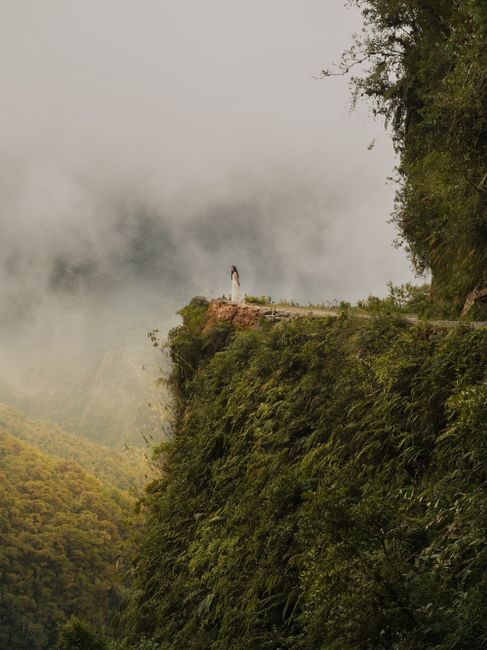
The middle section is the most infamous. The road narrows to a single lane, with no guardrails and sheer drops on the left side. Waterfalls crash onto the road, and fog often obscures the view. You pass through small settlements like San Juan and Chuspipata, where you can stop for water or a quick snack. The final stretch descends into the Yungas valleys, where the road widens and the vegetation becomes lush and tropical. The ride ends in Coroico, a charming town perched on a hilltop, where riders can rest, eat, and celebrate their survival.
Climate and Weather Conditions
The weather on the Death Road is as unpredictable as the road itself. At the top, temperatures can hover near freezing, and you may encounter strong winds and even snow. As you descend, the temperature rises, but so does the humidity. The cloud forest creates its own microclimate, with frequent rain, dense fog, and sudden downpours.
The best conditions are usually in the early morning. Fog tends to roll in during the afternoon, and rain is common later in the day. The dry season, from May to October, offers the most reliable weather, but even then, the road can be wet from waterfalls and runoff. Riders in 2026 should check local forecasts, but be prepared for anything. Layered gear is essential, as is waterproof protection for both you and your luggage.
Is Riding the Death Road Legal and Safe in 2026?
This is the question every rider asks, and the answer is nuanced. The Death Road is not a closed museum; it is a public road, and motorized vehicles are still allowed to use it. However, the Bolivian government has implemented regulations to manage traffic and improve safety, particularly in response to the growth of tourism. Riding here is legal, but it comes with responsibilities and risks that you must take seriously.
Safety is a relative term on a road with this history. The new highway has removed most of the heavy traffic, which has dramatically reduced the number of fatal accidents. But the road itself is still narrow, unpaved in many areas, and subject to landslides and rockfalls. For a motorcyclist, the margin for error is small. A moment of distraction, a patch of slick mud, or an unexpected oncoming vehicle can have serious consequences.
That said, hundreds of riders successfully navigate the Death Road every year. With the right preparation, a well-maintained bike, and a conservative riding style, the risks can be managed. The key is to treat the road with the respect it demands, to ride within your limits, and to be willing to turn around if conditions deteriorate. In 2026, the Death Road is not a death sentence; it is a challenge that rewards careful, skilled riders.
Current Regulations for Motorcyclists
As of 2026, motorcyclists are permitted on the Death Road, but there are rules. You must carry your passport, a valid motorcycle license, and proof of insurance. Helmets are mandatory, and riding at night is strongly discouraged and, in some sections, prohibited. The road is one-way in spirit, but not by law, so you must be prepared for oncoming traffic.
Local authorities occasionally set up checkpoints, especially during the high season. They may ask to see your documents and may warn you about current road conditions. It is also worth noting that the road is closed periodically for maintenance or after heavy rains. Always check with local riders or your accommodation in La Paz before setting out.
Risk Assessment and Safety Statistics
Since the opening of the new highway in 2006, traffic on the Death Road has dropped by over 90%. Fatalities are now rare, but they still occur, mostly involving tourists on mountain bikes or vehicles that attempt the road in bad weather. For motorcyclists, the most common risks are loss of traction on wet mud, collisions with oncoming vehicles on blind corners, and underestimating the effect of altitude on both rider and machine.
In 2026, the road is arguably safer than it has ever been, but it is not safe by any conventional standard. The lack of guardrails, the narrow width, and the exposure to sheer drops mean that a simple mistake can be fatal. Riders who are honest about their skills, who ride slowly, and who avoid the road in heavy rain will find the risks manageable. Those who treat it as a racecourse will not.
Travel Advisories and Insurance Considerations
Before you ride the Death Road, check your home country's travel advisory for Bolivia. Most advisories mention the road by name and warn against unnecessary travel, but they do not prohibit it. Your decision to ride is a personal one, and you should weigh the advice carefully.
Insurance is critical. Standard motorcycle travel insurance may not cover you on unpaved roads or in areas with a history of danger. You need a policy that explicitly covers adventure riding and, ideally, medical evacuation. If you are renting a bike in La Paz, the rental company will likely require proof of insurance. Do not ride without it. A serious accident on the Death Road can involve a long, difficult rescue, and the costs can be enormous. In 2026, there are several insurers that offer specific coverage for high-altitude and off-road riding in South America; it is worth the investment.

Planning Your Death Road Motorcycle Trip
Riding Bolivia’s North Yungas Road, better known as Death Road, is not a spur-of-the-moment decision. The route demands respect, preparation, and a clear understanding of what you are getting into. This Death Road Bolivia motorcycle guide will help you plan every detail so you can focus on the ride rather than the logistics. Most riders base themselves in La Paz, the world’s highest capital, and use it as a staging point for the journey toward Coroico. You will need to think about timing, paperwork, route selection, and where to sleep before you ever twist the throttle.
The road itself is roughly 64 kilometers from La Cumbre to Yolosa, but the full ride from La Paz to Coroico adds significant distance and altitude changes. You will start above 4,600 meters and descend to just over 1,100 meters in a matter of hours. That means you need to pack for cold, wet, foggy conditions at the top and hot, humid weather at the bottom. Layering is essential, and so is a clear head. The planning phase is where you set yourself up for a safe and memorable ride.
Do not underestimate the mental preparation either. Death Road has earned its name for a reason. While the traffic situation has improved dramatically since the new paved highway opened, the old road still sees cyclists, tour vans, and the occasional local vehicle. You will be riding on a narrow dirt track with sheer drops on one side and rock faces on the other. Knowing what to expect before you arrive will make the experience thrilling rather than terrifying.
Best Time to Ride
The dry season, from May to October, is the best time to ride Death Road in 2026. During these months, the dirt surface is firm, visibility is better, and the risk of landslides is lower. That said, the weather can change fast at high altitude, so always expect a mix of conditions. The rainy season from November to April turns the road into a muddy, slippery challenge that is best avoided unless you are an expert rider with local support.
Morning starts are ideal. Most tour traffic leaves La Paz early, and you want to be ahead of the bicycle groups that descend later in the day. Riding midweek also means fewer people on the road than on weekends. If you can, plan your ride for a Tuesday, Wednesday, or Thursday in the dry season for the best experience.
Permits, Documents, and Paperwork
You do not need a special permit to ride Death Road itself, but you do need the right paperwork for Bolivia. Carry your passport, your motorcycle registration, and proof of insurance. If you are renting a motorcycle, the rental company will provide the registration and usually a basic insurance policy. Make sure you read the rental agreement carefully so you understand your liability in case of damage.
Bolivia also requires an International Driving Permit for foreign riders, so get one before you travel in 2026. Police checkpoints are rare on the old road, but they do exist. Keep your documents in a waterproof bag, and have photocopies stored separately from the originals. That way, if anything gets lost or soaked, you still have a backup.
Choosing Your Route and Starting Point
Most riders start in La Paz and head northeast toward La Cumbre, the high pass that marks the beginning of the old road. From there, the route is straightforward: follow the dirt track downhill through Unduavi, San Juan, and Yolosa, then continue to Coroico. The old road is one-way downhill for vehicles on most days, which actually works in your favor as a motorcyclist heading toward Coroico.
Some adventurous riders choose to ride the route uphill, but that is not recommended. The road is narrow, and meeting downhill traffic on a blind corner is dangerous. Stick to the downhill direction from La Cumbre to Yolosa. You can return to La Paz via the new paved highway, which is a fast, safe, and scenic alternative that completes the loop nicely.
Accommodation and Logistics in La Paz and Coroico
La Paz has plenty of hostels, hotels, and motorcycle-friendly guesthouses. Look for a place with secure parking, since you do not want to leave your bike on the street overnight. Many riders stay in the Sopocachi or San Miguel neighborhoods, where you will find good restaurants and gear shops nearby. Book your first night in La Paz to acclimatize to the altitude before riding.
Coroico is a small, welcoming town at the end of the route. It is a great place to relax after the descent, with comfortable lodges, swimming pools, and excellent local food. You can stay one night and then ride back to La Paz the next morning on the new highway. Some riders choose to spend two nights in Coroico to recover and explore the surrounding coffee plantations and waterfalls.
Motorcycle Preparation and Gear Essentials
Your motorcycle and your gear are the two biggest factors that will determine how safe and enjoyable your Death Road ride is. This is not the place to test a poorly maintained bike or to skimp on protective equipment. The road surface is loose in places, the weather changes rapidly, and there are no guardrails. A well-prepared motorcycle and the right gear will give you the confidence to handle whatever the mountain throws at you.
Before you leave La Paz, do a full check of your motorcycle. Brakes are the most important item, since you will be descending for hours. Check your brake pads, fluid, and lever feel. Make sure your tires have good tread and are set to the correct pressure for dirt riding. A slightly lower pressure gives you more grip on loose surfaces, but do not go too low or you risk a pinch flat. Check your chain, sprockets, and all bolts, and carry a basic tool kit for adjustments on the road.
Choosing the Right Motorcycle for the Death Road
The ideal motorcycle for Death Road is a dual-sport or adventure bike in the 250cc to 650cc range. A lightweight bike like a Suzuki DR650, Yamaha XT250, or Honda XR650L is perfect because it is easy to handle on tight switchbacks and forgiving on loose gravel. Smaller bikes also give you more confidence when you need to put a foot down or maneuver around rocks and ruts.
Avoid heavy touring bikes or large adventure bikes with street-oriented tires. The extra weight makes the steep, narrow descent exhausting, and the road surface is not suited to big bikes loaded with luggage. If you are renting in La Paz, choose a well-maintained dual-sport from a reputable company. Ask about recent maintenance, tire condition, and whether the bike has been used on Death Road before.
Must-Have Safety Gear
Your helmet is non-negotiable. Choose a full-face helmet with a clean visor, since dust and fog are constant companions on Death Road. Bring anti-fog spray or a pinlock insert for the long descent. Your jacket and pants should be abrasion-resistant and offer impact protection. A mesh jacket with armor works well for the lower altitudes, while a waterproof outer layer handles the cold, wet start at La Cumbre.
Gloves should be full-fingered with good grip, and your boots need to cover your ankles. Sturdy adventure or motocross boots are ideal, but a solid pair of leather work boots can work in a pinch. Do not ride in sneakers or street shoes. Eye protection is also essential, even with a full-face helmet, because dust gets everywhere. Carry a spare pair of goggles or clear glasses for the dustiest sections.
Tools, Spares, and Emergency Equipment
Carry a basic tool kit that includes wrenches, Allen keys, a tire pressure gauge, and a multi-tool. A spare tube and tire levers are essential if you are running tube-type tires, which most dual-sports in Bolivia use. Practice changing a tube before you go, because doing it on the side of a cliff is not the time to learn. A compact air pump or CO2 cartridges will get you rolling again after a flat.
Pack a small first aid kit with bandages, antiseptic wipes, pain relievers, and altitude sickness medication. A charged phone with offline maps and a local SIM card is your lifeline in an emergency. Bring a headlamp, a space blanket, and some high-energy snacks in case you are delayed. A small bottle of water is fine, but do not overload the bike. Keep your emergency gear in a tank bag or backpack so you can reach it quickly.
Riding the Death Road: Step-by-Step Route Guide
The ride itself is a series of distinct stages, each with its own character and challenges. Understanding what to expect at each point will help you pace yourself and stay focused. This step-by-step route guide walks you through the entire journey from the high-altitude start at La Cumbre to the tropical finish in Coroico. Take your time, stop often, and enjoy one of the most dramatic motorcycle roads on the planet.
The full descent takes most riders between three and five hours, depending on stops and weather. There is no prize for speed. In fact, the riders who enjoy Death Road most are the ones who treat it as a scenic adventure rather than a race. Keep your speed low, especially on blind corners, and always stay to the left side of the road when descending. That gives you the best view of oncoming traffic and the edge of the road.
La Cumbre to Unduavi: The High-Altitude Start
La Cumbre sits at over 4,600 meters, and the air is thin and cold. You will likely start in fog or low cloud, so take the first few kilometers slowly. The road begins as a wide dirt track with gentle curves, but it narrows quickly. This section is more about acclimatization than technical riding. Stop at the La Cumbre viewpoint for a photo before you descend into the clouds.
As you approach Unduavi, the landscape shifts from barren highlands to greener, wetter terrain. The road surface can be damp here even in the dry season. Watch for small landslides and rocks on the road. Unduavi is a tiny settlement with a checkpoint where you may be asked to show your documents. Keep them handy and be polite to the officials.
Unduavi to Yolosa: The Dangerous Descent
This is the heart of Death Road and the section that earned the route its fearsome reputation. From Unduavi onward, the road narrows to a single lane cut into the cliffside. The drop on your left is often hundreds of meters straight down, with no barrier between you and the void. The surface is loose gravel and dirt, and the corners are tight, blind switchbacks. Keep your speed below 30 kilometers per hour and use engine braking to control your descent rather than relying on the brakes alone.
Visibility is your biggest challenge here. Fog can roll in without warning, reducing your sightline to a few meters. If you cannot see the road ahead, slow down to a walking pace and use your horn on blind corners. Cyclists are common in this section, so expect to share the road. Give them plenty of space and pass only when you have a clear view of what is coming. The waterfalls that cross the road add another layer of caution, as wet rocks are extremely slippery.
This section demands total concentration. Take regular short breaks at pullouts to rest your hands and clear your head. The descent is physically tiring, especially on a heavy bike, and fatigue leads to mistakes. If you feel overwhelmed, stop and take a few minutes. The road will still be there when you are ready to continue.
Yolosa to Coroico: The Final Stretch
Yolosa marks the end of the old Death Road and the junction with the new paved highway. From here, the road is smooth and wide, and the danger drops dramatically. The temperature rises quickly as you descend toward Coroico, so stop and shed your cold-weather layers. The final stretch is a series of gentle curves through lush green hills, a welcome relief after the intensity of the previous hours.
Coroico appears suddenly, perched on a ridge overlooking the valleys below. Ride into town slowly, find your accommodation, and park the bike. You have just ridden one of the most legendary roads in the world. The sense of accomplishment is real, and the cold shower and cold beer waiting for you will feel earned.
Key Landmarks and Photo Stops
The La Cumbre viewpoint is your first major photo stop, with views back toward La Paz and the surrounding peaks. The San Juan waterfall crossing is a classic Death Road photo, where water pours over the road and bikes splash through. The narrowest cliff sections between San Juan and Yolosa offer dramatic shots of the road snaking along the mountainside, but pull over only in designated wide spots and never stop on a blind corner.

Safety Tips and Riding Techniques for the Death Road
The Death Road Bolivia motorcycle guide isn't just about route planning and bike choice—it's fundamentally about survival skills. The North Yungas Road earned its grim nickname through decades of fatal accidents, and while conditions have improved since the new highway opened, the old road still demands absolute respect. Most crashes here aren't caused by mechanical failure or bad luck. They stem from overconfidence, poor cornering technique, and riders underestimating how quickly fog and rain can transform the surface.
Before you even kick the engine over in La Paz, commit to a few non-negotiable rules. First, never ride this road at night. The cliffs don't move, but your visibility and reaction time disappear. Second, always ride with your headlight on, even in bright sun. Oncoming trucks need to spot you early in the dust and shadow. Third, keep your speed well below your personal limit. The Death Road is not a racetrack, and every blind corner could hide a stopped bus, a rockfall, or a tour van reversing toward a viewpoint.
Your body position matters more here than on any paved mountain pass. Stay loose on the bars, keep your elbows bent, and let the bike move under you. Gripping too tight transfers every rock and rut straight into your shoulders, and fatigue leads to mistakes. Look far ahead, not at the edge of the cliff. Target fixation is real—stare at the drop and you will steer toward it. Instead, pick your line through each corner and trust your peripheral vision to track the edge.
Braking technique deserves special attention. On the steep, loose descents, use engine braking as your primary speed control. Click down a gear or two before entering a descent and let the motor hold you back. Apply both brakes gently and progressively. Grabbing a handful of front brake on gravel or wet clay will lock the wheel and put you down instantly. If the rear wheel skids, release pressure smoothly rather than stomping harder.
Finally, ride your own ride. Group dynamics can push you faster than you want to go. If you're with a tour, tell the guide you prefer a slower pace. If you're solo, pull over regularly to let faster vehicles pass. The road is narrow enough that a patient rider is a safe rider.
Handling Hairpin Turns and Narrow Passages
The Death Road's hairpins are not the sweeping bends you know from mountain highways. They are tight, off-camber, often blind, and frequently surfaced with loose gravel or wet mud. The key is to enter slow and exit smooth. Brake and downshift before the corner, not in it. Once you're committed, maintain a steady throttle and avoid sudden inputs. Chopping the throttle mid-corner unsettles the suspension and can cause a low-side slide.
Many hairpins on the old road are cut into the cliff face, meaning you cannot see around them at all. Sound becomes your early warning system. Give a short beep on the horn before entering a blind right-hander, and listen for approaching engines. If you hear a truck coming downhill, stop in a wide spot and let it negotiate the turn first. Uphill traffic technically has priority on Bolivian mountain roads, but downhill trucks need every inch of road to swing through tight bends.
Narrow passages require a different mindset. Some sections squeeze between a rock wall on your left and a sheer drop on your right, with barely enough room for one vehicle. In these spots, commit fully to your line. Do not hug the cliff so tightly that you clip a footpeg on the wall, and do not drift wide toward the edge. If the surface is muddy, keep your weight centered and your eyes up. A brief loss of traction is manageable if you stay relaxed and let the bike find grip again.
When a vehicle approaches in a narrow section, the rule is simple: the vehicle with more space yields. If you have a pullout on your side, take it early and stop fully. Never try to squeeze past a truck with inches to spare. Wait, breathe, and proceed when the road is clear.
Dealing with Oncoming Traffic and Road Conditions
Traffic on the Death Road is a mix of local minibuses, supply trucks, tour vans, cyclists, and the occasional fearless chicken truck. The old road is now mostly used by tourists and a handful of locals, but you should still expect vehicles at any time. Many local drivers know the road intimately and drive it fast. Give them room. If you see a cloud of dust ahead, slow down and move to the inside of the road before you can even identify the vehicle.
Road conditions change by the hour. In the dry season, the surface is hard-packed dirt with patches of loose gravel and washboard. In the wet season, it becomes slick clay with running water crossing the road in dozens of places. Waterfalls pour directly onto the track, creating permanent mud slicks. Treat every wet patch as if it were ice. Reduce speed, keep the bike upright, and avoid braking or accelerating hard while crossing.
Rockfalls are a constant reality. Small stones on the road are often a warning that larger rocks have recently fallen or are about to. Scan the cliffs above when the road cuts through a steep section. If you see fresh debris, do not stop beneath it. Move through quickly and smoothly, then reassess in a safe pullout.
Dust from passing vehicles can reduce visibility to near zero for a few seconds. If a truck passes you and throws up a thick cloud, slow to a crawl or stop until it clears. Never ride blind. Your mirrors will be useless in the dust, so rely on your ears and your sense of the road's edge. In fog, which often sits on the upper sections in the morning, use your low beam and follow the white line or roadside markers if they exist.
Altitude Sickness and Physical Preparedness
La Paz sits at roughly 3,650 meters, and the Death Road starts even higher at La Cumbre pass, around 4,650 meters. Altitude sickness can hit anyone, regardless of fitness. Symptoms include headache, nausea, dizziness, and shortness of breath. None of those are compatible with safe riding. Spend at least two days acclimatizing in La Paz before attempting the road. Drink coca tea, avoid alcohol, and stay hydrated.
Physical preparedness also means core strength and endurance. The Death Road is a long, bumpy ride that works your legs, arms, and back. If you're not used to standing on the pegs for extended sections, you'll feel it quickly. Do some basic squats and core work in the weeks before your trip. On the ride itself, take breaks every 30 to 45 minutes. Hydrate, eat a small snack, and rest your hands.
If you feel lightheaded or confused at any point, stop riding immediately. Descending to lower altitude usually relieves symptoms quickly, but you must be clear-headed to get there. Carry a small supply of coca leaves or altitude sickness medication, and know the signs of severe altitude illness. Your safety depends on honest self-assessment.
Final Thoughts: Is the Death Road Motorcycle Adventure Worth It?
After all the warnings, the preparation, and the nerves, the question remains: is the Death Road Bolivia motorcycle guide journey truly worth the risk? For the right rider, the answer is an emphatic yes. This is not a ride for everyone, and it should never be taken lightly. But for those who arrive with respect, patience, and solid fundamentals, the North Yungas Road delivers one of the most unforgettable motorcycling experiences on the planet.
What makes it special is not just the danger. It's the way the landscape transforms around you. You start in the thin, cold air of the high Andes, surrounded by rock and snow. Within hours, you descend into lush cloud forest, past waterfalls, through mist, and into the humid green of the Yungas. Few roads on Earth offer such a dramatic change in climate and scenery in such a short distance. Every hairpin reveals a new perspective, and every kilometre feels earned.
The Death Road also strips motorcycling down to its essence. There are no distractions, no traffic lights, no billboards. There is only you, the machine, the road, and the edge. That focus is rare in modern life. Many riders report that the experience stays with them for years, not because of the fear, but because of the clarity it demanded. You learn to trust yourself, to read the road, and to ride with genuine presence.
If you go, go prepared. Give yourself time to acclimatize, choose a reliable bike, wear proper gear, and ride conservatively. Treat the road as a privilege, not a challenge to be conquered. The mountain is far older and far more patient than you are. Ride with humility, and the Death Road will reward you with one of the great adventures of your riding life. In 2026, the old road still waits, quiet and green, for those who are ready to meet it on its own terms.
Gear for this trip
- Dual Sport Motorcycle Gloves
- Adventure Motorcycle Jacket
- Anti-Fog Spray for Helmet Visor
- Waterproof Motorcycle Backpack
- Action Camera with Helmet Mount
As an Amazon Associate I earn from qualifying purchases.


No comments:
Post a Comment