
In This Article
- Why Visit Goa in 2026: What’s New and Exciting
- Best Time to Visit Goa in 2026: Month-by-Month Breakdown
- Getting to Goa and Getting Around: Transport Guide 2026
- Where to Stay in Goa: Neighborhood and Accommodation Guide
- Top Beaches in Goa: From Party Hubs to Secluded Shores
- Goa Beyond the Beaches: Culture, History, and Adventure
- Goa Food Guide: Must-Try Dishes, Beach Shacks, and Night Markets
- Goa Nightlife 2026: Clubs, Silent Discos, and Sunset Parties
- Your Goa 2026 Adventure Awaits: Final Tips and Inspiration
Why Visit Goa in 2026: What’s New and Exciting
Goa has always been the crown jewel of India’s coastline, but 2026 is shaping up to be a transformative year for this sun-drenched paradise. The state is no longer just about crowded beaches and late-night parties. It has matured into a multi-dimensional destination that balances its bohemian soul with modern convenience. If you haven't booked your tickets yet, the upcoming year offers compelling reasons to prioritize this coastal haven over other tropical escapes.
The biggest shift in the 2026 landscape is the seamless integration of digital nomad infrastructure. With the new co-working spaces popping up in Anjuna, Assagao, and Palolem, remote workers are flocking here for long stays. High-speed internet is now remarkably stable, a far cry from the patchy connections of previous years. You can take a morning Zoom call overlooking a paddy field and wrap up your day with a sunset surf session. The state government has also streamlined the long-stay visa process for digital nomads, making it officially easier to stay for months on end.
Wellness tourism is experiencing a massive renaissance. Beyond the standard yoga retreats, 2026 introduces a wave of integrative wellness centers in the hinterlands of Siolim and Mandrem. These aren't just drop-in classes. They are immersive programs combining Ayurveda, sound healing, and functional fitness. Travelers are now coming to Goa specifically to reset their circadian rhythms and detox from urban burnout. The food scene is following suit, with farm-to-table restaurants sourcing ingredients from local permaculture projects rather than relying on imported goods.
Culturally, the state is doubling down on its heritage. The restoration of several historic Portuguese mansions in Chandor and Loutolim has been completed, opening up previously inaccessible wings to the public. These aren't dusty museum tours. They are interactive experiences where you can dine with the descendants of noble families. The blend of Konkani and Portuguese architecture looks fresher than ever under the tropical sun. Furthermore, the newly launched "Goa Heritage Pass" allows tourists seamless access to multiple sites at a heavily discounted rate, encouraging deeper cultural exploration beyond the beach shacks.
Upcoming Events and Festivals in 2026
The Goa India travel guide 2026 calendar is bursting with color, rhythm, and spiritual fervor. The year kicks off with the Feast of the Three Kings in early January, where tiny hilltop chapels host vibrant processions. Carnival in February 2026 promises to be the biggest post-pandemic blowout yet, with the legendary float parades led by King Momo taking over the streets of Panjim, Margao, and Vasco. It's a riot of color, samba-style music, and food that lasts for four relentless days.
For electronic music lovers, the season shifts gears with the return of the underground music scene. While the big commercial festivals maintain their presence, the niche boutique festivals in South Goa’s palm groves are the real draw. Expect international techno and house DJs playing on Funktion-One sound systems under the stars, with attendance capped to maintain an intimate vibe. Shigmo, the Hindu spring festival, floats down streets in March with elaborate folk dances and mythological floats, offering a deep dive into Goan Hindu traditions that often get overshadowed by the coastal party image.
Infrastructure and Travel Updates for 2026
Traveling to and within Goa has taken a quantum leap in 2026. The full operational capacity of the Mopa International Airport in the north is the headline story. It has successfully decongested the older Dabolim Airport, meaning fewer delays and a much smoother entry experience. The connecting highways from Mopa to the northern beaches of Ashwem and Morjim have been widened and beautifully lit, cutting travel time from the airport to the coast down to a breezy thirty-five minutes.
The much-anticipated coastal road project linking North and South Goa is partially open, bypassing the chaotic internal highways. This dramatically shortens the journey from Candolim to Agonda. Electric vehicle charging stations are no longer a rarity; they are standard at most major beach parking lots and hotels. The state-run bus service has also introduced an app-based luxury coach booking system specifically for tourists traveling between Mopa, Panjim, and Palolem, featuring air-conditioned comfort and real-time tracking.
Sustainability and Eco-Tourism Initiatives
The Goa India travel guide 2026 must highlight the green revolution sweeping the state. Goa has aggressively moved to clean up its beaches and hinterlands. Single-use plastics are strictly banned, and enforcement is visible. Beach shacks now serve drinks in glass bottles or biodegradable cups, and you’ll notice "nude beaches"—not in the clothing-optional sense, but beaches completely stripped of permanent structures and plastic waste. The government’s "Clean Beaches, Safe Beaches" certification ensures that the sand you walk on is mechanically cleaned and monitored.
Eco-tourism is pushing inland. The mangrove forests of Chorao Island are now accessible via silent solar-powered boats, offering birdwatching tours that don't disturb the delicate ecosystem. Local communities are leading the charge. In the Netravali region, you can stay in community-run eco-lodges where the profits directly fund forest conservation and leopard habitat protection. These aren't roughing-it experiences; they offer luxurious four-poster beds and plunge pools filtered by natural plants. The focus is on zero-waste living, with travelers encouraged to plant a sapling upon departure, leaving a literal green footprint behind in the Goa India travel guide 2026 legacy.
Best Time to Visit Goa in 2026: Month-by-Month Breakdown
Timing is everything when planning your escape using this Goa India travel guide 2026. The state transforms dramatically with the seasons, shifting from a vibrant party hub to a serene spiritual retreat and eventually to a lush, rain-soaked wilderness. The "perfect" time doesn't exist universally; it depends entirely on the kind of traveler you are. Whether you crave buzzing nightlife, solitary walks on empty beaches, or the raw spectacle of the monsoon, 2026 has a distinct season calibrated to your desires.
The meteorological rhythm here splits the year into three distinct phases. The dry, cool winter lures the international crowds. The hot, sweaty pre-monsoon offers raw value for money and solitude. Then the monsoon flips the script entirely, turning the brown landscape into a blindingly green utopia where waterfalls thunder down the Western Ghats. Understanding the nuances of each month will help you align your vacation days with the exact vibe you're chasing, ensuring you don't end up at a closed beach shack during a thunderstorm or fighting for a sunbed in peak overcrowding.
Peak Season: November to February
Peak season is the classic Goa fantasy. The weather is virtually flawless, with clear blue skies, low humidity, and temperatures hovering around a comfortable 28°C. The sea is calm and flat, perfect for swimming and watersports. This is when the Goa India travel guide 2026 really comes alive, with every shanty, club, and restaurant operating at full throttle. Sunburn Festival typically kicks off in late December, bleeding into a New Year’s Eve celebration that is famously chaotic but undeniably electric. The atmosphere is cosmopolitan, drawing a blend of Russian charters, European backpackers, and domestic luxury travelers.
However, "peak" means crowds. Prices for accommodation skyrocket, and the narrow roads of Calangute and Baga become parking lots. If you are traveling during this window, you must book everything at least three months in advance. The trick to enjoying peak season is to base yourself in quieter pockets like Cola Beach in the south or Mandrem in the north, and commute to the action only when you crave it. Christmas and New Year specifically see a massive influx of Indian families, shifting the vibe from laid-back to festive and bustling. It’s vibrant, but not quiet.
Shoulder Season: March to May and October
The shoulder seasons are the secret weapon of savvy travelers. March and April bring the heat, with temperatures climbing into the mid-30s, but the ocean breeze keeps mornings and evenings pleasant. The crowds have thinned out drastically, leaving long stretches of sand nearly empty. This is the perfect time for budget travelers, as luxury resorts slash their rates by half or more. The water is warmer, the tanning is faster, and the service at restaurants is more attentive simply because the staff isn't overwhelmed. By May, the humidity can feel oppressive, so a room with a reliable air-conditioner and a pool is non-negotiable.
October marks the reawakening. The rains have stopped, but the landscape is still brilliantly emerald. It’s a gamble—sometimes the tail-end of the monsoon lingers, bringing short, sharp showers. But the reward is a fresh, clean Goa. Beach shacks are being hammered back together, the tourist police are well-rested, and there’s a palpable sense of anticipation in the air. The ocean can still be a bit choppy, making it less ideal for novice swimmers, but the sunsets are spectacular thanks to the residual moisture in the atmosphere. This window offers a sweet spot of good weather and low density before the winter madness begins.
Monsoon Magic: June to September
Don't dismiss the monsoon. For a specific breed of traveler, June to September is the most magical chapter in the Goa India travel guide 2026. The rain doesn't just fall; it performs. It arrives in heavy, theatrical bursts, often in the late afternoon, leaving the mornings surprisingly crisp. The entire state undergoes a chlorophyll explosion. The red laterite roads contrast violently with the fluorescent green rice paddies. This is the time when the waterfalls of the hinterlands—Dudhsagar, Tambdi Surla, and the hidden cascade of Netravali—roar to life at their full, thunderous capacity.
The core logistics shift during this period. The famous beach shacks are legally mandated to dismantle their structures, so the coastline returns to its wild, primordial state. Swimming in the sea is generally prohibited due to violent riptides, but long walks on the empty beaches are profoundly meditative. The "closed" status of the party scene is a myth; the nightlife simply migrates indoors to the clubs on the hilltops. You’ll find a raw, unpolished Goa. The fishing trawlers stay ashore, so fresh kingfish might be scarce, but the vegetarian bounty—wild mushrooms and tender bamboo shoots—takes center stage on local plates. It's a time for introspection, writing, and witnessing nature’s raw power, all while paying rock-bottom prices for a villa that would cost a fortune in December.
Getting to Goa and Getting Around: Transport Guide 2026
Navigating the logistics of a trip can be the most stressful part of planning, but the 2026 infrastructure upgrades have made access to this coastal state significantly smoother. The Goa India travel guide 2026 transport landscape is now defined by choice and convenience rather than frustration. Whether you are a budget backpacker flying in on a red-eye or a luxury seeker looking for the fastest route to a five-star cocoon, the dual-airport system and improved road networks have reshaped the arrival experience entirely. Understanding the geography before you book your flight is critical because picking the wrong airport could add hours of driving to your vacation.
Once you are on the ground, the real adventure begins. Goa is a state of narrow winding lanes, hidden coves, and villages that GPS often forgets. The local transport ecosystem is a mix of the ultra-modern and the charmingly archaic. App-based rideshare services have finally gained a foothold, but they exist in a complicated dance with the traditional local taxi unions. This section breaks down exactly how to get here and how to move around once your feet hit the red soil, ensuring you spend your time on the beach rather than haggling on the roadside.
Flights and Airports: Dabolim vs. Mopa
The choice between Dabolim (GOI) in the south and Manohar International Airport (GOX) at Mopa in the north is the single most important decision you’ll make when booking flights. The new Mopa airport is the star of the Goa India travel guide 2026 infrastructure boom. It’s a sleek, modern facility designed purely for civilian traffic. If you are staying in North Goa—places like Arambol, Ashwem, Anjuna, or Siolim—Mopa is a no-brainer. The roads leading out are smooth multi-lane highways, and you can be on the beach within forty minutes of landing. The terminal offers premium lounges and a far less chaotic pickup zone.
Dabolim remains operational and should not be dismissed, especially for South Goa travelers. Located near Vasco da Gama, it’s a military airfield with a civilian enclave. It can feel a bit older and more cramped, but it places you right in the heart of the action if your destination is Colva, Benaulim, or Palolem. A drive from Dabolim to Palolem takes about an hour, whereas from Mopa it’s a grueling two-and-a-half-hour journey. Both airports are well-served by domestic carriers like IndiGo and Air India, with direct international charters flying in from Russia, the UK, and the Gulf states. Always double-check your terminal before heading out, as the two airports are about 90 minutes apart by road.
Trains, Buses, and Road Trips to Goa
For the overland traveler, the journey to Goa is a rite of passage. The Indian railway network connects the state brilliantly via the Konkan Railway. Madgaon Junction (MAO) in South Goa and Thivim (THVM) in North Goa are the main stations. The overnight sleeper trains from Mumbai are a classic adventure, dropping you off in the muggy morning air perfectly aligned with check-in times. The Vande Bharat Express now also connects Mumbai to Goa in under seven hours, offering a premium, air-conditioned chair-car experience without the hassle of airport security lines.
Long-distance sleeper buses are ubiquitous. Private operators like Paulo Travels and Naik offer "Volvo" multi-axle buses that are surprisingly comfortable, with fully reclining sleeper pods. They depart from Mumbai and Pune in the evening and roll into Panjim or Mapusa by dawn. If you are driving, the Mumbai-Goa highway has seen significant improvements, though the ghat section through the Western Ghats remains a winding, scenic test of your stamina. The introduction of fast-charging stations along the highway makes 2026 the first year where an EV road trip to Goa is genuinely stress-free.
Local Transport: Scooters, Taxis, and App-Based Rides
Once you are in Goa, a two-wheeler is not just transport; it’s liberation. Renting a scooter or motorbike remains the most authentic way to explore. In 2026, the rental scene is becoming more regulated. You will need a valid International Driving Permit (IDP) or an Indian license. Police checks are frequent, and fines for missing helmets or papers are strictly enforced. Rent from a reputable shop near your hotel, always take a video of the vehicle’s condition before riding off, and check the brakes immediately. Prices range from 400 to 800 rupees a day depending on the engine size.
The taxi monopoly is the biggest point of friction for tourists. Local "yellow-black" taxis and rickshaws often refuse to use the meter, operating on a fixed, often inflated, rate system. However, the app-based revolution is finally cracking this. The "GoaMiles" app is the government-backed solution, functioning similarly to Uber but with a dedicated fleet of tourist taxis. It offers transparent pricing, though availability in extremely remote southern beaches can be spotty. For a premium experience, private chauffeur services are available via your hotel, and they eliminate the haggling entirely. If you are going out for a night of partying, always designate a sober driver or use the app-based taxi services; the winding, dark roads are unforgiving.
Where to Stay in Goa: Neighborhood and Accommodation Guide
Choosing where to stay is one of the most crucial decisions in your Goa India travel guide 2026 planning. The state is split almost perfectly into two distinct personalities: the vibrant, electric north and the tranquil, luxurious south. Your choice will define your entire trip, so it is not just about finding a bed—it is about matching the vibe to your vacation style. In 2026, the accommodation scene has matured beautifully, balancing modern amenities with the state's bohemian soul. You will find everything from digital nomad hubs with co-working spaces in Anjuna to soundproofed luxury cocoons in Cavelossim.
Connectivity in 2026 is better than ever, but the distance between North and South is still a solid hour by road, sometimes more with traffic. If you plan to party every night, do not book a resort in South Goa thinking you will just "quickly pop up" to Tito's Lane. You will exhaust yourself. Conversely, if you are a peace-seeker who books a budget guesthouse behind Baga's main strip, you might find the noise levels incompatible with relaxation. This guide breaks down exactly where to lay your head based on the experience you crave, covering everything from solo-traveler hostels to treehouse eco-resorts.
Budget is surprisingly flexible across the state. In North Goa, you can find a clean private room for a steal if you walk just five minutes inland from the beach road. In South Goa, while ultra-luxury dominates, family-run guesthouses still offer incredible value steps from pristine sands. The key is understanding the neighborhood's rhythm. Arambol in the north has a completely different heartbeat than Patnem in the south. Below, we dissect the best areas to help you find your perfect Goan home base for 2026.
North Goa: Best Areas for Nightlife and Action
If your Goa India travel guide 2026 vision includes dancing until sunrise, shopping at flea markets, and dining at world-class shacks by day, North Goa is where you belong. The coastal stretch from Candolim to Morjim is the undisputed capital of hedonism. Baga and Calangute remain the beating heart of the action, though they are far denser and more commercialized than ever. Staying here puts you right in the center of the maelstrom. You step out of your hotel and directly into a river of neon lights, live music venues, and late-night eateries. It is intense, sensory-overloaded, and absolutely perfect if you want zero travel time between dinner and the dance floor.
For a slightly more curated but still electric vibe, Anjuna is the sweet spot in 2026. It has evolved beyond its rave past into a chic, bohemian hub. You will find trendy cocktail bars perched on the cliffs, boutique hotels with stunning sunset views, and easy access to the Wednesday flea market. Vagator, just next door, splits itself into Little Vagator (luxurious and laid-back) and Big Vagator (home to hilltop clubs). For the digital nomad crowd, Assagao has emerged as the "Hamptons of Goa." This inland village is a short scooter ride from the beach but packed with stylish cafes, yoga studios, and beautifully restored Portuguese villas turned into co-living spaces. It offers a tranquil retreat without the isolation of the south.
- Stay in Baga/Calangute: If you want to be steps from Tito's Lane and non-stop beach parties.
- Stay in Anjuna/Vagator: For a trendy, bohemian nightlife scene with cliffside bars and boutique markets.
- Stay in Assagao: For a stylish, quieter base with incredible restaurants, still just a 10-minute ride to the action.
South Goa: Serene Beaches and Luxury Resorts
South Goa is the antidote to the north's beautiful chaos. This stretch, from Varca down to Palolem, is defined by vast, uncrowded beaches and five-star hospitality. If your 2026 trip is about recharging, this is your sanctuary. The resorts here are destinations in themselves, often occupying sprawling acres of manicured gardens with private beach access. You don't just get a room; you get a private slice of the Arabian Sea coastline. The water quality and sand softness here generally surpass those in the north, making it ideal for long, undisturbed swims and lazy afternoons with a book.
For those not on an unlimited budget, the areas around Palolem and Agonda offer a beautiful middle ground. Palolem has a lively main street behind its picture-perfect bay, filled with budget guesthouses, health-focused cafes, and small shops. It attracts a mixed crowd of backpackers and families who want natural beauty without the isolation of a gated resort. Cavelossim and Mobor, on the other hand, are the domains of pure luxury. Think private butler service, riverside suites, and sunset cruises from your hotel's private jetty. The pace here is slow, deliberate, and deeply restorative. A night out here means a candlelit seafood dinner on the sand, not a thumping club.
- Stay in Cavelossim/Mobor: For exclusive, world-class resorts with pristine, quiet beaches.
- Stay in Palolem: For a vibrant yet laid-back atmosphere with great budget and mid-range options right on a stunning bay.
Unique Stays: Eco-Resorts, Heritage Villas, and Hostels
For a truly memorable trip, your Goa India travel guide 2026 should include a stay that goes beyond the standard hotel room. Goa is a pioneer in unique accommodations, and 2026 sees a surge in sustainable luxury. In the hinterlands of South Goa, near Netravali and Cotigao, eco-resorts offer rustic-chic treehouses and earth-built cottages. These stays often run on solar power, harvest rainwater, and grow their own organic produce. You might wake up to the sound of peacocks instead of traffic, with a morning yoga session overlooking a jungle-clad valley. It is an immersive nature experience that adds a profound layer of stillness to your vacation.
Heritage tourism is also booming. In the Latin Quarter of Panjim, Fontainhas, centuries-old Portuguese mansions have been painstakingly converted into boutique guesthouses. You sleep under high wooden ceilings, walk on original tiled floors, and breakfast in a courtyard draped in bougainvillea. This is an ideal choice for culture lovers who want to be in the heart of the capital city. For solo travelers or those on a tight budget, the hostel scene has matured brilliantly. Gone are the days of dingy dorm rooms. The top hostels in Anjuna and Palolem now feature infinity pools, co-working spaces, community kitchens, and a packed calendar of events like family dinners and pub crawls, making them social hubs where you instantly meet travel companions.
Top Beaches in Goa: From Party Hubs to Secluded Shores
No Goa India travel guide 2026 would be complete without a deep dive into the coastline itself. Goa is, at its heart, a beach destination, but its shores are spectacularly diverse. To say you "visited a beach in Goa" is as vague as saying you "ate pasta in Italy." The experience on Baga Beach at sunset, amidst a thousand dancing bodies and booming speakers, is a different universe from a quiet morning on Cola Beach, where a freshwater lagoon kisses the sea. The key to a perfect beach day is knowing exactly what you are signing up for. Some beaches are for water sports, others for solitude, and some are simply for watching the world go by from a sunbed with a coconut in hand.
In 2026, beach management has improved, with stricter regulations on littering and shacks, particularly in the south. You will find cleaner sands and better-organized facilities. However, the essential character of each beach remains gloriously intact. The north still pulses with an infectious, chaotic energy, while the south retains its dreamy, postcard-perfect tranquility. This guide categorizes the beaches not just by location, but by the experience they offer. Whether you are hunting for the loudest party, the safest swimming spot for a toddler, or a secret cove where you can be totally alone, you will find your perfect stretch of sand here.
Timing is everything. Anjuna at 4 PM is a sunset-chasing hotspot; at 8 AM, it is a peaceful, empty sweep of sand. Likewise, a beach that is a quiet gem in November might be a bustling carnival during the Christmas-New Year peak. Use this guide to match your beach to your mood, and remember that the true magic often lies in the unplanned discovery. Rent a scooter, drive with no fixed destination, and let the coastline reveal itself to you.
Iconic North Goa Beaches: Baga, Calangute, Anjuna
The trinity of Baga, Calangute, and Anjuna forms the undisputed center of tourist gravity in Goa. Calangute, often called the "Queen of Beaches," is the grand, chaotic entrance point. It connects directly to Baga in one long, unbroken stretch of sand. Here, the beach is less about serenity and more about spectacle. The shoreline is packed with shacks that transform from laid-back cafes by day into vibrant, neon-lit party zones by night. Water sports operators offer everything from parasailing to banana boat rides, and the sheer density of humanity is part of the attraction. It is a sensory feast of sizzling seafood, thumping music, and the constant hum of activity.
Baga takes this energy and concentrates it further, particularly around the famous creek mouth. By day, you can paddleboard on the creek; by night, the area becomes a legendary party corridor. Anjuna, just a little further north, offers a different flavor. Its rocky, dramatic shoreline sets a more bohemian tone. The beach is famous for its sunset parties at venues like Curlies, where a spiritual, trance-infused vibe takes over as the sun dips into the sea. The sand is softer in some pockets and the crowd is distinctly more alternative. In 2026, Anjuna has managed to hold onto its free-spirited soul despite the growth around it. For a classic Goan day, start with a swim at Calangute, walk north to Baga for lunch and a beer, and end your evening on the cliffs of Anjuna.
South Goa’s Pristine Stretches: Palolem, Agonda, Cola
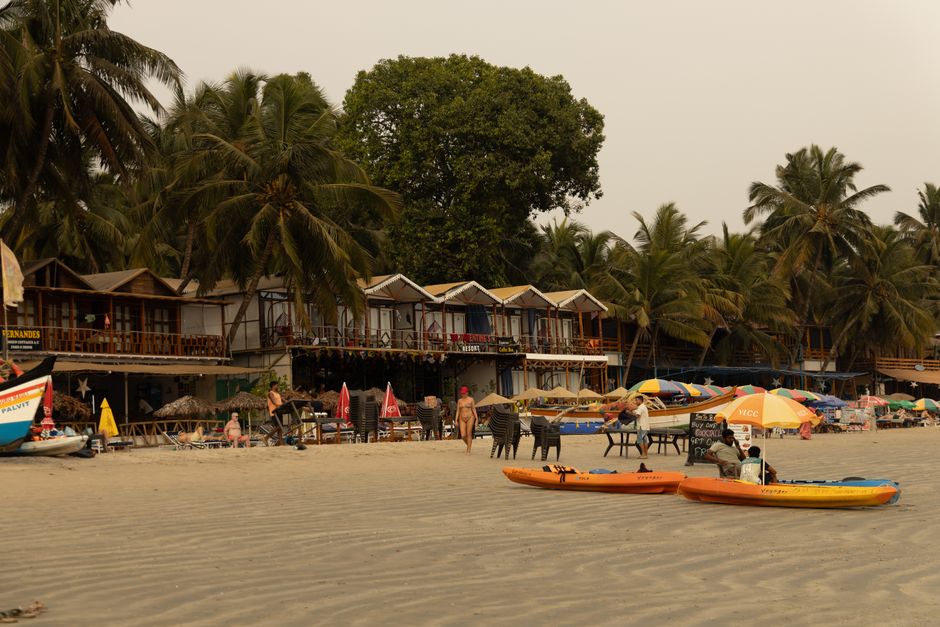
Cross the Zuari River and the world transforms. South Goa’s beaches are what travel dreams are made of. Palolem is the poster child: a perfect crescent of golden sand backed by a dense curtain of coconut palms. The bay is naturally sheltered, making the water as calm and flat as a lake. It is ideal for swimming and beginner kayaking. Colorful wooden fishing boats bob gently near the shore, and the islands just offshore invite exploration. The beach has a lively but not overwhelming energy, with simple, rustic shacks serving fresh kingfish thali right on the sand. Nightlife here is intimate and acoustic, a stark contrast to the north's DJ consoles.
A short drive south, Agonda is Palolem’s quieter, more elegant sister. This three-kilometer stretch is blissfully undeveloped, with a protected turtle-nesting site adding to its untouched feel. Here, the beach is your private sanctuary. You choose a shack restaurant, claim a sunbed, and that becomes your world for the day. The swimming is fantastic, and the vibe encourages total digital detox. Further north, Cola Beach adds a touch of magic realism with its famous freshwater lagoon that runs parallel to the sea before merging with it. You can float in the warm, green lagoon water and look out at the crashing surf just meters away. It is an extraordinary natural phenomenon and one of the most beautiful places in all of Goa.
Hidden Gems and Secret Beaches Only Locals Know
Even in 2026, Goa holds secret corners for those willing to explore. These hidden gems require a bit of effort—a hike, a bumpy road, or a tip from a local—but the reward is a slice of paradise to yourself. Kakolem Beach, often called Tiger Beach, is one such spot. Tucked between steep cliffs south of Cola, it is accessible via a steep, winding staircase that discourages the casual tourist. The effort reveals a tiny, pristine cove with a freshwater stream and a single shack serving cold drinks. The seclusion is absolute, and the raw beauty feels like a castaway fantasy.
Butterfly Beach, north of Palolem, is another semi-secret treasure. It is famously a butterfly-shaped cove accessible by a short forest hike from Agonda or a quick boat ride. Dolphins are often spotted playing in the waters just offshore. The sand is dotted with sea urchins and unique shells, making it a fantastic spot for a quiet afternoon of snorkeling and rock-pool exploration. For a totally off-the-radar experience, head to Galgibaga Beach. While technically known as a turtle-nesting site, it is so long and wide that it feels completely deserted for most of the year. Pack a picnic, bring plenty of water, and you will find a stretch of shoreline that is profoundly, soul-stirringly empty.
Goa Beyond the Beaches: Culture, History, and Adventure
A truly immersive Goa India travel guide 2026 must venture beyond the shoreline. The narrative that Goa is just sun, sand, and sea does a disservice to its profound cultural and natural wealth. The state is a layered tapestry of Indo-Portuguese history, lush Western Ghats biodiversity, and a growing appetite for adventure tourism. To come to Goa and never leave the beach is to miss its soul. The whitewashed churches of Old Goa stand as silent, majestic witnesses to a bygone colonial era, while just an hour inland, entire hillsides are carpeted with spice plantations that have thrived for centuries. This is the Goa of quiet contemplation, of architectural wonder, and of adrenaline-pumping action in equal measure.
In 2026, the infrastructure for inland tourism has seen significant upgrades. Roads are better, guided experiences are more polished, and the push for sustainable tourism means many inland attractions offer a more authentic, less commercialized encounter. You can spend a morning marveling at the gilded altars of a UNESCO World Heritage site, an afternoon trekking to a hidden waterfall to cool off, and an evening learning to cook a traditional Goan curry with a local family in their ancestral home. These experiences provide the context that makes the beach sundowners feel so earned. This section is your guide to the Goa that exists in the shade of the coconut palms, where the air smells of spices and history whispers from every stone.
Portuguese Heritage: Old Goa Churches and Fontainhas
The remnants of Portuguese India are not mere tourist attractions; they are living, breathing parts of Goa's identity. Old Goa, the former capital, is a must-visit. The Basilica of Bom Jesus is the star, a UNESCO World Heritage site that holds the mortal remains of St. Francis Xavier. Its baroque facade is unmissable, and the interior is a masterpiece of gilded woodwork. Right next door, the Sé Cathedral stands with its magnificent Portuguese-Gothic architecture, famed for its enormous Golden Bell. These structures are not just beautiful; they are profoundly important spiritual centers. Visit during a weekday morning to avoid the crowds and feel the serene vastness of these sacred halls.
From Old Goa, travel to Panjim and step into Fontainhas, the Latin Quarter. This is no museum; it’s a vibrant neighborhood where life plays out in narrow, winding lanes flanked by brightly colored Portuguese villas. You will see houses painted in ochre, indigo, and mint green, with oyster-shell windows and red-tiled roofs. The area is best explored on foot, with no fixed agenda. Stop for a coffee at a quaint art gallery, admire the Chapel of St. Sebastian, and simply absorb the sleepy, European-meets-tropical atmosphere. It is a photographer's paradise and a complete sensory departure from the beach towns, offering a slice of Lisbon in the heart of South Asia.
Spice Plantations, Waterfalls, and Wildlife Sanctuaries
The hinterlands of Goa are a treasure trove of sensory experiences. A visit to a spice plantation in Ponda is a journey into the source of Goan cuisine's magic. Places like the Sahakari Spice Farm offer guided tours where you walk through groves of cardamom, vanilla, pepper, and nutmeg. You learn how these spices grow, taste them fresh, and end the tour with a legendary, all-you-can-eat Goan lunch served on a banana leaf. The aromas are intoxicating, and the experience provides a cool, green respite from the coastal heat. It is a half-day outing that engages all your senses.
For the adventurous, Goa's monsoon-fed waterfalls are a spectacle. The most famous, Dudhsagar Falls, is a four-tiered cascade that thunders down into a milky pool. While the full trek requires planning and a permit, the jeep safari through Mollem National Park to its base is a thrilling, bumpy ride through dense jungle. For a quieter swim, the Tambdi Surla waterfall, near the ancient Mahadeva Temple, is a hidden gem. Wildlife enthusiasts should not miss the Cotigao Wildlife Sanctuary in the south. A walk on its treetop canopy gives you a unique perspective of the forest, where you might spot giant squirrels, monkeys, and a dazzling array of birds. These green escapes show a Goa that is wild, ancient, and profoundly beautiful.
Water Sports and Adventure Activities in 2026
Adventure tourism in Goa has matured well beyond a simple banana-boat ride. In 2026, the state offers a full-fledged adrenaline menu that makes the most of its rivers, sea, and sky. For a unique thrill, book a hot air balloon ride in South Goa. Drifting silently over the emerald fields and winding rivers at sunrise offers a breathtaking, meditative perspective you cannot get anywhere else. On the water, scuba diving off Grande Island remains a top draw. The visibility is best from November to March, and the waters are teeming with colorful reef fish, shipwrecks, and hard corals. Several reputable PADI centers in Bogmalo offer discovery dives for beginners.
Parasailing and jet-skiing are ubiquitous on the busier northern beaches, but for something more skillful, try kite surfing. The steady winds and flat water lagoons of Morjim and Arambol make them ideal training grounds for this increasingly popular sport. The backwaters and rivers provide a calmer playground. Kayaking through the mangrove forests of the Nerul River or the Zuari is a peaceful yet active way to spot kingfishers, egrets, and crocodiles basking on the banks. For land-based thrills, a few operators now offer guided rock climbing and rappelling trips in the Western Ghats. The combination of a morning trek, a scramble up a rock face, and a dip in a hidden jungle pool is the perfect recipe for a day off the beach.

Goa Food Guide: Must-Try Dishes, Beach Shacks, and Night Markets
Goa's culinary landscape is a vibrant collision of Portuguese heritage, coastal abundance, and Konkan soul. Your 2026 trip will be defined as much by the food on your plate as the sand between your toes. From fiery curries ladled over red rice to late-night bites under fairy lights at a bustling market, this Goa India travel guide 2026 maps out every essential flavor you need to chase.
Eating in Goa is not just about sustenance; it is a ritual. The tang of kokum, the creaminess of coconut milk, and the unmistakable smokiness of a wood-fired clay oven define the region's flavors. While international cuisines have flooded the tourist hubs, the true magic lies in the traditional dishes passed down through generations of Goan Catholic and Hindu Saraswat families. Whether you are sinking your feet into the sand at a rustic shack or grabbing a plate of sizzling chorizo pav at a market stall, understanding the local food hierarchy will transform your journey.
Traditional Goan Cuisine: Fish Curry, Vindaloo, and Bebinca
The cornerstone of any visit is Goan fish curry, locally known as xitti kodi. Unlike thinner Indian curries, this is a harmonious blend of fresh coconut, raw mango or kokum for sourness, and a delicate spice paste that never overpowers the catch of the day, typically kingfish or pomfret. It is a daily staple, best eaten with fluffy steamed rice.
Then there is the globally famous vindaloo, a dish often misunderstood outside Goa. Derived from the Portuguese carne de vinha d'alhos (meat marinated in wine and garlic), the Goan version historically used palm vinegar and dried red Kashmiri chilies. In 2026, seek out a slow-cooked pork vindaloo where the meat falls apart, the fat has rendered into a spicy puddle, and the tangy, garlic-heavy marinade hits you with a complex heat rather than just raw fire.
Vegetarians need not feel left out. Catholic Saraswat cuisine offers delicacies like khatkhate, a mixed vegetable stew with teal and chana dal, and tonsak, a rich coconut and cashew curry. For dessert, you cannot leave without slicing into a layered slab of bebinca. This Indo-Portuguese layered pudding requires immense patience, with each thin layer of coconut milk, egg yolk, and ghee grilled individually until a caramelized, seven-to-sixteen-layer cake emerges. Pair it with vanilla ice cream for a modern twist.
Best Beach Shacks and Rooftop Restaurants
The humble beach shack is the beating heart of Goa's coastline. In 2026, the scene balances rustic charm with elevated gastronomy. In the south, look for family-run operations on Agonda Beach where the catch is displayed on ice before you even sit down. Order a whole red snapper, butterflied and grilled with a recheado masala paste that stains your fingers red, eaten while watching the tide roll in.
For a bohemian North Goa experience, the shacks on Arambol and Ashwem have evolved into creative hubs. You will find menus featuring wood-fired sourdough pizzas next to traditional Goan caldeirada (a light fish stew). The key is to visit during the day when the seafood is freshest. A cold-port beer and a plate of golden rava-fried calamari with a squeeze of lime is the ultimate afternoon ritual.
Rooftop restaurants, particularly around Vagator and Anjuna, offer a different vibe. Head up just before sunset to secure a spot overlooking the Arabian Sea. The menu often blends Tibetan momos with Goan chorizo pulao. A must-try is cafreal, a green masala chicken originating from the Portuguese colonies in Africa, perfectly charred on a grill and served with a salad. The panoramic views combined with the sea breeze make these elevated spots ideal for a long, lazy dinner.
Night Markets and Street Food: Anjuna, Mapusa, and Beyond
As the sun drops, Goa's night markets ignite. The Anjuna Flea Market, a legacy of the hippie era, remains a sensory overload in 2026. While you can buy everything from harem pants to silver jewelry, the food stalls at the back are the main event. Look for Goan sausages, or choris, sliced and fried with onions on a flat top, stuffed into a soft pao roll. The spicy, vinegary kick of the pork paired with the pillowy bread is a messy masterpiece.
For a more authentic, less touristy experience, wake up early on a Friday for the Mapusa Market. While technically a day market, the adjoining street food stalls operate like a culinary circus. Here you can try patal bhaji, a white pea curry sopping wet with coconut, ladled over puris. You will also see vendors selling bikna (deep-fried lentil cakes) and fresh poha topped with grated coconut.
Back in the night market scene, the Mackie’s Saturday Night Bazaar in Arpora is a foodie paradise. Dedicated zones serve international fare, but stick to the Goan corner. Order a plate of beef croquettes or a shrimp rissois (half-moon shaped, battered, and crumb-fried patties filled with creamy shrimp). Wash it down with a glass of feni, the local spirit made from cashew apples, if you are feeling brave.
Goa Nightlife 2026: Clubs, Silent Discos, and Sunset Parties
Goa after dark is a shapeshifter. It can be a thumping, bass-heavy, confetti-soaked fever dream in a mega-club, or it can be the soft strumming of a guitar under a canopy of stars on a quiet cove. This Goa India travel guide 2026 navigates the state's dual personality, ensuring you find the exact rhythm that matches your mood. The nightlife in 2026 is more organized than the lawless raves of the past, yet it still retains that electric, unbridled energy that makes the coastline famous.
The season runs from November through March, when the weather is dry and the international DJ circuit descends upon the state. However, 2026 also sees a rise in curated, intimate experiences away from the mainstream. From silent disco technology that allows you to switch between three DJs with a flick of a headphone switch, to floating casinos on the Mandovi River that glitter like mini Las Vegases, the options are wildly diverse.
Legendary Clubs and Beach Parties in North Goa
North Goa remains the undisputed capital of hedonism. The stretch from Baga to Vagator is densely packed with iconic venues that have defined decades of revelry. Tito’s Lane in Baga is the strip that never sleeps; here, you can hop between massive dance floors pumping commercial EDM and Bollywood remixes. For a more sophisticated electronic music palate, head to the cliffside venues in Vagator.
Hilltop, the legendary trance party spot, continues its legacy in 2026 with carefully curated psychedelic trance nights that start late and end well after sunrise. The visuals, the Funktion-One sound systems, and the panoramic view of the valley create an immersive sensory experience. Nearby, a club like Raeeth offers a sleek, modern contrast with deep house, a laser-lit swimming pool, and a strict couples-only policy to manage the crowd.
Beach parties are slightly more regulated now, but you can still find them. Look for organized sunset parties on Anjuna and Morjim beaches where international DJs play melodic techno and afro-house right on the sand. The key is to follow the local flyer pages on social media or ask shack owners; the best parties in 2026 are often word-of-mouth to avoid overcrowding.
Unique Experiences: Silent Noise Parties and Casino Cruises
One of Goa’s strangest and most wonderful inventions is the silent noise party. Palolem Beach in South Goa hosts this regularly. Upon entry, you receive a pair of wireless headphones with multiple channels. One DJ spins reggae, another spins techno, and a third spins Bollywood hits. The result is a beach full of people dancing and singing to entirely different beats, creating a surreal, laughter-filled atmosphere.
For a completely different flavor of nightlife, board a casino cruise on the Mandovi River in Panjim. Vessels like the Deltin Royale offer an all-inclusive evening of roulette, blackjack, and three-card poker. In 2026, the entertainment has expanded to include live burlesque shows, international buffet dinners, and sky-deck bars where you can sip a cocktail while the boat glides past the illuminated Adil Shah Palace.
Laid-Back Evenings: Live Music and Rooftop Bars
If a high-decibel club is not your scene, Goa’s mellow evenings are just as intoxicating. The state has a thriving live music culture, with many restaurants in Assagao and Siolim transforming into intimate jazz clubs or acoustic sessions as the night deepens. You can find a corner table, order a craft gin from a local distillery, and listen to a duo cover classic rock or fado music.
Rooftop bars in Panjim offer a stylish, low-key alternative to the beach crowds. These spots focus on mixology, often infusing spirits with local ingredients like kokum syrup, black salt, and chili. The ambiance is chic without being pretentious, featuring soft bamboo lighting and views over the tiled roofs of the Latin Quarter. It is the perfect way to wind down, recapping the day’s adventures over a perfectly balanced cocktail.
Your Goa 2026 Adventure Awaits: Final Tips and Inspiration
Goa has never been a destination that requires a rigid checklist. It is a place that rewards curiosity, the willingness to turn down a random dirt road, and the patience to watch a sunset without glancing at your phone. As you finalize your plans with this Goa India travel guide 2026, remember that the state's true magic lies between the major landmarks—in the casual conversation with a fisherman mending his nets, the unexpected invitation to a local feast, or the perfectly ripe mango you buy from a roadside cart.
Traveling smart in 2026 means embracing the balance between the digital and the tangible. While UPI payments and online scooter rentals have made logistics seamless, the best discoveries remain analog. Carry a little cash for the smaller beach shacks and village bakers who still operate on trust and tradition. The monsoon season, from June to September, is no longer a complete shut-down period; instead, it has become a time for lush, introspective travel where the crowds vanish, the waterfalls roar, and the countryside transforms into a brilliant emerald green. It is a different Goa entirely, one suited for writers, couples, and solo travelers seeking solitude.
Respect the land and its rhythms. The beaches are fragile ecosystems, and the local communities appreciate visitors who treat their home with care. Leave nothing but footprints, dress modestly when visiting temples and churches, and learn a word or two of Konkani. A simple Dev Borem Korum (God bless you) goes a long way. Goa has been reinventing itself for centuries, absorbing waves of traders, colonizers, and travelers, yet its soul remains stubbornly, beautifully intact. It is a place that meets you exactly where you are, whether you need a wild dance on a moonlit shore or a silent morning with only the waves for company. Your adventure is waiting.
Gear for this trip
As an Amazon Associate I earn from qualifying purchases.


No comments:
Post a Comment