In This Article
- Why the Overseas Highway Is a Bucket-List Ride for Motorcyclists
- Planning Your Overseas Highway Motorcycle Trip
- Motorcycle Rental or Bring Your Own?
- The Route: Mile-by-Mile Highlights from Key Largo to Key West
- Top Stops and Hidden Gems Along the Way
- Safety Tips for Riding the Overseas Highway
- Where to Stay: Motorcycle-Friendly Lodging in the Keys
- Key West: The Grand Finale
- Final Thoughts: Making the Most of Your Overseas Highway Ride
Why the Overseas Highway Is a Bucket-List Ride for Motorcyclists
There are scenic coastal roads, and then there is the Overseas Highway. This legendary stretch of U.S. Route 1 leaps from island to island across the turquoise waters of the Florida Keys, offering a riding experience that feels less like a road trip and more like a pilgrimage. For motorcyclists, the Overseas Highway Florida Keys motorcycle guide is not just about getting from Miami to Key West—it is about earning one of the most surreal rides in North America.
The road itself seems to float. For 113 miles, you are surrounded by water on both sides, with the Atlantic Ocean on one side and the Gulf of Mexico on the other. The horizon stretches endlessly, the sky feels enormous, and the rhythm of the ride is punctuated only by the hum of your engine and the cry of seabirds. It is the kind of ride that reminds you why you fell in love with motorcycling in the first place.
What makes this route truly special is its accessibility. You do not need to be a hardcore adventure rider to enjoy it. The road is well-maintained, the speed limits are moderate, and the stops are frequent. Yet despite its ease, it delivers world-class scenery that rivals far more remote destinations. You can ride it on a cruiser, a touring bike, an adventure bike, or even a scooter if you are feeling bold.
Every mile brings a new reason to pull over. A roadside seafood shack with conch fritters sizzling in the fryer. A weathered bait shop where locals swap fishing stories. A sandy pull-off where you can park the bike, peel off your gloves, and wade into water so clear you can count the shells on the bottom. The Overseas Highway is not a road you rush. It is a road you savor.
For many riders, this is a once-in-a-lifetime journey. It is the kind of trip you plan for months, talk about for years, and mark off the bucket list with a sense of deep satisfaction. Whether you ride it solo for quiet reflection or with a group for shared memories, the Overseas Highway delivers an experience that stays with you long after the salt spray has dried on your jacket.
The Allure of 113 Miles of Ocean Views
The defining feature of the Overseas Highway is the water. It is everywhere, all the time. From the moment you leave the mainland at Florida City, the landscape shifts from sawgrass and strip malls to open sky and endless blue. The road narrows, the traffic thins, and suddenly you are riding on a ribbon of asphalt suspended between two vast bodies of water.
The color of the water changes as you ride south. Near Key Largo, it is a deep sapphire blue, rich and mysterious. Around Islamorada, it shifts to a bright aquamarine that looks almost artificial in its intensity. By the time you reach the Lower Keys, the shallows glow in shades of turquoise and pale green, revealing sandbars and sea grass beds just beneath the surface. Each island has its own palette, and the light shifts constantly with the time of day.
There are moments on this ride when you will feel like you are flying. The road rises gently on a bridge approach, and for a few seconds, all you see is water in every direction. The wind is warm, the engine is steady, and the world feels impossibly vast. These are the moments riders chase, and the Overseas Highway delivers them again and again.
The views are not just about the water, either. You will pass mangrove islands, coral rock formations, and tiny keys that are little more than a cluster of trees and a dock. Pelicans skim the surface of the water, frigate birds circle overhead, and in the shallows you might spot a stingray gliding through the sea grass. It is a living, breathing ecosystem that unfolds at 45 miles per hour.
What makes these ocean views so special is their constancy. On most coastal rides, the ocean appears in glimpses between buildings and hills. Here, it is the main event. For 113 miles, the water is your companion, your scenery, and your guide. It is a sensory experience that no photograph can fully capture, and one that every motorcyclist should experience at least once.
Historic Bridges and Engineering Marvels
The Overseas Highway is more than a road—it is a monument to human determination. The route follows the path of Henry Flagler's Overseas Railroad, an audacious project that connected mainland Florida to Key West in 1912. When a devastating hurricane destroyed much of the railroad in 1935, engineers transformed the remaining infrastructure into a highway for automobiles, completing the task in 1938.
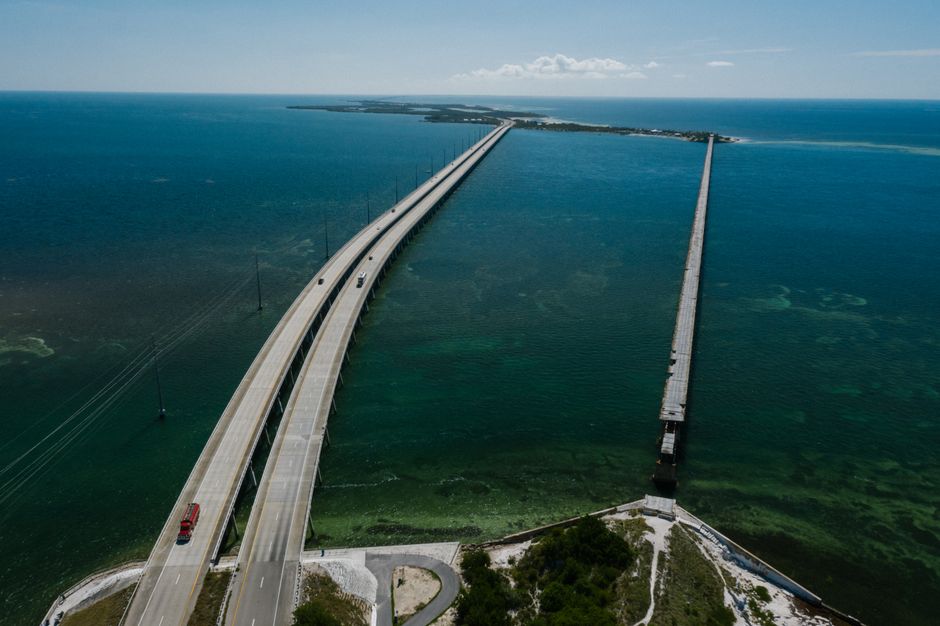
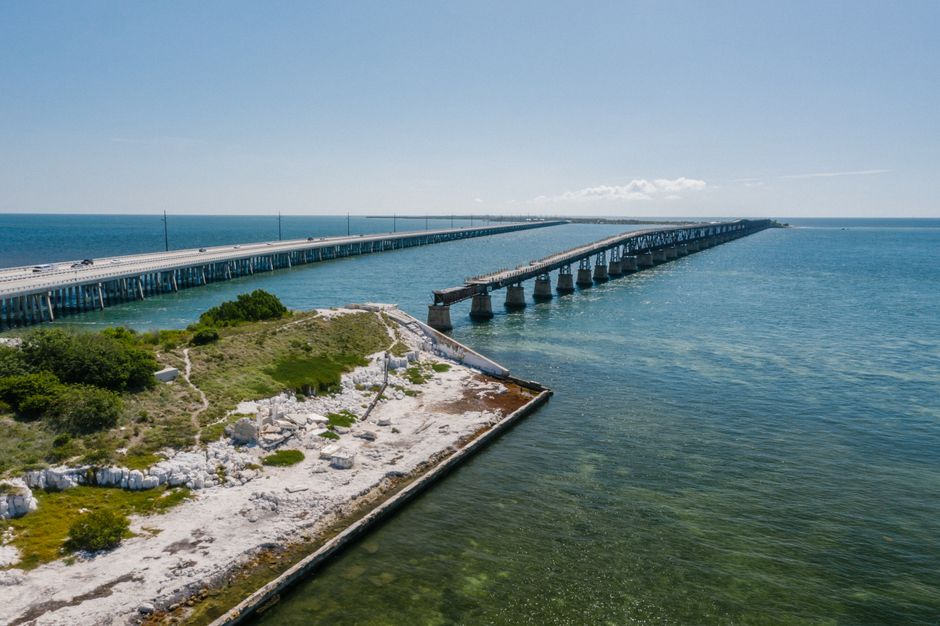
The most famous of these structures is the Seven Mile Bridge. Stretching 6.79 miles between Knight's Key and Little Duck Key, it is one of the longest bridges in the world and an icon of the Florida Keys. Riding across it is a surreal experience. The bridge seems to disappear into the horizon, and for several minutes, you are suspended over open water with no land in sight. The original 1912 bridge runs parallel to the modern span, a rusting relic that adds a haunting beauty to the scene.
Other historic bridges punctuate the ride as well. The Long Key Viaduct, the Bahia Honda Bridge, and numerous smaller spans all carry echoes of the railroad era. Many of the old bridges have been repurposed as fishing piers and pedestrian walkways, allowing you to stop and explore the original concrete arches up close. The craftsmanship is remarkable, especially when you consider the primitive equipment used over a century ago.
For engineering enthusiasts, the modern bridges offer their own appeal. The current Seven Mile Bridge, completed in 1982, is a marvel of prestressed concrete construction. The elevated spans allow water to flow freely beneath, protecting the delicate marine environment while providing a smooth, stable riding surface. The gentle curves and consistent grade make for effortless riding, even in strong crosswinds.
Riding these bridges gives you a profound appreciation for what it took to connect these islands. You are not just crossing water—you are traversing history, following a route that has challenged engineers, survived hurricanes, and captured the imagination of travelers for over a century. Every bridge has a story, and on a motorcycle, you feel connected to that story in a way that car drivers never will.
Perfect Weather Year-Round (With a Few Caveats)
One of the biggest draws of the Overseas Highway is the weather. The Florida Keys enjoy a tropical climate with warm temperatures throughout the year. Winter highs typically range from 75 to 80 degrees Fahrenheit, while summer highs hover around 90. For motorcyclists, this means you can plan a ride in January and still enjoy comfortable conditions while the rest of the country shivers.
The dry season, which runs from November through April, is the most popular time to ride. Humidity is lower, rain is less frequent, and the skies are often a brilliant, cloudless blue. This is peak tourist season, so expect more traffic and higher prices, but the trade-off is near-perfect riding weather. Many riders consider February and March the sweet spot, with mild temperatures and relatively stable conditions.
Summer brings heat, humidity, and the threat of afternoon thunderstorms. The rain can be intense but usually passes quickly, leaving behind steam rising from the asphalt and a fresh, clean smell in the air. If you ride in summer, plan to start early in the morning, take a long lunch break during the hottest part of the day, and carry quality rain gear. The payoff is fewer crowds and a more laid-back atmosphere.
Hurricane season runs from June through November, with the peak risk in September and October. While direct hits are rare, it is wise to monitor the forecast and have a flexible itinerary. The Keys are a narrow chain of islands, and evacuation routes are limited. If a storm is approaching, do not try to ride it out. Head for the mainland and live to ride another day.
The wind is another factor to consider. Ocean breezes are constant, and on the long bridges, crosswinds can be strong enough to push you around. Keep a relaxed grip on the bars, lean slightly into the wind, and be prepared for sudden gusts. With the right mindset and a bit of caution, the weather here is rarely a dealbreaker—it is just another part of the adventure.
Planning Your Overseas Highway Motorcycle Trip
A successful Overseas Highway ride starts long before you twist the throttle. This is a route that rewards preparation, and a little planning goes a long way toward ensuring a smooth, stress-free journey. From choosing the right season to packing the right gear, every decision shapes your experience on the road.
The first thing to understand is that the Overseas Highway is not a race. At just 113 miles from end to end, you could technically ride it in a few hours. But doing so would miss the entire point. This is a road meant to be savored, with frequent stops, leisurely meals, and plenty of time to soak in the views. Plan accordingly, and resist the urge to rush.
Accommodations are a key consideration. The Keys offer everything from budget motels to luxury resorts, but rooms fill up quickly during the winter season. Book well in advance, especially if you plan to stay in Key West. If you are traveling on a budget, consider staying in the Middle Keys, where prices tend to be lower and the location puts you within easy reach of both ends of the highway.
Fuel stops are another practical concern. Gas stations are plentiful along the route, but prices in the Keys are consistently higher than on the mainland. Fill up in Florida City or Homestead before heading south, and top off again in Marathon or Key Largo. Most motorcycles have plenty of range for this route, but it is always better to be safe than stranded on a bridge.
Finally, think about your riding style. The Overseas Highway is a relaxed, low-speed route with a maximum speed limit of 55 miles per hour and frequent slower zones through towns. This is not the place for aggressive riding or high-speed cornering. It is a place to settle into a comfortable rhythm, enjoy the scenery, and let the miles unfold at their own pace.
Best Time to Ride: Weather and Traffic Considerations
Choosing the right time to ride the Overseas Highway can make or break your trip. The road is open year-round, but conditions vary dramatically by season. Understanding these patterns will help you pick the window that best suits your riding preferences and tolerance for crowds.
The peak season runs from late December through April. This is when the weather is most pleasant, with low humidity, mild temperatures, and minimal rain. It is also when the Keys are busiest. Traffic on the two-lane highway can be heavy, especially on weekends and around holidays. Expect slower speeds, crowded restaurants, and higher accommodation prices. If you do not mind the bustle, the weather is hard to beat.
Shoulder seasons—May and November—offer a compelling compromise. The weather is still warm and mostly dry, but the crowds have thinned considerably. You will find better deals on hotels, shorter waits at popular attractions, and more open road. The risk of afternoon thunderstorms increases in late May, but these are usually brief and manageable with proper gear.
Summer riding is for those who can handle heat and humidity. Temperatures often reach 90 degrees Fahrenheit with high humidity, making full riding gear a challenge. Afternoon thunderstorms are common and can be intense. The advantage is solitude—traffic is light, and you will often have long stretches of road to yourself. If you ride in summer, hydrate constantly and plan your riding for the morning hours.
Regardless of when you go, avoid holiday weekends if possible. Memorial Day, the Fourth of July, and Labor Day bring heavy traffic to the Keys, with long lines at bridges and crowded parking areas. Weekdays are always quieter than weekends. If your schedule allows, plan your ride for a Tuesday or Wednesday to experience the highway at its most peaceful.
How Many Days Do You Need?
The ideal length for an Overseas Highway motorcycle trip depends on what you want to experience. At a minimum, you should allow two full days for the ride itself, with an overnight stop somewhere in the Middle Keys. This gives you time to stop at scenic overlooks, grab a leisurely lunch, and arrive in Key West before dark without feeling rushed.
A three-day itinerary is the sweet spot for most riders. Spend the first day riding from the mainland to Marathon, stopping at John Pennekamp Coral Reef State Park, the Florida Keys Wild Bird Center, and the many scenic pull-offs along the way. On day two, explore the Lower Keys and arrive in Key West by early afternoon, leaving time to walk Duval Street and watch the sunset at Mallory Square. Day three is for the return ride, which many riders prefer to do in a single relaxed push with fewer stops.
If you have four or five days, you can truly immerse yourself in the Keys experience. Add a snorkeling trip in Key Largo, a kayak tour through the mangroves, or a day trip to the Dry Tortugas. Spend an extra night in Key West to explore its historic sites and vibrant nightlife. The longer you stay, the more you will discover that the Overseas Highway is not just a road—it is a destination in itself.
Whatever you choose, resist the temptation to do the entire ride in a single day. The highway is only 113 miles, but the magic lies in the stops, the side roads, and the moments when you pull over just to stare at the water. Give yourself time to linger, and the road will reward you with memories that last a lifetime.
Essential Documents and Gear Checklist
Packing for an Overseas Highway ride is straightforward, but a few essentials will make your trip safer and more comfortable. Start with the basics: your driver's license with motorcycle endorsement, proof of insurance, and your vehicle registration. If you are renting a motorcycle, carry a copy of the rental agreement and the rental company's emergency contact information.
Your gear should prioritize comfort and sun protection. The Florida sun is intense, even in winter, and you will be exposed for hours at a time. A full-face helmet with a tinted visor is ideal, along with a lightweight riding jacket that offers ventilation. Consider a cooling vest or moisture-wicking base layers for summer rides. Sunscreen is non-negotiable—apply it to your face, neck, and any exposed skin before you ride.
- Driver's license with motorcycle endorsement
- Proof of insurance and vehicle registration
- Full-face helmet with tinted or clear visor
- Lightweight, ventilated riding jacket
- Riding gloves with good grip and ventilation
- Sturdy riding boots or over-the-ankle footwear
- Rain gear, including waterproof jacket and pants
- Sunscreen and lip balm with SPF protection
- Hydration pack or water bottle
- Basic tool kit and tire repair kit
Rain gear is essential, even in the dry season. A sudden squall can appear out of nowhere, and the bridges offer no shelter. A compact waterproof layer can mean the difference between a minor inconvenience and a miserable ride. Pack it where you can reach it quickly—you do not want to unpack your entire saddlebag on the side of the road when the sky opens up.
Finally, bring a phone mount and a portable charger. Cell service is generally reliable along the highway, but a dead battery can leave you without navigation or emergency contact. Download offline maps before you go, and consider carrying a paper map as a backup. With the right preparation, you can focus on the ride and let the road take care of the rest.
Motorcycle Rental or Bring Your Own?
One of the biggest decisions for any Overseas Highway ride is whether to bring your own motorcycle or rent one when you arrive. Both options have their merits, and the right choice depends on your starting point, your budget, and your personal preferences. This is a decision worth thinking through carefully before you commit.
Bringing your own bike offers the comfort of familiarity. You know how it handles, how it sounds, and how it fits your body. There is no adjustment period, no unfamiliar controls, and no risk of discovering a mechanical quirk halfway across a seven-mile bridge. If you are riding from a nearby state, trailering your bike, or planning an extended tour, bringing your own machine often makes the most sense.
The downside is the logistics. Riding to the Keys from the northern states or the West Coast is a significant undertaking that adds days and miles to your trip. Trailering is an option, but it requires a suitable vehicle and a place to store the trailer while you ride. For many riders, the simplicity of flying into Miami or Fort Lauderdale and renting a motorcycle is far more appealing.
Rental options in South Florida are plentiful. Several reputable companies operate out of Miami, Fort Lauderdale, and even Key West, offering a range of bikes from cruisers to adventure machines to touring rigs. Most include helmets and basic gear, though you may prefer to bring your own for comfort and hygiene. Rates vary by season and bike type, but expect to pay anywhere from $100 to $200 per day for a quality machine.
If you rent, book early. The winter season is busy, and the best bikes go quickly. Read reviews carefully, check the rental agreement for mileage limits and insurance coverage, and inspect the bike thoroughly before you leave the lot. Take photos of any existing damage, check tire tread and fluid levels, and make sure you understand the roadside assistance policy. A little caution up front can save you from a ruined trip later.
Ultimately, there is no wrong answer. Bringing your own bike adds a sense of continuity and ownership to the journey, while renting offers convenience and flexibility. Whichever path you choose, the Overseas Highway is waiting, and the ride of a lifetime is just a twist of the throttle away.
The Route: Mile-by-Mile Highlights from Key Largo to Key West
The Overseas Highway Florida Keys motorcycle guide route stretches 113 miles from the mainland to the southernmost point of the continental United States. You will cross 42 bridges, ride over open water for miles at a time, and pass through a chain of islands each with its own rhythm. The ride itself is the destination here. Give yourself a full day if you want to stop often, or two days if you want to linger without feeling rushed.
Mile markers along the highway count down from MM 106 at Key Largo to MM 0 in Key West. They are painted green and white on small posts along the shoulder, which makes navigation simple. Use them to plan your stops. Traffic moves slower than you might expect, especially on weekends, so build that into your timing.
The road is mostly flat and straight, but the scenery changes constantly. One minute you are riding through mangrove tunnels, the next you are suspended over turquoise water with no land in sight. Keep your eyes moving and your mirrors checked. The views are distracting in the best possible way.
Key Largo: Gateway to the Keys
Key Largo begins immediately after you leave the mainland and cross the Jewfish Creek Bridge. This is the longest island in the chain, and it sets the tone with low-slung buildings, dive shops, and water on both sides. The speed limit drops quickly, so ease off the throttle and settle into island pace.
Stop at the Florida Keys Visitor Center at MM 106 for a restroom break and a quick photo with the iconic sign. John Pennekamp Coral Reef State Park at MM 102.5 is worth a short detour if you want to see the water up close. For riders who prefer a quiet moment, the stretch between MM 104 and MM 100 offers glimpses of Florida Bay through the trees.
Fuel up before leaving Key Largo. Stations are available but spacing increases as you head south. A full tank here gives you flexibility for the next several islands.
Islamorada: Sportfishing Capital and Scenic Pull-offs
Islamorada spreads across several small islands between MM 90 and MM 82. The highway narrows in places, and the ocean appears suddenly on both sides. This is one of the most visually rewarding sections for motorcyclists, particularly between Plantation Key and Upper Matecumbe Key.
Pull off at the Florida Keys History and Discovery Center or simply find a shaded shoulder near a marina. The fishing fleet docks are colorful and photogenic. Anne's Beach at MM 73.5 has a boardwalk and shallow water, though parking is limited on busy days.
Watch for cars slowing abruptly to turn into restaurants and bait shops. The road has frequent curb cuts and hidden driveways. Keep a two-second following distance and stay toward the center of your lane for visibility.
Marathon and the Seven Mile Bridge
Marathon sits around MM 50 and is a practical midpoint for food, fuel, and a stretch. The town has grocery stores, motorcycle-friendly parking, and a slower residential feel than the upper Keys. Sombrero Beach at MM 50 is a short detour with free parking and calm water.
The Seven Mile Bridge begins just south of Marathon at MM 47. The old bridge runs parallel to the new one, and it is now a pedestrian and cycling path. On a motorcycle, the new bridge gives you a long, elevated ride over open ocean. Crosswinds can be strong here, so keep your arms relaxed and your grip firm but not tense.
At the end of the bridge, you land on Little Duck Key. There is a small parking area where you can stop and look back at the span you just crossed. This is one of the most memorable moments of the entire ride.
Lower Keys: Big Pine Key and No Name Key
The Lower Keys feel wilder and quieter than the upper islands. Big Pine Key begins around MM 33 and is home to the National Key Deer Refuge. The speed limit drops to 45 mph during the day and 35 mph at night to protect the small Key deer that wander near the road.
No Name Key is a short ride off the main highway and offers a glimpse of old Florida with unpaved roads and dense vegetation. It is a good spot for a slow, shady break. Watch for loose gravel if you turn off the pavement.
This section has fewer services, so top off your tank in Marathon before heading south. Cell signal can be spotty in parts of the Lower Keys, which is part of the appeal.
Top Stops and Hidden Gems Along the Way
This Overseas Highway Florida Keys motorcycle guide would be incomplete without a list of places that make the ride memorable. Some stops are famous, others are easy to miss if you are not looking. The best approach is to mix both. Plan a few must-see spots, then leave room for spontaneous pull-offs when something catches your eye.
Most stops have limited parking, but a motorcycle can usually squeeze into a corner where a car cannot. Be respectful of private property and no-parking zones. The Keys are narrow, and residents rely on clear shoulders and driveways.
Must-Visit Beaches and Swimming Spots
Natural sandy beaches are rare in the Keys, but the ones that exist are worth a stop. Sombrero Beach in Marathon is one of the best, with soft sand, palm trees, and calm water. It is free and has restrooms and outdoor showers, which makes it ideal for a mid-ride cool-down.
Anne's Beach in Islamorada offers a boardwalk and shallow flats perfect for wading. Bahia Honda State Park at MM 37 has the most beautiful stretch of sand in the Lower Keys. The entrance fee is small, and the view of the old railroad bridge from the beach is unforgettable.
If you prefer a quick dip without sand, look for public boat ramps and small roadside water access points. Many have a sliver of shoreline and clear water. Bring a microfiber towel and leave your boots on the bike.
Iconic Eateries and Key Lime Pie
No ride through the Keys is complete without key lime pie. The debate over the best slice is endless, but a few spots consistently earn praise. Mrs. Mac's Kitchen in Key Largo serves a tangy, traditional version. The Blond Giraffe in Tavernier and Marathon is known for its award-winning pie and shaded garden seating.
For a full meal, stop at the Islamorada Fish Company or Robbie's Marina, where you can eat outdoors and watch boats come in. The Square Grouper in Cudjoe Key is a local favorite with creative seafood and a laid-back atmosphere. Many of these places are casual, so riding gear is not out of place.
Try the conch fritters, fish tacos, and a cold glass of sweet tea. Eat light before riding, especially in the heat. A heavy meal plus sun and wind can make you drowsy.
Unique Attractions: From Deer to Dolphins
The National Key Deer Refuge on Big Pine Key is one of the most unusual stops on the route. These miniature deer are found nowhere else in the world. Visit the Blue Hole observation area for a chance to see alligators, turtles, and wading birds along a short trail.
Robbie's Marina in Islamorada is famous for tarpon feeding. Giant silver fish gather at the dock, and for a few dollars you can hand-feed them. It is touristy, yes, but it is also genuinely fun to watch, especially from the shaded dock.
Dolphin Research Center in Marathon offers educational sessions and the chance to see dolphins up close. It is a good break from the saddle, and the shaded viewing areas are welcome on hot afternoons. Book ahead if you want a hands-on program, as they fill quickly in 2026.
Safety Tips for Riding the Overseas Highway
The Overseas Highway is not a technical road, but it presents its own challenges. Traffic, weather, wildlife, and distracted tourists all demand attention. This section of the Overseas Highway Florida Keys motorcycle guide focuses on staying safe so the ride stays enjoyable from start to finish.
Ride defensively and assume that other drivers are looking at the water, not at you. Keep your headlight on, wear bright or reflective gear, and position yourself where you are most visible. Avoid lingering in blind spots, especially around RVs and rental convertibles.
Handling Crosswinds and Weather Changes
Crosswinds are strongest on the long bridges, particularly the Seven Mile Bridge and the Channel Five Bridge. A sudden gust can push you toward the edge of your lane. Keep a relaxed grip on the bars, bend your elbows slightly, and steer with gentle inputs rather than fighting the wind.
Weather in the Keys changes quickly. A sunny morning can turn into a heavy downpour by early afternoon. Rain showers are often brief but intense. Pull off at a safe spot and wait it out if visibility drops. Wet roads here can be slick from oil and sand, especially near intersections and construction zones.
Check the forecast before you ride, but do not trust it completely. Carry a compact rain suit and waterproof gloves. Even in winter, the sun is strong, so wear sunscreen and stay hydrated.
Sharing the Road with RVs and Tourists
RVs are common on the Overseas Highway, and many drivers are navigating narrow lanes for the first time. They accelerate slowly, brake early, and sometimes drift toward the center line. Give them extra space and pass only when you have a clear view of the road ahead.
Rental cars full of tourists are also frequent. Drivers may slow suddenly to photograph a bridge or turn without signaling. Anticipate sudden stops near scenic overlooks and popular attractions. Use your horn sparingly and keep your distance.
Patience is your best tool here. The highway is not a place to rush. A relaxed pace reduces stress and gives you more time to react to unpredictable moves from other vehicles.
Night Riding and Visibility Concerns
Night riding in the Keys is risky due to limited street lighting and the presence of Key deer, especially on Big Pine Key. The speed limit drops at night for this reason. If you must ride after dark, reduce your speed and scan the roadside constantly for movement.
Your headlight may be the only light source for long stretches. Keep it clean and consider auxiliary lights if you plan frequent night rides. Reflectors on the road and bridge railings help, but they are not a substitute for caution.
If you can, plan to reach your lodging before sunset. The Keys are best enjoyed in daylight, and evening traffic can include drivers unfamiliar with the road. A well-rested rider is a safer rider, so end your day early and enjoy the sunset from solid ground.
Where to Stay: Motorcycle-Friendly Lodging in the Keys
After a long day of riding the Overseas Highway, where you park your bike and rest your head matters. The Florida Keys offer a wide range of lodging options, from rustic campgrounds to opulent oceanfront resorts. As a motorcyclist, you will want to prioritize places with easy parking, ground-floor access, and a relaxed attitude toward road-trippers. The good news is that the Keys are accustomed to travelers arriving on two wheels, and many properties offer designated motorcycle parking or allow you to park right outside your door.
When booking, always confirm that the property has paved or gravel parking suitable for a motorcycle kickstand. Sandy lots can be a nightmare for a heavy touring bike. Also consider the time of year. During the winter high season, rooms book up months in advance, so planning ahead is essential for a smooth ride. Below, we break down the best options by budget, so you can find the perfect spot to recharge for the next leg of your island-hopping adventure.
Budget-Friendly Motels and Campgrounds
Traveling the Overseas Highway on a budget does not mean sacrificing comfort or location. The Keys are dotted with retro motels and state park campgrounds that put you right in the middle of the action without draining your wallet. Many of these spots have a classic Old Florida charm that feels authentic to the road trip experience.
- Boyd's Key West Campground: Offers tent sites and RV spots with a pool and waterfront views, just minutes from downtown Key West.
- Sugarloaf Key KOA: A quiet, shady campground with a marina, perfect for riders who want to pitch a tent and listen to the water at night.
- Rock Reef Resort in Key Largo: A small, family-run property with private beach access and rooms where you can park your bike right at the door.
- Seafarer Resort and Beach in Islamorada: Simple cottages and motel rooms with a sandy beach, hammocks, and free kayak use for guests.
For motorcycle riders, campgrounds are particularly appealing because you can often park your bike next to your tent or RV, keeping your gear secure and accessible. Just be sure to bring a kickstand puck if the ground is soft. Budget motels typically offer exterior corridors, which means you can keep an eye on your bike from your window and load luggage without hauling it through a lobby.
Mid-Range Hotels with Ocean Views
If you want a comfortable bed, a pool, and a view of the Atlantic or Florida Bay without paying resort prices, the Keys have plenty of mid-range options. These hotels strike a balance between convenience and value, and many are located directly on the water so you can watch the sunrise from your balcony before heading south.
- Hawks Cay Resort on Duck Key: A sprawling property with multiple pools, a marina, and rooms that feel upscale without being stuffy.
- Amara Cay Resort in Islamorada: Modern beachfront rooms with a laid-back vibe, complimentary bikes, and a great on-site restaurant.
- La Siesta Resort and Marina in Islamorada: Recently renovated bungalows and suites with a private beach and easy parking for motorcycles.
- Courtyard by Marriott Key Largo: A reliable chain option with clean rooms, a pool, and a location close to John Pennekamp Coral Reef State Park.
These properties usually have paved parking lots and security cameras, giving you peace of mind when leaving your bike overnight. Many also offer ground-floor rooms with patios, which make loading and unloading your saddlebags much easier. When booking, request a room near the parking area to minimize walking distance with your gear.
Luxury Resorts for a Splurge Night
After days of riding, treating yourself to one night of luxury can be the highlight of your trip. The Keys are home to some truly world-class resorts that cater to every whim, and they welcome motorcyclists with valet parking and secure garages. Splurging on a resort night is especially rewarding in Key West or Islamorada, where you can park the bike and enjoy fine dining, spa treatments, and sunset views without touching the road again until morning.
- Little Palm Island Resort and Spa: Accessible only by boat or seaplane, this private island resort offers overwater bungalows and total seclusion.
- The Moorings Village in Islamorada: A collection of private cottages set among coconut palms on a stunning stretch of beach.
- Ocean Key Resort and Spa in Key West: Located at the foot of Duval Street with panoramic sunset views and a lively pool scene.
At these properties, you can expect valet service, but it is worth asking if you can park the bike yourself to avoid any handling concerns. The staff is generally accommodating and will find a safe spot for your motorcycle. A splurge night is a great way to celebrate completing the ride to Key West.
Key West: The Grand Finale
Reaching Mile Marker 0 in Key West is a moment every rider remembers. The final stretch of the Overseas Highway delivers you into a vibrant, eccentric town that feels like a reward for all those miles. Key West is compact, walkable, and packed with history, nightlife, and quirky charm. Once you arrive, the best strategy is to park the bike and explore on foot or by bicycle. The streets are narrow, traffic can be slow, and parking is limited, so leaving the motorcycle in a safe spot while you wander is the smart move.
Key West is also the southernmost city in the continental United States, and there is a palpable sense of accomplishment when you stand at the end of the road. Give yourself at least one full day here to soak it all in. Whether you are interested in Ernest Hemingway's former home, fresh seafood, or simply watching the sun sink into the Gulf of Mexico, Key West delivers. Plan your arrival for early afternoon to avoid the rush and secure parking before the evening crowds descend.
Parking Your Motorcycle in Key West
Parking in Key West can be challenging, but motorcycles have an advantage. Many public lots and garages offer reduced rates or designated motorcycle areas. The city operates several pay-to-park lots near Old Town, and you can often find a spot for a bike where a car would not fit. Always use a kickstand puck on hot asphalt, which can soften in the Florida sun and cause your bike to tip.
Street parking is metered in most areas, but some spaces are free for motorcycles if you park in a designated zone. Check the posted signs carefully, as enforcement is strict. If your hotel offers parking, use it and walk or rent a scooter for the day. The best approach is to park once and leave the bike until you are ready to depart Key West.
Must-See Sights: Southernmost Point, Duval Street, and More
Key West packs a lot of personality into a small area. The Southernmost Point buoy is the iconic photo stop, marking the closest point to Cuba. Expect a line, but it moves quickly. Duval Street is the main drag, lined with bars, shops, and restaurants that range from rowdy to refined. It is worth a stroll from end to end to feel the pulse of the island.
- Ernest Hemingway Home and Museum: Tour the author's former residence and meet the famous six-toed cats.
- Mallory Square: The heart of the sunset celebration, with street performers and food carts every evening.
- Fort Zachary Taylor Historic State Park: A quiet beach and Civil War-era fort with excellent snorkeling.
- Key West Lighthouse: Climb the 88 steps for a panoramic view of the island and ocean.
For a break from the crowds, wander the residential side streets where you will find colorful conch houses, lush gardens, and roosters strutting freely. The island's charm is in these quiet corners as much as in the famous landmarks.
Sunset Celebration at Mallory Square
Every evening, Mallory Square transforms into a lively festival as visitors gather to watch the sun dip below the horizon. Street performers, musicians, and food vendors create a carnival atmosphere that has been a Key West tradition for decades. Arrive about an hour before sunset to secure a good viewing spot along the waterfront.
The celebration is free to attend, though tips for performers are appreciated. You will see tightrope walkers, fire breathers, and local artists selling their work. The sunset itself is the main event, and on a clear evening, the sky erupts in shades of orange, pink, and purple. It is the perfect way to end your ride down the Overseas Highway and toast your journey.
Final Thoughts: Making the Most of Your Overseas Highway Ride
The Overseas Highway is more than just a road. It is a journey through a chain of islands that each have their own rhythm, from the laid-back fishing villages of the Upper Keys to the bohemian energy of Key West. Riding it on a motorcycle strips away the barriers between you and the environment. You feel the salt breeze, smell the mangroves, and see the water stretch out on both sides in a way that no car can replicate. This Overseas Highway Florida Keys motorcycle guide is meant to help you plan, but the real magic happens when you twist the throttle and let the road unfold.
Give yourself time. The highway is only 113 miles long, but rushing through it would be a mistake. Stop at the pull-offs, try the conch fritters, and talk to the locals. Watch for the bridges that rise like gentle arcs over the sea, especially the Seven Mile Bridge, which feels like flying. And remember that weather in the Keys can change quickly, so pack a rain layer and stay flexible with your schedule.
Whether you are a seasoned long-distance rider or a weekend adventurer, this ride belongs on your bucket list. The Overseas Highway delivers a rare combination of beauty, history, and pure riding joy that stays with you long after you return home. Fuel up, check your tires, and point your front wheel south. The islands are waiting, and Mile Marker 0 is calling your name.
Gear for this trip
- Motorcycle Rain Suit
- Motorcycle Phone Mount
- Motorcycle Kickstand Puck
- Waterproof Motorcycle Gloves
- Microfiber Travel Towel
As an Amazon Associate I earn from qualifying purchases.


No comments:
Post a Comment