
In This Article
- Introduction: Why Timing Matters on the Manali-Leh Highway
- Overview of the Manali-Leh Route and Its Seasonal Challenges
- Month-by-Month Breakdown of Riding Conditions in 2026
- Month-by-Month Breakdown (Continued): Late Season and Beyond
- Permits, Regulations, and Logistics for 2026 Riders
- Packing Essentials for Every Season on the Manali-Leh Highway
- Safety Tips and Emergency Preparedness for the High Himalayas
- Insider Tips from Experienced Manali-Leh Riders
- Wrapping Up: Your Perfect 2026 Manali-Leh Ride Starts with the Right Timing
Introduction: Why Timing Matters on the Manali-Leh Highway
The Manali to Leh highway isn't just a road—it's a rite of passage. Stretching roughly 428 kilometers across the Indian Himalayas, this legendary route delivers a cocktail of adrenaline, thin air, and landscapes that look ripped from a painter’s wildest dream. But here's the catch: this highway isn't open year-round. It awakens from its winter hibernation for only a few precious months, and within that narrow window, conditions swing wildly from pristine tarmac to axle-deep slush. If you're planning to experience the best time to ride Manali to Leh in 2026, understanding the calendar is not just helpful—it's essential for survival.
The journey crosses some of the planet's highest motorable passes, where snow walls tower higher than trucks even in summer. You'll climb from the lush greenery of the Kullu Valley into a stark, lunar-like cold desert where oxygen levels drop to nearly half of what you're used to. Timing dictates whether you'll glide over Baralacha La under blue skies or wrestle your handlebars through a sudden July snow squall. Get the timing right, and you'll carry home memories of crystal-clear Himalayan mornings. Get it wrong, and you might spend hours waiting for a BRO bulldozer to clear a fresh landslide.
For 2026, early indicators from meteorological patterns and Border Roads Organisation (BRO) projections suggest a slightly extended but intense riding season. The window is shifting, with earlier melts tempting riders into May, while unpredictable late-summer monsoons continue to batter the lower sections. This guide breaks down exactly what each month holds, so you can align your leave applications, bike preparations, and mental readiness with the highway's actual mood.
The Allure of the World’s Highest Motorable Road
There's a reason this highway dominates motorcycling bucket lists globally. It crosses Umling La, which at over 19,300 feet, currently holds the title of the world's highest motorable pass. The road threads through landscapes that shift dramatically every hour—from apple orchards and pine forests around Manali to the barren, multicolored rock faces of Lahaul and the vast, windswept plains of the Morey Plains. You'll ford glacial streams, navigate 21 hairpin bends at Gata Loops, and pitch a tent beside the surreal blue waters of Tso Kar. The sheer physical challenge of breathing at these altitudes while controlling a motorcycle creates an unmatched sense of accomplishment.
Beyond the geography, it's the cultural transition that captivates. You start in Hindu-majority Himachal Pradesh and end in predominantly Buddhist Ladakh, with its whitewashed stupas, fluttering prayer flags, and ancient monasteries clinging to cliffs. The road itself feels alive, constantly reshaped by melting glaciers, rockfalls, and the tireless work of road crews. Riding it isn't just about reaching Leh—it's about earning every kilometer through a landscape that demands respect and rewards courage with views no photograph can truly capture.
Why Choosing the Right Window Can Make or Break Your Trip
Pick the wrong month, and your dream ride can turn into a logistical nightmare. Attempt the route too early in May, and you might find high passes still buried under 20 feet of snow, with the BRO yet to complete clearing operations. Rush in late, during September's tail end, and you risk getting caught by early winter storms that can close the highway overnight, stranding you on the wrong side of a pass. The best time to ride Manali to Leh balances snow clearance status, monsoon impact, and temperature comfort.
Your physical safety is directly tied to timing. July and August bring the Indian monsoon, which doesn't drench Ladakh like it does Goa, but its tail whips the lower sections near Rohtang and Zanskar, triggering landslides that can trap vehicles for hours or days. Oxygen levels don't change with the calendar, but your riding comfort does—May mornings can plunge to -10°C at high camps, while August afternoons might bake the Leh valley at 30°C. Choosing wisely means packing appropriate gear, planning realistic daily distances, and knowing which mountain passes are likely to be clear and when.
What This Guide Covers
This month-by-month guide is built specifically for motorcyclists targeting the 2026 season. We'll walk through the full arc of the riding window, from the risky but rewarding early openings in May through the monsoon-challenged peak of July and August, continuing into the golden autumn weeks of September. Each month gets a realistic assessment of road conditions, weather patterns, crowd levels, and what kind of rider would enjoy—or endure—that particular slice of the season.
We've incorporated projected BRO maintenance schedules for 2026, typical winter snow accumulation data, and monsoon trend forecasts to give you actionable intelligence. You'll learn which passes typically open first, when fuel stations become reliably stocked, and how daylight hours shift across the season. Whether you're a solo adventurer on a Himalayan 450 or riding in a convoy of Royal Enfields, this breakdown will help you pinpoint your personal sweet spot for the journey of a lifetime.
Overview of the Manali-Leh Route and Its Seasonal Challenges
The Manali-Leh Highway is essentially a seasonal miracle of engineering. For most of the year, it lies buried under a deep white blanket, completely impassable. The route climbs from Manali at 6,726 feet to the Rohtang La at 13,058 feet, then descends into the Lahaul Valley before climbing again over Baralacha La (16,040 feet), Lachulung La (16,616 feet), and Tanglang La (17,480 feet)—each a world of its own with distinct weather personalities. Understanding how these high-altitude giants behave across the short riding season is crucial for anyone seeking the best time to ride Manali to Leh.
The highway isn't a uniform stretch of asphalt. Sections like the Morey Plains offer smooth, straight tarmac where you can comfortably cruise at 80 km/h, while other segments remain unpaved, rocky tracks where 20 km/h feels optimistic. Stream crossings, some ankle-deep in early morning and knee-deep by afternoon as snowmelt accelerates, add technical difficulty. The road is actively maintained by the BRO, whose workforce battles nature daily to keep supply lines open to Ladakh. Their efforts are heroic, but they can't prevent every landslide or instantly repair every washed-out culvert.
Altitude sickness is another seasonal wildcard that doesn't care about your riding skills. The rapid ascent from Manali to the high passes leaves little time for acclimatization. Riders who fly into Manali and immediately start climbing often suffer headaches, nausea, and dangerous confusion by the time they reach Sarchu or Pang. The timing of your ride affects how you can manage this—early or late season trips with fewer accommodation options open mean you might have to push harder and climb faster than your body would prefer.
Key High-Altitude Passes and Their Impact on Riding Conditions
Rohtang La serves as the gatekeeper, and its condition in 2026 will depend heavily on winter snowfall levels in the Pir Panjal range. Even after the BRO declares it open, expect slushy, narrow tracks cut through towering snow walls in May, gradually widening to reveal crumbling rockfaces by July. This pass is particularly vulnerable to tourist traffic jams from day-trippers out of Manali, which can delay riders trying to reach Keylong before dark.
Baralacha La is where the altitude begins to bite hard. At over 16,000 feet, this pass often holds snow well into June, with the infamous "chicken neck" section demanding precise throttle control on loose gravel. Oxygen deprivation here is real—expect dizziness and sluggish reactions. By August, the snow recedes but the road surface can degrade into a washboard of corrugations that rattles bolts loose on even well-prepared motorcycles.
Tanglang La, the second-highest point on the highway, presents a psychological challenge as much as a physical one. Its long, seemingly endless climb under a blazing high-altitude sun tests endurance. In 2026, ongoing road widening projects may leave sections of this pass as unpaved dirt tracks, with dust clouds from passing trucks reducing visibility to near zero. The descent toward Rumtse offers spectacular relief but demands careful braking on loose surfaces where the front wheel can easily wash out.
Temperature, Precipitation, and Daylight Hours Throughout the Year
The temperature swings on this route are extreme enough to crack engine blocks if you're not careful with coolant mixtures. In May, pre-dawn temperatures at Sarchu or Pang camps regularly plummet to -5°C or lower, while midday sun can push the mercury to a pleasant 15°C. By July and August, lower elevations near Manali and Leh might hit 30°C, but the high passes still hover between 5°C and 10°C. September brings a sharp cooling trend, with nighttime temperatures at high camps dropping to -10°C by month-end.
Precipitation patterns vary dramatically along the route. The southern side, from Manali to Rohtang, catches the full brunt of the monsoon from July through early September, with heavy rainfall turning exposed dirt sections into mud pits. North of Baralacha La, Ladakh lies in a high-altitude rain shadow, receiving perhaps only 100mm of annual precipitation. However, cloudburst events are becoming more frequent in the Lahaul region, capable of triggering flash floods that wash away bridges in minutes. Riders should monitor IMD forecasts specifically for the Kullu and Lahaul-Spiti districts.
Daylight hours are a planning factor many first-timers overlook. In June and July, you'll enjoy nearly 14 hours of usable daylight, with first light around 5:00 AM and last light close to 7:30 PM. This generous window allows comfortable 250-kilometer days without rushing. By September, daylight shrinks to about 12 hours, and the sun drops behind mountain ridgelines much earlier in narrow valleys, plunging temperatures and making unlit road sections treacherous. Always plan to reach your night halt by 5:00 PM in late season.
Road Status and BRO Maintenance Schedules
The Border Roads Organisation typically begins snow-clearing operations on the Manali-Leh axis in March, starting from both ends simultaneously. In 2026, expect the first bulldozers to hit the Rohtang snow walls by mid-March, with the highway tentatively opening for light military traffic by late April. Civilian vehicles usually get the green light in stages—first to Keylong, then Darcha, then Sarchu, and finally across Tanglang La into Leh. This phased opening means the full route rarely becomes navigable end-to-end before mid-May.
BRO's maintenance rhythm shifts with the seasons. Spring is all about snow clearance and repairing winter damage—collapsed culverts, washed-out retaining walls, and rockfall debris. By July, crews pivot to monsoon damage control, positioning bulldozers and excavators at known trouble spots like the Zingzingbar slide zone and the climb to Lachulung La. These machines are your lifeline, and their operators work with astonishing dedication, but a major slide can still block the road for 6 to 12 hours. Carry extra water, snacks, and warm layers specifically for these waits.
Fuel availability is directly tied to road status. The Tandi fuel station, your last reliable fill-up before Leh, typically becomes operational once Keylong is accessible, but early-season supply can be irregular. In May, it's wise to carry a jerry can of extra fuel. By June, Tandi, Karu, and Upshi pumps operate on relatively consistent schedules, though power outages can still disable electric pumps. Always top up at every opportunity and never assume the next station will have fuel just because the map says it should.
Month-by-Month Breakdown of Riding Conditions in 2026
The riding season on the Manali-Leh highway is a tight, intense window where each month delivers a fundamentally different experience. From the raw, freshly opened tracks of May to the lush but treacherous monsoon months of July and August, your choice of timing shapes every aspect of the journey—the road surface under your tires, the gear you'll need, the number of fellow riders you'll share campsites with, and the very character of the landscape itself. Finding the best time to ride Manali to Leh means matching your riding style and risk tolerance to the specific conditions each month offers.
For 2026, we're looking at a season that will likely open slightly earlier than the historical average due to lower-than-usual winter snow accumulation in the Lahaul valley, though high passes will retain their deep snowpack well into early summer. Monsoon predictions suggest near-normal rainfall for Himachal Pradesh, which means the typical July-August pattern of afternoon slides and washouts will hold. Late-season riders in September should watch for early cold waves that can dust the high passes with fresh snow even before the official closure. What follows is a detailed, month-by-month breakdown of exactly what to expect.
May 2026: Early Season Risks and Rewards
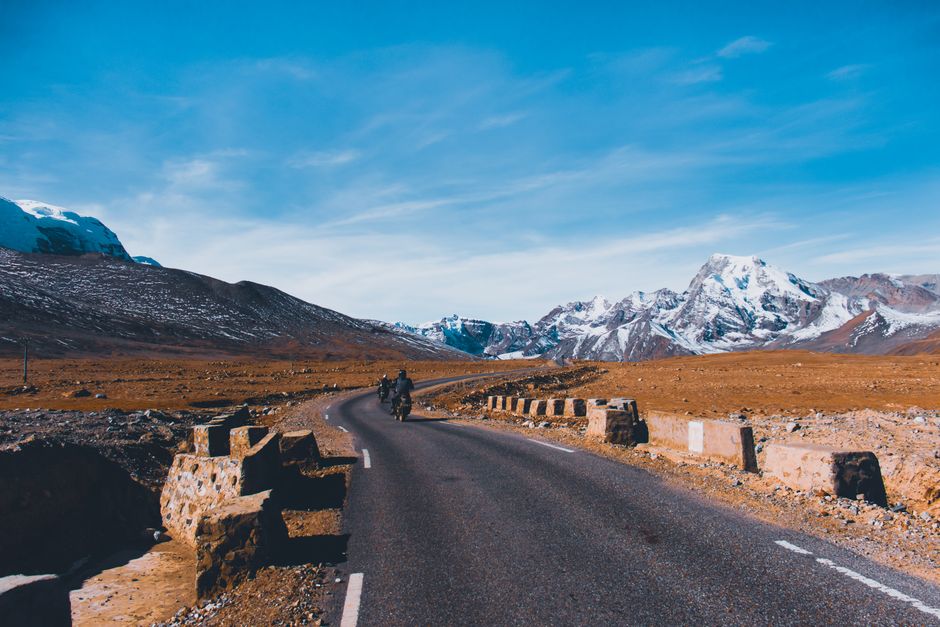
May is for the bold. The highway typically opens to civilians around mid-month, and riding it in May 2026 means traversing a landscape still emerging from winter. Snow walls 15 to 20 feet high line the road over Baralacha La, creating a surreal white corridor that makes for spectacular photographs. Traffic is extremely light—you might ride for an hour without seeing another vehicle. The air is crystal clear, the peaks are heavily snow-capped, and you'll feel like an Arctic explorer on two wheels.
The risks are substantial. Nighttime temperatures at Sarchu and Pang can drop to -10°C, and not all campsites have their infrastructure fully operational. Fuel at Tandi may be erratic, and mechanical help is scarce. Water crossings are at their iciest and most challenging, swollen with early snowmelt. This is a trip for experienced riders with proper cold-weather gear, including heated grips and a four-season tent. If you're prepared, the solitude and raw beauty are unmatched.
June 2026: The Start of Peak Season
June is widely considered the sweet spot, and 2026 will be no different. By early June, all high passes are reliably open, snow walls have receded enough for safe passage, and daytime temperatures at altitude settle into a comfortable 10°C to 15°C range. The landscape is still lush from snowmelt, wildflowers begin to appear in the Lahaul valley, and the notorious monsoon rains haven't yet arrived to complicate the lower sections. Accommodation and fuel infrastructure are fully online.
The trade-off is traffic. June sees a significant increase in motorcycle groups, SUV convoys, and cycling expeditions. Campsites at Sarchu and Jispa fill up by late afternoon, so advance booking becomes important. The road surface is generally at its best—the BRO has completed initial repairs, and before the monsoon battering begins, you'll find long stretches of decent tarmac mixed with predictable gravel sections. For most riders, June represents the best balance of safety, scenery, and riding pleasure.
July 2026: Peak Monsoon Challenges
July brings the monsoon's edge to the southern half of the route, transforming sections of the Manali-Leh highway into a test of mud-riding skill. Expect heavy rainfall between Manali and Keylong, with the Rohtang pass often shrouded in dense fog and drizzle. The real danger lies in landslides, particularly in the stretch between Rohtang and Jispa, where waterlogged slopes can give way without warning. The BRO works tirelessly, but delays of several hours are common.
North of Baralacha La, Ladakh remains dry and sunny, creating a strange duality—you'll start the day in rain gear and end it in a dust storm on the Morey Plains. River crossings are at their deepest and fastest, demanding careful line selection. On the positive side, the valleys are impossibly green, waterfalls cascade down every rockface, and the high-altitude desert contrasts are at their most dramatic. July suits riders who don't mind getting wet, can handle technical mud sections, and have buffer days built into their itinerary for landslide delays.
August 2026: Landslides and Road Closures
August is the monsoon's peak intensity month, and the Manali-Leh highway shows its teeth. The southern section from Manali to Darcha becomes a gauntlet of active landslide zones, with fresh rockfalls occurring almost daily. In 2026, areas like the climb out of Tandi toward Keylong and the stretch near Zingzingbar will require particular vigilance. Road closures lasting 24 to 48 hours are not unheard of, and riders should carry enough supplies to be self-sufficient if stranded.
Paradoxically, August also offers some of the warmest temperatures and most accessible high passes of the entire season. Once you break free of the monsoon zone and enter Ladakh, the riding is sublime—warm, dry, and under vast blue skies. Leh itself is alive with festivals and a vibrant traveler scene. For those with flexible schedules and a patient mindset, August can work, but it's the month where the best time to ride Manali to Leh is truly a gamble. Always check the latest BRO advisories before departure and consider carrying a satellite phone for emergencies.
Month-by-Month Breakdown (Continued): Late Season and Beyond
September 2026: The Golden Window for Clear Skies and Stable Roads
Ask veteran riders about the best time to ride Manali to Leh, and many will whisper a single word: September. The monsoon clouds have retreated, leaving behind impossibly blue skies and a landscape washed clean. The air is crisp, the dust has settled, and the snow peaks stand out with razor-sharp clarity against the horizon. For photographers and purists, this is the undisputed golden window.
Temperatures in September begin their slow descent toward winter. Daytime highs in Leh hover around 20-25°C, while Manali remains pleasantly cool. Nighttime temperatures, however, start dropping significantly, often touching 5°C at higher campsites like Sarchu and Pang. You still have comfortable riding conditions during daylight hours, but that evening chill is a clear reminder that the season is ending.
Road conditions are arguably at their annual best. The BRO has typically completed most monsoon repair work by early September. Water crossings, while still present, are generally shallower and less intimidating than in July. The infamous crossing at Pagal Nala becomes manageable rather than menacing. Landslides are far less frequent now because the ground has already absorbed its fill of moisture. You will still encounter rough patches and loose gravel on the Gata Loops and the descent from Tanglang La, but overall, the tarmac-to-pothole ratio is more favorable than in any other month.
A major practical advantage is thinner crowds. Ladakh's peak tourist rush fades after mid-August when Indian families head home for school reopenings. By September, you will share the highway with far fewer SUVs and trucks. Guesthouses in Jispa and Leh offer better rates, and you can negotiate more freely. Mechanics in Keylong and Leh are less harried and can give your motorcycle more attention if repairs are needed.
The riding experience itself transforms. The softer autumn light paints the More Plains in shades of gold and ochre. You might encounter fresh dustings of snow on the highest passes—Tanglang La at 5,328 meters is particularly prone to early flurries—but these usually melt by midday. The key risk is the unpredictability of the closing date. While Baralacha La and Rohtang La typically remain open through September, an unusually heavy early snowfall can temporarily shut a pass for a day or two. Always build at least one buffer day into your itinerary.
For 2026, September aligns with the Ladakh Marathon, typically held in the second week. If your dates overlap, book Leh accommodation weeks in advance. Otherwise, this month offers the most balanced, visually stunning, and mechanically forgiving ride of the entire season. Many riders who have experienced all three summer months will tell you this truly is the best time to ride Manali to Leh for those who prioritize solitude and clarity.
October 2026: Last Chance Before Winter Closure
October is a gamble, and you must be honest about your risk tolerance. The first half of the month can deliver riding days that rival September in sheer beauty. The autumn colors are at their peak—poplar trees lining the Indus Valley turn brilliant gold, and the high-altitude pastures glow amber. You will see very few other travelers. The isolation is profound and deeply rewarding for experienced riders.
The cold, however, is no longer a suggestion; it is a command. Daytime temperatures struggle to cross 15°C in Leh and hover around 10-12°C at high passes. At night, Sarchu and Pang plunge to -5°C or lower. Your motorcycle will be difficult to start in the morning. Carbureted engines suffer without proper tuning. Frost on your seat and ice in your fuel line become real possibilities. You need serious cold-weather riding gear, including heated grips or thick winter gloves with liners, and a balaclava that genuinely blocks wind.
Pass closures are the deal-breaker. Rohtang La and Baralacha La typically close for the winter sometime in October, the exact date decided by snow accumulation. The BRO does not announce a fixed calendar; they monitor conditions daily. You might arrive in Keylong only to learn that the pass closed overnight. Reversing your route or waiting it out for days is your only option. If you attempt October, you must carry extra food, water, and fuel, and you must accept that reaching Leh is not guaranteed. Satellite phone or a reliable satellite messaging device is a sensible precaution for this month. For those who succeed, the bragging rights are immense—but this late window is for hardened adventurers, not first-timers.
November 2026 to April 2027: Why the Route Is Closed and Winter Alternatives
From November through April, the Manali-Leh Highway is not a road; it is a snowbound corridor buried under meters of ice. Baralacha La, Lachulung La, and Tanglang La routinely accumulate 10-15 feet of snow, making them impassable even for heavy BRO machinery. The average temperature at these altitudes stays well below freezing for months. Avalanches are a constant threat. No amount of skill or determination can force a motorcycle through a closed high Himalayan pass in deep winter.
The official closure typically begins in late October or early November and lasts until the BRO clears the snow in May or June. The road does not simply "close" with a gate; sections become physically nonexistent under snowpack and ice sheets. Attempting to ride is illegal and suicidal. Even 4x4 winter expeditions with specialized equipment rarely attempt the full crossing.
Winter riders need not despair completely. The Srinagar-Leh Highway remains open for much of the winter, weather permitting, because the Zoji La pass receives more aggressive snow clearance. This is the only overland supply route to Ladakh in winter. But even this road closes frequently for days during heavy snowstorms, and temperatures in Dras regularly hit -20°C. Riding it is an extreme endurance test, not a holiday.
A more practical winter alternative is to fly into Leh and rent a motorcycle locally for day rides. The Khardung La and Chang La passes are kept open by the BRO for military access, so you can still ride to Nubra Valley or Pangong Lake. The landscape is desolate, frozen, and hauntingly beautiful. You will need chains for your tires and gear rated for Arctic conditions, but you can taste Ladakh's winter magic without attempting a suicidal crossing from Manali. Wait for the spring thaw and the reopening of the highway for the true Manali-Leh pilgrimage.
Permits, Regulations, and Logistics for 2026 Riders
Inner Line Permits for Foreign Nationals and Domestic Tourists
The permit landscape for Ladakh has evolved significantly, and what was true a few years ago no longer applies. For the 2026 riding season, all foreign nationals still require a Protected Area Permit to travel anywhere in Ladakh. This is non-negotiable. You can obtain it online through the official LAHDC Leh portal or upon arrival at the DC office in Leh. Carry multiple printed copies and your original passport with a valid Indian visa at all times. Checkpoints will demand them.
Domestic Indian tourists previously needed an Inner Line Permit only for specific restricted areas like Pangong Lake, Nubra Valley, and Tso Moriri. This requirement was significantly relaxed in recent years. As of the current regulations expected to continue into 2026, Indian citizens do not need an ILP for most of Ladakh, including Leh town and the Manali-Leh highway itself. However, you still need permits for the border areas. These include Pangong Lake, Nubra Valley via Khardung La, Tso Moriri, and the Dah-Hanu villages. The process is simple: apply online at the official portal, pay a small fee, and download the permit. You can also get it from the DC office in Leh, but online is faster and avoids queues. The permit specifies dates and the number of people, so plan your side trips accordingly. Always check the latest official notification a week before your ride, as rules around border regions can change with little notice based on security situations.
Vehicle Documentation and Emission Checks
You will cross multiple checkpoints where your paperwork is scrutinized. Carry original documents, not just photocopies. The essential set includes your valid driving license with the correct class of vehicle endorsement, the motorcycle's Registration Certificate, a valid Pollution Under Control certificate, and your insurance papers. The insurance must be comprehensive or at least third-party, and it must be valid for the entire duration of your trip. Check the expiry date on your PUC certificate before leaving; getting one in Manali is easy, but finding an emission testing center in Keylong or Jispa is not.
If you are riding a rented motorcycle, the rental agency must provide the RC and insurance. Verify these documents physically before departing. Some rental shops hand over bikes with expired paperwork, leaving you vulnerable at police checkpoints. A common trap is a mismatch between the vehicle class on your license and the motorcycle's engine capacity. If your license is for a light motorcycle only and you are caught on a 500cc Royal Enfield, you face fines and your bike can be impounded. For foreign riders, an International Driving Permit is mandatory, and it must be accompanied by your home country license. Do not forget the IDP at home.
Fuel Availability and Petrol Pump Locations Along the Route
Fuel planning on the Manali-Leh highway is not casual; it is a survival calculation. The distance from Manali to Leh is approximately 475 kilometers, and there are only a handful of official petrol pumps. The last reliable pump in Manali is on the Leh Road, just before the climb toward Rohtang begins. Fill your tank to the brim here, and fill any spare fuel cans or bags if you are carrying them.
Your next fuel stop is in Tandi, about 110 kilometers from Manali, just past Keylong. The Tandi petrol pump is famous among riders because it is the last fuel station for the next 365 kilometers until you reach Karu, just short of Leh. The Tandi pump is generally well-stocked during the riding season, but it runs out occasionally during peak July rushes. Do not bypass it assuming you will fill up later. Fill up completely at Tandi, even if your tank is still half full. Your next fuel is in Karu, about 35 kilometers before Leh. There is also a pump in Upshi, slightly earlier, but it is less reliable. For the 2026 season, rumors persist about a new pump opening in Sarchu, but do not bet your life on it. Carry at least 5-10 liters of spare fuel in a metal jerry can or high-quality fuel bladder. Plastic water bottles are dangerous and illegal for fuel transport. The high passes burn more fuel than you expect because of thin air and low-gear climbing. Calculate your motorcycle's worst-case fuel efficiency and plan accordingly.
Packing Essentials for Every Season on the Manali-Leh Highway
Riding Gear: What to Wear in Freezing Mornings and Warm Afternoons
The Manali-Leh highway will subject you to a 30-degree temperature swing in a single day. You might leave Sarchu at dawn in sub-zero cold and arrive in Upshi by afternoon sweating under a blazing sun. Your clothing system must be layered and adaptable. Start with a moisture-wicking base layer against your skin—merino wool is ideal because it resists odor over multiple days. Avoid cotton at all costs; it holds sweat and chills you dangerously when temperatures drop.
Your mid-layer should be a fleece or a thin down jacket that compresses small. This is your insulation core. Your outer layer must be a windproof and waterproof riding jacket with CE-rated armor. Do not rely on a rain poncho alone; the wind at high passes will shred it. For your lower body, wear thermal leggings under armored riding pants. The kneecaps are the first body part to feel the cold, and cold knees mean slow reflexes. Your hands need serious protection. Full-gauntlet, insulated, waterproof gloves are non-negotiable in June, September, or October. Pack a thinner pair for the hot afternoons descending into the valleys. Your feet need wool socks and waterproof touring boots with ankle protection. A balaclava that covers your neck and can be pulled up over your nose prevents windburn and frostnip on high passes. A full-face helmet with a Pinlock anti-fog visor is invaluable; open-face helmets and sunglasses will leave you miserable and sunburned. Pack a hydration bladder in your backpack; stopping to fumble with water bottles in freezing wind is demoralizing.
Motorcycle Spares and Tools You Shouldn’t Leave Without
The distance between competent mechanics can be a hundred kilometers of rough track. Your motorcycle will vibrate itself to exhaustion on corrugated dirt and rocky climbs. Certain spares are so commonly needed that carrying them is basic prudence. Bring a spare clutch cable and a spare accelerator cable, routed alongside the existing ones and zip-tied in place for a quick swap. The clutch cable on Royal Enfield Himalayan and Classic models is especially prone to snapping under heavy use on hairpin climbs. Carry a spare front and rear tube, even if you run tubeless tires. A puncture repair kit with a CO2 inflator or a compact manual pump is essential. Pack a master link for your chain and a small bottle of chain lube. The dust and river crossings strip lubricant rapidly.
Your tool kit should include the standard toolkit that came with the bike, plus a few additions: a multi-tool with pliers, zip ties in various sizes, electrical tape, a spark plug wrench and a spare spark plug, and a length of insulated wire for emergency electrical bypasses. A small roll of duct tape can temporarily hold together a cracked fairing or a broken luggage mount. If your bike is fuel-injected, you cannot do much roadside ECU tuning, so focus on mechanical backups. For carbureted motorcycles, a spare main jet and the knowledge to swap it at high altitude is a genuine advantage. Pack your spares in a waterproof dry bag, not just a canvas saddlebag. The river crossings are deep enough to submerge a pannier.
First Aid, Hydration, and High-Altitude Sickness Prevention
Altitude sickness does not care how fit you are; it cares how fast you ascend. The Manali-Leh highway drags you from 2,000 meters to over 5,000 meters in a single day if you are not careful. The golden rule is to sleep at a lower altitude than your highest point of the day. Plan your itinerary so you spend your first high-altitude night in Jispa or Sarchu, not directly in Leh after crossing Tanglang La. Acclimatization takes time your body cannot cheat.
Your first-aid kit must go beyond band-aids. Pack Diamox tablets, but consult your doctor before using them. Start taking them 24 hours before your ascent if you are prone to AMS. Carry ibuprofen for the inevitable altitude headache, and anti-nausea medication for stomach bugs from unfamiliar water. Oral rehydration salts are weightless lifesavers. A pulse oximeter that clips onto your finger is a small, cheap device that tells you exactly how your body is coping. If your oxygen saturation drops below 80% and you feel confused or cannot walk straight, descend immediately. Do not sleep it off at altitude; it will get worse.
Hydration is your primary defense against altitude sickness. The dry mountain air and heavy breathing steal moisture from your body faster than you realize. You must drink 4-5 liters of water per day. Stop at every dhaba and stream to refill. Carry a water purifier or purification tablets because bottled water is expensive and creates plastic waste in a fragile ecosystem. A SteriPen or a simple LifeStraw bottle lets you drink safely from any water source. Avoid alcohol entirely for the first three days of your ride; it mimics and masks altitude sickness symptoms and dehydrates you severely. Eat carbohydrate-rich meals even if your appetite is suppressed. Parathas, rice, and dal are your fuel. Your body burns calories just staying warm at night, so eat more than you think you need. A small bag of nuts and dried fruit in your tank bag provides quick energy between stops.

Safety Tips and Emergency Preparedness for the High Himalayas
The best time to ride Manali to Leh is during the summer window, but even in perfect weather, the terrain remains unforgiving. The highway tests your physical endurance and mechanical reliability at altitudes where oxygen is scarce and help is far away. Preparing for emergencies isn't optional—it's the backbone of a successful ride. Every year, riders get caught out by sudden snowstorms in June or flash floods in August, and the ones who fare best are those who packed the right gear and respected the mountain's warning signs.
Before you kickstart your journey, share your detailed itinerary with someone back home. Include expected dates for crossing each high pass. If you don't check in, they should know exactly which stretch to alert authorities about. Carry a physical map. Phone batteries die quickly in the cold, and GPS signals can be unreliable in deep gorges. A paper backup takes zero battery and works in any weather. Also, pack a comprehensive first-aid kit that goes beyond band-aids—include anti-diarrheal tablets, oral rehydration salts, antiseptic cream, and any personal prescription medicines. The remote clinics along the route have limited supplies, so you must be self-sufficient.
Weather windows close rapidly above 4,000 meters. A bright blue sky at Baralacha La can morph into a blizzard within 45 minutes. Always start your day's ride by 6 AM to clear the high passes before afternoon clouds build up. If dark cumulus clouds gather overhead while you're climbing a pass, do not push forward hoping it will pass. Turn back to the last safe point or seek shelter immediately. Lightning strikes are a real threat on exposed switchbacks, and hailstorms can reduce visibility to zero. Waterproof riding gear is mandatory, but also pack a heavy-duty poncho that can cover both you and your tank bag in a sudden downpour.
Motorcycle preparation is equally critical. The best time to ride Manali to Leh might be when roads are clear, but that doesn't mean they're smooth. Carry two spare tubes for each tire, a portable air pump, a clutch cable, a throttle cable, and a chain link lock. Learn to fix a punctured tube yourself—there are long stretches with no mechanic for 80 kilometers or more. Check your brake pads before departure; the steep descents from Tanglang La and Rohtang will chew through worn pads alarmingly fast. Pack extra engine oil because your bike will burn through it faster at high RPMs in thin air.
Navigating Water Crossings, Loose Gravel, and Slippery Slush
Water crossings are the most deceptive obstacles on the Manali-Leh highway. Some are ankle-deep trickles in the morning and raging torrents by late afternoon when glacial melt peaks. Never enter a crossing without first walking through it on foot. The water will be painfully cold—often just above freezing—but it's better than discovering a hidden boulder or deep rut mid-crossing that throws you off balance. Unbuckle your helmet strap before crossing so you can escape quickly if you go down. Ride in first gear, maintain steady throttle, and do not stop mid-stream. Stopping allows water to flood your exhaust pipe, stalling the engine.
Loose gravel demands a completely different riding technique than tarmac. Keep your arms relaxed and let the front wheel find its own path slightly. Gripping the handlebars too tight transfers every wobble straight to your shoulders, exhausting you within an hour. Stand up on the footpegs for better balance and lower your tire pressure by about 5 PSI from the recommended level to increase the contact patch. The gravel sections between Sarchu and Pang are notorious for washing out tires. When you feel the rear wheel sliding, do not slam the front brake. Instead, gently roll off the throttle and look where you want to go, not at the edge of the cliff.
Slippery slush appears mainly at the top of passes like Rohtang and Baralacha La, even during the best time to ride Manali to Leh. This half-melted snow mixed with mud acts like grease under your tires. Reduce speed to a walking pace when you see slush ahead. Keep both feet dangling just above the surface as outriggers, ready to catch a slide. Avoid any sudden steering inputs—treat the handlebars as if they're made of glass. If the slush is deeper than your bike's ground clearance, do not attempt to power through. Wait for a four-wheeled vehicle to create tire tracks, then follow exactly in those grooves.
Communication Black Spots and Emergency Contact Numbers
Mobile connectivity vanishes for roughly 80% of the Manali-Leh highway. Only BSNL postpaid connections work intermittently, and even those fail beyond Sarchu. You'll be completely cut off between Keylong and Leh—a stretch that can take two to three days of riding. Satellite phones are illegal for civilians in India without special permits, but satellite messengers like Garmin inReach devices are permitted and can send SOS signals and text messages via satellite. If you're riding solo, this device alone could save your life. Rent one from outdoor gear shops in Delhi or Manali before the trip.
Memorize or write down these emergency numbers before you lose signal. The Leh District Disaster Management Control Room operates 24/7 during tourist season. The Himachal Pradesh helpline works for the Manali side up to Sarchu. Border Roads Organization (BRO) workers are stationed at critical passes and can radio for help—approach them if you're in trouble. Also save the number of a reliable taxi service in Leh that can arrange a pickup truck if your motorcycle breaks down completely. Recovery vehicles from Leh can reach as far as Pang in about six hours, but it's expensive. Always carry enough cash for emergency transport; card machines don't exist up here.
Inform your accommodation host each morning about your planned destination. If you don't arrive by nightfall, they're often the first to alert authorities. Many dhaba owners along the route look out for bikers and will notice if someone expected doesn't show up. When you stop for tea, mention where you're heading next. In the mountains, this informal network of concerned strangers often fills the gap left by absent phone signals. It's an old-school system, but it works.
Dealing with AMS (Acute Mountain Sickness) and When to Turn Back
Acute Mountain Sickness doesn't care about your fitness level or how many marathons you've run. It strikes randomly and can incapacitate even the most experienced riders. The first symptoms are a persistent headache that doesn't respond to paracetamol, nausea, dizziness, and loss of appetite. If you feel any of these above 3,500 meters, assume it's AMS and act immediately. Descending just 500 meters of altitude is the only reliable cure. Do not convince yourself to push through "just one more pass"—AMS can progress to High Altitude Cerebral Edema (HACE), where fluid leaks into your brain, and that can be fatal within hours.
Acclimatization is your best defense. The best time to ride Manali to Leh won't protect you if you climb too fast. Spend your first night at a lower altitude like Jispa (3,200 meters) rather than pushing straight to Sarchu (4,290 meters). Your body needs time to produce more red blood cells. Drink four to five liters of water daily—the dry mountain air and heavy breathing dehydrate you faster than you realize. Avoid alcohol completely for the first three days of the ride. A single beer at 4,500 meters hits like three at sea level and severely depresses your breathing rate while sleeping, worsening AMS symptoms.
Carry Diamox (Acetazolamide) tablets as a preventive measure, but consult your doctor before the trip. Diamox isn't a cure for AMS; it only speeds up acclimatization and can mask early warning signs. If you take Diamox and still develop a splitting headache or start vomiting, the mountain is telling you to descend. Listen to it. Turning back from a pass you've dreamed of riding for years is heartbreaking, but the mountain will still be there next year. Your family needs you home more than you need a summit photograph. Pride has no place above the treeline.
Insider Tips from Experienced Manali-Leh Riders
Veterans who've ridden this highway a dozen times carry wisdom that no guidebook captures. They've watched the route transform from a bone-jarring dirt track to a mostly paved marvel, yet their advice remains rooted in the fundamentals: patience, preparation, and knowing when to ignore the itinerary. The best time to ride Manali to Leh is whenever you can get clear skies, but these insider tips will elevate your journey from a simple checkpoint-chasing ride into something far more memorable. Small decisions—where you sleep, when you start, which side road you explore—make the difference between a trip you'll brag about and one that genuinely changes you.
The first piece of advice every seasoned rider gives: slow down. The highway is not a race track. The average speed between Manali and Leh works out to barely 25 km/h once you factor in photo stops, water crossings, and chai breaks. Plan your daily distances conservatively. A 120-kilometer day might take eight hours. Rushing leads to mistakes, and mistakes at 5,000 meters have steep consequences. Build buffer days into your schedule. If you've booked exactly seven days and a landslide blocks the road for 24 hours—a common occurrence—you'll be forced to ride dangerously long hours to catch up. An extra day in Leh at the end is far better than a missed flight.
Fuel management surprises many first-timers. Petrol pumps are scarce—the longest gap between Tandi and Karu is roughly 365 kilometers with no guaranteed fuel. Your motorcycle will consume more fuel than usual because you'll be riding in lower gears at high RPMs through thin air. Carry extra fuel in approved jerry cans or fuel bladders. Don't rely on black-market petrol sold in plastic bottles at dhabas; it's often adulterated and can damage your fuel injection system. Fill up completely at Tandi even if your tank is still three-quarters full. The peace of mind is worth the ten-minute stop.
Best Campsites and Homestays Worth a Detour
Skip the crowded tent colonies at Sarchu and ride an extra 30 kilometers to the campsites near Tsokar Lake instead. The salt lake reflects the surrounding peaks in shades of turquoise that photographers dream about, and the night sky there is free of light pollution. The ground is harder and colder, but the silence at dawn as the sun hits the water is worth every shiver. If you prefer a roof overhead, the homestays in Lato village, just before the climb to Tanglang La, offer warm blankets and home-cooked thukpa that beats any dhaba meal. The family-run places don't advertise online—just ask around at the tea stalls.
Jispa remains the gold standard for a first-night stop, but most riders cluster at the main campsites near the bridge. Ride two kilometers further south to the smaller camps on the riverbank. You'll get the same view of the Bhaga River with half the noise. For a truly special detour, consider spending a night at Tso Moriri instead of rushing directly to Leh. The lake is a four-hour detour from the main highway near Debring, but the homestays in Korzok village put you right on the shore of a high-altitude lake that sees a fraction of Pangong's tourists. The road to Tso Moriri is rough, so allow a full day for the round trip.
How to Avoid the Crowds Even in Peak Months
July and August draw the maximum number of riders, but you can still find solitude by shifting your daily routine. Most groups depart their campsites between 7:30 and 8:30 AM. If you're on the road by 5:30 AM, you'll have the high passes almost entirely to yourself. The light at dawn is softer for photography, and the snow bridges on passes like Rohtang are firmer in the early morning cold. You'll reach your destination by early afternoon, well before the afternoon dust storms kick up.
Reverse your itinerary compared to the typical flow. About 85% of riders go Manali to Leh. If you ship your bike to Leh and ride toward Manali instead, you'll face oncoming traffic but far fewer vehicles traveling in your direction. The acclimatization challenge is different—Leh is already at 3,500 meters, so you must spend two full days resting there before attempting the highway in reverse. Another trick: camp at lesser-known stops like Pang instead of Sarchu. Pang has fewer amenities but also far fewer people. The milky way visible from Pang's high-altitude plateau on a moonless night is the best free show in the Himalayas.
Photography Hotspots and Secret Viewpoints
The classic shot of the Gata Loops—21 hairpin bends stacked like a coiled snake—is taken from the bottom looking up, but the better angle is from the middle of the climb. Around the 14th hairpin, a small pullout lets you frame the road snaking both above and below you. Arrive before 8 AM when the low sun casts long shadows that emphasize the road's geometry. For Suraj Tal, the lake just below Baralacha La, walk 200 meters up the slope on the eastern side instead of shooting from the roadside. The elevated angle captures the lake's full emerald color with the glacier peaks behind it.
Moore Plains offers the most dramatic riding photographs, but most people stop at the first flat stretch. Continue until you find a section where the road narrows to a single ribbon with mountains rising sharply on both sides. A wide-angle lens here makes the motorcycle look tiny against the scale of the landscape, which is exactly the story you want to tell. At Tanglang La, skip the crowded signboard and ride 500 meters down the Leh side to a rocky outcrop. From there, the road unfurls below you in a series of switchbacks that look spectacular with a telephoto lens compressing the distance. For star photography, the campsite at Debring offers an unobstructed 360-degree horizon at over 4,500 meters. Set up your tripod at 3 AM when even the last dhaba lights have gone out.
Wrapping Up: Your Perfect 2026 Manali-Leh Ride Starts with the Right Timing
Choosing the best time to ride Manali to Leh in 2026 comes down to what kind of experience you crave. June delivers pristine snow walls and the thrill of being among the first to cross freshly opened passes. July and August bring warmer temperatures and the camaraderie of meeting riders from across the country at every dhaba stop, though you'll share the road with monsoon remnants and larger crowds. September rewards the patient with golden light, empty highways, and a landscape that seems to exhale after the summer rush. Each window has its own personality, and none of them are wrong—they're just different chapters of the same epic story.
The highway doesn't care about your plans. It will throw surprises at you whether you've picked the statistically driest week or not. The riders who have the best journeys aren't necessarily the ones who timed the weather perfectly. They're the ones who packed the extra layer, who turned back when their headache wouldn't quit, who stopped to help a stranger with a flat tire, and who lingered an extra hour at a nameless chai stall because the view demanded it. Flexibility transforms a rigid itinerary into an adventure. Book your permits, service your motorcycle, train your body, then let the road dictate the pace.
As you plan your 2026 ride, remember that this highway exists because of the incredible effort of the Border Roads Organization, who battle avalanches and landslides every spring to connect Ladakh to the rest of India. Respect their work by riding responsibly. Don't litter—carry a small bag for your trash until you find a proper bin. Don't play loud music at campsites where others are trying to absorb the silence of the mountains. And when you return home, tell the stories that deserve telling: not just about the passes you conquered, but about the people you met, the stars you counted, and the moment somewhere around Pang when you realized how small and how alive you felt all at once. That feeling is why we ride, and it's waiting for you in 2026.
Gear for this trip
- Merino Wool Base Layer
- Waterproof Insulated Motorcycle Gloves
- Motorcycle Fuel Bladder
- Pulse Oximeter
- Garmin inReach Satellite Messenger
As an Amazon Associate I earn from qualifying purchases.


No comments:
Post a Comment