
Beijing: A Cinematic Journey Through the Heart of an Empire
Introduction
The first thing that hits you is the scale. It's not just the physical vastness, though that is staggering—the endless boulevards stretching into a hazy horizon, the monumental gateways that dwarf human life, the sheer weight of history pressing down from every brick of the Forbidden City. No, the scale of Beijing is temporal. It is a city that exists in multiple centuries simultaneously, a living palimpsest where the echoes of imperial edicts whisper through the hutongs and are answered by the digital hum of its silicon dreams. To walk its streets is to step into a film where the scenes cut abruptly from ancient, silent courtyards to a dizzying future of neon and glass. This is not merely a city; it is an experience, a grand, chaotic, and profoundly beautiful epic.
You feel it in your bones as you stand before Tiananmen Gate, the portrait of Mao gazing impassively over the world's largest public square. The air here is thick with a sense of occasion, of parades past and the quiet, determined footsteps of a thousand visitors. The scent of sun-warmed stone and distant traffic hangs in the air. But turn a corner, plunge into the labyrinth of Nanluoguxiang, and the soundtrack shifts. The rumble of the city fades, replaced by the gentle clatter of bicycle bells, the sizzle of lamb skewers on charcoal braziers, the laughter spilling from hidden courtyards. The smell is now of coal smoke, frying dough, and the faint, damp earthiness of old, narrow lanes.
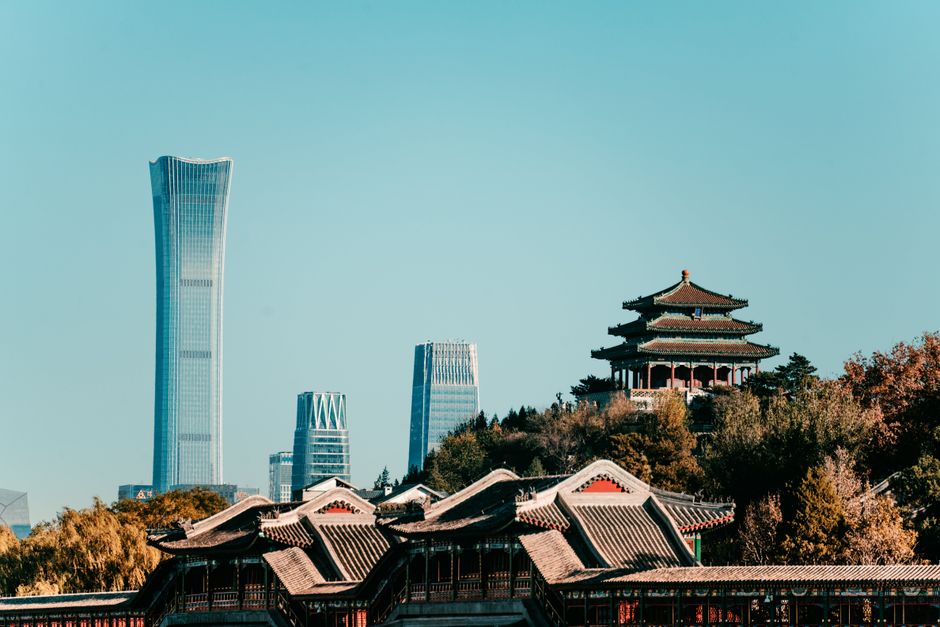
Beijing is a city of profound contrasts, a dialogue between the vertical and the horizontal, the old and the new, the solemn and the vibrantly alive. It is the capital of China, the political and cultural heart of a civilization that measures its continuity in millennia. Here, you can trace the axis of celestial power designed by Ming emperors, then look up to see the gravity-defying curves of the CCTV Headquarters, a building that seems to defy not just architecture, but physics itself. You can sip delicate, jasmine-scented tea in a tranquil temple, then an hour later be swept into the electric pulse of Sanlitun, where fashion and futurism collide in a blaze of light.
This cinematic quality is Beijing's true essence. It demands to be felt, not just seen. It's in the texture of the dragon-carved marble under your fingertips at the Summer Palace. It's in the taste of a steaming, juice-filled baozi on a crisp morning. It's in the sound of opera singers practicing their piercing, melodic scales in a park at dawn, their voices cutting through the mist like blades. To visit Beijing is to play a part in its ongoing story, to walk its stage sets of imperial grandeur and intimate alleyways, and to leave with the sense that you have glimpsed not just a place, but the very soul of an ancient civilization hurtling into tomorrow.
Why Visit Beijing?
Why does a traveler journey to the other side of the world? For postcard views? Those exist in abundance. For exotic food? Unquestionably. But Beijing offers something rarer: a tangible connection to the narrative of human history and a front-row seat to its next chapter. You come here to witness the physical manifestations of power, philosophy, and artistry on a scale that simply does not exist anywhere else. The Forbidden City isn't just a museum; it's a 720,000-square-meter lesson in cosmology, hierarchy, and sheer ambition, a city within a city built to house the Son of Heaven. Walking its successive courtyards, you feel the weight of isolation and authority in every empty space between the magnificent halls.
Then, you come for the counterpoint. The Great Wall, snaking like a stone dragon over the jagged, mist-shrouded mountains north of the city, is the ultimate monument to human endeavor and paranoia. Hiking a restored section like Mutianyu is impressive, but finding a wild, crumbling segment at dawn is transformative. As you place your hand on sun-warmed brick worn smooth by centuries of weather and watch, the wall ceases to be a tourist attraction and becomes a lonely, majestic sentinel. The silence up there, broken only by the wind, is a powerful reminder of the empire's vast reach and its profound vulnerability.
Beyond the iconic, Beijing offers the deeply personal. Its soul resides in the surviving hutongs, the ancient network of alleyways and traditional courtyard homes. To wander these is to step off the main reel of the film and into a slice of daily life that feels miraculously preserved. You see old men playing chess under the shade of a scholar tree, hear the melodic call of a knife-sharpener's flute, smell laundry drying in the sun. It's a human-scale, intimate Beijing that provides essential context to the grandeur. You visit to feel the thrill of the new at the Olympic Park, to ponder contemporary art in the 798 District, and to understand that this city is not a relic. It is a dynamic, pulsing entity, fiercely proud of its past and racing headlong into a future it is actively designing. You come to Beijing to be awed, to be challenged, and to have your understanding of civilization permanently expanded.
When to Visit
Choosing your moment in Beijing is like selecting the filter for your cinematic journey. Each season paints the city in a radically different light, with its own mood, palette, and challenges. The undisputed champion for climate is autumn (September to early November). This is Beijing's golden hour. The fierce summer heat and humidity dissipate, replaced by crisp, clean air, brilliant cobalt skies, and gentle sunlight. The temperature is perfect for long days of walking. The city's many ancient trees—especially the ginkgos in the Diaoyutai State Guesthouse area and the Fragrant Hills—explode in a spectacle of fiery gold and burnt orange. It's a season of clarity, where the distant outlines of the Western Hills are visible, and the Forbidden City' yellow roofs seem to glow against the deep blue. Crowds are manageable after the National Day holiday in early October.
Spring (April to early June) is a close second, a season of rebirth. After the grey winter, the city blossoms—literally. The jasmine and lilac bushes perfume the hutongs, while the imperial gardens come alive with peonies and magnolias. The weather is generally mild, though it can be unpredictable, with occasional sandstorms blowing in from the Gobi Desert that coat the city in an eerie, ochre haze. It's a hopeful, vibrant time to visit. Summer (June-August) is the blockbuster season—hot, crowded, and intense. The heat is subtropical and oppressive, the air often thick with humidity. Yet, this is when the city is most lush, and the lakes are full of blooming lotuses. If you can brave the conditions and the tourist throngs, the energy is undeniable. Winter (December-February) is for the atmospheric, dramatic traveler. It is cold, dry, and often starkly beautiful. Seeing the Forbidden City or the Temple of Heaven with a dusting of snow is a magical, quiet experience few get to witness. The crowds are thin, the light is pale and beautiful, and the hotpot meals taste infinitely better. Just bundle up.
How to Get There
Your arrival in Beijing is a scene in itself. Most international travelers will enter through Beijing Capital International Airport (PEK) or the newer, staggering Beijing Daxing International Airport (PKX). Daxing, in particular, is a destination—a soaring, starfish-shaped marvel of modern architecture designed by Zaha Hadid, a statement of intent that begins your journey the moment you land. From either airport, the most efficient way to reach the city center is via the Airport Express train, a smooth, high-speed link that feels like gliding into the future before you've even encountered the past. Taxis and ride-hailing apps like Didi are plentiful but can be subject to the city's infamous traffic.
For a truly immersive approach, consider arriving by high-speed train from another Chinese city. Pulling into the vast, futuristic Beijing South Railway Station is an experience—a cathedral of transit buzzing with organized chaos. The train journey itself offers a framed view of the evolving Chinese landscape, from dense urban sprawl to countryside, building anticipation. Once within the city, Beijing's metro system is your lifeline. It is extensive, cheap, efficient, and signs are in English. Dive into its bustling, clean depths; it is the arterial system of the modern city, connecting ancient temples to space-age financial districts in minutes. Surface-level travel by taxi or Didi is straightforward, but always have your destination written in Chinese characters to show the driver. The city is built on a grand, cardinal-direction grid, making it surprisingly navigable once you orient yourself to the central north-south axis.
Accommodation
Where you rest your head in Beijing will define your narrative. Your choice is a lens through which you'll experience the city. For the ultimate immersion in history and atmosphere, seek out a courtyard hotel (siheyuan) in a preserved hutong area like around the Bell and Drum Towers or Nanluoguxiang. These are often painstakingly restored traditional homes, with rooms arranged around a central, tranquil courtyard. Waking up to the sound of pigeons cooing and light filtering through latticed windows, you live the intimate, ancient Beijing. It's a quiet, personal escape from the metropolitan roar just beyond the alley walls.
For sheer convenience and modern luxury, the districts of Wangfujing and Guomao are ideal. Wangfujing puts you steps from the Forbidden City and its famous snack street, amidst grand, historic hotels and sleek shopping malls. Guomao, in the Central Business District, is the skyline of tomorrow—a forest of glittering towers housing international five-star brands with breathtaking views, infinity pools, and direct access to the metro. It's the heart of 21st-century Beijing. For a blend of local life, trendy cafes, and vibrant nightlife, the Sanlitun and Gulou areas are perfect. Here, you'll find boutique hotels, stylish serviced apartments, and a constant, youthful energy. Sanlitun is a fashion-forward, international hub, while Gulou, centered on the historic drum tower, is the epicenter of Beijing's hipster scene, with live music bars and indie boutiques tucked into hutongs. Choose your setting: the serene past, the dynamic present, or the pulsing, creative edge.
Things to Do
The action list in Beijing is not a checklist; it's a series of set pieces, each with its own emotional tone. Your first act must be the Forbidden City (Palace Museum). Don't just rush through the central halls. Arrive at opening, let the crowds flow toward the throne, and instead linger in the side galleries and quieter courtyards. Imagine the whispers of eunuchs, the rustle of silk robes, the profound isolation of the emperors who lived here. Feel the crushing symmetry and the immense, empty spaces designed to instill awe. It is overwhelming in the best possible way.
Then, seek its opposite. The Summer Palace is imperial leisure writ large. This is where the court fled the furnace-like city. Stroll along the Long Corridor, its beams painted with thousands of intricate scenes, gaze out over Kunming Lake from the marble boat, and climb Longevity Hill for a view that feels like a classical Chinese painting come to life. It's a lesson in landscape design as philosophy. For a spiritual interlude, the Temple of Heaven is non-negotiable. At dawn, join the locals practicing tai chi in the park surrounding the temple complex. Then, stand in the center of the circular Hall of Prayer for Good Harvests, its triple-eaved blue roof soaring above you, and feel the architectural perfection meant to connect heaven and earth. The silence here is sacred.
No journey is complete without a day trip to the Great Wall. For accessibility and beauty, Mutianyu is superb, with a cable car up and a thrilling toboggan ride down. For raw, untamed beauty and a real hike, Jiankou or Gubeikou offer breathtaking, photogenic ruins. Time your visit for sunrise or sunset; the play of light on the ancient stone is soul-stirring. Back in the city, lose yourself in the hutongs. Rent a bicycle and weave through the alleys of the Lama Temple area, stopping to smell incense at the stunning Tibetan Buddhist temple itself, then get gloriously lost. Visit the 798 Art District, a converted Bauhaus-style electronics factory complex now filled with cutting-edge galleries, surreal sculptures, and chic cafes—it's the perfect visual palate cleanser, a dive into China's provocative contemporary art scene. End a day at the Bell and Drum Towers, climbing their steep steps for a panoramic view over a sea of grey-tiled rooftops, and listen as the drums are beaten in a recreation of the ancient time-keeping ritual, the sound echoing over the twilight city.
Food and Drink
Beijing's culinary scene is a starring character in your journey. This is the home of imperial cuisine and robust northern flavors. The undisputed king is Peking Duck. Forget what you've had elsewhere. The real thing is a ceremony: the skin is glazed to a crackling, amber perfection, served first with just a dip of sugar to melt on the tongue. Then, the tender meat is carved tableside and assembled by you into a thin pancake with scallion, cucumber, and sweet bean sauce. The first bite is a symphony of texture and flavor—crisp, savory, sweet, fresh. Head to a time-honored institution like Quanjude or Da Dong for the full experience.
But the city's true heartbeat is found on the street and in humble, buzzing restaurants. Follow the scent of cumin and chili to a chuan'r stall for skewers of grilled lamb. Brave the legendary Wangfujing Snack Street for a spectacle of scorpions, seahorses, and candied fruit, or find a local joint for zhajiangmian—thick wheat noodles slathered in a rich, salty-sweet fermented bean paste with diced vegetables. In the winter, hotpot is a social ritual. Gather around a simmering, divided pot of broth (one side mild, one side lethally spicy), and cook thin slices of lamb, tofu, and vegetables, dipping them in a sesame sauce you concoct yourself. For drinks, sample erguotou, a potent sorghum-based spirit, or warm your hands with a cup of suanmeitang, a sweet-sour plum drink. And always, there is tea. Visit the Maliandao Tea Street to wander hundreds of shops, inhale the fragrant air, and participate in a gongfu tea ceremony—a moment of slow, deliberate calm amidst the urban frenzy.
Practical Tips
To navigate Beijing's epic smoothly, a few practical notes are crucial. First, cash is no longer king. Mobile payments via WeChat Pay and Alipay dominate absolutely everything, from mega-malls to street vendors. Set this up if possible. Have some yuan for small hutongs vendors, but expect to use your phone. Second, download essential apps: a VPN before you arrive (to access Google, Instagram, etc.), Didi (the Chinese Uber), and a reliable translation app like Pleco or Microsoft Translator. Third, always carry tissues and hand sanitizer, as public restrooms, while plentiful, often lack toilet paper and sometimes western-style toilets. Embrace the squat toilet—it's more hygienic!
Pollution can be a real issue. Check an app like AQI.cn daily. On bad days (AQI above 150), consider wearing a mask (N95 or KN95 are effective) and limiting strenuous outdoor activity. Most hotels now have high-end air purifiers. When crossing the street, be vigilant. Traffic, especially from bicycles and electric scooters, can come from unexpected directions, even on sidewalks. Walk with purpose. Finally, embrace the cultural nuance of "face" (mianzi). Patience and a calm, polite demeanor will get you much further than visible frustration. A few words of Mandarin—nǐ hǎo (hello), xièxie (thank you), duìbuqǐ (sorry)—go an incredibly long way in building rapport.
Suggested Itinerary
Day 1: The Imperial Core. Morning at Tiananmen Square, then spend the entire day exploring the Forbidden City. Exit through Jingshan Park for a breathtaking view over the palace roofs. Evening stroll through Wangfujing, ending with a Peking Duck feast.
Day 2: Temples and Hutongs. Sunrise visit to the Temple of Heaven to see local life in action. Afternoon dedicated to the hutongs: start at the Bell and Drum Towers, wander through Yandai Xiejie, explore the artsy Nanluoguxiang, and visit the serene Lama Temple. Have dinner at a hidden courtyard restaurant in the alleys.
Day 3: The Great Wall. Full-day excursion. For a classic experience, choose Mutianyu. For adventure and photography, choose Jiankou (requires a guide). Return exhausted and triumphant for a casual hotpot meal.
Day 4: Summer Leisure & Modern Art. Morning at the Summer Palace, boating on the lake if weather permits. Afternoon shift to the 798 Art District to immerse in contemporary China. Evening in Sanlitun for modern dining and experiencing Beijing's glittering nightlife.
Day 5: Finale and Souvenirs. Morning visit to the Panjiayuan Antique Market (weekends only) or the Silk Market for controlled haggling. Final afternoon at the Confucius Temple and Imperial College for a dose of scholarly calm. Last evening, catch a Peking Opera show at the Huguang Guild Hall for a sensory blast of color and sound.
Conclusion
Leaving Beijing, you don't just have photos. You have sensory memories imprinted on your psyche: the specific coolness of marble underfoot in a silent hall, the particular taste of wood smoke and star anise in a hutong evening, the dizzying perspective from a glass-and-steel skyscraper looking down on a world of grey-tiled courtyards. The city is a grand, complex, and sometimes challenging masterpiece. It refuses to be simple or easily categorized. It is both awe-inspiring and intimately human, brutally modern and gracefully ancient. It teaches you about scale, about continuity, about the relentless march of time and a culture's determination to shape its own destiny. You may come for the Wall and the Forbidden City, but you leave with a profound understanding of a civilization's rhythm—its solemn, ceremonial heartbeat felt in its ancient sites, and its rapid, excited pulse seen in its futuristic skyline. Beijing is not just a destination; it is a revelation, a cinematic epic where you were both audience and participant. It changes you.
Frequently Asked Questions (FAQ)
Is Beijing safe for tourists?
Beijing is generally an extremely safe city for tourists, even at night. Violent crime is rare. The main concerns are petty theft in crowded areas like markets or on busy public transport, so keep your valuables secure. Traffic safety is another point of vigilance—always look carefully when crossing streets.
Do I need a visa to visit Beijing?
Yes, most foreign nationals require a visa to enter China. You must apply for a tourist visa (L visa) at a Chinese embassy or consulate in your home country before your trip. Ensure your passport has at least six months of validity remaining and blank pages. The process can take several weeks, so plan well ahead.
What is the best way to get around Beijing?
The Beijing Subway is the fastest, cheapest, and most efficient way to navigate the city. It's extensive, signs are in English, and it avoids the notorious traffic. Taxis and Didi (ride-hailing) are good for direct point-to-point trips, especially at night or with luggage. For short distances in hutongs, walking or renting a shared bike via an app like Mobike is perfect.
Can I visit the Great Wall on my own, or do I need a tour?
You can absolutely visit independently. For popular, restored sections like Badaling or Mutianyu, you can take a public bus or a train from the city. It requires more planning but offers flexibility. For wilder, unrestored sections like Jiankou, hiring a local guide and driver is highly recommended for safety and navigation. Tours offer convenience and commentary but less freedom.
What should I pack for a trip to Beijing?
Pack for the season, but essentials include: comfortable walking shoes (you will walk miles), layers for variable temperatures, a quality pollution mask (N95/KN95), all necessary medications (with prescriptions), a power adapter (Type A, C, or I), tissues/hand sanitizer, and a VPN installed on your devices before arrival.
Is it difficult to navigate Beijing if I don't speak Mandarin?
It can be challenging but is absolutely manageable. In tourist areas, hotels, and restaurants, basic English is often spoken. Major signs are bilingual. However, in hutongs, taxis, and local markets, English is rare. Use a translation app, have your hotel write down destinations in Chinese characters, and learn a few key phrases. People are generally helpful even through language barriers.


No comments:
Post a Comment