How I Discovered the Heart of America on $75 a Day: The Best Budget Road Trips in the United States
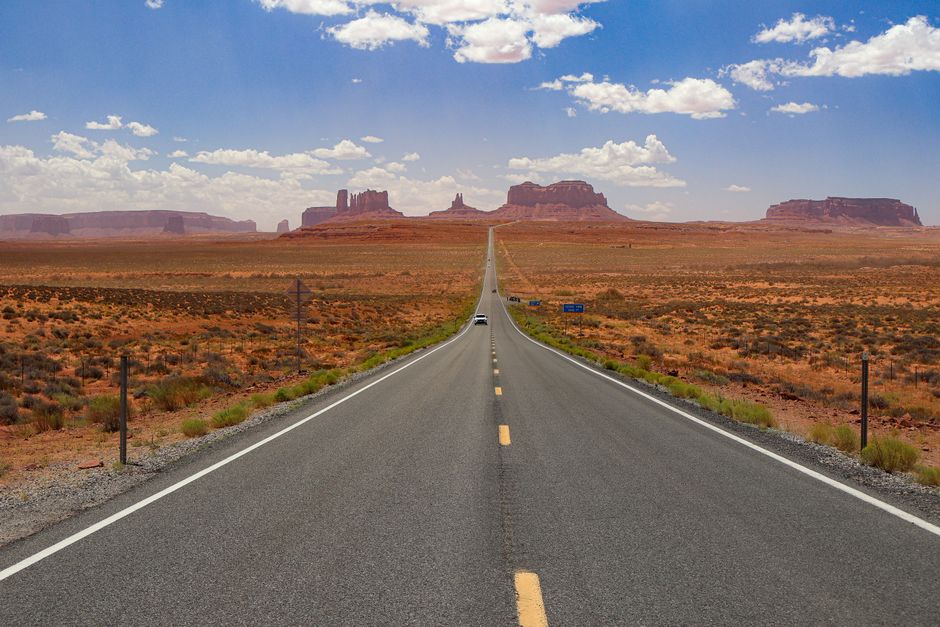
The open road calls—and your wallet doesn't have to dread the answer. Photo credit: Pexels.
✈️ Best time to visit: Late April–June or September–October for mild weather and fewer crowds.
💰 Estimated budget: $75–$125 per person per day (including gas, camping fees, and simple meals).
⏱️ How long to spend: 7–14 days for a single route; 21+ days if combining stretches of Route 66, the Pacific Coast, or the Southwest loop.
🎯 Difficulty level: Easy to moderate—mostly paved highways with well-maintained campgrounds.
📍 Recommended season: Spring and fall for the desert sections; summer for northern or mountain routes.
👥 Best for: Solo travelers seeking solitude, couples who love starlit campfires, and families who want an affordable vacation that feels like an epic quest.
I remember the exact moment the asphalt whispered my name. It was 4 a.m., I was bleary-eyed from another shift behind a desk, and I saw a photo of a rusted Cadillac half-buried in the Texas panhandle. Something clicked. Six weeks later, I packed a tent, a cooler, and a playlist of forgotten country songs, and I hit the road with exactly $1,200 saved up. That trip—a patchwork of Route 66, backcountry roads in Utah, and a spontaneous detour through the Ozarks—taught me that the best budget road trips in the United States aren't about deprivation; they're about intention. You trade overpriced motels for starry campgrounds, fast-food burgers for campfire beans, and that constant feeling of hurry for a slower, richer rhythm. I've now spent over four years exploring America's blacktop arteries, always with a strict daily budget and a craving for authentic, cheap experiences. In this guide, I'm going to hand you the keys to my favorite budget-friendly routes—from the crumbling nostalgia of the Mother Road to the wild, free campsites of the West—so you can experience the open road without the burden of debt. No fluffy promises, just real numbers, real places, and honest advice for anyone who dreams of a big trip on a small wallet.
The Essentials at a Glance
- 🚗 Prioritize camping: Free dispersed camping (BLM land) and low-cost state park sites save $60–$100 per night compared to motels.
- ⛽ Gas is your biggest variable: Use GasBuddy to find the cheapest stations and plan stops around states with lower fuel taxes (e.g., Oklahoma, Texas).
- 🍳 Cook your own meals: A $20 propane stove and a cooler full of eggs, tortillas, and canned chili can feed two people for a week on $40.
- 📱 Download offline maps: Cell service vanishes in the desert and mountains; Google Maps offline or a paper atlas (I use the Benchmark Road Atlas) is a lifesaver.
- 🎒 Pack layers and water: A 5-gallon water jug (refillable at campgrounds) and a simple rain jacket cost almost nothing but prevent misery.
The Complete Guide
Why This Matters / Why You Should Go
Look, there are countless glossy blog posts about “luxury RV road trips” that gloss over the cost. I’m not that. I’m writing this because I believe that seeing the real America—the diners where the waitress calls you “hon,” the lonely stretch of highway where you can see the Milky Way, the forgotten ghost towns that don’t charge admission—shouldn’t require a second mortgage. These budget road trips matter because they strip away the pretension and leave you with the raw, beautiful, dusty soul of the country. Who is this for? It’s for the student who saved tips, the family that can’t afford flights, the retiree on a fixed income, and anyone who thinks adventure is reserved for the wealthy. On a budget, you’re forced to slow down, talk to strangers at gas stations, and sleep under the same sky as the pioneers. That’s worth more than a five-star hotel.
When to Visit (Seasonal Guide)
Timing is everything when your budget depends on weather and campground availability. For the classic Route 66 experience (Chicago to Santa Monica), I recommend late April through early June or September through October. The desert sections—especially the Mojave and Arizona—can hit 110°F in July, making camping miserable and water expenses skyrocket. Conversely, the mountain routes like the Blue Ridge Parkway or the Colorado Rockies are best from June to September when passes are free of snow. Crowds peak in July and August, which means campgrounds fill up fast (book ahead if you can) and prices for last-minute spots sometimes double. Winter brings cheap rooms in places like Taos or Flagstaff, but many campgrounds shut down. My personal sweet spot: early October. The heat is gone, the crowds are thinner, and the autumn colors along Route 66 in Oklahoma are a free show.
Budget Breakdown
Let’s get to the real numbers from my own trip journal. I’ll use a 10-day Southwest loop (Las Vegas – Zion – Bryce – Moab – Monument Valley – Flagstaff – back) as an example, but the math works for most routes.
- Accommodation (low/mid/high): Low: $0 (dispersed camping on BLM land near Moab, free sites outside Joshua Tree). Mid: $20–$35 per night (state park campgrounds like Valley of Fire or Custer). High: $80–$120 per night (basic motel in a small town, split between two people). On my trip, I camped 7 of 10 nights, averaging $12/night.
- Food: Low: $10–$15/day per person (oatmeal, PB&Js, canned chili, apples, and tap water). Mid: $20–$30/day (a hot dinner at a diner once a day, plus grocery basics). High: $40–$50/day (two restaurant meals). I kept it to $18/day by cooking breakfast and lunch, and treating myself to a $12 burger in Kanab.
- Gas: Approximately $40–$60 per day depending on your car’s mileage. A 2,000-mile round trip in a compact car (35 mpg) at $3.80/gallon = ~$217. I used GasBuddy and saved $30 by filling up in St. George, Utah, instead of inside the parks.
- Activities: Most national parks are $35 per vehicle (valid for 7 days). An America the Beautiful Pass ($80) pays for itself after three parks. State parks like Valley of Fire ($15) are cheaper. I spent $80 total on entry fees.
- Daily/weekly total: My average was $78/day ($780 for 10 days) including everything. For two people sharing costs, it dropped to $55/day each.
- Money-saving tips: Cook at least two meals a day, bring a reusable water bottle, camp for free on BLM land (use the app iOverlander), and never buy souvenirs at tourist traps—buy local art at roadside stands instead.
Getting There & Getting Around
Most budget road trips start from a major urban hub that has cheap flights or a decent bus network. For Route 66, you can begin in Chicago (via Amtrak) or Los Angeles (via budget airlines like Spirit). For the Southwest loop, Las Vegas and Salt Lake City are the cheapest gateways—I found round-trip flights from the Midwest for $150. Once you’re there, a reliable car is non-negotiable. I drive a 2010 Honda Civic with 180,000 miles; it’s not glamorous, but it’s cheap to fix and sips gas. Rentals can be found for $30–$50/day on Turo or through budget agencies like Enterprise (avoid airport locations for lower fees). Navigation tip: buy a paper atlas at a gas station for $10—your phone will die in the desert. And always carry a spare tire. I learned that the hard way near Needles, California.
Top Recommendations / Must-Do Activities
I’ve driven over 30,000 miles on these budget trips, and here are the experiences that stick with me. Cadillac Ranch on Route 66 (Amarillo, Texas): It’s free, weird, and wonderfully American. You can spray-paint your own tag (bring a can; locals sell them for $5). I went at sunrise to avoid the crowds—it was just me and a guy playing a harmonica. Dispersed camping near Moab, Utah: South of town on Kane Creek Road, there are dozens of free sites with views of red rock cliffs. I pitched my tent under a full moon and felt like the last person on earth. The Painted Desert (Petrified Forest National Park, Arizona): It’s $25 per vehicle, but the desert colors at sunset are a photograph you can’t buy. Insider tip: skip the visitor center and drive directly to the Pintado Point. Blue Hole in Santa Rosa, New Mexico: A $5 fee (cash only) for a crystal-clear, 80-foot-deep natural swimming hole. It was the best $5 I spent all trip. Buckboard Cafe on Route 66 in Tucumcari, New Mexico: A green chile cheeseburger for $8.50 tastes better when you’re sitting on a creaky stool next to a 70-year-old rancher. The downside? Some of these places are remote—a broken-down car or a sudden storm can feel intimidating. Always have a backup plan and extra cash.
Traveler’s Pro Tips
Tip 1: Use the “Free Campsites” app like a secret weapon. The iOverlander app lists over 10,000 free dispersed campsites on BLM and National Forest land. I’ve camped for free in spots with million-dollar views—just remember to pack out all trash and leave no trace.
Tip 2: Gas station rotisserie chicken is your budget friend. A pre-cooked chicken at Walmart or a Flying J costs $6 and gives you three meals (chicken, chicken salad wraps, and soup). Add a packet of instant mashed potatoes ($1) and you’ve got a feast.
Tip 3: Avoid the “last gas for 100 miles” trap. In the West, there are stretches where gas stations are 80 miles apart and charge 50 cents more per gallon. Use GasBuddy to check prices 50 miles ahead and fill up early even if you still have half a tank.
Tip 4: Plan your showers at truck stops. Love’s and Pilot Flying J offer showers for $10–$15 with a clean towel and soap. Alternatively, state park campgrounds often have coin-operated showers for $1–$2. Don’t waste $60 on a motel just for a shower.
Tip 5: Bring a paper map and a power bank. I bought a Garmin inReach Mini after my phone died in the Utah desert—but that’s $300. A cheaper solution: a high-capacity power bank ($40) and a paper BenchMark Atlas ($15). GPS fails; paper does not.
Common Mistakes to Avoid
Mistake 1: Over-planning every stop. I once had a detailed spreadsheet with 12 stops per day. I missed a spontaneous detour to a ghost town because I was rushing. The consequence: stress and missed serendipity. How to avoid: Plan only the campgrounds and must-see anchors; leave 40% of your day empty.
Mistake 2: Ignoring car maintenance before the trip. I met a couple in Kingman whose transmission failed because they didn’t check the oil. Their budget trip became a $1,500 repair nightmare. How to avoid: Spend $50 at a mechanic for a pre-trip inspection (tires, belts, fluids).
Mistake 3: Not carrying enough water. In the Mojave Desert, I saw a family run out of water in 100°F heat. They had to pay $10 for a single bottle at a gas station. How to avoid: Carry a 5-gallon collapsible water jug (refill at campgrounds) and one gallon per person per day.
Mistake 4: Booking everything online in advance. I used to book three months ahead. Then I arrived at a campground in Montana that was overrun with mosquitoes. How to avoid: Reserve only the most popular spots (like Arches). For others, call a day before or just show up early on weekdays.
Your Travel Checklist
Documents: Driver’s license, vehicle registration, proof of insurance (physical copies), America the Beautiful Pass (if you plan to visit 3+ national parks).
Packing: Tent, sleeping bag rated to 40°F, camping stove, two lighters, cooler, reusable water jug, paper atlas, power bank, headlamp, first-aid kit, rain jacket, sunscreen, and a wide-brimmed hat.
Research: Download iOverlander app, GasBuddy app, offline Google Maps for your route, and a PDF of the state park rules for each state you cross.
Bookings: Book only the first night’s campground if you’re unsure; otherwise, call 24 hours ahead to check availability.
Health & Safety: Sunscreen (SPF 50), electrolyte tablets, antihistamines (for insect bites), and a small emergency kit (bandages, antiseptic, tweezers).
Local Currency: Carry $100 in cash ($1s, $5s, $10s) for small diners, campgrounds that don’t take cards, and national park entrance fees that sometimes have no ATMs.
Apps: GasBuddy, iOverlander, Park4Night, AllTrails (offline maps for hiking), and Roadtrippers for finding quirky roadside attractions.
Traveler FAQ
Q: Can I really do a road trip for under $100 a day?
A: Absolutely—I’ve done it dozens of times. The key is camping (free or $15/night), cooking your own meals, and driving a fuel-efficient car. My average on a 10-day trip through the Southwest was $78/day, including gas, food, and one cheap motel.
Q: Is it safe to camp for free on BLM land by myself?
A: I’m a solo female traveler and I’ve done it dozens of times without a major incident. Stick to well-used spots (check iOverlander for recent reviews), arrive before dark, and trust your gut. Avoid camping right next to highways; move 200 yards off the road.
Q: How do I find free or cheap campsites without cell service?
A: Download the iOverlander and Park4Night apps before you leave, and use the offline map feature. Alternatively, stop at a BLM or Forest Service ranger station in the nearest town—they’ll give you a free paper map with campsites marked.
Q: What’s the best budget route for someone who only has 5 days?
A: The “Mother Road Mini”—Chicago to St. Louis via Route 66 (about 300 miles). You can camp at Pere Marquette State Park ($20/night) and eat at cheap diners like the Cozy Dog Drive-In ($5.50 for a corn dog). It’s manageable, nostalgic, and very cheap.
Q: Should I buy an America the Beautiful Pass if I’m on a tight budget?
A: Only if you plan to visit three or more national parks. At $80, it pays for itself if you hit Zion, Bryce, and Grand Canyon (each $35 entry). If you’re mostly visiting state parks or BLM land, skip it and pay per park.
Ready for Your Adventure?
The first time I saw the sun rise over the Painted Desert—free of charge, from a roadside pullout—I understood that the budget isn’t a limitation; it’s a liberation. When you strip away the hotel lobbies and the expensive guided tours, you’re left with the raw elements: the road, the sky, and your own curiosity. Yes, it takes a little grit. Yes, you’ll probably eat a few cans of cold beans. But you’ll also have conversations that change your perspective, see places that no filter can capture, and realize that adventure is not a commodity you buy—it’s a decision you make. So go ahead. Fill up the tank, check your tire pressure, and pack that tent. The road is waiting, and it costs far less than you think. The best stories in America are still written in cheap gasoline and campfire smoke—and it’s your turn to write one.


No comments:
Post a Comment