How to Create a Flexible Travel Itinerary: Master the Art of Spontaneous Planning
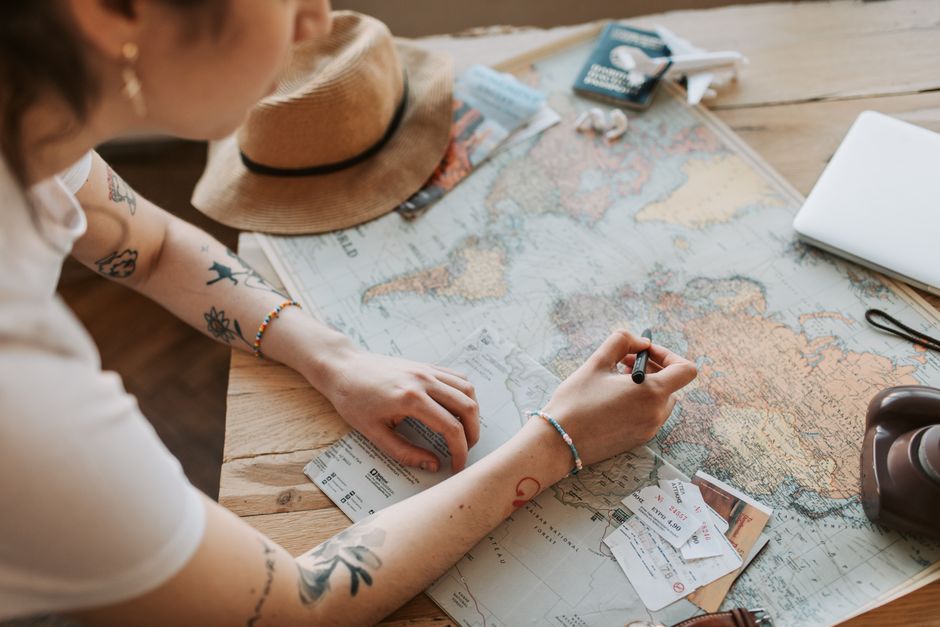
A moment of pause with a paper map and a smartphone — the two tools of a truly flexible traveler.
✈️ Best time to visit: Shoulder seasons (April–May, September–October) for the best balance of weather and manageable crowds.
💰 Estimated budget range: $100–$250 per day (mid-range traveler; varies wildly by region).
⏱️ How long to spend: 7–14 days to truly embrace a loose structure without rushing.
🎯 Difficulty level: Moderate (requires discipline to leave gaps in your schedule).
📍 Recommended season: Spring or autumn for pleasant weather and off-peak spontaneity.
👥 Best for: Solo travelers, adventurous couples, and small groups who value discovery over ticking boxes.
Introduction
I still remember standing on a platform in rural Portugal, clutching a crumpled train timetable and watching my rigidly planned 10:17 AM connection disappear without me. I had planned every hour of that trip — 30-minute blocks for lunch, specific museum entry times, even a scheduled "wander around" slot. And it was a disaster. I was stressed, rushed, and missing the soul of the place because I was too busy consulting my spreadsheet. That day, I decided to try something radical: I tore up the rest of the itinerary (not literally, but I deleted the digital version) and just started asking locals where to go next. That afternoon, I ended up at a tiny village festival I’d never find in a guidebook, eating grilled sardines with a retired fisherman who told me stories about the sea. It was the best travel day of my life.
From that moment, I became obsessed with the balance between planning and openness. I’ve since traveled through 18 countries using what I call the "flexible skeleton" method — a framework that gives you direction without handcuffs. In this guide, I’m going to show you how to build a travel itinerary that lets you chase a recommendation from a stranger, linger in a café that feels right, or change your entire route on a whim — without feeling lost or wasting your precious vacation time. You’ll learn the specific apps I trust, the hard rules I break, and the mental shift that makes spontaneity possible without losing your shirt.
The Essentials at a Glance
- 📍 Build a "Skeleton" Not a Cage: Only book the first two nights of accommodation and one non-negotiable activity. Leave everything else open.
- 🗺️ Use Offline Maps Before You Need Them: Download entire regions in Google Maps or Maps.me — your internet will fail you exactly when you need directions.
- 🎒 Pack a "Day-Bag" with essentials: Keep your daily carry prepared for an unplanned overnight stay (change of clothes, charger, toothbrush).
- 💬 Talk to Locals Before You Book: The best recommendations come from a bartender or shopkeeper, not a blog. Build in time for real conversations.
- 📱 Use Apps That Enable Flexibility: Prioritize Rome2Rio (transport), Booking.com (free cancellation), and TripIt (centralized plans).
The Complete Guide
Why This Matters / Why You Should Travel Flexibly
Let’s be honest: the old-school, minute-by-minute itinerary is a trap. I’ve seen friends return from "perfectly planned" trips exhausted, having spent more time managing their schedule than actually experiencing a place. A flexible itinerary isn’t about being lazy — it’s about being smarter. You travel to discover something new, not to confirm what you already read online. When you lock yourself into a rigid plan, you close the door to serendipity. The best meal I ever had in Thailand came after I missed my bus to Chiang Mai and a tuk-tuk driver took me to his cousin’s street stall. I never would have found it otherwise.
This approach is especially important for solo travelers and couples who value authentic connection. When you’re not rushing from one pre-booked attraction to the next, you have the mental space to notice details — the way light hits a plaza at dusk, a musician playing in a hidden courtyard, a local inviting you to a family dinner. Flexible travel also reduces decision fatigue. Instead of making 50 micro-decisions a day about where to eat or what to see, you make three macro-decisions: region, first stop, and a single "must-do" for the day. The rest is flow.
Who is this for? Anyone who has ever felt like a tourist instead of a traveler. Anyone who wants to return from a trip feeling energized, not exhausted. Anyone who wants to tell stories that start with "I was just walking and then…" rather than "We had a 9:15 reservation at…"
When to Visit (Seasonal Guide for Flexible Planning)
The best time to practice flexible travel is during shoulder seasons — April to May and September to October — regardless of your destination. Here’s why: you’ll find good weather without the peak-season crowds that force you to book everything weeks in advance. During high season (June–August), flexibility becomes harder because accommodations and popular trains sell out. During low season (November–February in many places), you have incredible flexibility but may find some attractions or restaurants closed.
Spring (March–May): My personal favorite. The weather is mild, flowers are blooming, and locals are in good spirits after winter. You can often book a room the day before without a problem. The downside is that Easter holidays can spike prices for a week.
Summer (June–August): High season means you must pre-book key accommodations at least a week ahead. However, you can still be flexible with daily activities — just accept that popular sites will have lines. The trade-off is long daylight hours for spontaneous evening exploration.
Autumn (September–November): Harvest season in many cultures means local festivals pop up unexpectedly — perfect for the flexible traveler. Crowds thin after September, and prices drop. I’ve booked same-day rooms in Tuscany in October for half the August price.
Winter (December–February): Great for city breaks and off-season charm, but some rural transport runs on reduced schedules. Build in extra time for weather delays. Flexibility is high with accommodations, but low with mountain activities like ski lifts.
Budget Breakdown
Flexible travel can actually save you money if you do it right, because you can jump on last-minute deals. However, it can also cost more if you’re forced to pay premium rates for last-minute bookings in high season. Here’s a realistic breakdown based on my experience in Western Europe and Southeast Asia:
Accommodation (per night): Low-end (hostel dorm or budget guesthouse) $25–$50. Mid-range (private room in a guesthouse or budget hotel) $60–$120. High-end (boutique hotel or Airbnb entire place) $150–$300. My strategy: book the first two nights at mid-range to settle in, then use apps like HotelTonight for same-day deals — I’ve saved up to 40% this way.
Food (per day): $15–$30 for street food and self-catering. $30–$60 for casual restaurants. $60–$150 for nice dinners. Flexible travelers eat like locals — grocery stores and market stalls are your best friends.
Activities (per day): $0–$20 for walking and free attractions. $20–$50 for one paid activity (museum, guided walk). $50+ for special experiences (cooking class, day tour).
Transport (per day average): $5–$15 for public transit within a city. $20–$50 for intercity buses or trains. $50+ for flights or car rental.
Daily total for a mid-range flexible traveler: $100–$180 per day (Southeast Asia) to $200–$300 per day (Western Europe). Money-saving tip: Use Rome2Rio to compare all transport options before committing, and never pay for a "tourist pass" unless you’ve crunched the numbers for your specific plans.
Getting There & Getting Around
Flexibility starts the moment you arrive. I recommend flying into a major hub (like Bangkok, Barcelona, or London) and spending your first two nights there without any onward plans. Use this time to gauge the rhythm of the region. From the hub, you can use trains or budget airlines with loose return tickets — many airlines like Ryanair and AirAsia offer "flexible date" search options.
For local transport, download the Moovit app for urban transit (it works in over 3,000 cities) and Rome2Rio for intercity logistics. In countries with strong train networks (Japan, Switzerland, much of Europe), a rail pass can be a flexible traveler’s best tool — the Eurail pass, for instance, lets you hop on and off without pre-booking most trains. For rural areas, renting a car gives ultimate flexibility but comes with parking headaches. I once drove through the Scottish Highlands with a paper map and a playlist, stopping whenever I saw a sign for a castle ruin. That kind of freedom is hard to beat.
Navigation tips: Before you leave Wi-Fi, drop a pin on your map for your accommodation and save the offline area. Learn to read a paper map as backup — your phone will die at the worst moment. And always carry a small amount of local cash, because card machines don’t work at spontaneous market stalls or remote bus stops.
Top Recommendations / Must-Do Activities for Flexible Travelers
These are activities that reward a spontaneous mindset:
1. The "Ask a Local" Walk: In any new city, I find a central square, sit down at a café, and ask the server or the person next to me: "If you had one free afternoon, where would you go?" I then walk in that direction without consulting Google Maps more than once. This has led me to hidden viewpoints in Lisbon, a secret garden in Kyoto, and a rooftop bar in Budapest that wasn’t in any guidebook. Insider tip: Avoid asking hotel concierges — they are trained to send you to commission-paying attractions.
2. Last-Minute Cooking Classes or Workshops: In places like Chiang Mai, Florence, or Oaxaca, you can often walk into a cooking school in the morning and join a class that afternoon. I did this in Vietnam and ended up making pho with a grandmother who taught me her family recipe. Downside: Sometimes the best classes are booked out, but the backup option is often just as good.
3. Random Train Rides: Pick a town two hours away from your base that you’ve never heard of. Take the next train there. I did this in Slovenia and discovered Lake Bohinj, which I liked much more than the crowded Lake Bled. Insider tip: Use an app like Omio to check departure frequencies first — in some regions, trains run every three hours.
4. The "Golden Hour" Walk: Every evening between one hour before sunset and 15 minutes after, put away your phone and just walk in any direction. This is when the light is magical, locals are out, and the day’s heat (or chill) softens. It’s my unbreakable flexible ritual.
Traveler’s Pro Tips
Master the "Book-Don't-Book" Rule: Always book the first night of accommodation and your departure flight. That’s it for non-negotiables. Everything else — accommodation, transport, activities — should have free cancellation or be bookable on the day. I use Booking.com’s filter for "free cancellation" exclusively.
Use the 3-2-1 Packing Rule: Pack three tops, two bottoms, and one pair of versatile shoes. This minimalist approach means you can repack in five minutes and leave on a whim. I pack a silk scarf that doubles as a blanket, a shawl, or an emergency towel — incredibly versatile.
Create a "Maybe" List: Before I travel, I research 20–30 things I’d like to do, categorized by location and time commitment. I save them in Google Maps lists (not starred). When I’m feeling aimless, I open the map and see what’s nearby. This gives me a curated set of options without the pressure of a schedule.
Carry a Physical Notebook: I know, it sounds old-fashioned, but writing down recommendations from locals is faster than typing, and it creates a connection. When a bartender in Seville told me about a flamenco bar that doesn’t advertise, I wrote the address in my notebook. I’d have lost it in my phone.
Build in "Buffer Days": For every week of travel, plan two days with absolutely nothing scheduled. These are your "discovery days." If nothing special comes up, you can sleep in and explore slowly. But when a local invites you to a wedding (true story from my trip to Albania), you’re free to say yes.
Common Mistakes to Avoid
Mistake #1: Over-booking "Refundable" Accommodation: I once booked four hotel rooms in four cities, all "free cancellation," thinking I was being flexible. But the mental weight of having four reservations was paralyzing. I felt obligated to follow that route. How to avoid it: Only book two nights ahead at a time. Cancel the rest and trust that you’ll find something. Consequence: I stressed over which city to go to first and ended up wasting a day in transit anxiety.
Mistake #2: Ignoring Local Holidays and Closures: I arrived in a small French village on a Tuesday, only to discover everything was closed. My flexible plan didn’t account for regional siestas or holiday schedules. How to avoid it: Quickly Google "closing days [town name]" while booking your first night. Consequence: I spent two hours sitting on a bench waiting for a bakery to open that never did.
Mistake #3: Not Having a "Safety Net" Activity: Sometimes the spontaneous plan fails — it rains, the festival is canceled, the recommended restaurant is closed for a private event. Without a backup, you can feel lost. How to avoid it: Always have one "rainy day" activity (a museum, a cinema, a bookshop) saved in your offline maps that you’d enjoy regardless. Consequence: I once wandered aimlessly through a downpour in Porto for an hour before finding shelter.
Mistake #4: Over-relying on Your Phone: When your battery dies or you have no signal (which happens often in rural areas), your entire flexible system collapses. How to avoid it: Carry a printed hotel reservation, a basic map from the tourist office, and a power bank. Consequence: I missed a bus in Croatia because I couldn’t access the online timetable.
Your Travel Checklist for Flexible Travel
Documents: Passport with at least six months validity, printed copies of first-night accommodation and exit flight, photocopies of credit cards (kept separate from originals).
Packing: Minimal wardrobe (3-2-1 rule), silk scarf or sarong (multi-purpose), universal adapter, small notebook and pen, reusable water bottle, and a day-bag that can hold everything for an unplanned overnight.
Research: Save a "Maybe List" of 20+ activities in Google Maps offline, note local holiday schedules, and read one recent blog post from a solo traveler on the region.
Bookings: Flight in and out, first two nights of accommodation with free cancellation, one non-negotiable activity (if any).
Health & Safety: Travel insurance with 24/7 helpline, any necessary vaccinations (check CDC website), basic first-aid kit (bandages, painkiller, antihistamine), and a digital copy of your insurance card.
Local Currency: Carry the equivalent of $50 in local cash for emergencies, plus a debit card with no foreign transaction fees (I use Charles Schwab).
Apps to Download: Rome2Rio (transport connections), Booking.com (accommodation with free cancellation filter), Google Maps (offline areas), Moovit (public transit), TripIt (centralize your few bookings), and a weather app (I use AccuWeather).
Traveler FAQ
Q: How do I find affordable last-minute accommodation?
A: I use Booking.com with the "free cancellation" filter and then check HotelTonight for that evening’s deals — I’ve found rooms for 30–50% off by booking at 4 PM. Hostels in Europe and guesthouses in Asia are often willing to negotiate a cash price if you show up in person asking if they have a free room.
Q: What if I miss a train or bus because I’m being spontaneous?
A: It happens! In most countries, you can buy a ticket for the next departure. I always check the frequency of transport before leaving — if the next bus is in five hours, I’ll plan accordingly. Build an extra hour into your "spontaneous" window to account for delays.
Q: How do I stay safe while being flexible, especially alone?
A: Trust your gut. Share your live location with one trusted person back home. Never get into a vehicle that you haven’t pre-arranged through a reputable app (Grab in Southeast Asia, Uber elsewhere). And always let someone know your general plan for the day, even if it’s vague — "I’m heading to the north part of the city, maybe the art district."
Q: Can I be flexible if I’m traveling with a family or group?
A: Absolutely, but it requires a different approach. I build in two "anchor" activities per day that everyone agrees on early (like a specific museum or beach), and leave the rest open for spontaneous choices. Use a group chat with a shared list of "maybe" options so everyone can vote without pressure.
Q: What’s the best app for spontaneous trip planning?
A: Rome2Rio is my non-negotiable for transport — it shows trains, buses, flights, and even taxis with prices and times. For accommodation, Booking.com’s free cancellation filter is king. And for finding things to do nearby, TripAdvisor’s "Near Me" function is actually quite good when you turn off reviews and look at the map view.
Ready for Your Adventure?
I won’t pretend that flexible travel is always easy. There will be moments when you’re standing in a train station at 10 PM with nowhere to sleep, or when the restaurant you walked 20 minutes to is closed. But those moments are part of the story — they’re the texture of real travel. The alternative is a trip that feels like checking boxes on a spreadsheet. You’ve worked hard for your vacation; you deserve to actually feel it, not just document it.
Start small. If you’re a planner like I was, try this: on your next short trip, leave one entire day completely blank. Don’t book anything. Wake up, look out the window, and ask yourself what you truly feel like doing. Not what the guidebook says you should do. Not what your Instagram feed expects. What you, right now, actually want. Then go do that. That single shift changed the way I travel forever. So pack your bags, download the essentials, and leave generous space for the unexpected. The best travel stories are the ones you never planned to tell.


No comments:
Post a Comment