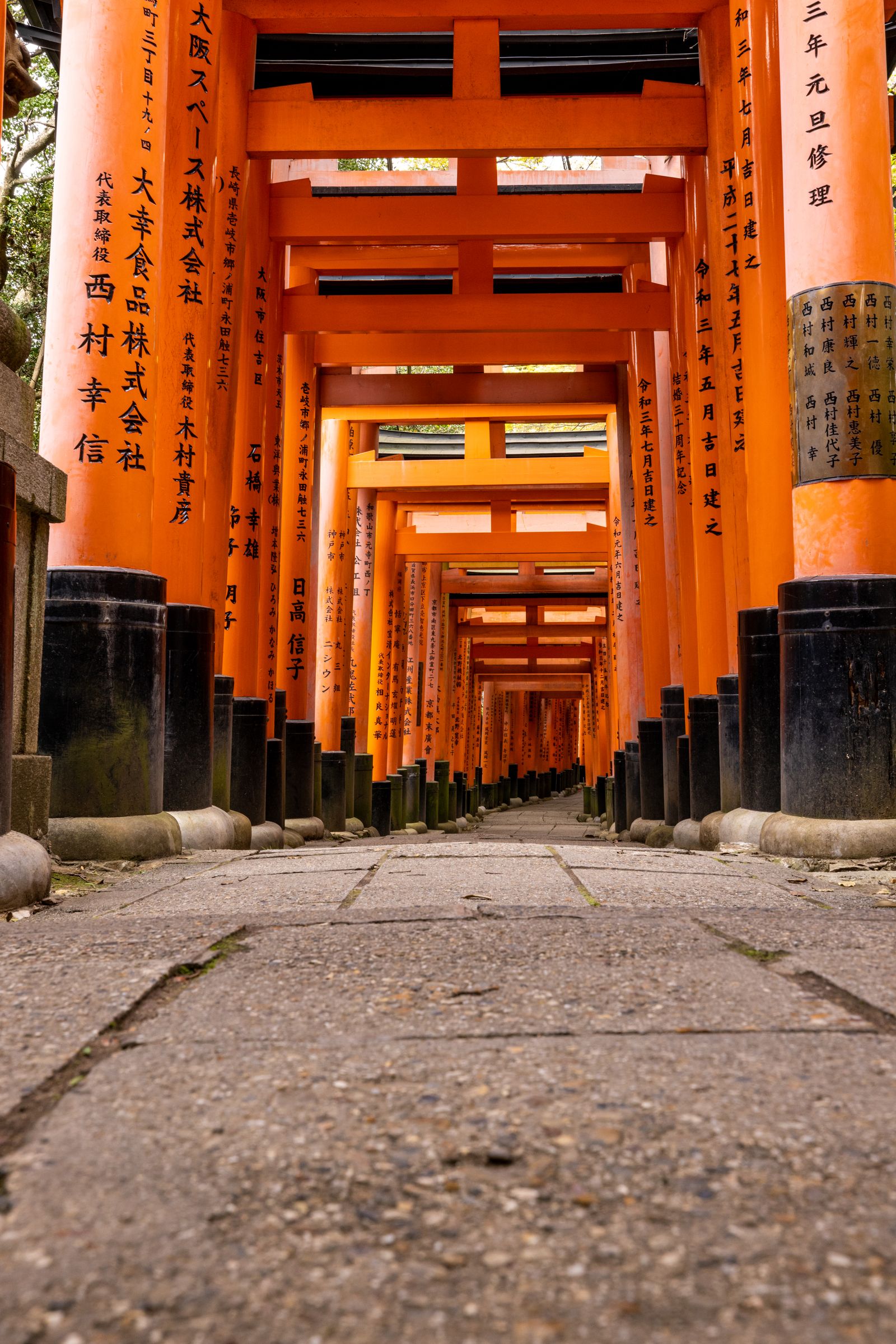
Photo by Balazs Simon via Pexels
Kyoto was Japan's imperial capital for more than a thousand years, from 794 until the seat of government moved to Tokyo in 1868, and it wears that history more visibly than almost any other city in the country. Spared from the large-scale bombing campaigns of the Second World War, Kyoto retains an unmatched concentration of temples, shrines, palaces, and traditional wooden machiya townhouses, alongside seventeen separate UNESCO World Heritage sites scattered across the city and its surrounding hills. Walk through the bamboo groves of Arashiyama at dawn, climb through thousands of vermilion torii gates at Fushimi Inari, or watch a geiko hurry between appointments in the lantern-lit lanes of Gion at dusk, and it becomes clear why Kyoto remains, for many travelers, the single most evocative destination in Japan.
What distinguishes Kyoto from Tokyo is not just age but density and atmosphere. Where Tokyo sprawls outward in a scale that can feel almost abstract, Kyoto is compact enough that its historic core, ringed by mountains on three sides, can genuinely be explored on foot, by bicycle, or via a manageable network of buses and a small subway system. The city rewards a slower pace: a morning spent quietly in a Zen rock garden, an afternoon following a canal path lined with cherry trees, an evening watching the sun set from a temple veranda over a valley of tiled rooftops. Kyoto is also a living city of some 1.4 million residents, home to renowned universities, a serious food culture built around kaiseki cuisine and centuries-old tofu shops, and a thriving contemporary craft scene that includes textile dyeing, ceramics, and lacquerware traditions passed down through generations of the same families.
Kyoto does present a real challenge that Tokyo does not: overtourism at its most famous sites, particularly Fushimi Inari, Kiyomizudera, and the Arashiyama bamboo grove, all of which can feel more like crowd management exercises than contemplative visits during peak hours and peak seasons. The solution is not to skip these places, since they earn their fame, but to time visits strategically, arriving at dawn or in the late afternoon, and to balance headline attractions with quieter neighborhoods and lesser-known temples that receive a fraction of the visitors while offering an equally authentic sense of the city. This guide covers both the essential sights and the pacing strategy needed to actually enjoy them, along with neighborhoods, food, day trips, and a practical three-day itinerary for a first visit.
Quick Facts & Best Time to Visit
Kyoto sits in a basin surrounded by mountains, which gives it notably hot, humid summers and cold winters with occasional light snow, a more extreme seasonal swing than coastal Tokyo. Spring, particularly the first two to three weeks of April, brings the city's famous cherry blossoms to spots like the Philosopher's Path, Maruyama Park, and the banks of the Kamo River, making it the single most popular and most crowded season to visit; book accommodation at least several months ahead. Autumn, roughly mid-November through the first week of December, is arguably even more spectacular, when maple trees turn brilliant shades of red and gold across temple gardens such as Tofukuji, Eikandō, and the Arashiyama hills, and many temples hold special nighttime illuminations during this period. Summer, June through August, is hot, humid, and punctuated by a June rainy season, though it also hosts the Gion Matsuri festival in July, one of Japan's most famous traditional festivals, with elaborate floats parading through the city center. Winter, December through February, is cold but offers the thinnest crowds and occasional snow-dusted temple scenes, particularly striking at Kinkakuji, the Golden Pavilion, and is an underrated season for travelers prioritizing tranquility over ideal weather.
The currency is the Japanese yen, and while IC cards like ICOCA (the regional equivalent of Tokyo's Suica) work throughout the city's bus and rail network, many smaller temples, shops, and traditional restaurants remain cash-preferred, so carry sufficient yen, particularly for entry fees, which are almost always paid in cash on-site. The language is Japanese, and English signage is generally decent at major sites and train stations, though somewhat less comprehensive than in Tokyo, especially at smaller neighborhood restaurants. The same 90-day visa-free entry that applies to Tokyo applies to Kyoto, since both fall under the same national immigration rules; always verify current requirements before travel. Kyoto has no major international airport of its own; most visitors arrive via Kansai International Airport near Osaka, about 75 to 90 minutes away by direct train (the Haruka limited express), or via the Shinkansen bullet train from Tokyo, a roughly two-hour-and-fifteen-minute ride that makes Kyoto an easy add-on to a Tokyo-based itinerary. Within the city, an extensive city bus network reaches most major temples, supplemented by two subway lines and several private rail lines; a one- or two-day bus pass is often worthwhile given how bus-dependent central Kyoto sightseeing tends to be.
Top Things to Do in Kyoto
Walk Through the Thousand Torii Gates of Fushimi Inari Taisha
Fushimi Inari is Kyoto's most photographed site and the head shrine of some 30,000 Inari shrines across Japan, dedicated to the god of rice, prosperity, and business success. Its defining feature is the seemingly endless procession of vermilion torii gates, donated by individuals and companies over centuries, that forms tunnels winding roughly four kilometers up the wooded slopes of Mount Inari, punctuated by stone fox statues, the messengers of Inari, and smaller sub-shrines along the route. The lower section near the main shrine buildings draws the heaviest crowds, particularly the famous Senbon Torii double-gate tunnel just beyond the entrance, so arriving before 7 a.m. or after sunset, when the shrine remains open and lit, offers a dramatically different, far more atmospheric experience. Very few visitors complete the full loop to the summit, which takes roughly two to three hours round trip, which means the crowds thin substantially after the first thirty minutes of climbing, rewarding those who continue upward with quieter gates, small teahouses along the path, and expansive views back over the city. The shrine is free to enter and open 24 hours, and it sits directly beside JR Inari Station, making it one of the easiest major sites in Kyoto to reach independently.
Admire Kinkakuji, the Golden Pavilion
Kinkakuji, formally Rokuonji, is a Zen Buddhist temple whose top two floors are covered entirely in gold leaf, and its reflection in the still pond before it, called Kyoko-chi, creates one of the most iconic images in all of Japan, particularly striking against a backdrop of autumn maples or winter snow. Originally built in 1397 as a retirement villa for a shogun and later converted to a temple, the current structure is a 1955 reconstruction following a 1950 fire, faithfully rebuilt to the original design and re-gilded in the 1980s with a notably thicker layer of gold leaf than the original. The temple's compact but carefully composed strolling garden, one of the finest surviving examples of Muromachi-period garden design, is meant to be viewed along a fixed one-way path that loops past several designated photo points, a small teahouse, and gift shop, and typically takes about 45 minutes to walk through at an unhurried pace. Because photographs of the pavilion require a specific angle from across the pond, that viewpoint gets crowded quickly after opening; arriving right at the 9 a.m. opening time, or visiting on a weekday, gives the best chance at photographing the pavilion without a wall of other visitors in frame.
Explore the Bamboo Grove and Temples of Arashiyama
Arashiyama, on Kyoto's western outskirts, is best known for its Sagano Bamboo Grove, a soaring corridor of towering bamboo stalks that creates a naturally filtered green light and a distinctive rustling sound the Japanese government has officially designated one of the country's 100 soundscapes worth preserving. The grove itself is free and only takes about fifteen minutes to walk through, so pair it with the surrounding district's other attractions: Tenryuji Temple, a UNESCO World Heritage site with an exceptional Zen garden overlooking the Arashiyama mountains, the Togetsukyo Bridge spanning the Katsura River, and the Iwatayama Monkey Park, where a short uphill hike leads to a hillside populated by wild Japanese macaques and sweeping city views. Because Arashiyama draws immense crowds, especially the bamboo grove around midday, an early morning visit, ideally before 8 a.m., is essential to experience the grove's quiet, cathedral-like atmosphere as intended rather than as a shuffling queue for photos. A scenic option for reaching or leaving the area is the Sagano Romantic Train, a slow sightseeing railway that runs along the Hozugawa River gorge, particularly beautiful during cherry blossom and autumn foliage seasons.
Visit Kiyomizudera and Walk the Historic Higashiyama Lanes
Kiyomizudera, meaning Pure Water Temple, is a UNESCO World Heritage site famous for its wooden stage, built without a single nail, that juts out from the hillside on a lattice of wooden pillars, offering sweeping views over Kyoto and, in season, a foreground of cherry blossoms or fiery maple leaves. The temple takes its name from the Otowa Waterfall beneath the main hall, where visitors queue to drink from one of three separate streams, each said to grant a different blessing: longevity, academic success, or a fortunate love life, though local wisdom holds that drinking from all three is considered greedy. The approach to the temple along Kiyomizu-zaka and Sannenzaka and Ninenzaka, two beautifully preserved sloped streets lined with traditional wooden shopfronts selling ceramics, sweets, and souvenirs, is itself one of Kyoto's most atmospheric walks, particularly in the early morning before shops open and tour groups arrive. This entire district, known as Higashiyama, rewards continued wandering beyond the temple itself, connecting via quiet backstreets to Kodaiji Temple and eventually into the Gion geisha district, making it easy to combine several major sights into a single, largely walkable afternoon.
Wander Gion and Watch for Geiko and Maiko
Gion is Kyoto's most famous geisha district, a compact neighborhood of preserved machiya wooden townhouses, traditional teahouses called ochaya, and narrow stone-paved lanes where geiko (Kyoto's term for geisha) and their apprentices, maiko, still occasionally hurry between evening appointments in full traditional dress. Hanamikoji Street is the district's main thoroughfare and most photogenic stretch, particularly in the early evening when lanterns illuminate the wooden facades, though visitors should note that photographing geiko or maiko without consent, following them, or blocking their path is prohibited by local ordinance and can result in fines, following years of tourist harassment complaints; observe respectfully from a distance rather than approaching for photos. For a guaranteed, respectful geisha encounter, several venues in Gion offer public performances of traditional dance and music, and some teahouses now offer tourist-accessible tea ceremony or dinner experiences with a maiko present, bookable in advance. Yasaka Shrine, at the eastern end of Gion's main street, is worth a stop for its distinctive stage and lantern-lined approach, and connects directly into Maruyama Park, one of the city's best-loved cherry blossom viewing spots each spring.
Experience the Zen Rock Garden at Ryoanji Temple
Ryoanji is home to Japan's most famous karesansui, or dry rock garden, a rectangular expanse of raked white gravel punctuated by fifteen carefully placed stones arranged so that, from any single viewing angle along the temple veranda, only fourteen are visible at once, a design whose exact meaning and original purpose remain genuinely debated by scholars centuries after its creation in the late 15th century. Visitors sit on the wooden veranda overlooking the garden, and while the space is compact, it rewards patience: many first-time visitors expect to spend five minutes and end up sitting for twenty, simply absorbing the deliberate minimalism and the way the garden's meaning seems to shift the longer you look at it. The surrounding temple grounds include a larger strolling garden with a picturesque pond, Kyoyochi, that predates the rock garden itself and makes for a pleasant walk after the more contemplative main attraction. Ryoanji sits within the same northwestern Kyoto temple circuit as Kinkakuji and Ninnaji, making it easy to combine into a single morning focused on Zen Buddhist architecture and garden design, ideally visited earlier in the day before tour bus groups arrive in larger numbers.
Follow the Philosopher's Path Between Ginkakuji and Nanzenji
The Philosopher's Path is a roughly two-kilometer stone walkway following a cherry-tree-lined canal between Ginkakuji, the Silver Pavilion, and Nanzenji Temple in northern Higashiyama, named for a 20th-century Kyoto University philosophy professor who reportedly used the route for daily meditative walks. Ginkakuji, despite its name, was never actually covered in silver, but its understated wooden pavilion, meticulously raked sand garden representing Mount Fuji, and moss garden set against a forested hillside are considered among the finest examples of Muromachi-period aesthetic restraint, a deliberate contrast to Kinkakuji's gold-leafed extravagance. At the path's southern end, Nanzenji Temple complex includes an impressive wooden Sanmon gate visitors can climb for a view over the temple grounds, along with a surprising redbrick Meiji-era aqueduct, the Suirokaku, that cuts dramatically through the temple's forested grounds. The path itself is most magical during the first two weeks of April, when the canal-side cherry trees bloom, and again in November for foliage, though it remains a pleasant, small-scale walk lined with independent cafes and craft shops in any season, and considerably less crowded than the major temples at either end.
Tour Nijo Castle and Its Nightingale Floors
Nijo Castle was built in 1603 as the Kyoto residence of the first Tokugawa shogun and later served as an imperial palace, and its Ninomaru Palace remains one of the best-preserved examples of feudal-era Japanese castle architecture, its sliding doors decorated with elaborate paintings of tigers, leopards, and landscapes by artists of the Kano school. The palace's most famous feature is its uguisubari, or nightingale floors, corridors engineered with deliberately creaking floorboards that chirp underfoot, an early warning system designed to alert guards to the approach of intruders or assassins, and the effect is still audible and slightly eerie today as visitors shuffle through in socked feet. The surrounding grounds include the Ninomaru Garden, a formal Edo-period landscape garden with a large pond and carefully placed stones, along with a newer plum and cherry orchard that draws crowds in late winter and early spring. Nijo Castle is a UNESCO World Heritage site and sits centrally enough, near the Karasuma and Tozai subway lines, to be easily combined with a day focused on central Kyoto sights like Nishiki Market or the Kyoto Imperial Palace Park, and its scale makes it a worthwhile two-hour visit even for travelers who feel templed-out by this point in a Kyoto trip.
Browse Nishiki Market, Kyoto's Kitchen
Nishiki Market is a narrow, roughly 400-meter covered shopping street in central Kyoto that has operated as a food market for over 400 years, earning its nickname as Kyoto's Kitchen. More than 100 stalls and small shops line the arcade, selling Kyoto specialties such as yuba (tofu skin), tsukemono pickles in dozens of varieties, fresh and dried seafood, matcha sweets, knives, and ceramics, alongside a growing number of stalls offering ready-to-eat skewers, mochi, and tamagoyaki for grazing as you walk. Some of the market's traditional shops date back many generations, specializing narrowly in a single product, such as one particular pickle or a specific style of dashi stock, reflecting the same craft specialization found throughout Kyoto's broader culture. The market can get very crowded in the late morning and afternoon, particularly with tour groups, so an early visit, shortly after most stalls open around 10 a.m., offers a calmer experience and better access to the freshest items before they sell out. It connects at its eastern end to Teramachi and Shinkyogoku, two covered shopping arcades that make for an easy transition into a broader afternoon of central Kyoto shopping.
Cycle or Walk the Kamo River
The Kamo River runs north to south through central Kyoto, and its wide, grassy banks function as one of the city's most beloved public spaces, popular with joggers, cyclists, students on lunch break, and couples who, by local tradition, tend to sit spaced at roughly even intervals along the riverbank at dusk. Renting a bicycle, widely available near Kyoto Station and in central neighborhoods, is one of the most pleasant and efficient ways to see the city, since much of central Kyoto is flat and increasingly equipped with dedicated cycling infrastructure along the river and canal paths. In summer, restaurants along the river's Pontocho side erect kawadoko, elevated wooden dining platforms directly over the water, a centuries-old practice that offers a uniquely atmospheric dinner setting from May through September. The stretch near Demachiyanagi, where the Kamo and Takano rivers meet at a distinctive delta popular with families and students, marks a good turnaround point for a riverside walk or ride, and connects conveniently to the Philosopher's Path and northern Higashiyama temples for travelers wanting to combine a scenic river route with further sightseeing.
Step Into Fushimi's Sake Breweries
South of central Kyoto, the Fushimi district, distinct from but near Fushimi Inari Shrine, has been one of Japan's most important sake-brewing regions for over four centuries, thanks to the exceptionally soft, mineral-rich groundwater that flows from the surrounding hills. The Gekkeikan Okura Sake Museum, housed in a beautifully preserved Meiji-era brewery building along a canal, offers a compact, well-curated look at traditional sake production methods, complete with tastings included in the modest admission fee, and the surrounding streets of white-walled, black-tiled brewery buildings along the Horikawa canal make for one of Kyoto's most photogenic and least crowded historic walks. Several other breweries in the neighborhood, including Kizakura, offer their own tasting rooms and small museums, and the area's canal, once used to transport sake barrels by boat, still runs boat tours during peak seasons. This is an excellent half-day addition for travelers interested in Japanese food and drink culture beyond restaurants, and it pairs naturally with a visit to Fushimi Inari Shrine, since both sit along the same southern Kyoto rail corridor and can be combined in a single outing.
Discover Tofukuji and Its Autumn Foliage
Tofukuji, a major Zen temple in southern Kyoto founded in 1236, is best known among serious foliage chasers as arguably the single best autumn color viewing spot in the entire city, thanks to the roughly 2,000 maple trees that fill the ravine beneath its Tsutenkyo Bridge, creating a canopy of red that, from the bridge itself, appears to stretch unbroken across the valley floor. Beyond its autumn reputation, Tofukuji is architecturally significant year-round, home to Japan's oldest surviving Zen temple gate structure and a striking modernist checkerboard moss and stone garden in its Hojo (abbot's quarters), designed by influential 20th-century garden designer Mirei Shigemori, a deliberate and celebrated departure from more traditional temple garden styles. Because its fame is concentrated so heavily around a three-to-four-week autumn window, typically mid-to-late November, the temple becomes extremely crowded during that period, with timed viewing arrangements sometimes required for the bridge itself; visiting slightly before or after the absolute peak, or arriving right at opening, meaningfully improves the experience. Outside peak foliage season, Tofukuji remains a rewarding, comparatively quiet stop for visitors interested in Zen architecture and garden design, well off the main Higashiyama tourist circuit.
Visit the Kyoto Imperial Palace and Gyoen Park
The Kyoto Imperial Palace served as the residence of Japan's emperors from 794 until the capital's relocation to Tokyo in 1868, and while the current palace buildings date mostly from an 1855 reconstruction following a series of fires common to the site's history, they retain the layout and architectural style of the imperial court, including the Shishinden ceremonial hall used for enthronement ceremonies as recently as 1990 for symbolic ritual purposes. Guided tours of the palace grounds, available in English and bookable through the Imperial Household Agency, offer access to the inner buildings and gardens that are otherwise viewed from a distance; free walk-in visits to the outer grounds are also possible without a tour. The palace sits within Kyoto Gyoen, a large, free public park that functions as a genuinely pleasant green space for Kyoto residents year-round, with wide gravel paths, seasonal plum and cherry blossoms, and considerably more breathing room than the more crowded temple districts. This is a good half-day stop for travelers interested in the more governmental and ceremonial side of Kyoto's imperial history, distinct from the religious focus of the city's many temples and shrines.
Take a Tea Ceremony or Matcha-Making Class
Kyoto is considered the spiritual home of the Japanese tea ceremony, and the city offers an unusually wide range of ways to experience it, from formal, ritualized ceremonies performed by tea masters trained in centuries-old schools such as Urasenke, to more casual, English-language workshops aimed specifically at first-time visitors that explain the history and etiquette while guiding guests through whisking their own bowl of matcha. Several venues near Kiyomizudera, Gion, and the Uji district specialize in these tourist-accessible experiences, typically lasting 45 minutes to an hour and often paired with traditional wagashi sweets designed to balance matcha's natural bitterness. For a deeper dive, the nearby town of Uji, roughly 30 minutes south of central Kyoto by train, is Japan's most historically significant tea-growing region, and several tea houses there offer tours of working tea fields alongside their tastings and classes. Even a single, simple ceremony offers genuine insight into the aesthetic principles, wabi-sabi appreciation of imperfection and transience, that underpin so much of traditional Japanese design, architecture, and garden-making found throughout the rest of the city.
Best Neighborhoods to Explore
Higashiyama is Kyoto's most historically dense district, a hillside area running roughly from Kiyomizudera in the south to Ginkakuji in the north, packed with preserved lanes, temples, and traditional shops, and it functions as the closest thing Kyoto has to a single must-walk tourist corridor. Sannenzaka and Ninenzaka, the sloped stone streets near Kiyomizudera, are particularly photogenic, lined with wooden machiya buildings that now house ceramics shops, tea houses, and sweet stalls, and the district's northern end near the Philosopher's Path offers a quieter, more residential counterpoint to the crowds further south.
Gion, Kyoto's famed geisha district, sits just west of Higashiyama and centers on Hanamikoji Street and the surrounding lattice of narrow lanes lined with exclusive teahouses and restaurants, many of which operate on a reservation-only, introduction-based system inaccessible to casual visitors. Evening is the best time to experience Gion's atmosphere, when lanterns illuminate the wooden facades, though the neighborhood is worth a daytime wander too, particularly for its craft shops and the Yasaka Shrine at its eastern edge.
Arashiyama, on the western edge of the city, combines natural scenery with major temple sites, anchored by its famous bamboo grove, riverside setting, and surrounding hills, and it has its own distinct small-town atmosphere quite different from central Kyoto, with a concentration of soba and yudofu (hot tofu) restaurants that take advantage of the area's clean mountain water. It is best visited as an early-morning outing given how dramatically its crowd levels shift over the course of a day.
Downtown Kyoto, centered on the Shijo-Kawaramachi intersection and covered arcades like Teramachi, Shinkyogoku, and Nishiki Market, is the city's main shopping and dining hub, home to department stores, izakayas, and the atmospheric riverside Pontocho alley, a narrow lane of restaurants running parallel to the Kamo River that is one of Kyoto's best areas for an evening meal. This district functions as Kyoto's most convenient base for travelers who want to be centrally located for both sightseeing and nightlife.
Around Kyoto Station, while less charming architecturally than the historic districts, offers excellent transit connectivity, a large concentration of hotels across every budget tier, and its own worthwhile attractions, including Toji Temple, home to Japan's tallest wooden pagoda, and the striking modern architecture of Kyoto Station itself. It is a practical, if less atmospheric, base for travelers prioritizing easy access to day trips and Shinkansen connections over immersive old-Kyoto ambiance.
Where to Eat and Drink
Kyoto's food culture is built around kaiseki, a multi-course haute cuisine tradition that developed out of the formal meals served before tea ceremonies, emphasizing seasonal ingredients, careful presentation, and a deliberate progression of courses; a proper kaiseki dinner, whether at a historic ryotei restaurant or a more accessible modern interpretation, is one of the defining culinary experiences the city offers, though reservations, often arranged weeks ahead through a hotel concierge, are typically necessary at the most renowned establishments. Kyoto is equally famous for yudofu, simple simmered tofu served in a light kombu broth, a specialty particularly associated with Arashiyama's temple-adjacent restaurants, reflecting the city's Buddhist vegetarian temple cuisine tradition known as shojin ryori, which several temples, including some in the Arashiyama and northern Higashiyama areas, still serve to visitors by advance reservation.
Nishiki Market remains the best single stop for grazing across a range of Kyoto specialties in one visit, from fresh yuba to grilled skewers to matcha sweets, while Pontocho Alley, running along the Kamo River in downtown Kyoto, offers one of the city's most atmospheric settings for dinner, its narrow lane lined with restaurants ranging from affordable yakitori counters to upscale kaiseki establishments, many with river-facing seating in summer. For ramen, a style distinct from Tokyo's, Kyoto favors a lighter, often soy-based or chicken-based broth, and shops like Honke Daiichi Asahi near Kyoto Station have long-standing local followings. Matcha desserts are something of a Kyoto specialty given the region's centuries-old tea cultivation, and cafes throughout the city, particularly in the Uji-adjacent tea shops that have opened Kyoto branches, serve everything from matcha parfaits to soft-serve to full tea ceremony experiences.
For something more casual and budget-conscious, Kyoto's many depachika basement food halls, particularly beneath the JR Kyoto Isetan department store at Kyoto Station, offer high-quality bento boxes and prepared foods ideal for a train-platform lunch before a day trip, and standing soba and udon counters throughout the city provide quick, inexpensive, and satisfying meals for under 1,000 yen. Sake pairs naturally with a Kyoto meal given the city's Fushimi brewing heritage, and many izakayas maintain thoughtful sake lists alongside the more common beer and highballs; asking staff for a recommendation, even with limited Japanese, is a reliable way to discover a well-matched regional bottle. As in Tokyo, reservations for well-known restaurants, especially kaiseki and sushi establishments, are increasingly essential and worth arranging as early as possible, ideally before arriving in the country.
Best Day Trips from Kyoto
Nara, about 45 minutes south of Kyoto by train, was itself Japan's capital before Kyoto and remains one of the country's most rewarding day trips, centered on Nara Park, where more than 1,000 wild but remarkably tame sika deer roam freely and will bow for visitors offering shika senbei crackers sold throughout the park. The park is also home to Todaiji Temple, which houses a colossal 15-meter bronze Buddha statue inside one of the largest wooden buildings in the world, and Kasuga Taisha Shrine, known for its thousands of bronze and stone lanterns lining a forested approach path. Nara is compact and highly walkable, making it an easy, low-stress full-day or even half-day outing from Kyoto.
Uji, roughly 30 minutes south of Kyoto, is Japan's historic center of premium tea cultivation and the setting of the final chapters of the classic novel The Tale of Genji, home to Byodoin Temple, whose Phoenix Hall, depicted on the 10 yen coin, is one of the best-preserved examples of Heian-period architecture and reflects beautifully in its surrounding pond. Beyond the temple, Uji's main street is dense with tea shops offering tastings, matcha sweets, and tea-ceremony experiences, making it an excellent half-day trip that can be combined with Fushimi's sake breweries en route, since both lie along the same southern rail corridor.
Amanohashidate, one of Japan's officially designated three most scenic views, sits roughly two hours north of Kyoto on the Sea of Japan coast, a striking 3.6-kilometer sand spit covered in pine trees that, viewed upside-down from a designated hillside viewpoint (a local tradition believed to make the spit appear to float in the sky), has drawn visitors for centuries. This is a more ambitious full-day trip better suited to travelers with a second or third day free in the Kyoto area, or those planning to continue toward the San-in coast, and it can be reached directly by limited express train from Kyoto Station.
Where to Stay
Central Kyoto, particularly the Shijo-Kawaramachi and Karasuma areas, offers the best balance of convenience and atmosphere, placing visitors within walking distance of Nishiki Market, Pontocho, and Gion, with strong bus and subway connectivity to the temple districts further out; this area suits most first-time visitors well. Higashiyama and Gion themselves offer a more immersive, traditional stay, including a growing number of beautifully restored machiya townhouses converted into boutique guesthouses and even a handful of ryokan offering tatami rooms, futon bedding, and kaiseki breakfasts, ideal for travelers who want to wake up already inside the historic district rather than commuting into it each morning. Kyoto Station's surrounding area, while architecturally more modern and less atmospheric, is the most practical choice for travelers prioritizing easy access to day trips via JR lines and the Shinkansen, with a dense concentration of business hotels at competitive rates. For a genuinely traditional splurge, a stay at a full-service ryokan, whether within the city or in the nearby hot spring town of Kurama or Kibune to the north, offers kaiseki dinners, private or shared onsen bathing, and attentive omotenashi hospitality that many travelers consider a highlight of their entire Japan trip; book these well in advance, particularly for cherry blossom or autumn foliage season, as the best-regarded properties fill months ahead.
Suggested 3-Day Itinerary
Day 1: Southern and Eastern Kyoto - Fushimi Inari and Higashiyama
Start at Fushimi Inari Shrine as early as possible, ideally by 7 a.m., to experience the torii gate tunnels before the crowds arrive, climbing as far up the mountain as time and energy allow. Take the train back toward central Kyoto and spend the early afternoon in Higashiyama, visiting Kiyomizudera and walking down through Sannenzaka and Ninenzaka into the Gion district. Wander Hanamikoji Street and Yasaka Shrine as evening approaches, when Gion's lanterns come on, and finish with dinner in Pontocho Alley along the river.
Day 2: Northern and Western Kyoto - Golden Pavilion and Arashiyama
Head to Arashiyama first thing in the morning to walk the bamboo grove before the tour groups arrive, then visit Tenryuji Temple's garden and cross the Togetsukyo Bridge, adding the Monkey Park if time and interest allow. In the early afternoon, make your way to Kinkakuji, the Golden Pavilion, followed by Ryoanji's rock garden nearby, both part of the same northwestern temple circuit. Close the day with a walk along part of the Philosopher's Path toward Ginkakuji, timing it for late afternoon light, followed by dinner in the downtown Shijo-Kawaramachi area.
Day 3: Central Kyoto, Culture, and a Day Trip
Spend the morning at Nijo Castle, listening for the nightingale floors, then walk or take the subway to Nishiki Market for a grazing lunch among its food stalls, followed by a browse through the adjoining Teramachi and Shinkyogoku shopping arcades. In the afternoon, either take a half-day trip to nearby Uji for tea culture and Byodoin Temple, or, for travelers who haven't yet left the city, book a tea ceremony experience and spend the remaining hours exploring the Kyoto Imperial Palace grounds. End the trip with a proper kaiseki dinner, reserved in advance, as a fitting final meal that captures Kyoto's culinary refinement.
Practical Travel Tips
Kyoto's city bus network is the backbone of most sightseeing itineraries, since many major temples sit outside the reach of the subway system, and a one- or two-day bus pass, purchasable at Kyoto Station or on board, usually pays for itself within three or four rides; note that buses can become extremely crowded and slow during peak cherry blossom and autumn foliage seasons, so building in extra transit time is wise during those windows. An ICOCA IC card, Kyoto's regional equivalent of Suica, works interchangeably across most of Japan's transit networks and can also be loaded onto a smartphone wallet before arrival, simplifying both buses and trains. Renting a bicycle is a genuinely excellent alternative for central and western Kyoto, since the terrain is largely flat and traffic, while present, is generally manageable for confident riders.
Kyoto is very safe by international standards, with low crime rates similar to the rest of urban Japan, though its narrow historic lanes can become genuinely uncomfortable crowd crushes during peak season, so building flexibility and early starts into a itinerary matters more here than almost anywhere else in the country. Budget roughly 10,000 to 18,000 yen per person per day, excluding accommodation, to cover temple entry fees (typically 300 to 600 yen each), food, and local transit comfortably; a kaiseki splurge dinner will push a single day's food budget considerably higher. Pack comfortable walking shoes that slip on and off easily, since many temples require removing footwear at the entrance, and bring a light scarf or shawl for shoulder coverage when visiting more conservative religious sites.
On etiquette, photography is prohibited inside many temple interiors and is restricted around geiko and maiko in Gion under local law, with fines possible for violations; always look for posted signage and err toward asking permission. Bowing at shrine and temple entrances, washing hands at the purification fountain before approaching a shrine's main hall, and speaking quietly within temple grounds are all appreciated gestures of respect, even for visitors unfamiliar with the specific rituals involved. As throughout Japan, tipping is not customary and can cause confusion if attempted.
Frequently Asked Questions
How many days do I need in Kyoto?
Three full days covers the essential sights at a comfortable, unrushed pace, as outlined in the itinerary above, though four or five days allows time for additional day trips to Nara or Uji and a more relaxed exploration of quieter neighborhoods and lesser-known temples away from the main tourist circuit.
Is Kyoto easy to visit as a day trip from Tokyo?
Technically yes, via the roughly two-hour-and-fifteen-minute Shinkansen ride, but it is not recommended; Kyoto has enough depth to merit a minimum two- to three-night stay, and a single rushed day barely scratches the surface of its temple density and neighborhood character. Most travelers combine Kyoto with Osaka, given the two cities are only about 15 minutes apart by train, for a more efficient use of time in the region.
When is the best time to see cherry blossoms or fall foliage in Kyoto?
Cherry blossoms typically peak in the first to second week of April, though exact timing shifts year to year and is worth checking closer to travel dates via seasonal forecast trackers. Autumn foliage generally peaks in mid-to-late November, with some variation by elevation and location; northern and hillside temples tend to color slightly earlier than those in the low-lying city center.
Do I need to book temple tickets in advance?
Most temples sell entry on-site with no advance booking required, though a handful of especially popular or capacity-limited experiences, including certain seasonal illuminations, some tea ceremony venues, and the Kyoto Imperial Palace's guided interior tour, benefit from or require advance reservation, particularly during cherry blossom and foliage peak seasons.
Is it rude to take photos of geisha in Gion?
Photographing, following, or blocking the path of geiko and maiko on Gion's private streets is prohibited by local ordinance, with fines for violations, following years of tourist harassment; observing respectfully from a distance without approaching is acceptable, but the better path is booking a proper geisha performance or teahouse experience where photography is welcomed under agreed terms.
How crowded is Kyoto, and how can I avoid the worst of it?
Kyoto's most famous sites, particularly Fushimi Inari, Kinkakuji, Arashiyama's bamboo grove, and Kiyomizudera, can be genuinely overwhelmed with visitors, especially during cherry blossom and autumn foliage seasons and midday hours generally. Arriving at or before opening time, visiting in the late afternoon or early evening where sites permit it, and building in visits to less famous but equally worthwhile temples can meaningfully improve the experience without sacrificing the highlights.
Final Thoughts
Kyoto asks something that few other destinations do: patience. Its most extraordinary sights, a thousand stacked torii gates, a garden of raked gravel and fifteen stones, a pavilion sheathed entirely in gold, reveal themselves most fully to travelers willing to arrive early, walk a little further than the crowd, or simply sit still for longer than feels natural. The reward for that patience is a city that still functions, after more than a millennium as Japan's spiritual and cultural capital, as a place where craft, ritual, and seasonal beauty are treated as genuinely important rather than merely decorative. Whether your lasting memory ends up being the hush of a temple garden at dawn, the specific bitterness of a well-whisked bowl of matcha, or the particular quality of light filtering through a bamboo grove, Kyoto has a way of rewarding exactly the kind of attention you choose to bring to it.


No comments:
Post a Comment